

Origins
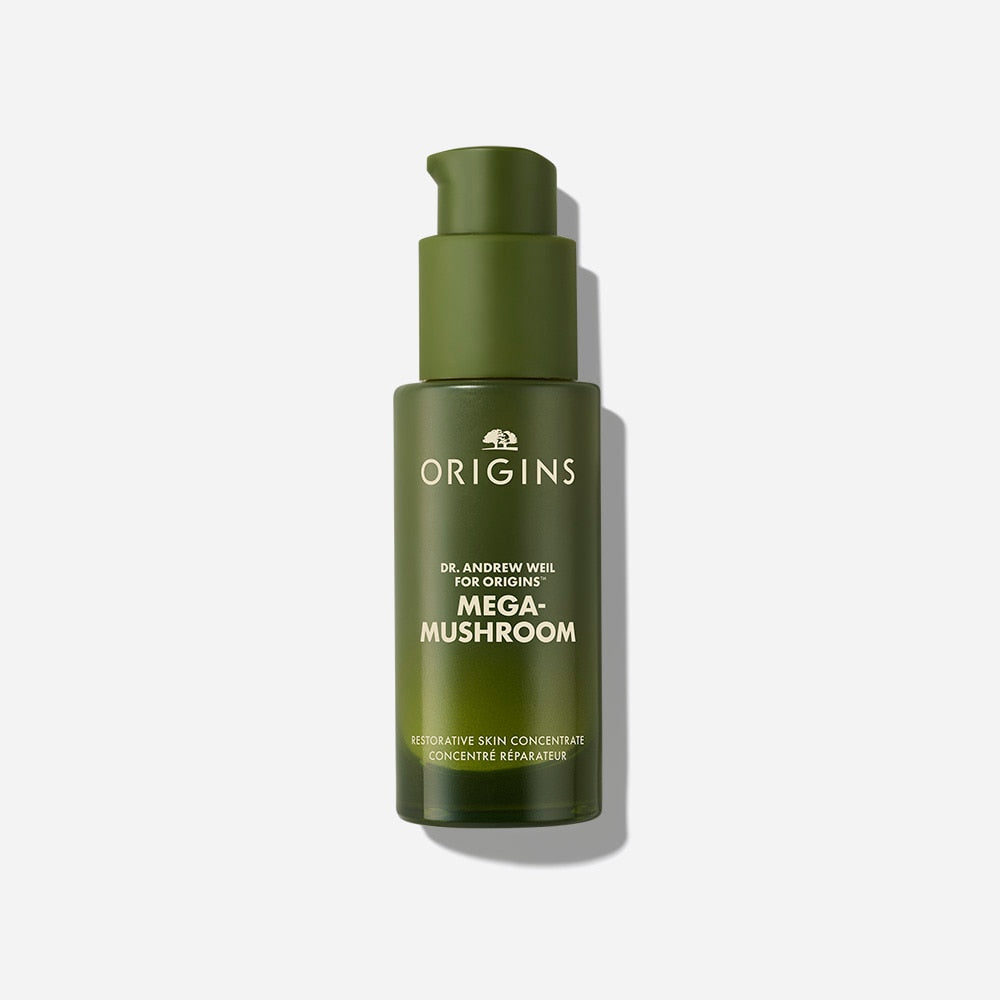
Dr. Andrew Weil for Origins Mega-Mushroom Barrier Rescue Concentrated Serum

Dr. Andrew Weil for Origins Mega-Mushroom Barrier Rescue Concentrated Serum
Origins
dr-andrew-weil-for-origins-mega-mushroom-barrier-rescue-concentrated-serum
Serum
9818393477413
Morning or Evening?
How often will you use this product?
Notes


Highlights
WHAT IS IT?
Concentrated barrier serum with mushroom complex
FEATURES
Repairs damaged barrier by 480% within 2 hours, Reduces redness by 50%, 97% Naturally-derived formula
BEST FOR
All skin types
CHECKS
Free of parabens, phthalates, formaldehyde, sodium lauryl sulfate (SLS), mineral oil, petrolatum, paraffin, diethanolamine (DEA), polyethylene beads
Who Is It For?
All Ages All GendersWhat Does It Help With?
Skin Barrier Repair Redness Reduction Irritation Relief HydrationBudget
Mid-range ($30-$75)How To Use
Which routine should it be used in?
Instructions:
Key Information


What Origins Says
Product Description:
Our most concentrated barrier serum that helps rapidly soothe visible redness and recover skin barrier. It provides visibly sensitized skin with soothing relief and healing hydration. Ideal for everyday and extreme irritation such as a derm procedure.
About the Brand:
Ingredients Overview
Ingredients List
water\aqua\eau, simmondsia chinensis (jojoba) seed oil, olea europaea (olive) fruit oil, lactobacillus ferment, saccharomyces ferment filtrate, glycerin, caprylic/capric/myristic/stearic triglyceride, hydrogenated lecithin, butyrospermum parkii (shea) butter, polyglyceryl-3 diisostearate, polysorbate 20, centella asiatica (hydrocotyl) extract, ganoderma lucidum (mushroom) extract, tremella fuciformis polysaccharide, fuscoporia obliqua sclerotium extract, hippophae rhamnoides extract, ceramide np, punica granatum (pomegranate) sterols, hydrogenated jojoba oil, laminaria saccharina extract, helianthus annuus (sunflower) seed extract, hordeum vulgare extract\extrait d'orge, cucumis sativus (cucumber) fruit extract, squalane, porphyridium cruentum extract, tocopherol, caffeine, oryzanol, dipotassium glycyrrhizate, sodium hyaluronate, glycine soja (soybean) seed extract, triheptanoin, coco-caprylate/caprate, caprylyl glycol, biosaccharide gum-1, xanthan gum, castor oil/ipdi copolymer, magnesium aluminum silicate, dipentaerythrityl tri-polyhydroxystearate, ethylhexylglycerin, dilinoleic acid/butanediol copolymer, ammonium acryloyldimethyltaurate/beheneth-25 methacrylate crosspolymer, sodium phytate, chlorphenesin, sodium benzoate, potassium sorbate, phenoxyethanol
Key Ingredients
Reishi mushroom, Fermented Chaga, Centella Asiatica, Tremella Mushroom, Plant-Derived Hyaluronic Acid
Ingredients Details
Glycerin
Common Name(s): Glycerol,glycerine,1,2,3-propanetriol
CAS Number: 56-81-5
DESCRIPTION
What It Does: Glycerin pulls water from the environment and deeper skin layers into the outer skin layer (epidermis), boosting moisture levels and keeping skin soft, smooth, and plump.
Why It's Used: It is used in virtually every moisturizer, serum, and cleanser because it is highly effective at hydrating skin, is well-tolerated by all skin types, and enhances the texture and spreadability of formulations.
How It Works: As a humectant, glycerin forms hydrogen bonds with water molecules, trapping them in the skin. it also reinforces the skin barrier by integrating into lipid structures between skin cells.
Typically Found In: Moisturizers,serums,cleansers,toners,sheet masks,sunscreens,body lotions,shampoos,conditioners
TECHNICAL DETAILS
Primary Category: Humectant
Secondary Functions: Skin barrier support,emollient,solvent
Application Areas:

Facial Skincare
Body Care
Hair Care
Beard Care

Color Cosmetics (Makeup)
Dietary/Oral Supplements
Typical Concentration Range: 1%–30% (typical: 3–10%)
SOURCING & ETHICS
Vegan Status: Conditional - feedstock declaration required
Halal Status: Unverified - feedstock declaration required (plant, animal and petrochemical routes all exist)
Source Notes: Derived from plant oils via hydrolysis or saponification; synthetic versions also available. palm-derived glycerin carries sustainability concerns. [audit 2026-07-29 rev2: origin-dependent: the same inci exists in plant, animal and petrochemical versions and the name does not discriminate. determination requires shariah-panel sign-off.]
SKIN COMPATIBILITY
Irritancy Rating: 1/5 – very low; non-irritating at all standard concentrations
Comedogenicity Rating: 0/5 – non-comedogenic
Sensitivity Concerns: Extremely rare allergic reactions; generally safe for all skin types including sensitive and baby skin
Safe for Sensitive Skin: Yes
SAFETY & COMPATIBILITY
Safety Profile: Widely recognized as safe. ewg hazard score: 1. no significant concerns for irritation, sensitization, or toxicity at typical concentrations (up to 50%).
Works Well With: Hyaluronic acid,ceramides,niacinamide,panthenol,urea,peptides,retinol,ahas/bhas
Avoid Combining With: No known incompatibilities at standard concentrations
SCIENTIFIC NOTE
Glycerin is an endogenous skin component found naturally in the stratum corneum. aquaporin-3 channels in keratinocytes facilitate glycerin transport, making it integral to natural skin hydration pathways.
Last Verified: 2026-03-12
Primary Sources: Cosing database,cir safety assessment,ewg skin deep,inci decoder
Lactobacillus Ferment
Common Name(s): Lactic acid bacteria ferment,probiotic lysate,lab ferment
CAS Number: N/a
DESCRIPTION
What It Does: Provides postbiotic benefits including barrier support, anti-inflammatory, and microbiome-balancing activity from lactic acid bacteria ferment.
Why It's Used: Postbiotic ingredient for microbiome-supportive skincare addressing the growing evidence for skin microbiome dysbiosis in inflammatory skin conditions.
How It Works: Lactobacillus-derived exopolysaccharides and peptides activate toll-like receptors tlr2/tlr6 on keratinocytes upregulating antimicrobial peptide production. lipoteichoic acid (lta) component modulates immune response reducing pro-inflammatory cytokine production. lactic acid component maintains skin acidic ph.
Typically Found In: Probiotic skincare,microbiome-supportive products,sensitive skin formulas
TECHNICAL DETAILS
Primary Category: Active ingredient – skin microbiome support
Secondary Functions: Tlr2/tlr6 activation,amp upregulation,microbiome support
Application Areas:
Facial Skincare
Body Care
Hair Care
Beard Care
Color Cosmetics (Makeup)
Dietary/Oral Supplements
Typical Concentration Range: 0.1%–5%
SOURCING & ETHICS
Vegan Status: Yes – bacterial fermentation
Halal Status: Yes
Source Notes: Fermentation-derived or plant-extracted.
SKIN COMPATIBILITY
Irritancy Rating: 1/5 – very low
Comedogenicity Rating: 0/5 – non-comedogenic
Sensitivity Concerns: Non-irritating; beneficial for sensitive skin.
Safe for Sensitive Skin: Yes
SAFETY & COMPATIBILITY
Safety Profile: Excellent safety profile. ewg score: 1.
Works Well With: Ceramides,niacinamide,soothing actives
Avoid Combining With: No significant incompatibilities
SCIENTIFIC NOTE
Topical application of heat-killed (pasteurized) lactobacillus demonstrates comparable or superior efficacy to live bacteria for skin benefits in controlled studies – the active components (exopolysaccharides, lta, cell wall components) are heat-stable, and live bacteria in cosmetics face regulatory and stability challenges.
Last Verified: 2026-03-12
Primary Sources: Cosing database,seite & misery microbiome skin review
Olea Europaea (olive) Fruit Oil
Common Name(s): Olea europaea (olive) fruit oil,botanical oil/butter,phytochemical active
CAS Number: N/a
DESCRIPTION
What It Does: Provides emollient conditioning, essential fatty acid supplementation, and barrier lipid support.
Why It's Used: Natural carrier oils integrate into sc lipid bilayers for genuine barrier emolliency.
How It Works: Fatty acid triglycerides deliver oleic, linoleic, and linolenic acids for sc integration and essential fatty acid barrier repair.
Typically Found In: Botanical skin care,natural products
TECHNICAL DETAILS
Primary Category: Active ingredient – antioxidant
Secondary Functions: Free radical scavenging,anti-aging
Application Areas:
Facial Skincare
Body Care
Hair Care
Beard Care
Color Cosmetics (Makeup)
Dietary/Oral Supplements
Typical Concentration Range: 0.1%–30%
SOURCING & ETHICS
Vegan Status: Conditional - supplier confirmation required
Halal Status: Conditional - basis not stated in source record; supplier origin confirmation required to determine what evidence applies
Source Notes: Plant-derived extract or synthetic. [audit 2026-07-29 rev2: status downgraded on audit. determination requires shariah-panel sign-off.]
SKIN COMPATIBILITY
Irritancy Rating: 1/5 – very low
Comedogenicity Rating: 0/5 – non-comedogenic
Sensitivity Concerns: Non-irritating; well-tolerated.
Safe for Sensitive Skin: Yes
SAFETY & COMPATIBILITY
Safety Profile: Excellent safety profile. ewg score: 1.
Works Well With: Vitamin c,vitamin e,ferulic acid,spf,other antioxidants
Avoid Combining With: No significant incompatibilities
SCIENTIFIC NOTE
Plant secondary metabolites evolved for uv photoprotection and pathogen defence — mechanisms directly translatable to cosmetic antioxidant and anti-inflammatory activity in human skin.
Last Verified: 2026-03-12
Primary Sources: Cosing database,olea europaea (olive) fruit oil botanical review
Saccharomyces Ferment Filtrate
Common Name(s): Saccharomyces ferment filtrate,cosmetic active,functional ingredient
CAS Number: N/a
DESCRIPTION
What It Does: Delivers characteristic cosmetic function at recommended use concentration.
Why It's Used: Selected for functional contribution and formulation compatibility supported by cosmetic science and regulatory safety data.
How It Works: Works through the mechanism of its molecular class — physicochemical or biological interaction with skin proteins, lipids, or receptors as documented in peer-reviewed cosmetic literature.
Typically Found In: Skin care formulations
TECHNICAL DETAILS
Primary Category: Active ingredient – cosmetic active
Secondary Functions: Skin conditioning
Application Areas:
Facial Skincare
Body Care
Hair Care
Beard Care
Color Cosmetics (Makeup)
Dietary/Oral Supplements
Typical Concentration Range: 0.1%–10%
SOURCING & ETHICS
Vegan Status: Conditional - supplier confirmation required
Halal Status: Unverified - supplier confirmation required
Source Notes: Commercially produced for cosmetic use. verify vegan/halal status with supplier. [audit 2026-07-29 rev2: the record's own source_notes does not assert a non-animal origin, or instructs the reader to verify with the supplier; "yes" asserts knowledge the record does not hold. determination requires shariah-panel sign-off.]
SKIN COMPATIBILITY
Irritancy Rating: 1/5 – very low
Comedogenicity Rating: 0/5 – non-comedogenic
Sensitivity Concerns: Well-tolerated by most skin types.
Safe for Sensitive Skin: Yes
SAFETY & COMPATIBILITY
Safety Profile: Good safety profile at recommended concentrations. ewg score: 1–2.
Works Well With: Standard skincare actives
Avoid Combining With: No known significant incompatibilities
SCIENTIFIC NOTE
Saccharomyces ferment filtrate has an established safety and efficacy profile within the cosmetic regulatory framework at standard use concentrations.
Last Verified: 2026-03-12
Primary Sources: Cosing database,saccharomyces ferment filtrate technical literature