

Earth Science Ayurveda
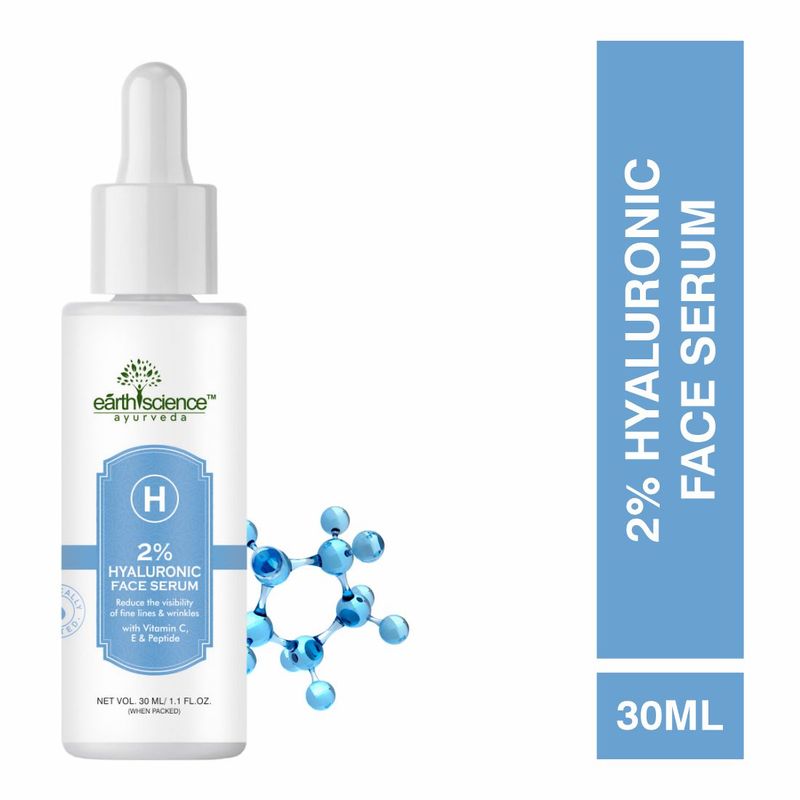
Earth Science Ayurveda Hyaluronic Acid Face Serum

Earth Science Ayurveda Hyaluronic Acid Face Serum
Earth Science Ayurveda
earth-science-ayurveda-hyaluronic-acid-face-serum
Serum
10084851679525
Morning or Evening?
How often will you use this product?
Notes


Highlights
WHAT IS IT?
Face Serum with hyaluronic acid
FEATURES
Hydrates skin by attracting and retaining moisture, Supports skin barrier function, Lightweight texture, Suitable for all skin types
BEST FOR
sensitive
CHECKS
Who Is It For?
What Does It Help With?
Hydration Skin Barrier Support Suitable For Sensitive Dry Oily Combination SkinBudget
Affordable (under $30)How To Use
Which routine should it be used in?
Instructions:
Key Information


What Earth Science Ayurveda Says
Product Description:
Earth Science Ayurveda Hyaluronic Acid Face Serum sounds like a hydrating and versatile product suitable for all skin types. Hyaluronic acid helps hydrate the skin by attracting and retaining moisture, supports the skin barrier, has a lightweight texture, and is suitable for all skin types including sensitive, dry, oily, and combination skin. The brand emphasizes natural and herbal ingredients consistent with Ayurvedic traditions.
About the Brand:
Ingredients Overview
Ingredients List
Folic Acid, Glycolic Acid, Retinol, Peptide, Hyaluronic Acid, Vitamin C, Aloe Vera
Key Ingredients
Hyaluronic Acid
Ingredients Details
Aloe Vera
Common Name(s): Aloe vera juice,aloe vera gel,aloe barbadensis
CAS Number: 85507-69-3
DESCRIPTION
What It Does: Provides acemannan-based wound healing and comprehensive moisturising skin conditioning from the quintessential healing plant.
Why It's Used: The most universally recognised natural healing plant — aloe vera's acemannan polysaccharides, vitamins, and enzymes provide a comprehensive wound healing and soothing profile with thousands of years of documented use.
How It Works: Acemannan (poly-mannose) activates dectin-1 for wound healing immune stimulation. gibberellin promotes fibroblast growth. salicylic acid derivative provides anti-inflammatory. vitamins c and e provide antioxidant. glucomannan provides humectant.
Typically Found In: After-sun products,wound healing,moisturisers,virtually all skin care categories
TECHNICAL DETAILS
Primary Category: Active ingredient – aloe vera gel
Secondary Functions: Redness reduction,anti-inflammatory,calming
Application Areas:

Facial Skincare
Body Care

Hair Care
Beard Care
Color Cosmetics (Makeup)
Dietary/Oral Supplements
Typical Concentration Range: 0.5%–99%
SOURCING & ETHICS
Vegan Status: Yes – from aloe barbadensis leaf
Halal Status: Yes
Source Notes: Plant-derived extract or synthetic.
SKIN COMPATIBILITY
Irritancy Rating: 1/5 – very low
Comedogenicity Rating: 0/5 – non-comedogenic
Sensitivity Concerns: Non-irritating; ideal for reactive and sensitive skin.
Safe for Sensitive Skin: Yes – particularly recommended for sensitive skin
SAFETY & COMPATIBILITY
Safety Profile: Excellent safety profile. ewg score: 1.
Works Well With: Ceramides,panthenol,allantoin,hyaluronic acid,centella asiatica
Avoid Combining With: No significant incompatibilities
SCIENTIFIC NOTE
Aloe vera's clinical evidence for sunburn relief is among the best for any botanical wound healing ingredient. multiple rcts demonstrate that aloe vera gel reduces healing time of first and second degree burns and sunburns, attributed primarily to acemannan's immunomodulatory wound healing activity and the anti-inflammatory salicylate derivatives providing prostaglandin inhibition.
Last Verified: 2026-03-12
Primary Sources: Cosing database,surjushe et al. aloe vera skin review,cir safety assessment
Folic Acid
Common Name(s): Vitamin b9,pteroylmonoglutamic acid,folate
CAS Number: 59-30-3
DESCRIPTION
What It Does: Provides folate cofactor support for dna synthesis and cell proliferation underlying skin renewal.
Why It's Used: Dna synthesis b vitamin for skin renewal — folic acid provides the thymidine synthesis cofactor essential for dna replication during skin cell division, supporting the normal rate of epidermal renewal.
How It Works: 5,10-methylenethf provides thymidylate synthase substrate for dtmp synthesis (dna precursor). methionine synthase cofactor for homocysteine methylation maintaining sam-dependent methylation reactions. cell proliferation support from purine and pyrimidine synthesis. uv photoprotection from conjugated pteridine ring system.
Typically Found In: Anti-aging skincare,skin renewal products
TECHNICAL DETAILS
Primary Category: Active ingredient – b9 folate vitamin
Secondary Functions: Skin conditioning
Application Areas:
Facial Skincare
Body Care
Hair Care
Beard Care
Color Cosmetics (Makeup)
Dietary/Oral Supplements
Typical Concentration Range: 0.001%–0.1%
SOURCING & ETHICS
Vegan Status: Conditional - supplier confirmation required
Halal Status: Unverified - supplier confirmation required
Source Notes: Commercially produced for cosmetic use. verify vegan/halal status with supplier. [audit 2026-07-29 rev2: the record's own source_notes does not assert a non-animal origin, or instructs the reader to verify with the supplier; "yes" asserts knowledge the record does not hold. determination requires shariah-panel sign-off.]
SKIN COMPATIBILITY
Irritancy Rating: 1/5 – very low
Comedogenicity Rating: 0/5 – non-comedogenic
Sensitivity Concerns: Well-tolerated by most skin types.
Safe for Sensitive Skin: Yes
SAFETY & COMPATIBILITY
Safety Profile: Good safety profile at recommended concentrations. ewg score: 1–2.
Works Well With: Standard skincare actives
Avoid Combining With: No known significant incompatibilities
SCIENTIFIC NOTE
Folic acid's role in uv protection has been documented epidemiologically: folic acid deficiency increases uv-induced skin cancer risk by impairing dna repair capability (folate-dependent repair enzymes require tetrahydrofolate). topical folic acid application to uv-exposed skin may support local dna repair capacity — a photoprotective mechanism distinct from uv absorption.
Last Verified: 2026-03-12
Primary Sources: Cosing database,jablonski & chaplin folic acid uv study
Glycolic Acid
Common Name(s): Hydroxyacetic acid,2-hydroxyacetic acid
CAS Number: 79-14-1
DESCRIPTION
What It Does: Provides maximum aha efficacy from the smallest most penetrating alpha-hydroxy acid.
Why It's Used: The most potent aha — glycolic acid's smallest molecular size provides the deepest penetration and highest efficacy of any alpha-hydroxy acid for exfoliation and anti-aging.
How It Works: Smallest aha (mw 76) provides deepest stratum corneum penetration. disrupts corneodesmosomes reducing cohesion. stimulates fibroblast collagen i and iii synthesis. efficacy is ph-dependent — free acid fraction determines activity.
Typically Found In: Chemical peels,body lotions,anti-aging serums,exfoliating toners
TECHNICAL DETAILS
Primary Category: Active ingredient – primary aha
Secondary Functions: Brightening,collagen stimulation
Application Areas:
Facial Skincare
Body Care
Hair Care
Beard Care
Color Cosmetics (Makeup)
Dietary/Oral Supplements
Typical Concentration Range: 1%–10% cosmetic; higher professional
SOURCING & ETHICS
Vegan Status: Yes – synthetic or fermentation-derived
Halal Status: Yes
Source Notes: Fermentation-derived or synthetic. ph must be ≤4.0 for aha activity.
SKIN COMPATIBILITY
Irritancy Rating: 2/5 – low to moderate
Comedogenicity Rating: 0/5 – non-comedogenic
Sensitivity Concerns: Photosensitizing – mandatory spf use. start at low frequency.
Safe for Sensitive Skin: Use with caution – spf required
SAFETY & COMPATIBILITY
Safety Profile: Eu cosmetics: max 10% leave-on, ph ≥3.5, mandatory sun protection advisory. professional peel concentrations regulated separately.
Works Well With: Niacinamide,ceramides,hyaluronic acid,spf
Avoid Combining With: Retinol in same step; multiple exfoliants simultaneously
SCIENTIFIC NOTE
Glycolic acid's ph-dependent efficacy is critical: at ph 3.0 ~100% is in the free acid (membrane-permeable) form; at ph 3.5 ~70%; at ph 4.0 ~50%. the eu ph ≥3.5 requirement reduces free acid proportion, lowering efficacy but also reducing irritation — why professional peel concentrations at lower ph are far more active than equivalent cosmetic concentrations.
Last Verified: 2026-03-12
Primary Sources: Cosing database,eu aha guidelines,cir safety assessment
Hyaluronic Acid
Common Name(s): Ha,sodium hyaluronate (salt form),hyaluronan,d-glucuronic acid-n-acetyl-d-glucosamine polymer
CAS Number: 9004-61-9
DESCRIPTION
What It Does: Hyaluronic acid draws and locks moisture into the skin at multiple depths (surface and deeper layers depending on molecular weight), creating a plumping, smoothing, and hydrating effect.
Why It's Used: It is used because it is endogenous to human skin, making it exceptionally biocompatible and non-irritating. its unparalleled moisture-binding capacity makes it the most effective hydrating ingredient available.
How It Works: Ha binds water molecules through its many hydroxyl and carboxyl groups, creating a gel-like matrix. high molecular weight ha (>500 kda) hydrates the skin surface; low molecular weight ha (<50 kda) penetrates deeper to provide interior hydration.
Typically Found In: Serums,moisturizers,sheet masks,toners,eye creams,lip treatments,dermal fillers (injectable)
TECHNICAL DETAILS
Primary Category: Active ingredient – humectant/hydrator
Secondary Functions: Barrier repair,plumping,anti-aging
Application Areas:
Facial Skincare
Body Care
Hair Care
Beard Care
Color Cosmetics (Makeup)
Dietary/Oral Supplements
Typical Concentration Range: 0.1%–2% (effective at very low concentrations; multi-weight ha provides superior results)
SOURCING & ETHICS
Vegan Status: Conditional - feedstock declaration required
Halal Status: Unverified - feedstock declaration required (plant, animal and petrochemical routes all exist)
Source Notes: Originally extracted from rooster combs; now predominantly produced via biotechnology (bacterial fermentation), which is vegan and more sustainable. [audit 2026-07-29 rev2: origin-dependent: the same inci exists in plant, animal and petrochemical versions and the name does not discriminate. determination requires shariah-panel sign-off.]
SKIN COMPATIBILITY
Irritancy Rating: 1/5 – very low; one of the gentlest skincare ingredients known
Comedogenicity Rating: 0/5 – non-comedogenic
Sensitivity Concerns: In very dry environments, high-molecular-weight ha on the surface can potentially draw moisture out of the skin if not sealed with an occlusive. apply to damp skin and seal with moisturizer.
Safe for Sensitive Skin: Yes – ideal for all skin types including rosacea, eczema, and post-procedure skin
SAFETY & COMPATIBILITY
Safety Profile: Exceptional safety profile. endogenous molecule – no toxicity concerns. ewg hazard score: 1. safe during pregnancy.
Works Well With: Virtually all ingredients; especially ceramides,glycerin,peptides,retinol (reduces irritation),niacinamide,vitamin c
Avoid Combining With: No significant incompatibilities; high concentrations of alcohol in a formula may reduce its efficacy
SCIENTIFIC NOTE
Hyaluronic acid naturally degrades in skin (half-life ~1–2 days). the skin produces it endogenously, but production decreases with age. multi-molecular-weight ha formulas provide hydration at both surface and deeper skin levels.
Last Verified: 2026-03-12
Primary Sources: Cosing database,cir safety assessment,papakonstantinou et al. (2012) dermato-endocrinology