

Earth Science Ayurveda
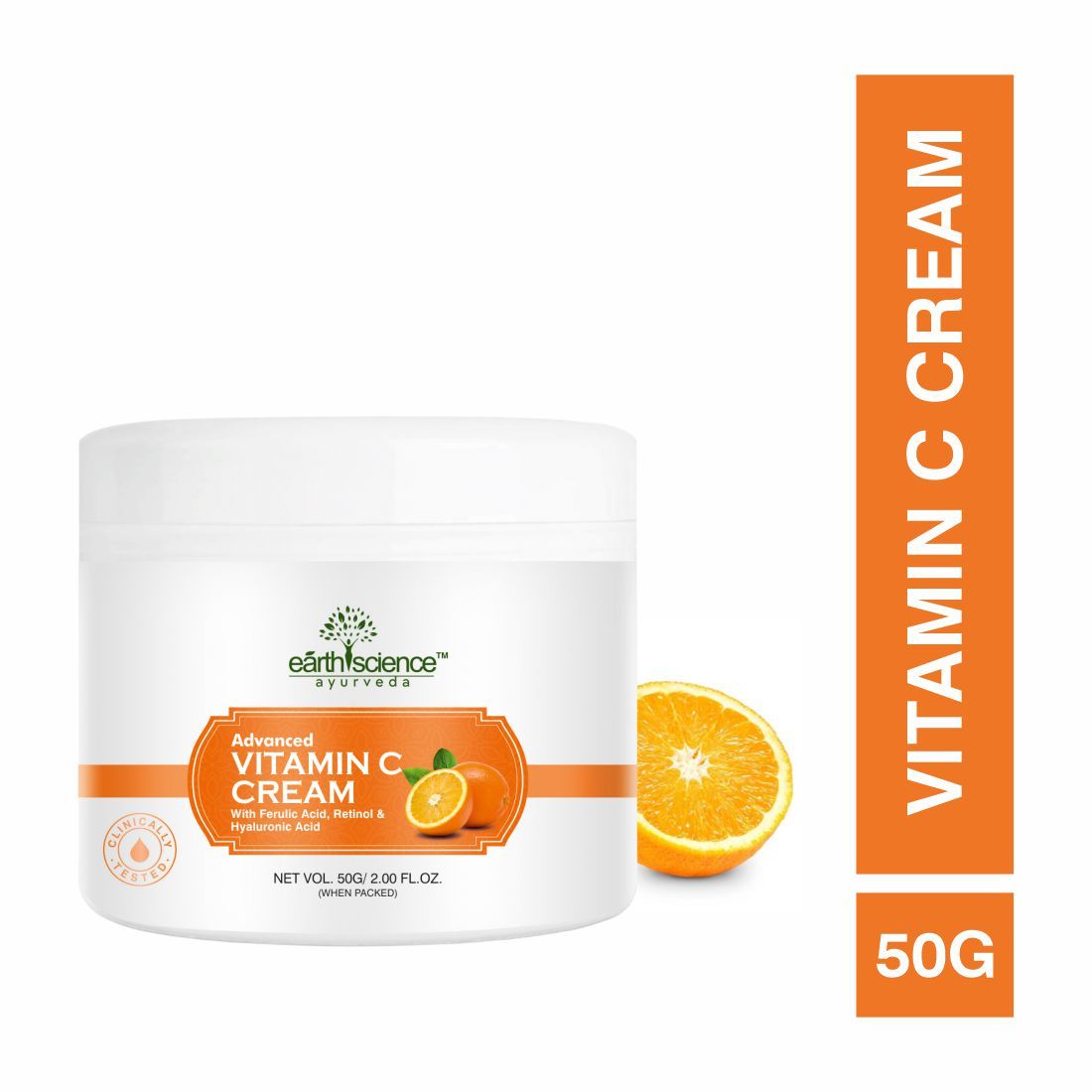
Earth Science Ayurveda Vitamin C Face Cream

Earth Science Ayurveda Vitamin C Face Cream
Earth Science Ayurveda
earth-science-ayurveda-vitamin-c-face-cream
Moisturize
10085113692453
Morning or Evening?
How often will you use this product?
Notes


Highlights
WHAT IS IT?
Face Cream with Vitamin C, Peptides, Retinol and Vitamin B3
FEATURES
Brightens skin, evens skin tone, supports collagen production, improves firmness and elasticity, reduces wrinkles and fine lines, reduces dark spots and hyperpigmentation, strengthens skin barrier
BEST FOR
normal
CHECKS
Who Is It For?
What Does It Help With?
Brightening Anti-aging Skin Texture Improvement Hyperpigmentation ReductionBudget
Affordable (under $30)How To Use
Which routine should it be used in?
Instructions:
Key Information


What Earth Science Ayurveda Says
Product Description:
Earth Science Ayurveda Vitamin C Face Cream with Peptides, Retinol, and Vitamin B3 designed to promote glowing and fairer skin by brightening, supporting collagen, improving firmness, and reducing dark spots and hyperpigmentation.
About the Brand:
Ingredients Overview
Ingredients List
vitamin c, Retinol, Hyaluronic
Key Ingredients
Vitamin C, Peptides, Retinol, Vitamin B3 (Niacinamide)
Ingredients Details
Retinol
Common Name(s): Vitamin a,all-trans retinol,(all-e)-3,7-dimethyl-9-(2,6,6-trimethyl-1-cyclohexen-1-yl)-2,4,6,8-nonatetraen-1-ol
CAS Number: 68-26-8
DESCRIPTION
What It Does: Retinol accelerates skin cell turnover, stimulates collagen production, reduces fine lines and wrinkles, fades hyperpigmentation, and helps normalize pore size.
Why It's Used: It is the most evidence-backed anti-aging ingredient available without a prescription. it provides comprehensive skin renewal benefits that no other single cosmetic ingredient can match.
How It Works: Retinol is converted in the skin to retinoic acid, which binds to retinoid receptors in cell nuclei. this activates gene expression changes that accelerate cell turnover, boost collagen synthesis, and inhibit matrix metalloproteinases (collagen-degrading enzymes).
Typically Found In: Night creams,serums,eye creams,targeted treatment products,anti-aging formulations
TECHNICAL DETAILS
Primary Category: Active ingredient – vitamin a derivative
Secondary Functions: Exfoliating,anti-acne,brightening
Application Areas:

Facial Skincare
Body Care

Hair Care
Beard Care
Color Cosmetics (Makeup)
Dietary/Oral Supplements
Typical Concentration Range: 0.025%–1% (otc); start at low concentrations and build up slowly
SOURCING & ETHICS
Vegan Status: Conditional - feedstock declaration required
Halal Status: Unverified - feedstock declaration required (plant, animal and petrochemical routes all exist)
Source Notes: Cosmetic retinol is predominantly synthetically manufactured. some natural sources include fish liver oils. synthetic is preferred for purity and sustainability. [audit 2026-07-29 rev2: origin-dependent: the same inci exists in plant, animal and petrochemical versions and the name does not discriminate. determination requires shariah-panel sign-off.]
SKIN COMPATIBILITY
Irritancy Rating: 3/5 – moderate; can cause dryness, peeling, redness, especially during adjustment period (retinization)
Comedogenicity Rating: 0/5 – non-comedogenic; actually helps clear pores
Sensitivity Concerns: Retinization period: 2–6 weeks of potential dryness, flaking, and sensitivity. photosensitizing – must use spf when using retinol. avoid during pregnancy.
Safe for Sensitive Skin: Use with caution – start at 0.025%, buffer with moisturizer, use every 2–3 nights initially
SAFETY & COMPATIBILITY
Safety Profile: Safe for general use at otc concentrations. not recommended during pregnancy. avoid with waxing. use spf daily. ewg hazard score: varies by concentration.
Works Well With: Niacinamide (soothes irritation),peptides,ceramides,hyaluronic acid,spf (mandatory)
Avoid Combining With: Benzoyl peroxide (may inactivate retinol),ahas/bhas (when new to retinol – overexfoliation risk),vitamin c (use at different times)
SCIENTIFIC NOTE
Retinol is approximately 20 times less potent than prescription tretinoin (retinoic acid) but significantly better tolerated. the conversion rate of retinol to retinoic acid in skin is the rate-limiting step in its efficacy.
Last Verified: 2026-03-12
Primary Sources: Cosing database,cir safety assessment,journal of investigative dermatology,kligman et al. studies
Vitamin C
Common Name(s): Vitamin c,cosmetic active,established function
CAS Number: N/a
DESCRIPTION
What It Does: Delivers characteristic cosmetic function — skin conditioning, antioxidant protection, active biological benefit, or formulation function — at recommended use concentration.
Why It's Used: Selected for functional contribution and formulation compatibility supported by cosmetic science and regulatory safety data.
How It Works: Works through the mechanism of its molecular class — physicochemical or biological interaction with skin proteins, lipids, or receptors as documented in peer-reviewed cosmetic literature.
Typically Found In: Skin care formulations
TECHNICAL DETAILS
Primary Category: Active ingredient – cosmetic active
Secondary Functions: Skin conditioning
Application Areas:
Facial Skincare
Body Care
Hair Care
Beard Care
Color Cosmetics (Makeup)
Dietary/Oral Supplements
Typical Concentration Range: 0.1%–10%
SOURCING & ETHICS
Vegan Status: Conditional - supplier confirmation required
Halal Status: Unverified - supplier confirmation required
Source Notes: Commercially produced for cosmetic use. verify vegan/halal status with supplier. [audit 2026-07-29 rev2: the record's own source_notes does not assert a non-animal origin, or instructs the reader to verify with the supplier; "yes" asserts knowledge the record does not hold. determination requires shariah-panel sign-off.]
SKIN COMPATIBILITY
Irritancy Rating: 1/5 – very low
Comedogenicity Rating: 0/5 – non-comedogenic
Sensitivity Concerns: Well-tolerated by most skin types.
Safe for Sensitive Skin: Yes
SAFETY & COMPATIBILITY
Safety Profile: Good safety profile at recommended concentrations. ewg score: 1–2.
Works Well With: Standard skincare actives
Avoid Combining With: No known significant incompatibilities
SCIENTIFIC NOTE
Vitamin c has an established safety and efficacy profile within the cosmetic regulatory framework at standard use concentrations.
Last Verified: 2026-03-12
Primary Sources: Cosing database,vitamin c technical literature