

ECOVANI
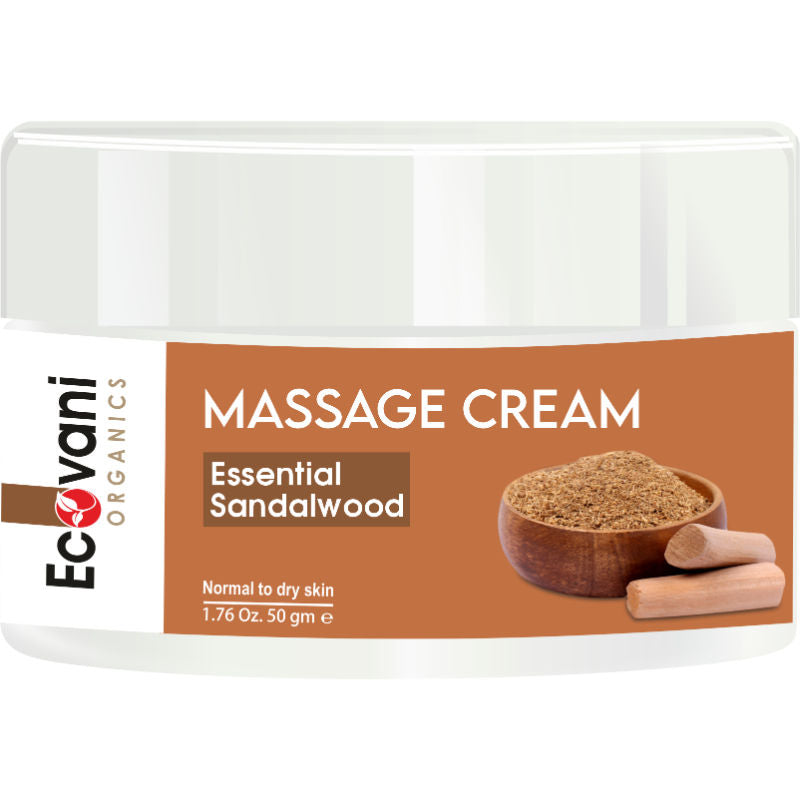
ECOVANI Essential Sandalwood Massage Cream

ECOVANI Essential Sandalwood Massage Cream
ECOVANI
ecovani-essential-sandalwood-massage-cream
Moisturize
10085453627685
Morning or Evening?
How often will you use this product?
Notes


Highlights
WHAT IS IT?
Massage cream with 4 key ingredients
FEATURES
Enhances skin glow, stimulates blood circulation on face, hydrates and nourishes skin, imparts nourished brighter skin tone, contains sandalwood oil, sesame oil, aloe vera extracts & shea butter
BEST FOR
sensitive
CHECKS
No information available on what it doesn't contain explicitly
Who Is It For?
What Does It Help With?
Enhances Skin Glow Stimulates Blood Circulation Hydrates And Nourishes SkinBudget
Affordable (under $30)How To Use
Which routine should it be used in?
Instructions:
Key Information


What ECOVANI Says
Product Description:
Sandalwood Massage cream helps in a smooth and long massage to allow the cream to be absorbed into the pores. The skin feels more radiant and gets the natural glow. Regular use of massage cream helps in enhancing the blood circulation on the face, making the skin brighter. The fresh Aroma of Sandal helps to distress and acts as a relaxing agent for mind. A smooth cream helps in swift hand movement while massaging and thereby enhances the blood circulation on the face. Rose is an extremely useful that helps to refresh the skin and thoroughly moisturize it. Sandal has impeccable properties in reducing the moisture loss from the skin. Benefits: Enhances Skin glow, Stimulates blood circulation on face, Hydrates & Nourishes skin, Imparts Nourished Brighter Skin Tone, With Sandalwood Oil, Sesame Oil, Aloe Vera Extracts & Shea Butter
About the Brand:
Ingredients Overview
Ingredients List
sandalwood-oil, sesame-oil, aloe-vera-ext, shea-butter
Key Ingredients
Sandalwood Oil, Sesame Oil, Aloe Vera Extract, Shea Butter
Ingredients Details
Sesame Oil
Common Name(s): Sesame oil,botanical oil,phytochemical active
CAS Number: N/a
DESCRIPTION
What It Does: Provides antioxidant protection from reactive oxygen species, reduces inflammatory cytokine production in skin, and conditions skin through the plant's phytochemical complex.
Why It's Used: Natural origin narrative, traditional use heritage, and multi-functional phytochemical profile supporting concurrent skin care claims from one ingredient.
How It Works: Polyphenols, terpenoids, and alkaloids scavenge ros via h• donation, inhibit nf-kb or cox-2 inflammatory pathways, and interact with skin surface proteins for conditioning.
Typically Found In: Botanical skin care,natural products
TECHNICAL DETAILS
Primary Category: Active ingredient – antioxidant
Secondary Functions: Free radical scavenging,anti-aging
Application Areas:

Facial Skincare
Body Care

Hair Care
Beard Care
Color Cosmetics (Makeup)
Dietary/Oral Supplements
Typical Concentration Range: 0.1%–10%
SOURCING & ETHICS
Vegan Status: Conditional - supplier confirmation required
Halal Status: Yes
Source Notes: Plant-derived extract or synthetic. [audit 2026-07-29 rev2: status downgraded on audit. determination requires shariah-panel sign-off.]
SKIN COMPATIBILITY
Irritancy Rating: 1/5 – very low
Comedogenicity Rating: 0/5 – non-comedogenic
Sensitivity Concerns: Non-irritating; well-tolerated.
Safe for Sensitive Skin: Yes
SAFETY & COMPATIBILITY
Safety Profile: Excellent safety profile. ewg score: 1.
Works Well With: Vitamin c,vitamin e,ferulic acid,spf,other antioxidants
Avoid Combining With: No significant incompatibilities
SCIENTIFIC NOTE
Plant secondary metabolites evolved as photoprotectants and antimicrobials — mechanisms directly applicable to cosmetic antioxidant and anti-inflammatory activity in human skin.
Last Verified: 2026-03-12
Primary Sources: Cosing database,sesame oil botanical review
Shea Butter
Common Name(s): Shea butter,karite butter
CAS Number: 91080-23-8
DESCRIPTION
What It Does: Provides deep nourishing emolliency with anti-inflammatory cinnamic acid esters and a uniquely rich unsaponifiable fraction.
Why It's Used: The most nutritious plant butter – unique cinnamic acid esters, lupeol, and rich unsaponifiable fraction provide anti-inflammatory and wound healing benefits beyond standard fatty acid emolliency.
How It Works: Cinnamic acid esters absorb uv radiation providing mild natural uv filtering (spf 3-4). lupeol inhibits nf-kb for anti-inflammatory activity. high stearic acid provides occlusive barrier function. rich unsaponifiable fraction (4-9%) provides phytosterols, tocopherols, and triterpenes for bioactive skin benefits.
Typically Found In: Body butters,rich moisturizers,baby products,hair conditioners,lip balms
TECHNICAL DETAILS
Primary Category: Functional ingredient – emollient
Secondary Functions: Cinnamic acid uv support,lupeol anti-inflammatory,rich emolliency
Application Areas:
Facial Skincare
Body Care
Hair Care
Beard Care
Color Cosmetics (Makeup)
Dietary/Oral Supplements
Typical Concentration Range: 1%–100%
SOURCING & ETHICS
Vegan Status: Conditional - supplier confirmation required
Halal Status: Unverified - supplier confirmation required
Source Notes: Unrefined (raw) shea retains more unsaponifiable fraction and stronger natural scent/color. refined shea is odorless, white, and cleaner for formulation. certified fair trade supports west african women's cooperatives. [audit 2026-07-29 rev2: the record's own source_notes does not assert a non-animal origin, or instructs the reader to verify with the supplier; "yes" asserts knowledge the record does not hold. determination requires shariah-panel sign-off.]
SKIN COMPATIBILITY
Irritancy Rating: 1/5 – very low
Comedogenicity Rating: 0/5 – non-comedogenic (refined); 2/5 – low (raw/unrefined)
Sensitivity Concerns: Non-irritating.
Safe for Sensitive Skin: Yes
SAFETY & COMPATIBILITY
Safety Profile: Excellent safety profile. ewg score: 1.
Works Well With: Humectants,ceramides,actives as carrier
Avoid Combining With: No significant incompatibilities
SCIENTIFIC NOTE
Shea butter's unsaponifiable fraction (4-9%, vs coconut oil's 0.5% and olive oil's 1-2%) is exceptionally rich in triterpenes, phytosterols, and tocopherols. this fraction is responsible for shea's anti-inflammatory and wound healing properties that simple fatty acid analysis fails to reveal.
Last Verified: 2026-03-12
Primary Sources: Cosing database,lin et al. shea butter cinnamic acid study,cir safety assessment