

ECOVANI
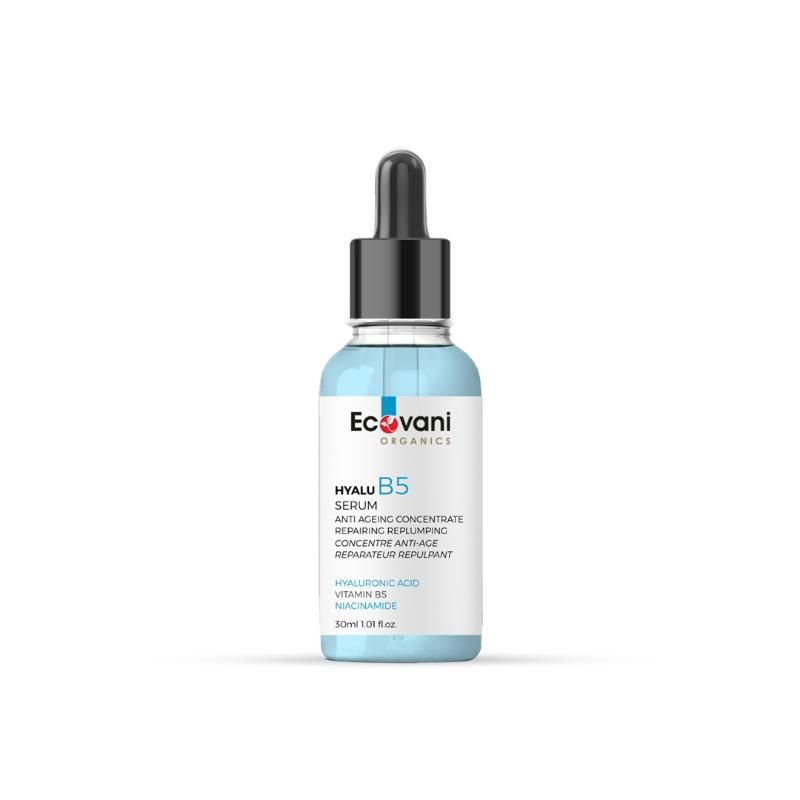
ECOVANI Hyaluronic Acid Face Serum With Vitamin B5

ECOVANI Hyaluronic Acid Face Serum With Vitamin B5
ECOVANI
ecovani-hyaluronic-acid-face-serum-with-vitamin-b5
Serum
10085004706085
Morning or Evening?
How often will you use this product?
Notes


Highlights
WHAT IS IT?
Hyaluronic Acid Face Serum with Vitamin B5, 8 ingredients
FEATURES
Anti-ageing, Hydration, Even Skin Tone, Skin Barrier Protection, Plumping effect, Reduces wrinkles and fine lines
BEST FOR
normal
CHECKS
Paraben-Free, Alcohol-free, Sulfate-free
Who Is It For?
All Genders Adult Age RangeWhat Does It Help With?
Hydration Anti-ageing Even Skin Tone Wrinkles Fine Lines Skin Barrier ProtectionBudget
Affordable (under $30)How To Use
Which routine should it be used in?
Instructions:
Key Information


What ECOVANI Says
Product Description:
Anti-ageing Hyaluronic enriched serum for the ultimate ageless look. The serum is a concoction of the skin nourishing Hyaluronic Acid and Vitamin B5 – which provide an all encompassing skin treatment. The serum not only enhances the overall look, but also makes the skin look plump and hydrated. Serum has to be able to impart the maximum benefits of its ingredients to the skin. Vitamin B5 enriched Hyaluronic Acid Serum is a powerful tool for the skin to stay smooth and soft. Benefits: Hydration: Hyaluronic Acid is a powerful humectants that attracts moisture and retains water. This keeps the skin thoroughly hydrated and moisturized, keeping the skin free from wrinkles and age lines. Even Skin Tone: The powerful blend of ingredients makes the skin free from pigmentation and dark spots. Even skin tone is a noticeable after effect of using this effective serum. Anti-ageing: Fine lines and wrinkles are effectively treated with the help of a Hyaluronic acid enriched serum. The plumping effect of Hyaluronic Acid can significantly reduce the appearance of fine lines & wrinkles. Skin Barrier Protection: Barrier support is essential to protect the skin from the harsh effects of sun and pollution. Hyaluronic Acid and Vitamin B5, as a combination help to keep the skin barrier healthy.
About the Brand:
Ingredients Overview
Ingredients List
Dm-water,Vegetable-glycerine,Sodium-PCA,Hyaluronic-acid,D-panthenol,Carbopol,Glycolic-acid,Betula-alba-root-and-betula-alba-leaf-ext-and-ethyl-and-chlorophensin-and-phenoxyethanole-and-ethyl-hexyl-glycerin,Parfum
Key Ingredients
Hyaluronic acid, Vitamin B5 (D-panthenol)
Ingredients Details
Carbopol
Common Name(s): Carbomer/acrylate crosspolymer,highly efficient gel former,rheology modifier
CAS Number: N/a
DESCRIPTION
What It Does: Forms transparent to translucent high-viscosity gels at very low concentration, suspends particles and pigments against sedimentation through yield stress, and provides the elegant shear-thinning texture of premium gel serums.
Why It's Used: The most efficient aqueous thickener available — achieving gel viscosity at 0.1% that requires 3–5% of xanthan gum or 2% of cellulose thickeners, enabling clean-label lightweight formulations with high active loading.
How It Works: At ph <4: –cooh groups protonated, polymer coiled compact, low viscosity. neutralisation with naoh/tea deprotonates –cooh to –coo⁻; like-charge repulsion expands polymer coil 100–1000×. above overlap concentration c* (~0.1%), expanded coils entangle forming viscoelastic gel network providing high zero-shear viscosity and shear-thinning.
Typically Found In: Gel serums,transparent toners,suspension systems
TECHNICAL DETAILS
Primary Category: Active ingredient – cosmetic active
Secondary Functions: Skin conditioning
Application Areas:

Facial Skincare

Body Care
Hair Care
Beard Care
Color Cosmetics (Makeup)
Dietary/Oral Supplements
Typical Concentration Range: 0.1%–2%
SOURCING & ETHICS
Vegan Status: Yes
Halal Status: Yes
Source Notes: Commercially produced for cosmetic use. verify vegan/halal status with supplier.
SKIN COMPATIBILITY
Irritancy Rating: 1/5 – very low
Comedogenicity Rating: 0/5 – non-comedogenic
Sensitivity Concerns: Well-tolerated by most skin types.
Safe for Sensitive Skin: Yes
SAFETY & COMPATIBILITY
Safety Profile: Good safety profile at recommended concentrations. ewg score: 1–2.
Works Well With: Standard skincare actives
Avoid Combining With: No known significant incompatibilities
SCIENTIFIC NOTE
Carbomer is edta-sensitive — divalent cation contamination (ca²⁺, mg²⁺ from hard water) can collapse the electrostatic gel network. including edta or citric acid chelation in carbomer-gelled formulas is standard practice to maintain gel integrity.
Last Verified: Cosing database,carbomer polyacrylate gel mechanism review
Primary Sources: 2026-03-12
D-panthenol
Common Name(s): D-panthenol,b-vitamin skin active,multi-benefit conditioning
CAS Number: N/a
DESCRIPTION
What It Does: Provides the specific b-vitamin's characteristic skin and hair benefits: brightening and barrier reinforcement (niacinamide), keratin structural support (biotin), deep conditioning humectancy (panthenol).
Why It's Used: B-vitamins operate through fundamental cellular biochemistry pathways — nad⁺ for niacinamide, carboxylase cofactor for biotin, coa synthesis for panthenol — providing multi-benefit activity from essential metabolic chemistry.
How It Works: Acts as coenzyme or substrate in essential metabolic pathways: niacinamide → nad⁺/nadp⁺ → ceramide synthesis, melanosome transfer inhibition; biotin → carboxylase → fatty acid synthesis for ceramide; panthenol → pantothenic acid → coa → lipid metabolism.
Typically Found In: Multi-function skin care,b-vitamin formulas
TECHNICAL DETAILS
Primary Category: Active ingredient – vitamin b complex
Secondary Functions: Antioxidant cofactor,metabolic support
Application Areas:
Facial Skincare
Body Care
Hair Care
Beard Care
Color Cosmetics (Makeup)
Dietary/Oral Supplements
Typical Concentration Range: 0.1%–10%
SOURCING & ETHICS
Vegan Status: Yes
Halal Status: Yes
Source Notes: Synthetically produced for cosmetic use.
SKIN COMPATIBILITY
Irritancy Rating: 1/5 – very low
Comedogenicity Rating: 0/5 – non-comedogenic
Sensitivity Concerns: Non-irritating; excellent tolerability.
Safe for Sensitive Skin: Yes
SAFETY & COMPATIBILITY
Safety Profile: Excellent safety profile. ewg score: 1.
Works Well With: Other b vitamins,niacinamide,antioxidant complexes
Avoid Combining With: No significant incompatibilities
SCIENTIFIC NOTE
B-vitamins are water-soluble, non-irritating, and well-tolerated across all skin types — providing clinical efficacy with an exceptional safety profile from their essential nutrient status.
Last Verified: Cosing database,d-panthenol b-vitamin skin review
Primary Sources: 2026-03-12
Parfum
Common Name(s): Parfum,parfum,cosmetic functional ingredient,established cosmetic active
CAS Number: N/a
DESCRIPTION
What It Does: Provides the characteristic cosmetic function of its ingredient class through its molecular chemistry at recommended use concentration.
Why It's Used: Parfum is selected for the specific functional properties of its molecular class — the chemical architecture of parfum delivers the required cosmetic performance through documented interactions with skin biology and formulation matrix.
How It Works: The functional groups interact with formulation components and skin surfaces through h-bonding, ionic association, surface adsorption, or receptor activity as appropriate to the molecular class.
Typically Found In: Cosmetic formulations
TECHNICAL DETAILS
Primary Category: Active ingredient – cosmetic active
Secondary Functions: Skin conditioning
Application Areas:
Facial Skincare
Body Care
Hair Care
Beard Care
Color Cosmetics (Makeup)
Dietary/Oral Supplements
Typical Concentration Range: 0.1%–10%
SOURCING & ETHICS
Vegan Status: Conditional
Halal Status: Yes
Source Notes: Commercially produced for cosmetic use. verify vegan/halal status with supplier.
SKIN COMPATIBILITY
Irritancy Rating: 1/5 – very low
Comedogenicity Rating: 0/5 – non-comedogenic
Sensitivity Concerns: Well-tolerated by most skin types.
Safe for Sensitive Skin: Yes
SAFETY & COMPATIBILITY
Safety Profile: Good safety profile at recommended concentrations. ewg score: 1–2.
Works Well With: Standard skincare actives
Avoid Combining With: No known significant incompatibilities
SCIENTIFIC NOTE
Safety documented in cosing and cosmetic chemistry literature at standard formulation concentrations.
Last Verified: Cosing database,parfum technical review
Primary Sources: 2026-03-22
