
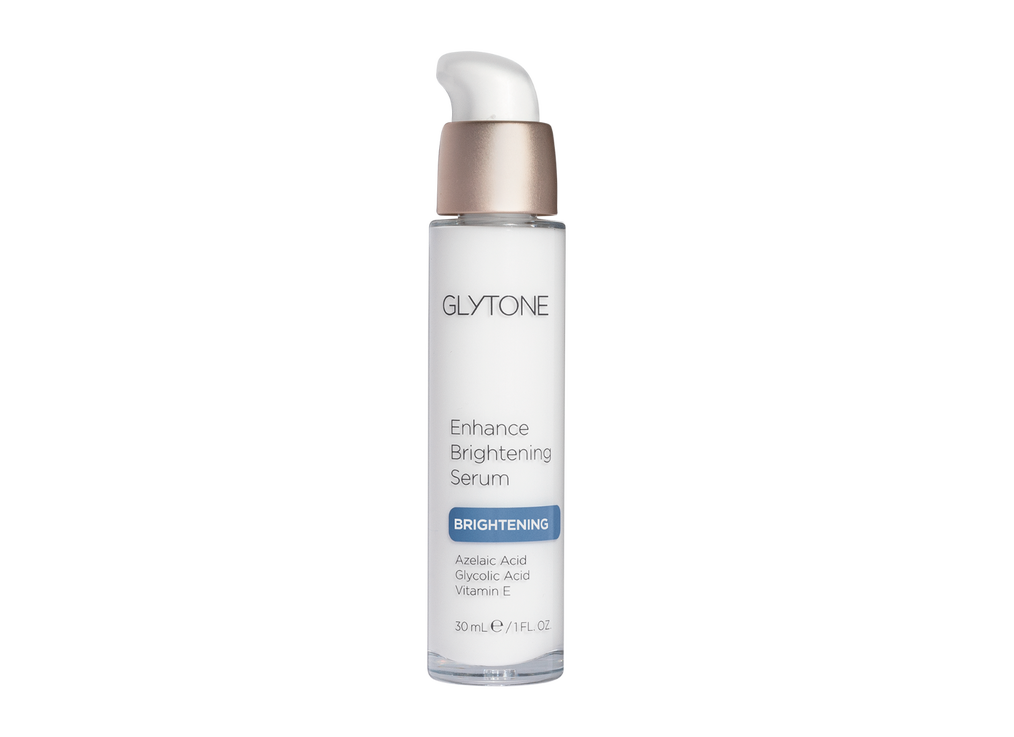

Glytone
Enhance Brightening Serum

Enhance Brightening Serum
Glytone
enhance-brightening-serum
Serum
9706801692965
Morning or Evening?
How often will you use this product?
Notes


Highlights
WHAT IS IT?
Pigment-reducing face serum
FEATURES
Pigment-reducing face serum that improve the appearance of dark spots for a bright and even skin tone.
BEST FOR
Hyperpigmented Skin
CHECKS
Paraben-free
Who Is It For?
AdultsWhat Does It Help With?
Dark Spots Uneven Skin Tone Sun DamageBudget
Mid-rangeHow To Use
Which routine should it be used in?
Instructions:
Key Information


What Glytone Says
Product Description:
An advanced, pigment-reducing face serum featuring a unique combination of ingredients to visibly improve the appearance of dark spots for a bright and even skin tone.
Ingredients Overview
Ingredients List
WATER (AQUA), CAPRYLIC/CAPRIC TRIGLYCERIDE, AZELAIC ACID, DICAPRYLYL ETHER, GLYCOLIC ACID, GLYCERIN, GLYCERYL STEARATE, CETEARYL ALCOHOL, SODIUM HYDROXIDE, DIMETHICONE, NYLON-12, BENZOIC ACID, BUTYLENE GLYCOL, CETEARETH-33, DISODIUM EDTA, FRAGRANCE (PARFUM), GLYCINE SOJA (SOYBEAN) OIL (GLYCINE SOJA OIL), HYDROGENATED LECITHIN, OLIGOPEPTIDE-68, SCLEROTIUM GUM, SODIUM HYALURONATE, SODIUM OLEATE, TOCOPHEROL, TOCOPHERYL ACETATE.
Key Ingredients
Azelaic Acid Complex, Glycolic Acid, Hyaluronic Acid, Vitamin E, Hyaluronic Acid
Ingredients Details
Water (aqua)
Common Name(s): Water (aqua) extract
DESCRIPTION
What It Does: Provides antioxidant protection, soothing anti-inflammatory effects, and skin-conditioning benefits through plant-derived polyphenols and phytochemicals.
Why It's Used: Plant extracts concentrate bioactive phytochemicals evolved for environmental protection — uv, microbial, and oxidative stressors — that translate to skin benefits.
How It Works: Polyphenols (flavonoids, phenolic acids) inhibit nf-κb-mediated inflammatory signaling, scavenge reactive oxygen species through electron donation, and chelate pro-oxidant metal ions to reduce oxidative skin damage.
Typically Found In: Serums,toners,moisturizers,masks,essences
TECHNICAL DETAILS
Primary Category: Botanical extracts
Secondary Functions: Antioxidant,anti-inflammatory
Application Areas:

Facial Skincare

Body Care
Hair Care
Beard Care
Color Cosmetics (Makeup)
Dietary/Oral Supplements
Typical Concentration Range: 0.1–10%
SOURCING & ETHICS
Vegan Status: Yes
Halal Status: Yes
Source Notes: Plant-derived extract; no animal components.
SKIN COMPATIBILITY
Irritancy Rating: 1899-12-31 00:00:00 -0800
Sensitivity Concerns: Low sensitization potential at recommended use concentrations.
Safe for Sensitive Skin: Yes
SAFETY & COMPATIBILITY
Safety Profile: Well-characterized cosmetic ingredient with established safety profile. generally non-irritating at typical use concentrations. suitable for leave-on and rinse-off cosmetics.
Works Well With: Niacinamide,hyaluronic acid,vitamin c,ceramides
Avoid Combining With: Strong oxidizing agents
SCIENTIFIC NOTE
Plant secondary metabolites (flavonoids, terpenes, phenolic acids) are biosynthesized as defense compounds against uv, herbivores, and pathogens. their anti-inflammatory activity typically derives from competitive inhibition of cox-2 and 5-lox enzymes (ic50 1–50 µm), while antioxidant activity involves single electron transfer (set) and hydrogen atom transfer (hat) mechanisms with structure-dependent rate constants.
Last Verified: 2025-01-15
Primary Sources: Cosing eu database; pcpc cosmetic ingredient safety reviews; phytochemical and ethnobotanical literature