

Natura Bissé
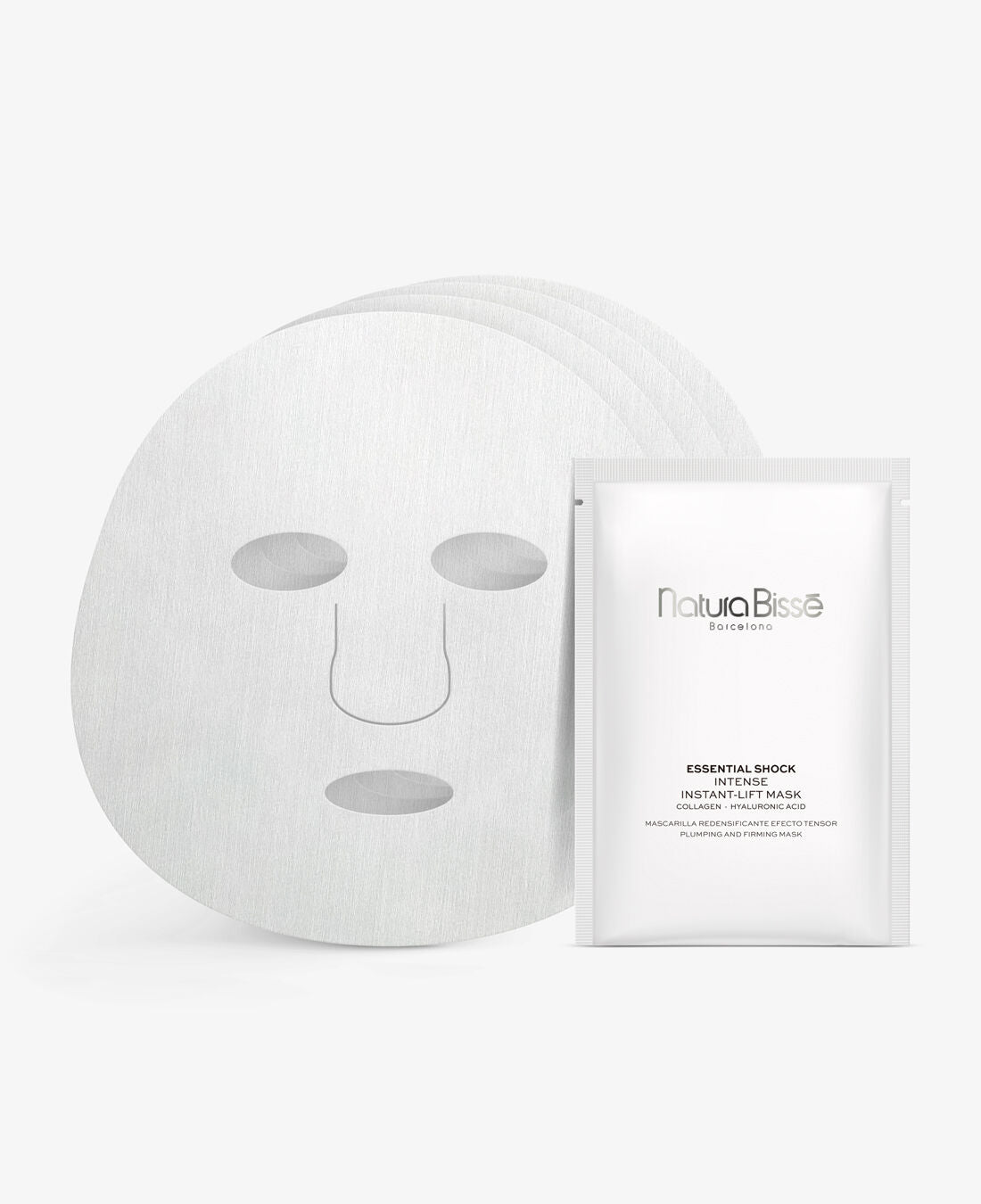
ESSENTIAL SHOCK INTENSE INSTANT-LIFT MASK

ESSENTIAL SHOCK INTENSE INSTANT-LIFT MASK
Natura Bissé
essential-shock-intense-instant-lift-mask
Face Mask
9643566596389
Morning or Evening?
How often will you use this product?
Notes


Highlights
WHAT IS IT?
Sheet mask with hyaluronic acid and collagen
FEATURES
Bamboo facial mask, instant lifting effect, hydrating and firming results
BEST FOR
Dry, Mature, Normal, Normal to Dry
CHECKS
Does not contain gluten, alcohol, oil
Who Is It For?
Not Specified Default Above 18 And Both Women And MenWhat Does It Help With?
Firmness Hydration Wrinkle ReductionBudget
PremiumHow To Use
Which routine should it be used in?
Instructions:
Key Information


What Natura Bissé Says
Product Description:
You only need 10 minutes to treat your skin to a much-needed dose of hyaluronic acid and collagen. We've infused a bamboo facial mask with high concentrations of this winning combination making its hydrating and firming results instantly noticeable and impressionable. Take this as your sign to carve out "me time" for you enjoy the benefits of an essential skin boost!
About the Brand:
Ingredients Overview
Ingredients List
Water (Aqua), Glycerin, Niacinamide, Hydrolyzed Collagen, Hydrolyzed Elastin, Hydrolyzed Sodium Hyaluronate, Panthenol, Sodium Acetylated Hyaluronate, Sodium Hyaluronate, Sodium Hyaluronate Crosspolymer, Soluble Collagen, Pentylene Glycol, PEG-40 Hydrogenated Castor Oil, PEG-6 Caprylic/Capric Glycerides, Citric Acid, Disodium EDTA, Sodium Hydroxide, Ethylhexylglycerin, Phenoxyethanol, Fragrance (Parfum), Geraniol, Hydroxycitronellal, Limonene.
Key Ingredients
Hyaluronic acid, Collagen, Elastin, Niacinamide
Ingredients Details
Glycerin
Common Name(s): Glycerol,glycerine,1,2,3-propanetriol
CAS Number: 56-81-5
DESCRIPTION
What It Does: Glycerin pulls water from the environment and deeper skin layers into the outer skin layer (epidermis), boosting moisture levels and keeping skin soft, smooth, and plump.
Why It's Used: It is used in virtually every moisturizer, serum, and cleanser because it is highly effective at hydrating skin, is well-tolerated by all skin types, and enhances the texture and spreadability of formulations.
How It Works: As a humectant, glycerin forms hydrogen bonds with water molecules, trapping them in the skin. it also reinforces the skin barrier by integrating into lipid structures between skin cells.
Typically Found In: Moisturizers,serums,cleansers,toners,sheet masks,sunscreens,body lotions,shampoos,conditioners
TECHNICAL DETAILS
Primary Category: Humectant
Secondary Functions: Skin barrier support,emollient,solvent
Application Areas:

Facial Skincare
Body Care
Hair Care
Beard Care

Color Cosmetics (Makeup)
Dietary/Oral Supplements
Typical Concentration Range: 1%–30% (typical: 3–10%)
SOURCING & ETHICS
Vegan Status: Conditional - feedstock declaration required
Halal Status: Unverified - feedstock declaration required (plant, animal and petrochemical routes all exist)
Source Notes: Derived from plant oils via hydrolysis or saponification; synthetic versions also available. palm-derived glycerin carries sustainability concerns. [audit 2026-07-29 rev2: origin-dependent: the same inci exists in plant, animal and petrochemical versions and the name does not discriminate. determination requires shariah-panel sign-off.]
SKIN COMPATIBILITY
Irritancy Rating: 1/5 – very low; non-irritating at all standard concentrations
Comedogenicity Rating: 0/5 – non-comedogenic
Sensitivity Concerns: Extremely rare allergic reactions; generally safe for all skin types including sensitive and baby skin
Safe for Sensitive Skin: Yes
SAFETY & COMPATIBILITY
Safety Profile: Widely recognized as safe. ewg hazard score: 1. no significant concerns for irritation, sensitization, or toxicity at typical concentrations (up to 50%).
Works Well With: Hyaluronic acid,ceramides,niacinamide,panthenol,urea,peptides,retinol,ahas/bhas
Avoid Combining With: No known incompatibilities at standard concentrations
SCIENTIFIC NOTE
Glycerin is an endogenous skin component found naturally in the stratum corneum. aquaporin-3 channels in keratinocytes facilitate glycerin transport, making it integral to natural skin hydration pathways.
Last Verified: 2026-03-12
Primary Sources: Cosing database,cir safety assessment,ewg skin deep,inci decoder
Hydrolyzed Collagen
Common Name(s): Hydrolyzed collagen,conditioning protein hydrolysate,amino acid film-former
CAS Number: N/a
DESCRIPTION
What It Does: Deposits conditioning protein film on skin and hair through electrostatic and h-bonding surface adsorption, provides amino acid humectancy, reduces friction and improves combability in hair, and temporarily smooths skin surface texture.
Why It's Used: Hydrolysed proteins provide dual-weight-dependent function: high-mw fractions (>5000 da) adsorb on surfaces for film-forming conditioning; low-mw fractions (<500 da) penetrate sc for deeper conditioning and metabolic amino acid delivery.
How It Works: Enzymatic hydrolysis yields a distribution of peptide fragments 100–10,000 da. positively charged (basic) amino acid residues (lysine, arginine) in the peptide fragments electrostatically bind the negatively charged hair cuticle surface; hydrophobic residues provide lipophilic anchoring. the resulting protein film reduces tewl and surface friction while providing amino acid nutrients.
Typically Found In: Hair conditioners,skin serums,protein formulas
TECHNICAL DETAILS
Primary Category: Functional ingredient – humectant
Secondary Functions: Tewl reduction,skin plumping
Application Areas:
Facial Skincare
Body Care
Hair Care
Beard Care
Color Cosmetics (Makeup)
Dietary/Oral Supplements
Typical Concentration Range: 0.1%–5%
SOURCING & ETHICS
Vegan Status: No - animal-derived
Halal Status: Conditional - halal slaughter certificate required (species declaration and slaughter method)
Source Notes: Synthetic or naturally derived. excellent aqueous solubility. [audit 2026-07-29 rev2: name declares rendered fat or animal tissue; halal status depends on species and slaughter, neither of which is in the record. determination requires shariah-panel sign-off.]
SKIN COMPATIBILITY
Irritancy Rating: 1/5 – very low
Comedogenicity Rating: 0/5 – non-comedogenic
Sensitivity Concerns: Non-irritating; suitable for all skin types.
Safe for Sensitive Skin: Yes
SAFETY & COMPATIBILITY
Safety Profile: Excellent safety profile. ewg score: 1.
Works Well With: Ceramides,emollients,occlusives,glycerin,hyaluronic acid
Avoid Combining With: No significant incompatibilities
SCIENTIFIC NOTE
Optimal hydrolysis degree for hair conditioning uses mw 1,000–5,000 da fragments — large enough for stable cuticle adsorption but small enough to penetrate damaged cuticle cracks and access internal cortex protein repair sites.
Last Verified: 2026-03-12
Primary Sources: Cosing database,hydrolyzed collagen protein conditioning review
Hydrolyzed Elastin
Common Name(s): Hydrolyzed elastin,cosmetic active,functional ingredient
CAS Number: N/a
DESCRIPTION
What It Does: Delivers characteristic cosmetic function at recommended use concentration.
Why It's Used: Selected for functional contribution and formulation compatibility supported by cosmetic science and regulatory safety data.
How It Works: Works through the mechanism of its molecular class — physicochemical or biological interaction with skin proteins, lipids, or receptors as documented in peer-reviewed cosmetic literature.
Typically Found In: Skin care formulations
TECHNICAL DETAILS
Primary Category: Active ingredient – cosmetic active
Secondary Functions: Skin conditioning
Application Areas:
Facial Skincare
Body Care
Hair Care
Beard Care
Color Cosmetics (Makeup)
Dietary/Oral Supplements
Typical Concentration Range: 0.1%–10%
SOURCING & ETHICS
Vegan Status: No - animal-derived
Halal Status: Conditional - halal slaughter certificate required (species declaration and slaughter method)
Source Notes: Commercially produced for cosmetic use. verify vegan/halal status with supplier. [audit 2026-07-29 rev2: name declares rendered fat or animal tissue; halal status depends on species and slaughter, neither of which is in the record. determination requires shariah-panel sign-off.]
SKIN COMPATIBILITY
Irritancy Rating: 1/5 – very low
Comedogenicity Rating: 0/5 – non-comedogenic
Sensitivity Concerns: Well-tolerated by most skin types.
Safe for Sensitive Skin: Yes
SAFETY & COMPATIBILITY
Safety Profile: Good safety profile at recommended concentrations. ewg score: 1–2.
Works Well With: Standard skincare actives
Avoid Combining With: No known significant incompatibilities
SCIENTIFIC NOTE
Hydrolyzed elastin has an established safety and efficacy profile within the cosmetic regulatory framework at standard use concentrations.
Last Verified: 2026-03-12
Primary Sources: Cosing database,hydrolyzed elastin technical literature
Hydrolyzed Sodium Hyaluronate
Common Name(s): Hyaluronic acid,gold standard humectant,multi-weight skin plumper
CAS Number: N/a
DESCRIPTION
What It Does: Hydrates skin at multiple depths depending on mw, provides visible plumping from dermal water retention, reduces tewl, and supports barrier integrity and fibroblast proliferation.
Why It's Used: The reference humectant in cosmetics — ha's 1,000× water binding capacity, skin-endogenous origin, and compatibility with all skin types make it the standard against which all humectants are benchmarked.
How It Works: High-mw ha (>1000 kda) films the surface reducing tewl; medium-mw (100–1000 kda) hydrates outer epidermis; low-mw (<50 kda) reaches dermis for plumping. each weight class binds water through carboxylate and amide group h-bonding across the (glcua-glcnac)ₙ disaccharide backbone.
Typically Found In: Hydrating serums,moisturisers,anti-aging
TECHNICAL DETAILS
Primary Category: Functional ingredient – humectant
Secondary Functions: Tewl reduction,skin plumping
Application Areas:
Facial Skincare
Body Care
Hair Care
Beard Care
Color Cosmetics (Makeup)
Dietary/Oral Supplements
Typical Concentration Range: 0.01%–2%
SOURCING & ETHICS
Vegan Status: Conditional - feedstock declaration required
Halal Status: Unverified - feedstock declaration required (plant, animal and petrochemical routes all exist)
Source Notes: Synthetic or naturally derived. excellent aqueous solubility. [audit 2026-07-29 rev2: origin-dependent: the same inci exists in plant, animal and petrochemical versions and the name does not discriminate. determination requires shariah-panel sign-off.]
SKIN COMPATIBILITY
Irritancy Rating: 1/5 – very low
Comedogenicity Rating: 0/5 – non-comedogenic
Sensitivity Concerns: Non-irritating; suitable for all skin types.
Safe for Sensitive Skin: Yes
SAFETY & COMPATIBILITY
Safety Profile: Excellent safety profile. ewg score: 1.
Works Well With: Ceramides,emollients,occlusives,glycerin,hyaluronic acid
Avoid Combining With: No significant incompatibilities
SCIENTIFIC NOTE
Ha production by streptococcus zooepidemicus fermentation provides high-purity, animal-free hyaluronic acid at molecular weights 50 kda–3 mda — batch selection determines the intended skin depth target.
Last Verified: 2026-03-12
Primary Sources: Cosing database,hyaluronic acid multi-weight humectant review