

Estee Lauder
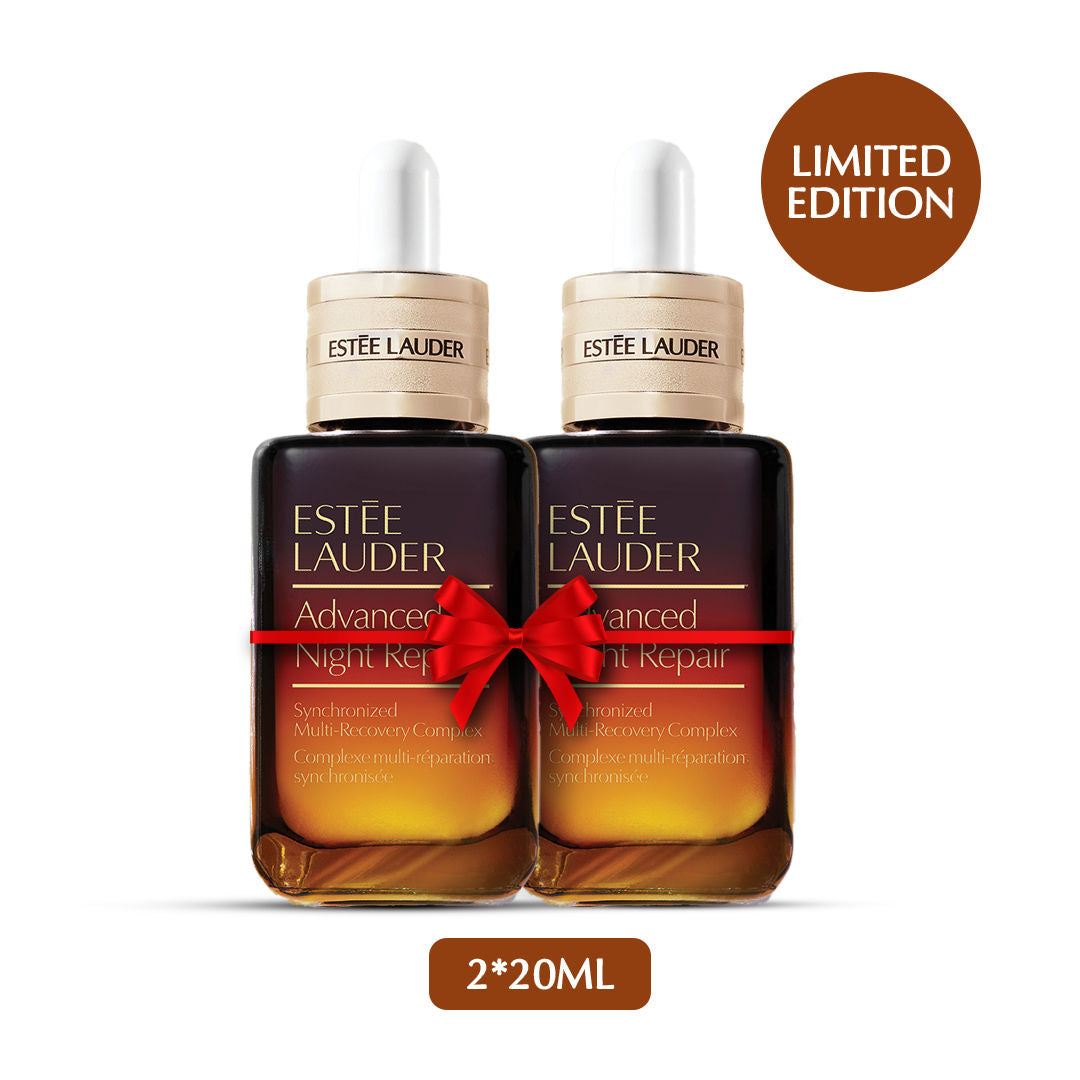
Estee Lauder Advanced Night Repair Serum Duo

Estee Lauder Advanced Night Repair Serum Duo
Estee Lauder
estee-lauder-advanced-night-repair-serum-duo
Serum
10084780802341
Morning or Evening?
How often will you use this product?
Notes


Highlights
WHAT IS IT?
Serum Duo with Tripeptide-32
FEATURES
Supercharged with 1-in-60 million Tripeptide-32; Helps repair 2X signs of ageing by optimizing skin’s natural rhythm; Deep overnight repair; 91% said skin looks more rested; 90% saw their skin looks brighter with renewed clarity; 89% said elasticity has improved
BEST FOR
sensitive
CHECKS
Who Is It For?
What Does It Help With?
Signs Of Ageing Skin Repair Skin Brightness Skin ElasticityBudget
Professional (over $150)How To Use
Which routine should it be used in?
Instructions:
Key Information


What Estee Lauder Says
Product Description:
Estee Lauder Advanced Night Repair Synchronized Multi-Recovery Complex Serum With Tripeptide-32 20ml: (MRP: 4500.00/-) | Quantity: 2 | Expiry Date: 15 July 2027
About the Brand:
Ingredients Overview
Ingredients List
Water\Aqua\Eau, Bifida Ferment Lysate, Peg-8, Propanediol, Bis-Peg-18 Methyl Ether Dimethyl Silane, Methyl Gluceth-20, Glycereth-26, Peg-75, Butylene Glycol, Adansonia Digitata Seed Extract, Tripeptide-32, Sodium Hyaluronate, Yeast Extract\Faex\Extrait De Levure, Lactobacillus Ferment, Cola Acuminata (Kola) Seed Extract, Anthemis Nobilis (Chamomile) Flower Extract, Hydrolyzed Algin, Pantethine, Caffeine, Lecithin, Sodium Rna, Bisabolol, Squalane, Glycerin, Oleth-3 Phosphate, Caprylyl Glycol, Oleth-3, Oleth-5, Choleth-24, Hydrogenated Lecithin, Jojoba Wax Peg-120 Esters, Ceteth-24, Tocopheryl Acetate, Carbomer, Triethanolamine, Tetrasodium Edta, Bht, Xanthan Gum, Potassium Sorbate, Disodium Edta, Phenoxyethanol, Red 4 (Ci 14700), Yellow 5 (Ci 19140)
Key Ingredients
Tripeptide-32
Ingredients Details
Adansonia Digitata Seed Extract
Common Name(s): Adansonia digitata seed extract,botanical extract,phytochemical active
CAS Number: N/a
DESCRIPTION
What It Does: Provides antioxidant protection from reactive oxygen species, reduces inflammatory cytokine production in skin, and conditions skin surface through the plant's secondary metabolite complex.
Why It's Used: Chosen for its natural origin narrative, traditional use heritage, and multi-functional phytochemical profile that supports several concurrent skin care claims from one ingredient.
How It Works: Polyphenols, terpenoids, and alkaloids in the extract scavenge ros via hydrogen atom transfer, inhibit nf-kb or cox-2 inflammatory pathways, and interact with skin surface proteins for conditioning.
Typically Found In: Botanical skin care,natural products
TECHNICAL DETAILS
Primary Category: Active ingredient – antioxidant
Secondary Functions: Free radical scavenging,anti-aging
Application Areas:

Facial Skincare
Body Care

Hair Care
Beard Care
Color Cosmetics (Makeup)
Dietary/Oral Supplements
Typical Concentration Range: 0.1%–10%
SOURCING & ETHICS
Vegan Status: Yes
Halal Status: Yes
Source Notes: Plant-derived extract or synthetic.
SKIN COMPATIBILITY
Irritancy Rating: 1/5 – very low
Comedogenicity Rating: 0/5 – non-comedogenic
Sensitivity Concerns: Non-irritating; well-tolerated.
Safe for Sensitive Skin: Yes
SAFETY & COMPATIBILITY
Safety Profile: Excellent safety profile. ewg score: 1.
Works Well With: Vitamin c,vitamin e,ferulic acid,spf,other antioxidants
Avoid Combining With: No significant incompatibilities
SCIENTIFIC NOTE
Plant secondary metabolites evolved as uv photoprotectants and antimicrobial agents — mechanisms that directly translate to cosmetic antioxidant and anti-inflammatory activity in human skin.
Last Verified: 2026-03-12
Primary Sources: Cosing database,adansonia digitata seed extract botanical review
Bht
Common Name(s): Bht
DESCRIPTION
What It Does: Delivers targeted skin-conditioning or bioactive benefits through a specific mechanism of action suited to the formulation's intended purpose.
Why It's Used: Specialty actives address specific skin concerns through targeted molecular mechanisms, providing efficacy beyond what base formulation ingredients alone can achieve.
How It Works: The bioactive compound interacts with specific molecular targets in skin cells or the extracellular matrix — enzymes, receptors, structural proteins, or signaling molecules — triggering beneficial biological responses.
Typically Found In: Serums,treatments,moisturizers,specialty products
TECHNICAL DETAILS
Primary Category: Specialty actives
Secondary Functions: Skin-conditioning,anti-aging
Application Areas:
Facial Skincare
Body Care
Hair Care
Beard Care
Color Cosmetics (Makeup)
Dietary/Oral Supplements
Typical Concentration Range: 0.01–5%
SOURCING & ETHICS
Vegan Status: Conditional - supplier confirmation required
Halal Status: Unverified - supplier confirmation required
Source Notes: Specialty active ingredient; check individual sourcing for vegan status. [audit 2026-07-29 rev2: the record's own source_notes does not assert a non-animal origin, or instructs the reader to verify with the supplier; "yes" asserts knowledge the record does not hold. determination requires shariah-panel sign-off.]
SKIN COMPATIBILITY
Irritancy Rating: 1
Comedogenicity Rating: 0
Sensitivity Concerns: Low sensitization potential at recommended use concentrations.
Safe for Sensitive Skin: Yes
SAFETY & COMPATIBILITY
Safety Profile: Well-characterized cosmetic ingredient with established safety profile. generally non-irritating at typical use concentrations. suitable for leave-on and rinse-off cosmetics.
Works Well With: Niacinamide,hyaluronic acid,vitamin c,peptides
Avoid Combining With: Incompatible with oxidizing agents; check ph stability
SCIENTIFIC NOTE
Specialty actives typically work through enzyme inhibition (e.g., tyrosinase inhibition for brightening, mmp inhibition for anti-aging), receptor activation (e.g., retinoid receptors, ppar-γ for barrier genes), or transcription factor modulation (e.g., nrf2 for antioxidant gene upregulation). structure-activity relationships determine potency and selectivity.
Last Verified:
Bifida Ferment Lysate
Common Name(s): Bifida ferment lysate,postbiotic ferment,bioactive metabolite complex
CAS Number: N/a
DESCRIPTION
What It Does: Supports skin microbiome balance, delivers anti-inflammatory postbiotic metabolites, and provides biotransformed botanical actives with 10–50× improved sc penetration versus native glycoside forms.
Why It's Used: Preferred over live probiotic formats for conventional cosmetic stability and preservation compatibility, while delivering equivalent microbiome-supportive postbiotic metabolites.
How It Works: Multi-organism fermentation produces organic acids (acidifying skin surface ph to 4.5–5.5), bacteriocins, and β-glucosidases that deglycosylate botanical polyphenols to their more penetrant aglycone forms. tlr2-active cell wall fragments train skin immune cells toward anti-inflammatory tolerance.
Typically Found In: Microbiome skin care,anti-inflammatory
TECHNICAL DETAILS
Primary Category: Active ingredient – skin microbiome support
Secondary Functions: Microbiome balance,prebiotic effect
Application Areas:
Facial Skincare
Body Care
Hair Care
Beard Care
Color Cosmetics (Makeup)
Dietary/Oral Supplements
Typical Concentration Range: 0.5%–15%
SOURCING & ETHICS
Vegan Status: Yes
Halal Status: Yes
Source Notes: Fermentation-derived or plant-extracted.
SKIN COMPATIBILITY
Irritancy Rating: 1/5 – very low
Comedogenicity Rating: 0/5 – non-comedogenic
Sensitivity Concerns: Non-irritating; beneficial for sensitive skin.
Safe for Sensitive Skin: Yes
SAFETY & COMPATIBILITY
Safety Profile: Excellent safety profile. ewg score: 1.
Works Well With: Ceramides,niacinamide,soothing actives
Avoid Combining With: No significant incompatibilities
SCIENTIFIC NOTE
Multi-organism postbiotic biotransformation selectively generates free aglycone polyphenols with 30–50 da lower molecular weight and higher logp for significantly improved stratum corneum penetration.
Last Verified: 2026-03-12
Primary Sources: Cosing database,multi-organism ferment postbiotic review
Bis-peg-18 Methyl Ether Dimethyl Silane
Common Name(s): Bis-peg-18 methyl ether dimethyl silane,cosmetic active,functional ingredient
CAS Number: N/a
DESCRIPTION
What It Does: Delivers characteristic cosmetic function at recommended use concentration.
Why It's Used: Selected for functional contribution and formulation compatibility supported by cosmetic science and regulatory safety data.
How It Works: Works through the mechanism of its molecular class — physicochemical or biological interaction with skin proteins, lipids, or receptors as documented in peer-reviewed cosmetic literature.
Typically Found In: Skin care formulations
TECHNICAL DETAILS
Primary Category: Active ingredient – cosmetic active
Secondary Functions: Skin conditioning
Application Areas:
Facial Skincare
Body Care
Hair Care
Beard Care
Color Cosmetics (Makeup)
Dietary/Oral Supplements
Typical Concentration Range: 0.1%–10%
SOURCING & ETHICS
Vegan Status: Conditional - supplier confirmation required
Halal Status: Unverified - supplier confirmation required
Source Notes: Commercially produced for cosmetic use. verify vegan/halal status with supplier. [audit 2026-07-29 rev2: the record's own source_notes does not assert a non-animal origin, or instructs the reader to verify with the supplier; "yes" asserts knowledge the record does not hold. determination requires shariah-panel sign-off.]
SKIN COMPATIBILITY
Irritancy Rating: 1/5 – very low
Comedogenicity Rating: 0/5 – non-comedogenic
Sensitivity Concerns: Well-tolerated by most skin types.
Safe for Sensitive Skin: Yes
SAFETY & COMPATIBILITY
Safety Profile: Good safety profile at recommended concentrations. ewg score: 1–2.
Works Well With: Standard skincare actives
Avoid Combining With: No known significant incompatibilities
SCIENTIFIC NOTE
Bis-peg-18 methyl ether dimethyl silane has an established safety and efficacy profile within the cosmetic regulatory framework at standard use concentrations.
Last Verified: 2026-03-12
Primary Sources: Cosing database,bis-peg-18 methyl ether dimethyl si technical literature