

Estee Lauder Companies
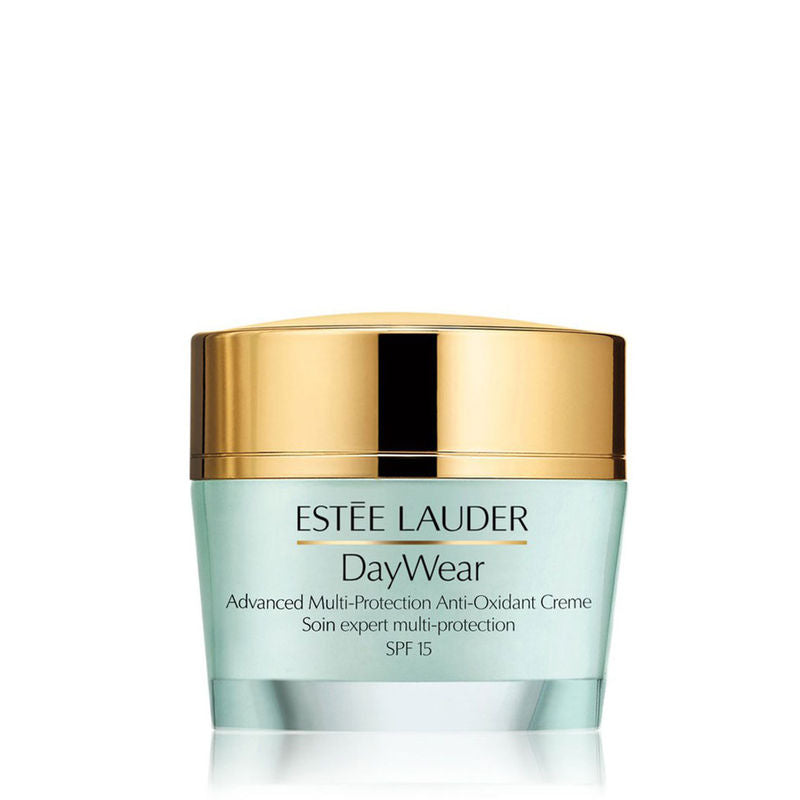
Estee Lauder DayWear Multi Protection Anti Oxidant Creme SPF15 - Normal Combination Skin

Estee Lauder DayWear Multi Protection Anti Oxidant Creme SPF15 - Normal Combination Skin
Estee Lauder Companies
estee-lauder-daywear-multi-protection-anti-oxidant-creme-spf15-normal-combination-skin
Moisturize
10084727554341
Morning or Evening?
How often will you use this product?
Notes


Highlights
WHAT IS IT?
Day cream, Anti oxidant
FEATURES
Defends against signs of premature aging, Diminishes appearance of aging signs, Contains effective anti oxidants
BEST FOR
combination
CHECKS
Who Is It For?
Adults UnisexWhat Does It Help With?
Signs Of Premature AgingBudget
Premium ($76-$150)How To Use
Which routine should it be used in?
Instructions:
Key Information


What Estee Lauder Companies Says
Product Description:
This high performance moisturizer defends against signs of premature aging and diminishes their appearance - with the most effective anti oxidant power ever. Benefits - Helps prevent and diminish first signs of aging.
About the Brand:
Ingredients Overview
Ingredients List
Water\Aqua\Eau, Dimethicone, Butyloctyl Salicylate, Butylene Glycol, Polyester-8, Cetyl Ricinoleate, Steareth-21, Steareth-2, Di-C12-15 Alkyl Fumarate, Caprylic/Capric/Myristic/Stearic Triglyceride, Polysilicone-11, Psidium Guajava (Guava) Fruit Extract, Gentiana Lutea (Gentian) Root Extract, Polygonum Cuspidatum Root Extract, Stearyl Alcohol, Hordeum Vulgare (Barley) Extract\Extrait D'orge, Laminaria Ochroleuca Extract, Rosmarinus Officinalis (Rosemary) Leaf Extract, Triticum Vulgare (Wheat) Germ Extract, Artemia Extract, Fumaria Officinalis Flower/Leaf/Stem Extract, Caffeine, Pentylene Glycol, Citrus Medica Limonum (Lemon) Fruit Extract, Hydrolyzed Rice Extract, Vitis Vinifera (Grape) Seed Extract, Hydrolyzed Rice Bran Extract, Lauryl PEG-9 Polydimethylsiloxyethyl Dimethicone, Thermus Thermophillus Ferment, Behenyl Alcohol, Acrylic Acid/VP Crosspolymer, Triacontanyl PVP, Glycerin, C12-15 Alkyl Benzoate, Linoleic Acid, Cholesterol, Squalane, Sodium PCA, 1,2-Hexanediol, Urea, Caprylic/Capric Triglyceride, Dipropylene Glycol Dibenzoate, Tocopheryl Acetate, Acrylamide/Sodium Acryloyldimethyltaurate Copolymer, Tetrahexyldecyl Ascorbate, Sodium Hyaluronate, Ergothioneine, Isohexadecane, PPG-15 Stearyl Ether Benzoate, Glycyrrhetinic Acid, Trehalose, Polyquaternium-51, Polysorbate 80, Lecithin, Hydrogenated Lecithin, Fumaric Acid, Palmitoyl Hydroxypropyltrimonium Amylopectin/Glycerin Crosspolymer, Caprylyl Glycol, Cyclodextrin, Sodium Hydroxide, Nordihydroguaiaretic Acid, Sodium Chloride, Ascorbyl Tocopheryl Maleate, Fragrance (Parfum), Citric Acid, Ethylbisiminomethylguaiacol Manganese Chloride, Pentaerythrityl Tetra-Di-T-Butyl Hydroxyhydrocinnamate, Disodium EDTA, BHT, Sodium Dehydroacetate, Phenoxyethanol, Blue 1 (CI 42090), Yellow 5 (CI 19140), Chromium Hydroxide Green (CI 77289)
Key Ingredients
Ingredients Details
1-2-hexanediol
Common Name(s): 1-2-hexanediol,cosmetic active,functional ingredient
CAS Number: N/a
DESCRIPTION
What It Does: Delivers characteristic cosmetic function at recommended use concentration.
Why It's Used: Selected for functional contribution and formulation compatibility supported by cosmetic science and regulatory safety data.
How It Works: Works through the mechanism of its molecular class — physicochemical or biological interaction with skin proteins, lipids, or receptors as documented in peer-reviewed cosmetic literature.
Typically Found In: Skin care formulations
TECHNICAL DETAILS
Primary Category: Active ingredient – cosmetic active
Secondary Functions: Skin conditioning
Application Areas:

Facial Skincare

Body Care
Hair Care
Beard Care
Color Cosmetics (Makeup)
Dietary/Oral Supplements
Typical Concentration Range: 0.1%–10%
SOURCING & ETHICS
Vegan Status: Conditional
Halal Status: Yes
Source Notes: Commercially produced for cosmetic use. verify vegan/halal status with supplier.
SKIN COMPATIBILITY
Irritancy Rating: 1/5 – very low
Comedogenicity Rating: 0/5 – non-comedogenic
Sensitivity Concerns: Well-tolerated by most skin types.
Safe for Sensitive Skin: Yes
SAFETY & COMPATIBILITY
Safety Profile: Good safety profile at recommended concentrations. ewg score: 1–2.
Works Well With: Standard skincare actives
Avoid Combining With: No known significant incompatibilities
SCIENTIFIC NOTE
1-2-hexanediol has an established safety and efficacy profile within the cosmetic regulatory framework at standard use concentrations.
Last Verified: Cosing database,1-2-hexanediol technical literature
Primary Sources: 2026-03-12
Acrylamide/sodium Acryloyldimethyltaurate Copolymer
Common Name(s): Acrylamide/sodium acryloyldimethyltaurate copolymer
DESCRIPTION
What It Does: Provides antioxidant protection, soothing anti-inflammatory effects, and skin-conditioning benefits through plant-derived polyphenols and phytochemicals.
Why It's Used: Plant extracts concentrate bioactive phytochemicals evolved for environmental protection — uv, microbial, and oxidative stressors — that translate to skin benefits.
How It Works: Polyphenols (flavonoids, phenolic acids) inhibit nf-κb-mediated inflammatory signaling, scavenge reactive oxygen species through electron donation, and chelate pro-oxidant metal ions to reduce oxidative skin damage.
Typically Found In: Lotions,creams,serums,masks
TECHNICAL DETAILS
Primary Category: Minerals
Secondary Functions: Skin-conditioning
Application Areas:
Facial Skincare
Body Care
Hair Care
Beard Care
Color Cosmetics (Makeup)
Dietary/Oral Supplements
Typical Concentration Range: 0.1–10%
SOURCING & ETHICS
Vegan Status: Yes
Halal Status: Yes
Source Notes: Mineral-derived ingredient; no biological origin.
SKIN COMPATIBILITY
Irritancy Rating: 1
Comedogenicity Rating: 0
Sensitivity Concerns: Low sensitization potential at recommended use concentrations.
Safe for Sensitive Skin: Yes
SAFETY & COMPATIBILITY
Safety Profile: Well-characterized cosmetic ingredient with established safety profile. generally non-irritating at typical use concentrations. suitable for leave-on and rinse-off cosmetics.
Works Well With: Plant extracts,peptides,vitamins
Avoid Combining With: Strong chelating agents (reduce mineral availability)
SCIENTIFIC NOTE
Plant secondary metabolites (flavonoids, terpenes, phenolic acids) are biosynthesized as defense compounds against uv, herbivores, and pathogens. their anti-inflammatory activity typically derives from competitive inhibition of cox-2 and 5-lox enzymes (ic50 1–50 µm), while antioxidant activity involves single electron transfer (set) and hydrogen atom transfer (hat) mechanisms with structure-dependent rate constants.
Last Verified: Cosing eu database; pcpc cosmetic ingredient safety reviews; ingredient-specific safety and efficacy literature
Primary Sources: 2025-01-15
Acrylic Acid/vp Crosspolymer
Common Name(s): Acrylic acid/vp crosspolymer,acrylates/vp crosspolymer,acrylic-vinylpyrrolidone polymer
DESCRIPTION
What It Does: Thickens water-based products and creates a film on skin or hair to improve hold and texture.
Why It's Used: Used as a thickener and binder in hair styling products and skin care where both film-forming and viscosity control are required in clear or translucent formulas.
How It Works: Crosslinked acrylic acid backbone (anionic polyelectrolyte) swells in water upon neutralization; vp units increase surface affinity to hair/skin and improve film flexibility.
Typically Found In: Hair gels,styling products,clear serums,setting sprays,skin primers
TECHNICAL DETAILS
Primary Category: Functional ingredient – viscosity controlling
Secondary Functions: Film forming,binding,skin conditioning
Application Areas:
Facial Skincare
Body Care
Hair Care
Beard Care
Color Cosmetics (Makeup)
Dietary/Oral Supplements
Typical Concentration Range: 0.1%–5%
SOURCING & ETHICS
Vegan Status: Yes
Halal Status: Yes
Source Notes: Synthetic polymer; acrylate/vinylpyrrolidone copolymer.
SKIN COMPATIBILITY
Irritancy Rating: 1/5 – very low
Comedogenicity Rating: 0/5 – non-comedogenic
Sensitivity Concerns: Generally non-irritating; rare contact sensitization possible at high concentrations. acrylic acid residual monomer levels regulated in eu (max 0.1%).
Safe for Sensitive Skin: Yes
SAFETY & COMPATIBILITY
Safety Profile: Good safety profile. ewg score: 1–2.
Works Well With: Neutralizing agents (naoh/tea),humectants,styling polymers,preservatives
Avoid Combining With: Do not use without neutralization (acidic ph causes poor swelling)
SCIENTIFIC NOTE
Acrylic acid/vp crosspolymers combine the anionic charge of polyacrylic acid with the hydrophilic, substantive properties of pvp; crosslinking creates a gel-network without dissolution; hlb and ph of system affects swelling efficiency.
Last Verified: Cosing database,inci dictionary,supplier technical data sheets
Primary Sources: 2026-03-27
Artemia Extract
Common Name(s): Artemia extract,botanical extract,phytochemical active
CAS Number: N/a
DESCRIPTION
What It Does: Provides antioxidant protection, anti-inflammatory activity, and skin conditioning from polyphenols, terpenoids, and phytochemicals in the extract.
Why It's Used: Natural plant extracts provide multi-functional phytochemical profiles supporting concurrent skin care claims from one ingredient with authentic botanical heritage.
How It Works: Polyphenols scavenge ros via h• donation; terpenoids inhibit nf-kb or cox inflammatory pathways; vitamins and minerals provide cofactor skin nutrition.
Typically Found In: Botanical skin care,natural products
TECHNICAL DETAILS
Primary Category: Active ingredient – antioxidant
Secondary Functions: Free radical scavenging,anti-aging
Application Areas:
Facial Skincare
Body Care
Hair Care
Beard Care
Color Cosmetics (Makeup)
Dietary/Oral Supplements
Typical Concentration Range: 0.1%–30%
SOURCING & ETHICS
Vegan Status: Conditional
Halal Status: Conditional
Source Notes: Plant-derived extract or synthetic.
SKIN COMPATIBILITY
Irritancy Rating: 1/5 – very low
Comedogenicity Rating: 0/5 – non-comedogenic
Sensitivity Concerns: Non-irritating; well-tolerated.
Safe for Sensitive Skin: Yes
SAFETY & COMPATIBILITY
Safety Profile: Excellent safety profile. ewg score: 1.
Works Well With: Vitamin c,vitamin e,ferulic acid,spf,other antioxidants
Avoid Combining With: No significant incompatibilities
SCIENTIFIC NOTE
Plant secondary metabolites evolved for uv photoprotection and pathogen defence — mechanisms directly applicable to cosmetic antioxidant and anti-inflammatory activity in human skin.
Last Verified: Cosing database,artemia extract botanical review
Primary Sources: 2026-03-12
