

EUCERIN
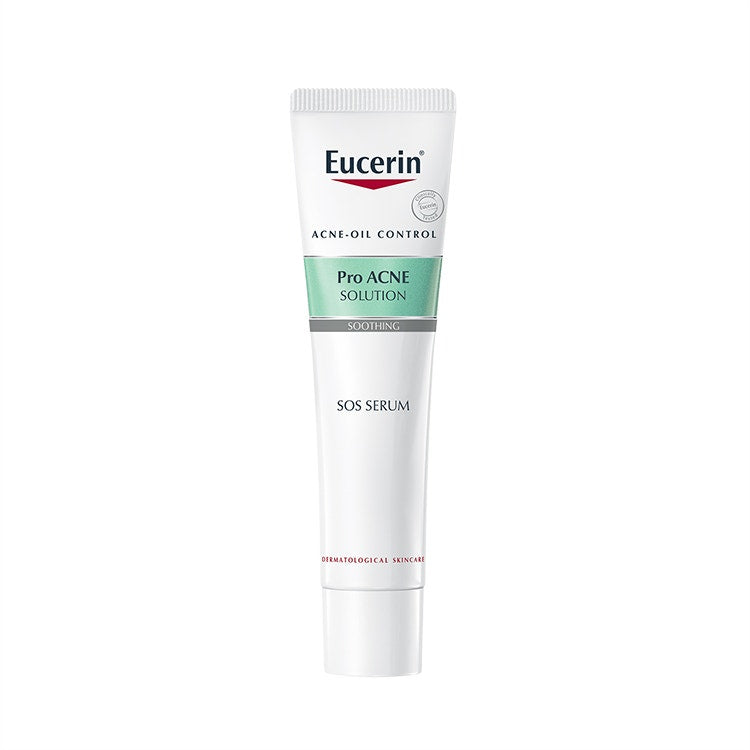
Eucerin Proacne Solution Sos Serum 40ml

Eucerin Proacne Solution Sos Serum 40ml
EUCERIN
eucerin-proacne-solution-sos-serum-40ml
Serum
10084892541221
Morning or Evening?
How often will you use this product?
Notes


Highlights
WHAT IS IT?
Acne solution serum with multiple acid compounds and soothing agents, 22 ingredients
FEATURES
Reduces comedones acne and oil control, Prevents re-appearance of acne with AHA, BHA, PHA, Soothes skin with Panthenol, Clinically and dermatologically proven
BEST FOR
oily
CHECKS
Non-acnegenic, Does not clog pores
Who Is It For?
Children Over 12 Years All GendersWhat Does It Help With?
Acne Comedones Excess Sebum Skin SoothingBudget
Mid-range ($30-$75)How To Use
Which routine should it be used in?
Instructions:
Key Information


What EUCERIN Says
Product Description:
Eucerin Pro ACNE Solution SOS Serum.
This product is suitable for acne prone skin and has a triple effect.
1. REDUCE: LICO A + DECOL + 2X CARNITINE effectively helps to reduce comedones acne & oil control.
2. HELP PREVENT : 3X Acid compound AHA, BHA &PHA fight comedones & helps prevent re-appearance
3. SOOTHE: Panthenol helps soothes the skin while nourishing skin without drying out,
Clinically and Dermatological studies proven: Very good skin tolerability and efficacy on acne prone skin.
Non-acnegenice
Non- comedogenic
Does not clog the pores
About the Brand:
Ingredients Overview
Ingredients List
Aqua,Caprylic-Capric-Triglyceride,Methylpropanediol,Butylene-Glycol,Panthenol,Lactic-Acid,Cetearyl-Alcohol,Gluconolactone,Glyceryl-Stearate-SE,Carnitine,Salicylic-Acid,Octyldodecanol,Pentaerythrityl-Tetraisostearate,Pentylene-Glycol,Sodium-Hydroxide,Hydroxypropyl-Starch-Phosphate,Potassium-Lactate,Trehalose,Dimethicone,Stearic-Acid,Decylene-Glycol,Xanthan-Gum,Hydroxyacetophenone,Sodium-Stearoyl-Glutamate,Sclerotium-Gum,Glycyrrhiza-Inflata-Root-Extract,Trisodium-Ethylenediamine-Disuccinate,Citric-Acid
Key Ingredients
Lico A, Decol, Carnitine, AHA, BHA, PHA, Panthenol
Ingredients Details
Carnitine
Common Name(s): L-carnitine,beta-hydroxy-gamma-trimethylaminobutyric acid
CAS Number: 541-15-1
DESCRIPTION
What It Does: Supports cellular energy production via fatty acid transport into mitochondria; regulates sebum fatty acid metabolism.
Why It's Used: Used in anti-aging and oily skin formulations for cellular energy support and sebum fatty acid regulation.
How It Works: Transfers long-chain acyl groups from cytosol to mitochondria via carnitine acyltransferase for beta-oxidation and atp production. in sebaceous glands, carnitine metabolism influences the fatty acid composition of sebum.
Typically Found In: Anti-aging serums,oily skin products,energy formulations
TECHNICAL DETAILS
Primary Category: Active ingredient – fatty acid transport amino acid
Secondary Functions: Cellular energy,sebum regulation
Application Areas:

Facial Skincare

Body Care
Hair Care
Beard Care
Color Cosmetics (Makeup)
Dietary/Oral Supplements
Typical Concentration Range: 0.5%–3%
SOURCING & ETHICS
Vegan Status: Conditional - feedstock declaration required
Halal Status: Unverified - feedstock declaration required (plant, animal and petrochemical routes all exist)
Source Notes: Fermentation-derived or synthetic. natural skin component. [audit 2026-07-29 rev2: origin-dependent: the same inci exists in plant, animal and petrochemical versions and the name does not discriminate. determination requires shariah-panel sign-off.]
SKIN COMPATIBILITY
Irritancy Rating: 1/5 – very low
Comedogenicity Rating: 0/5 – non-comedogenic
Sensitivity Concerns: Non-irritating; endogenous skin molecule.
Safe for Sensitive Skin: Yes
SAFETY & COMPATIBILITY
Safety Profile: Excellent safety profile. natural skin nmf component. ewg score: 1.
Works Well With: Hyaluronic acid,ceramides,peptides,other amino acids
Avoid Combining With: No significant incompatibilities
SCIENTIFIC NOTE
Carnitine-deficient conditions show marked sebaceous gland hyperactivity and altered sebum lipid profiles. this connection suggests topical carnitine may help normalize sebum composition in oily and acne-prone skin where sebaceous gland metabolic dysfunction contributes to comedone formation.
Last Verified:
Dimethicone
Common Name(s): Pdms,polydimethylsiloxane,silicone fluid
CAS Number: 9006-65-9
DESCRIPTION
What It Does: Provides silicone-characteristic silky feel and skin protection with adjustable viscosity.
Why It's Used: The benchmark cosmetic silicone – sets the gold standard for silky application feel, spreadability, and skin protection in virtually all skin care categories.
How It Works: Polydimethylsiloxane chain flexibility provides extremely low surface tension and high spreadability. inert si-o backbone provides chemical stability and excellent skin tolerance. occlusive film formation reduces tewl. higher viscosity grades provide more intense conditioning.
Typically Found In: Moisturizers,foundations,primers,sunscreens – nearly universal
TECHNICAL DETAILS
Primary Category: Functional ingredient – polydimethylsiloxane
Secondary Functions: Barrier sealing,softening
Application Areas:
Facial Skincare
Body Care
Hair Care
Beard Care
Color Cosmetics (Makeup)
Dietary/Oral Supplements
Typical Concentration Range: 0.1%–30%
SOURCING & ETHICS
Vegan Status: Conditional - supplier confirmation required
Halal Status: Unverified - supplier confirmation required
Source Notes: Plant-derived, synthetic or animal-derived. verify source. [audit 2026-07-29 rev2: the record's own source_notes does not assert a non-animal origin, or instructs the reader to verify with the supplier; "yes" asserts knowledge the record does not hold. determination requires shariah-panel sign-off.]
SKIN COMPATIBILITY
Irritancy Rating: 1/5 – very low
Comedogenicity Rating: 1/5 – low; formulation-dependent
Sensitivity Concerns: Non-irritating.
Safe for Sensitive Skin: Yes
SAFETY & COMPATIBILITY
Safety Profile: Excellent safety profile. ewg score: 1.
Works Well With: Humectants,ceramides,actives as carrier
Avoid Combining With: No significant incompatibilities
SCIENTIFIC NOTE
Dimethicone's exceptional silky feel arises from its very low intermolecular attractive forces (weak van der waals forces due to non-polar methyl groups) that allow silicone chains to slide freely over skin. the coefficient of kinetic friction for pdms against skin (~0.04) is among the lowest of any cosmetic material – explaining why even small amounts transform product feel.
Last Verified: 2026-03-12
Primary Sources: Cosing database,cir safety assessment
Gluconolactone
Common Name(s): D-gluconolactone,delta-gluconolactone
CAS Number: 90-80-2
DESCRIPTION
What It Does: Provides the gentlest chemical exfoliation with simultaneous antioxidant, moisture retention, and barrier support.
Why It's Used: Preferred exfoliant for rosacea, eczema, sensitive skin, and post-procedure recovery where standard ahas cause unacceptable irritation.
How It Works: Hydrolyzes slowly on skin surface to gluconic acid providing gentle exfoliation. multiple hydroxyl groups enable water binding (humectant) and metal chelation (antioxidant).
Typically Found In: Sensitive skin exfoliants,rosacea treatments,eczema care,post-procedure recovery
TECHNICAL DETAILS
Primary Category: Active ingredient – polyhydroxy acid (pha)
Secondary Functions: Gentle exfoliation,antioxidant,humectant
Application Areas:
Facial Skincare
Body Care
Hair Care
Beard Care
Color Cosmetics (Makeup)
Dietary/Oral Supplements
Typical Concentration Range: 5%–15%
SOURCING & ETHICS
Vegan Status: Conditional - supplier confirmation required
Halal Status: Unverified - supplier confirmation required
Source Notes: Fermentation-derived from glucose or synthetic. among the safest chemical exfoliants available. [audit 2026-07-29 rev2: status downgraded on audit. determination requires shariah-panel sign-off.]
SKIN COMPATIBILITY
Irritancy Rating: 1/5 – very low
Comedogenicity Rating: 0/5 – non-comedogenic
Sensitivity Concerns: No photosensitization; no stinging; suitable for very sensitive skin.
Safe for Sensitive Skin: Yes – ideal for sensitive, reactive, rosacea, and eczema-prone skin; no photosensitization
SAFETY & COMPATIBILITY
Safety Profile: Exceptional safety profile. no photosensitization. ewg score: 1.
Works Well With: Ceramides,niacinamide,hyaluronic acid,soothing actives
Avoid Combining With: No significant incompatibilities
SCIENTIFIC NOTE
Phas have molecular weights 2–3× larger than ahas, limiting penetration to superficial layers. combined humectant and antioxidant properties make them uniquely well-tolerated while providing meaningful exfoliation.
Last Verified: 2026-03-12
Primary Sources: Cosing database,green & yu (2003) pha review,cir safety assessment
Hydroxyacetophenone
Common Name(s): Para-hydroxyacetophenone,piceol,4-acetylphenol
CAS Number: 99-93-4
DESCRIPTION
What It Does: Provides antioxidant and preservative-boosting activity in a naturally-occurring clean-label phenolic.
Why It's Used: Clean-label preservation support — hydroxyacetophenone provides antioxidant and antimicrobial-boosting properties from a naturally-occurring compound accepted in natural cosmetic certifications.
How It Works: Para-hydroxyl group provides antioxidant radical scavenging. disrupts bacterial cell membrane penetration for preservative system boosting. anti-inflammatory via nf-kb inhibition. occurs naturally in plants including pear and raspberry as a secondary metabolite.
Typically Found In: Natural preservation systems,antioxidant serums,clean beauty
TECHNICAL DETAILS
Primary Category: Functional ingredient – antioxidant preservative booster
Secondary Functions: Free radical scavenging,anti-aging
Application Areas:
Facial Skincare
Body Care
Hair Care
Beard Care
Color Cosmetics (Makeup)
Dietary/Oral Supplements
Typical Concentration Range: 0.1%–1%
SOURCING & ETHICS
Vegan Status: Conditional - supplier confirmation required
Halal Status: Unverified - supplier confirmation required
Source Notes: Plant-derived extract or synthetic. [audit 2026-07-29 rev2: status downgraded on audit. determination requires shariah-panel sign-off.]
SKIN COMPATIBILITY
Irritancy Rating: 1/5 – very low
Comedogenicity Rating: 0/5 – non-comedogenic
Sensitivity Concerns: Non-irritating; well-tolerated.
Safe for Sensitive Skin: Yes
SAFETY & COMPATIBILITY
Safety Profile: Excellent safety profile. ewg score: 1.
Works Well With: Vitamin c,vitamin e,ferulic acid,spf,other antioxidants
Avoid Combining With: No significant incompatibilities
SCIENTIFIC NOTE
Hydroxyacetophenone's natural occurrence in fruits (pear, raspberry, passion fruit) at detectable concentrations provides clean-label justification for use in natural cosmetics. its cosmos certification acceptance reflects the growing demand for functional preservation ingredients that meet natural certification criteria — an ingredient with genuine plant-origin credentials that provides meaningful antimicrobial and antioxidant functions simultaneously.
Last Verified: