

SkinMedica
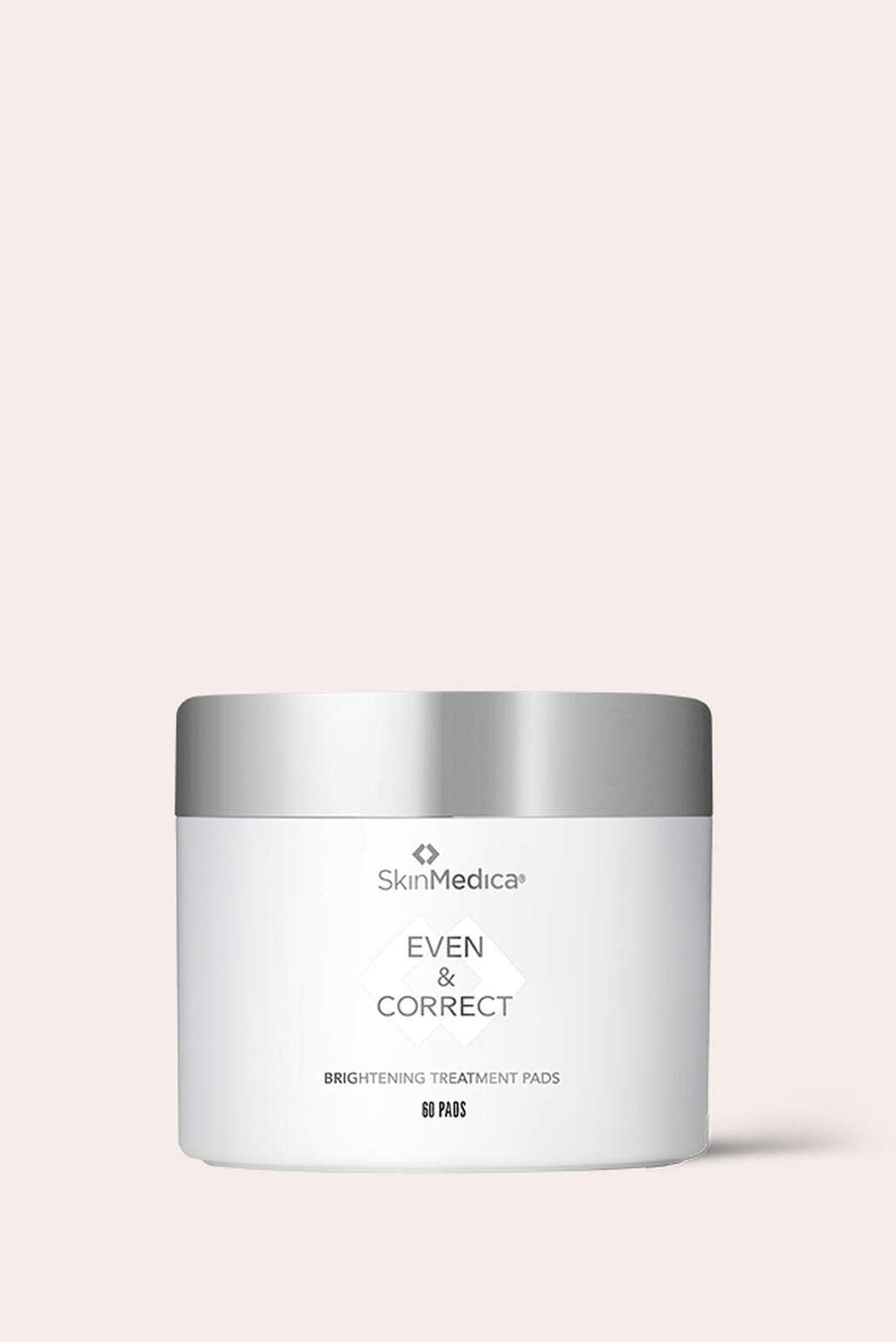
Even & Correct Brightening Treatment Pads

Even & Correct Brightening Treatment Pads
SkinMedica
even-correct-brightening-treatment-pads
Exfoliation
9706766369061
Morning or Evening?
How often will you use this product?
Notes


Highlights
WHAT IS IT?
Brightening treatment pads
FEATURES
Alcohol-free, exfoliating, brightening
BEST FOR
All skin types
CHECKS
Free of parabens, phthalates
Who Is It For?
Adults (18+) Both Women And MenWhat Does It Help With?
Dullness Uneven Tone And TextureBudget
Mid-rangeHow To Use
Which routine should it be used in?
Instructions:
Key Information

What SkinMedica Says
Product Description:
Alcohol-free brightening pads exfoliate for visibly bright skin. These pads can be used day and night as part of a daily skincare regimen.
About the Brand:
Ingredients Overview
Ingredients List
Water/Aqua/Eau, Hamamelis Virginiana (Witch Hazel) Water, Glycolic Acid, Sodium Hydroxide, Betaine, Tranexamic Acid, Niacinamide, Nelumbo Nucifera Germ Extract, Avena Sativa (Oat) Bran Extract, Phenoxyethanol, Polysorbate 20, Sodium Gluconate, Dipotassium Glycyrrhizate, Ethylhexylglycerin, Benzoic Acid, Propanediol, Sodium Benzoate, Potassium Sorbate, 1,2-Hexanediol, Caprylhydroxamic Acid
Key Ingredients
2% LTN Complex (Ultra-concentrated lotus sprout extract, tranexamic acid, niacinamide), 10% Glycolic Acid, Witch Hazel
Ingredients Details
Avena Sativa Oat Bran Extract
Common Name(s): Avena sativa oat bran extract extract
DESCRIPTION
What It Does: Provides antioxidant protection, soothing anti-inflammatory effects, and skin-conditioning benefits through plant-derived polyphenols and phytochemicals.
Why It's Used: Plant extracts concentrate bioactive phytochemicals evolved for environmental protection — uv, microbial, and oxidative stressors — that translate to skin benefits.
How It Works: Polyphenols (flavonoids, phenolic acids) inhibit nf-κb-mediated inflammatory signaling, scavenge reactive oxygen species through electron donation, and chelate pro-oxidant metal ions to reduce oxidative skin damage.
Typically Found In: Serums,toners,moisturizers,masks,essences
TECHNICAL DETAILS
Primary Category: Botanical extracts
Secondary Functions: Antioxidant,anti-inflammatory
Application Areas:

Facial Skincare

Body Care
Hair Care
Beard Care
Color Cosmetics (Makeup)
Dietary/Oral Supplements
Typical Concentration Range: 0.1–10%
SOURCING & ETHICS
Vegan Status: Yes
Halal Status: Yes
Source Notes: Plant-derived extract; no animal components.
SKIN COMPATIBILITY
Irritancy Rating: 1899-12-31 00:00:00 -0800
Sensitivity Concerns: Low sensitization potential at recommended use concentrations.
Safe for Sensitive Skin: Yes
SAFETY & COMPATIBILITY
Safety Profile: Well-characterized cosmetic ingredient with established safety profile. generally non-irritating at typical use concentrations. suitable for leave-on and rinse-off cosmetics.
Works Well With: Niacinamide,hyaluronic acid,vitamin c,ceramides
Avoid Combining With: Strong oxidizing agents
SCIENTIFIC NOTE
Plant secondary metabolites (flavonoids, terpenes, phenolic acids) are biosynthesized as defense compounds against uv, herbivores, and pathogens. their anti-inflammatory activity typically derives from competitive inhibition of cox-2 and 5-lox enzymes (ic50 1–50 µm), while antioxidant activity involves single electron transfer (set) and hydrogen atom transfer (hat) mechanisms with structure-dependent rate constants.
Last Verified: Cosing eu database; pcpc cosmetic ingredient safety reviews; phytochemical and ethnobotanical literature
Primary Sources: 2025-01-15
Betaine
Common Name(s): Trimethylglycine,tmg,natural betaine
CAS Number: 107-43-7
DESCRIPTION
What It Does: Provides osmoprotective humectant conditioning with anti-irritant and mild foam-boosting activity.
Why It's Used: Natural-origin multifunctional osmolyte from sugar beet providing hydration, anti-irritancy, and conditioning in virtually every cosmetic category.
How It Works: Quaternary ammonium betaine provides zwitterionic character for water binding via ionic hydration. osmoprotective function at 100–500mm as compatible solute protecting cells from osmotic stress. reduces surfactant irritation by competing with sls for protein binding sites. mild foam enhancement.
Typically Found In: Virtually all categories — moisturisers, shampoos, cleansers
TECHNICAL DETAILS
Primary Category: Functional ingredient – humectant
Secondary Functions: Tewl reduction,skin plumping
Application Areas:
Facial Skincare
Body Care
Hair Care
Beard Care
Color Cosmetics (Makeup)
Dietary/Oral Supplements
Typical Concentration Range: 0.5%–10%
SOURCING & ETHICS
Vegan Status: Yes – from beta vulgaris (sugar beet) molasses
Halal Status: Yes
Source Notes: Synthetic or naturally derived. excellent aqueous solubility.
SKIN COMPATIBILITY
Irritancy Rating: 1/5 – very low
Comedogenicity Rating: 0/5 – non-comedogenic
Sensitivity Concerns: Non-irritating; suitable for all skin types.
Safe for Sensitive Skin: Yes
SAFETY & COMPATIBILITY
Safety Profile: Excellent safety profile. ewg score: 1.
Works Well With: Ceramides,emollients,occlusives,glycerin,hyaluronic acid
Avoid Combining With: No significant incompatibilities
SCIENTIFIC NOTE
Betaine's anti-irritant mechanism for surfactant systems involves competitive protein protection: betaine at high concentrations preferentially interacts with skin proteins, occupying binding sites that would otherwise be occupied by surfactant molecules causing protein denaturation. this competition reduces available protein binding for irritating surfactants, explaining betaine's well-documented ability to reduce sls irritation when co-formulated.
Last Verified: Cosing database,craig betaine osmoprotective review,cir safety assessment
Primary Sources: 2026-03-12
Glycolic Acid
Common Name(s): Hydroxyacetic acid,2-hydroxyacetic acid
CAS Number: 79-14-1
DESCRIPTION
What It Does: Provides maximum aha efficacy from the smallest most penetrating alpha-hydroxy acid.
Why It's Used: The most potent aha — glycolic acid's smallest molecular size provides the deepest penetration and highest efficacy of any alpha-hydroxy acid for exfoliation and anti-aging.
How It Works: Smallest aha (mw 76) provides deepest stratum corneum penetration. disrupts corneodesmosomes reducing cohesion. stimulates fibroblast collagen i and iii synthesis. efficacy is ph-dependent — free acid fraction determines activity.
Typically Found In: Chemical peels,body lotions,anti-aging serums,exfoliating toners
TECHNICAL DETAILS
Primary Category: Active ingredient – primary aha
Secondary Functions: Brightening,collagen stimulation
Application Areas:
Facial Skincare
Body Care
Hair Care
Beard Care
Color Cosmetics (Makeup)
Dietary/Oral Supplements
Typical Concentration Range: 1%–10% cosmetic; higher professional
SOURCING & ETHICS
Vegan Status: Yes – synthetic or fermentation-derived
Halal Status: Yes
Source Notes: Fermentation-derived or synthetic. ph must be ≤4.0 for aha activity.
SKIN COMPATIBILITY
Irritancy Rating: 2/5 – low to moderate
Comedogenicity Rating: 0/5 – non-comedogenic
Sensitivity Concerns: Photosensitizing – mandatory spf use. start at low frequency.
Safe for Sensitive Skin: Use with caution – spf required
SAFETY & COMPATIBILITY
Safety Profile: Eu cosmetics: max 10% leave-on, ph ≥3.5, mandatory sun protection advisory. professional peel concentrations regulated separately.
Works Well With: Niacinamide,ceramides,hyaluronic acid,spf
Avoid Combining With: Retinol in same step; multiple exfoliants simultaneously
SCIENTIFIC NOTE
Glycolic acid's ph-dependent efficacy is critical: at ph 3.0 ~100% is in the free acid (membrane-permeable) form; at ph 3.5 ~70%; at ph 4.0 ~50%. the eu ph ≥3.5 requirement reduces free acid proportion, lowering efficacy but also reducing irritation — why professional peel concentrations at lower ph are far more active than equivalent cosmetic concentrations.
Last Verified: Cosing database,eu aha guidelines,cir safety assessment
Primary Sources: 2026-03-12
Nelumbo Nucifera Germ Extract
Common Name(s): Nelumbo nucifera germ extract,nelumbo nucifera germ extract,botanical extract,phytochemical active
CAS Number: N/a
DESCRIPTION
What It Does: Provides antioxidant protection from polyphenol radical scavenging, anti-inflammatory activity from terpenoid nf-kb/cox pathway inhibition, and skin conditioning from the secondary metabolite complex.
Why It's Used: Nelumbo nucifera germ extract is selected for the characteristic secondary metabolite signature of nelumbo nucifera — whether polyphenols, terpenoids, alkaloids, or polysaccharides, the phytochemical profile provides antioxidant, anti-inflammatory, or skin conditioning benefits specific to this botanical species.
How It Works: Polyphenol catechol h-atom donation for ros scavenging; terpenoids inhibit iκb kinase; flavonoids compete at cox-1/2; alkaloids modulate specific receptor targets.
Typically Found In: Botanical skin care
TECHNICAL DETAILS
Primary Category: Active ingredient – antioxidant
Secondary Functions: Free radical scavenging,anti-aging
Application Areas:
Facial Skincare
Body Care
Hair Care
Beard Care
Color Cosmetics (Makeup)
Dietary/Oral Supplements
Typical Concentration Range: 0.1%–10%
SOURCING & ETHICS
Vegan Status: Conditional
Halal Status: Conditional
Source Notes: Plant-derived extract or synthetic.
SKIN COMPATIBILITY
Irritancy Rating: 1/5 – very low
Comedogenicity Rating: 0/5 – non-comedogenic
Sensitivity Concerns: Non-irritating; well-tolerated.
Safe for Sensitive Skin: Yes
SAFETY & COMPATIBILITY
Safety Profile: Excellent safety profile. ewg score: 1.
Works Well With: Vitamin c,vitamin e,ferulic acid,spf,other antioxidants
Avoid Combining With: No significant incompatibilities
SCIENTIFIC NOTE
Standardise to marker compounds for consistent bioactivity — field-grown material varies 3-10× in secondary metabolite content.
Last Verified: Cosing database,nelumbo nucifera germ extract botanical extract review
Primary Sources: 2026-03-22
