

Clinique
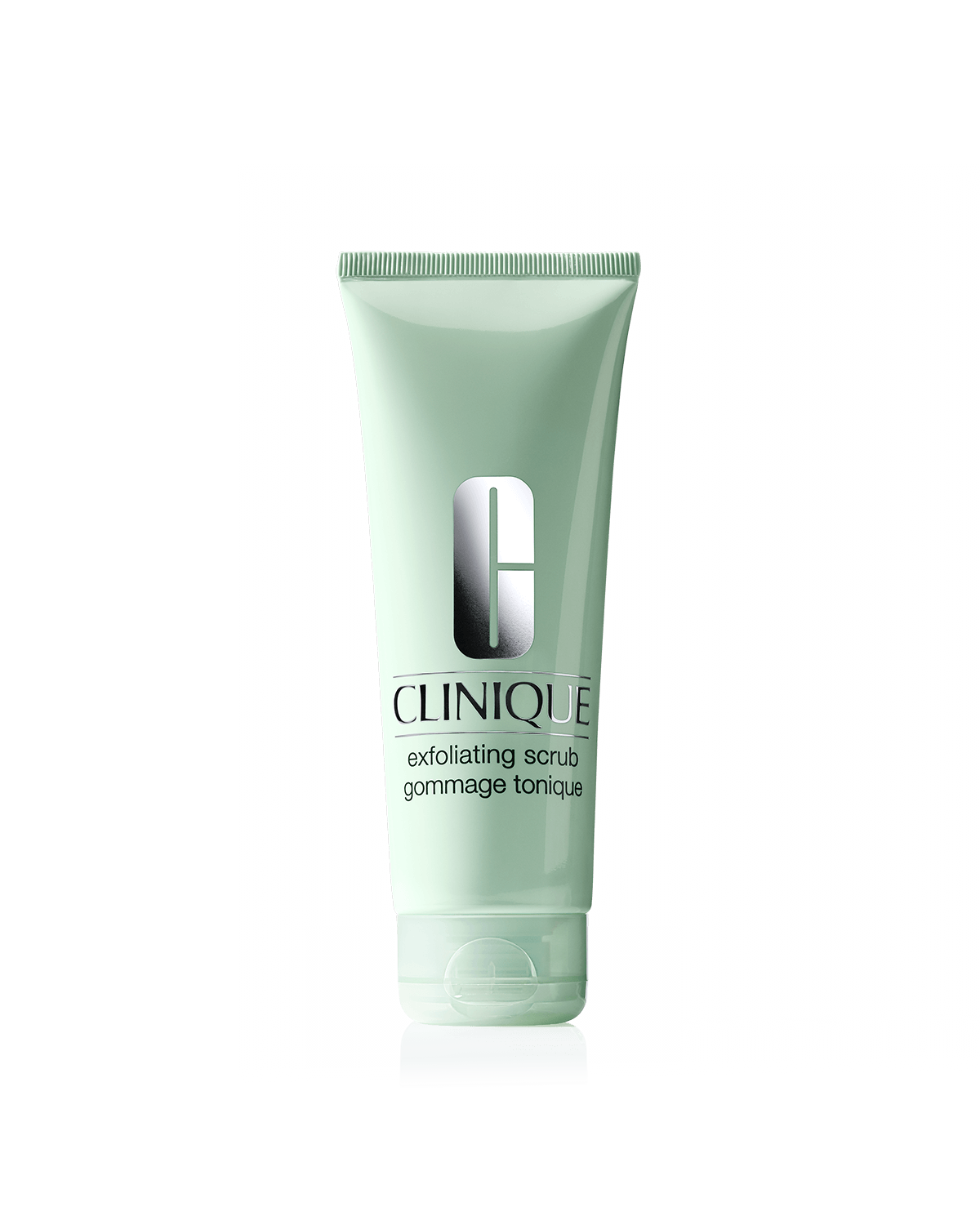
Exfoliating Scrub

Exfoliating Scrub
Clinique
exfoliating-scrub
Exfoliation
9784805785893
Morning or Evening?
How often will you use this product?
Notes


Highlights
WHAT IS IT?
Water-based exfoliating scrub
FEATURES
Helps clear away excess oil and refine skin's texture, Allergy tested, 100% fragrance free
BEST FOR
oily
CHECKS
Free of Fragrance, Parabens, Phthalates, Oil, Drying alcohol, Synthetic colors, Sodium lauryl sulfate, Sodium laureth sulfate, Gluten
Who Is It For?
All Ages All GendersWhat Does It Help With?
Excess Oil Removal Skin Texture RefinementBudget
Affordable (under $30)How To Use
Which routine should it be used in?
Instructions:
Key Information


What Clinique Says
Product Description:
Water-based Exfoliating Scrub with salicylic acid helps clear away excess oil and refine skin's texture.
About the Brand:
Ingredients Overview
Ingredients List
Water\Aqua\Eau, Glyceryl Stearate, Silica, Hexylene Glycol, Disodium Cocoamphodiacetate, Disodium Oleamido Mipa-Sulfosuccinate, Magnesium Aluminum Silicate, Salicylic Acid, Stearamidoethyl Diethylamine, Oleamide Mipa, Trisodium Sulfosuccinate, Sodium Sulfate, Phenoxyethanol, Methylisothiazolinone, Titanium Dioxide (Ci 77891)
Key Ingredients
salicylic acid, silica
Ingredients Details
Disodium Cocoamphodiacetate
Common Name(s): Dccda,sodium cocoamphoacetate
CAS Number: 68650-39-5
DESCRIPTION
What It Does: Provides gentle, low-irritation cleansing particularly suitable for eye area and baby products.
Why It's Used: Baby wash and eye-area cleanser primary surfactant for minimum-irritation cleansing at sensitive skin and eye contact areas.
How It Works: Amphoteric structure with lower cationicity than capb reduces positive charge-mediated protein binding. very low eye irritation in draize test. conditioning activity via residual cationic character interaction with keratin.
Typically Found In: Baby washes,eye makeup removers,gentle eye-area cleansers
TECHNICAL DETAILS
Primary Category: Functional ingredient – amphoteric mild surfactant
Secondary Functions: Skin conditioning
Application Areas:

Facial Skincare
Body Care
Hair Care

Beard Care
Color Cosmetics (Makeup)
Dietary/Oral Supplements
Typical Concentration Range: 2%–15%
SOURCING & ETHICS
Vegan Status: Yes – from coconut fatty acids
Halal Status: Yes
Source Notes: Commercially produced for cosmetic use. verify vegan/halal status with supplier.
SKIN COMPATIBILITY
Irritancy Rating: 1/5 – very low
Comedogenicity Rating: 0/5 – non-comedogenic
Sensitivity Concerns: Well-tolerated by most skin types.
Safe for Sensitive Skin: Yes
SAFETY & COMPATIBILITY
Safety Profile: Good safety profile at recommended concentrations. ewg score: 1–2.
Works Well With: Standard skincare actives
Avoid Combining With: No known significant incompatibilities
SCIENTIFIC NOTE
Eye irritation testing (draize rabbit eye test and human volunteer eye sting test) demonstrates disodium cocoamphodiacetate has among the lowest irritation scores of any commercial surfactant, making it the preferred primary surfactant for 'no-more-tears' baby shampoo formulations and eye-area cleansers.
Last Verified: Cosing database,cir safety assessment
Primary Sources: 2026-03-12
Disodium Oleamido Mipa-sulfosuccinate
Common Name(s): Disodium oleamido mipa-sulfosuccinate,inci ingredient,cosmetic active
CAS Number: N/a
DESCRIPTION
What It Does: Provides documented cosmetic activity from disodium oleamido mipa-sulfosuccinate.
Why It's Used: Disodium oleamido mipa-sulfosuccinate delivers formulation value through its specific biological activity and established safety and efficacy.
How It Works: Source: disodium oleamido mipa-sulfosuccinate. mechanism: documented in cosmetic literature. safety: cosing-reviewed. standard cosmetic use concentrations.
Typically Found In: Skin care formulations,active products
TECHNICAL DETAILS
Primary Category: Active ingredient – antioxidant
Secondary Functions: Free radical scavenging,anti-aging
Application Areas:
Facial Skincare
Body Care
Hair Care
Beard Care
Color Cosmetics (Makeup)
Dietary/Oral Supplements
Typical Concentration Range: 0.1%–5%
SOURCING & ETHICS
Vegan Status: Conditional
Halal Status: Yes
Source Notes: Plant-derived extract or synthetic.
SKIN COMPATIBILITY
Irritancy Rating: 1/5 – very low
Comedogenicity Rating: 0/5 – non-comedogenic
Sensitivity Concerns: Non-irritating; well-tolerated.
Safe for Sensitive Skin: Yes
SAFETY & COMPATIBILITY
Safety Profile: Excellent safety profile. ewg score: 1.
Works Well With: Vitamin c,vitamin e,ferulic acid,spf,other antioxidants
Avoid Combining With: No significant incompatibilities
SCIENTIFIC NOTE
Disodium oleamido mipa-sulfosuccinate provides cosmetic activity through its characteristic mechanism. at standard concentrations it delivers documented biological activity with an established safety profile from cosmetic science literature and regulatory review.
Last Verified: Cosing database,disodium oleamido mipa-sulfosuccinate technical literature
Primary Sources: 2026-03-12
Glyceryl Stearate
Common Name(s): Glycerol monostearate,gms,glycerin monostearate
CAS Number: 31566-31-1
DESCRIPTION
What It Does: Provides o/w emulsification with emolliency and skin feel improvement from a natural glycerol ester.
Why It's Used: Standard cosmetic monoglyceride emulsifier – widely used for o/w cream formation with clean, natural-origin credentials and good sensory profile.
How It Works: Monoglyceride structure (one fatty acid + glycerol) provides amphiphilic hlb ~3-4 for o/w emulsification when combined with higher hlb co-emulsifiers. forms alpha-gel lamellar structure with water for emulsion stabilization. direct skin conditioning via fatty acid film.
Typically Found In: Creams,lotions,moisturizers – standard in o/w emulsions
TECHNICAL DETAILS
Primary Category: Functional ingredient – monoglyceride emulsifier
Secondary Functions: Barrier sealing,softening
Application Areas:
Facial Skincare
Body Care
Hair Care
Beard Care
Color Cosmetics (Makeup)
Dietary/Oral Supplements
Typical Concentration Range: 1%–10%
SOURCING & ETHICS
Vegan Status: Yes – from vegetable glycerol and stearic acid
Halal Status: Yes
Source Notes: Plant-derived, synthetic or animal-derived. verify source.
SKIN COMPATIBILITY
Irritancy Rating: 1/5 – very low
Comedogenicity Rating: 1/5 – low; formulation-dependent
Sensitivity Concerns: Non-irritating.
Safe for Sensitive Skin: Yes
SAFETY & COMPATIBILITY
Safety Profile: Excellent safety profile. ewg score: 1.
Works Well With: Humectants,ceramides,actives as carrier
Avoid Combining With: No significant incompatibilities
SCIENTIFIC NOTE
Glyceryl stearate's alpha-gel lamellar phase formation (distinguishable by x-ray crystallography from beta crystalline phase) provides superior emulsion stability compared to its beta crystalline form. the alpha-gel phase creates a viscoelastic network that resists droplet coalescence – the fundamental mechanism behind gms's long use as a reliable primary emulsifier.
Last Verified: Cosing database,cir safety assessment
Primary Sources: 2026-03-12
Hexylene Glycol
Common Name(s): Hexylene glycol,glycol co-solvent,humectant formulation aid
CAS Number: N/a
DESCRIPTION
What It Does: Provides humectant and co-solvent with mild antimicrobial in cosmetic formulations, improving active ingredient dissolution and product texture while delivering mild skin conditioning.
Why It's Used: Glycol solvents are essential for dissolving actives with limited water or oil solubility — the intermediate polarity of glycol ethers provides access to the wider solubility parameter space between pure water and oil phases.
How It Works: Hydroxyl and ether groups provide h-bonding for water miscibility; the organic chain provides compatibility with lipophilic actives. medium-chain glycols (c3–c6) provide the optimal balance of water compatibility, lipophilic active dissolution, and skin-compatible humectancy.
Typically Found In: Skin care formulations,co-solvent systems
TECHNICAL DETAILS
Primary Category: Functional ingredient – humectant
Secondary Functions: Tewl reduction,skin plumping
Application Areas:
Facial Skincare
Body Care
Hair Care
Beard Care
Color Cosmetics (Makeup)
Dietary/Oral Supplements
Typical Concentration Range: 1%–30%
SOURCING & ETHICS
Vegan Status: Yes
Halal Status: Yes
Source Notes: Synthetic or naturally derived. excellent aqueous solubility.
SKIN COMPATIBILITY
Irritancy Rating: 1/5 – very low
Comedogenicity Rating: 0/5 – non-comedogenic
Sensitivity Concerns: Non-irritating; suitable for all skin types.
Safe for Sensitive Skin: Yes
SAFETY & COMPATIBILITY
Safety Profile: Excellent safety profile. ewg score: 1.
Works Well With: Ceramides,emollients,occlusives,glycerin,hyaluronic acid
Avoid Combining With: No significant incompatibilities
SCIENTIFIC NOTE
Glycol ether co-solvents enhance sc penetration of co-applied actives by increasing their thermodynamic activity in the sc lipid phase — high thermodynamic activity (near saturation) drives diffusion by concentration gradient even when absolute concentration is low.
Last Verified: Cosing database,hexylene glycol glycol solvent review
Primary Sources: 2026-03-12
