

Fixderma Cosmetic Laboratories
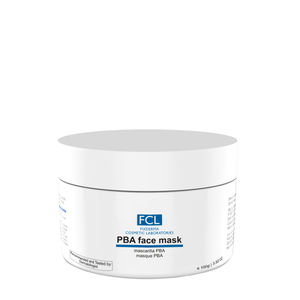
Fixderma Cosmetic Laboratories PBA Face Mask With Kojic Acid, Pha-Bha-Aha Face Pack ,Removes Dead Cells, Shrinks Open Pores, Evens Skin Tone, Reduces Skin Ageing, Provides Glowing Skin, Non-Comedogenic-100 gm

Fixderma Cosmetic Laboratories PBA Face Mask With Kojic Acid, Pha-Bha-Aha Face Pack ,Removes Dead Cells, Shrinks Open Pores, Evens Skin Tone, Reduces Skin Ageing, Provides Glowing Skin, Non-Comedogenic-100 gm
Fixderma Cosmetic Laboratories
fixderma-cosmetic-laboratories-pba-face-mask-with-kojic-acid-pha-bha-aha-face-pack-removes-dead-cells-shrinks-open-pores-evens-skin-tone-reduces-skin-ageing-provides-glowing-skin-non-comedogenic-100-gm
Face Mask
10085511528741
Morning or Evening?
How often will you use this product?
Notes


Highlights
WHAT IS IT?
Face Mask with multiple hydroxy acids (PHA, BHA, AHA)
FEATURES
Transforms skin with blend of salix alba extract, red clay, kojic acid, hyaluronic acid, lactobionic acid and multifruit AHAs; increases skin elasticity; removes wrinkles; detoxifies and nourishes skin; shrinks pores; brightens, soothes and refines skin; antiageing; evens skin tone; non-comedogenic; suitable for sensitive skin; derived from natural sources
BEST FOR
sensitive
CHECKS
Does not contain harsh chemicals; safe for sensitive skin
Who Is It For?
All Genders Suitable For Sensitive Skin (no Specific Age Range Mentioned)What Does It Help With?
Removes Dead Cells Shrinks Open Pores Evens Skin Tone Reduces Skin Ageing Provides Glowing SkinBudget
Mid-range ($30-$75)How To Use
Which routine should it be used in?
Instructions:
Key Information


What Fixderma Cosmetic Laboratories Says
Product Description:
PBA face mask transforms the skin with the luxurious blend of salix alba extract red clay kojic acid hyaluronic acid lactobionic acid and multifruit AHAs. Salix alba extract increases skin elasticity and removes wrinkles. Lactobionic acid & multifruit AHAs are potent substance that protect from free radicals that helps to maintain a youthful look. Red clay is an excellent detoxifying agent which removes impurities and dead skin cells. A regular use of this mask shrinks pores brightens soothes and refines skin. The hydroxy acids play an important role in the well being of the skin. Each type of acid has its own function. The most commonly used acids are alpha hydroxy acids and beta hydroxy acids. Poly Hydroxy Acids are the newly explored acids which also plays a keen role in the skin benefits. They are scientifically proved to give benefits like antiageing even skin tone and reduces skin pores. FCL PBA face mask is an innovative formulation which offers the benefits of all the three categories of hydroxy acids. The beauty of this product is that all the acids are derived from natural sources to ensure the maximum benefits with complete safety to even the most sensitive skin. They are scientifically proved to give benefits like antiageing even skin tone and reduces skin pores. It is a powerful combination of PHA BHA and AHA. All acids derived from natural sources to ensure best safety which detoxifies and nourishes the skin deeply.
About the Brand:
Ingredients Overview
Ingredients List
salix-alba-extract,red-clay,kojic-acid,hyaluronic-acid,lactobionic-acid,multifruit-AHAs,poly-hydroxy-acids,alpha-hydroxy-acids,beta-hydroxy-acids
Key Ingredients
salix alba extract, red clay, kojic acid, hyaluronic acid, lactobionic acid, multifruit AHAs, PHA, BHA, AHA
Ingredients Details
Aha
Common Name(s): Aha,alpha-hydroxy acid exfoliant,keratolytic active
CAS Number: N/a
DESCRIPTION
What It Does: Exfoliates dead skin cells by disrupting desmosomal adhesion bonds, brightens skin tone, stimulates collagen production, and improves product active penetration through the exfoliated sc.
Why It's Used: Aha exfoliation is the most evidence-backed chemical exfoliation mechanism with 30+ years of clinical use data; different acid sizes allow formulators to select penetration depth and intensity for specific skin types.
How It Works: Aha carboxylic groups donate h⁺ disrupting ca²⁺ coordination of desmoglein desmosomal proteins at formulation ph 3–4, weakening corneocyte cohesion. smaller ahas (glycolic, mw 76) penetrate fastest; larger (mandelic, mw 152) penetrate slower for gentler exfoliation.
Typically Found In: Exfoliating toners,aha serums,anti-aging
TECHNICAL DETAILS
Primary Category: Active ingredient – alpha hydroxy acid (aha)
Secondary Functions: Brightening,collagen stimulation
Application Areas:

Facial Skincare
Body Care

Hair Care
Beard Care
Color Cosmetics (Makeup)
Dietary/Oral Supplements
Typical Concentration Range: 1%–15%
SOURCING & ETHICS
Vegan Status: Yes
Halal Status: Yes
Source Notes: Fermentation-derived or synthetic. ph must be ≤4.0 for aha activity.
SKIN COMPATIBILITY
Irritancy Rating: 2/5 – low to moderate
Comedogenicity Rating: 0/5 – non-comedogenic
Sensitivity Concerns: Photosensitizing – mandatory spf use. start at low frequency.
Safe for Sensitive Skin: Use with caution – spf required
SAFETY & COMPATIBILITY
Safety Profile: Safe at otc concentrations. eu: ≤10% leave-on at ph ≥3.5. mandatory spf advisory.
Works Well With: Niacinamide,ceramides,hyaluronic acid,spf
Avoid Combining With: Retinol in same step; multiple exfoliants simultaneously
SCIENTIFIC NOTE
Glycolic acid is the most clinically studied aha; mandelic and lactic are preferred for sensitive or darker skin types from their larger molecular weight and slower penetration kinetics.
Last Verified: 2026-03-12
Primary Sources: Cosing database,aha aha exfoliant review
Bha
Common Name(s): Bha
DESCRIPTION
What It Does: Delivers targeted skin-conditioning or bioactive benefits through a specific mechanism of action suited to the formulation's intended purpose.
Why It's Used: Specialty actives address specific skin concerns through targeted molecular mechanisms, providing efficacy beyond what base formulation ingredients alone can achieve.
How It Works: The bioactive compound interacts with specific molecular targets in skin cells or the extracellular matrix — enzymes, receptors, structural proteins, or signaling molecules — triggering beneficial biological responses.
Typically Found In: Serums,treatments,moisturizers,specialty products
TECHNICAL DETAILS
Primary Category: Specialty actives
Secondary Functions: Skin-conditioning,anti-aging
Application Areas:
Facial Skincare
Body Care
Hair Care
Beard Care
Color Cosmetics (Makeup)
Dietary/Oral Supplements
Typical Concentration Range: 0.01–5%
SOURCING & ETHICS
Vegan Status: Conditional - supplier confirmation required
Halal Status: Unverified - supplier confirmation required
Source Notes: Specialty active ingredient; check individual sourcing for vegan status. [audit 2026-07-29 rev2: the record's own source_notes does not assert a non-animal origin, or instructs the reader to verify with the supplier; "yes" asserts knowledge the record does not hold. determination requires shariah-panel sign-off.]
SKIN COMPATIBILITY
Irritancy Rating: 1
Comedogenicity Rating: 0
Sensitivity Concerns: Low sensitization potential at recommended use concentrations.
Safe for Sensitive Skin: Yes
SAFETY & COMPATIBILITY
Safety Profile: Well-characterized cosmetic ingredient with established safety profile. generally non-irritating at typical use concentrations. suitable for leave-on and rinse-off cosmetics.
Works Well With: Niacinamide,hyaluronic acid,vitamin c,peptides
Avoid Combining With: Incompatible with oxidizing agents; check ph stability
SCIENTIFIC NOTE
Specialty actives typically work through enzyme inhibition (e.g., tyrosinase inhibition for brightening, mmp inhibition for anti-aging), receptor activation (e.g., retinoid receptors, ppar-γ for barrier genes), or transcription factor modulation (e.g., nrf2 for antioxidant gene upregulation). structure-activity relationships determine potency and selectivity.
Last Verified:
Hyaluronic Acid
Common Name(s): Ha,sodium hyaluronate (salt form),hyaluronan,d-glucuronic acid-n-acetyl-d-glucosamine polymer
CAS Number: 9004-61-9
DESCRIPTION
What It Does: Hyaluronic acid draws and locks moisture into the skin at multiple depths (surface and deeper layers depending on molecular weight), creating a plumping, smoothing, and hydrating effect.
Why It's Used: It is used because it is endogenous to human skin, making it exceptionally biocompatible and non-irritating. its unparalleled moisture-binding capacity makes it the most effective hydrating ingredient available.
How It Works: Ha binds water molecules through its many hydroxyl and carboxyl groups, creating a gel-like matrix. high molecular weight ha (>500 kda) hydrates the skin surface; low molecular weight ha (<50 kda) penetrates deeper to provide interior hydration.
Typically Found In: Serums,moisturizers,sheet masks,toners,eye creams,lip treatments,dermal fillers (injectable)
TECHNICAL DETAILS
Primary Category: Active ingredient – humectant/hydrator
Secondary Functions: Barrier repair,plumping,anti-aging
Application Areas:
Facial Skincare
Body Care
Hair Care
Beard Care
Color Cosmetics (Makeup)
Dietary/Oral Supplements
Typical Concentration Range: 0.1%–2% (effective at very low concentrations; multi-weight ha provides superior results)
SOURCING & ETHICS
Vegan Status: Conditional - feedstock declaration required
Halal Status: Unverified - feedstock declaration required (plant, animal and petrochemical routes all exist)
Source Notes: Originally extracted from rooster combs; now predominantly produced via biotechnology (bacterial fermentation), which is vegan and more sustainable. [audit 2026-07-29 rev2: origin-dependent: the same inci exists in plant, animal and petrochemical versions and the name does not discriminate. determination requires shariah-panel sign-off.]
SKIN COMPATIBILITY
Irritancy Rating: 1/5 – very low; one of the gentlest skincare ingredients known
Comedogenicity Rating: 0/5 – non-comedogenic
Sensitivity Concerns: In very dry environments, high-molecular-weight ha on the surface can potentially draw moisture out of the skin if not sealed with an occlusive. apply to damp skin and seal with moisturizer.
Safe for Sensitive Skin: Yes – ideal for all skin types including rosacea, eczema, and post-procedure skin
SAFETY & COMPATIBILITY
Safety Profile: Exceptional safety profile. endogenous molecule – no toxicity concerns. ewg hazard score: 1. safe during pregnancy.
Works Well With: Virtually all ingredients; especially ceramides,glycerin,peptides,retinol (reduces irritation),niacinamide,vitamin c
Avoid Combining With: No significant incompatibilities; high concentrations of alcohol in a formula may reduce its efficacy
SCIENTIFIC NOTE
Hyaluronic acid naturally degrades in skin (half-life ~1–2 days). the skin produces it endogenously, but production decreases with age. multi-molecular-weight ha formulas provide hydration at both surface and deeper skin levels.
Last Verified: 2026-03-12
Primary Sources: Cosing database,cir safety assessment,papakonstantinou et al. (2012) dermato-endocrinology
Kojic Acid
Common Name(s): 5-hydroxy-2-(hydroxymethyl)-4-pyranone,koji acid
CAS Number: 501-30-4
DESCRIPTION
What It Does: Provides potent copper-chelating tyrosinase inhibition for effective hyperpigmentation treatment.
Why It's Used: One of the most effective brightening agents — kojic acid's copper chelation directly blocks the tyrosinase active site providing stronger brightening than most naturally-derived alternatives.
How It Works: Chelates copper in the tyrosinase active site via the 3-hydroxy-4-pyranone chelating group (ic50 ~5μg/ml). without copper cofactor, tyrosinase cannot oxidise tyrosine to dopa or dopa to dopaquinone. inhibits both hydroxylation steps in eumelanin synthesis pathway.
Typically Found In: Brightening serums,hyperpigmentation treatments,anti-spot products
TECHNICAL DETAILS
Primary Category: Active ingredient – fungal brightening agent
Secondary Functions: Melanin inhibition,hyperpigmentation reduction
Application Areas:
Facial Skincare
Body Care
Hair Care
Beard Care
Color Cosmetics (Makeup)
Dietary/Oral Supplements
Typical Concentration Range: 0.5%–2%
SOURCING & ETHICS
Vegan Status: Yes – from aspergillus oryzae or acetobacter fermentation
Halal Status: Yes
Source Notes: Synthetic or plant-derived.
SKIN COMPATIBILITY
Irritancy Rating: 1/5 – very low
Comedogenicity Rating: 0/5 – non-comedogenic
Sensitivity Concerns: Non-irritating; well-tolerated.
Safe for Sensitive Skin: Yes
SAFETY & COMPATIBILITY
Safety Profile: Eu annex iii regulated: max 1% in face products. sensitiser potential — patch test for sensitive skin. photosensitive in formulation — requires stabilisation.
Works Well With: Niacinamide,vitamin c,alpha-arbutin,tranexamic acid,spf
Avoid Combining With: No significant incompatibilities
SCIENTIFIC NOTE
Kojic acid's copper chelation mechanism provides an unusually direct enzyme inhibition: rather than competing with tyrosine substrate (competitive inhibitor) or altering enzyme conformation (allosteric inhibitor), kojic acid simply removes the copper cofactor that is essential for tyrosinase catalytic activity — a metal-chelation mechanism that provides near-complete enzyme inhibition regardless of substrate concentration.
Last Verified: ##########
Primary Sources: Cosing database,eu annex iii,cir safety assessment