

Nykaa E retail limited
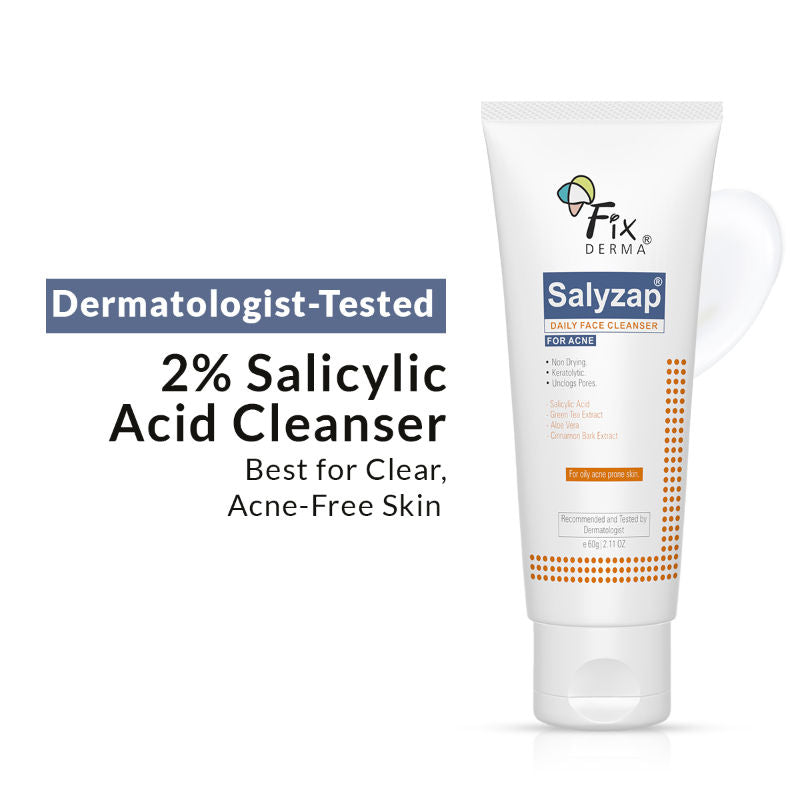
Fixderma Salyzap 2% Salicylic Acid Face Wash for Oily Skin, Sulphate Free

Fixderma Salyzap 2% Salicylic Acid Face Wash for Oily Skin, Sulphate Free
Nykaa E retail limited
fixderma-salyzap-2-salicylic-acid-face-wash-for-oily-skin-sulphate-free
Cleanse
10084906565925
Morning or Evening?
How often will you use this product?
Notes


Highlights
WHAT IS IT?
Face Wash, 17 ingredients
FEATURES
Non-drying daily face cleanser, helps get rid of acne and pimples, Enriched with benzoyl peroxide, thyme, tea tree oil and vitamin E, Exfoliates keratinized skin and fights acne-causing bacteria, Helps reduce surface oil without leaving skin dry, May help fade acne-related blemishes, Suitable for all skin types; recommended for oily acne-prone skin, Free of parabens and SLS; cruelty-free
BEST FOR
oily
CHECKS
Parabens,SLS
Who Is It For?
What Does It Help With?
Acne And Pimples Fading Acne-related Blemishes Excess Sebum Control Exfoliating Dead CellsBudget
Affordable (under $30)How To Use
Which routine should it be used in?
Instructions:
Key Information


What Nykaa E retail limited Says
Product Description:
Fixderma Salyzap Daily Face Cleanser is a soap-free acne face wash designed to effectively combat acne while being gentle on the skin. It exfoliates the keratinized skin and removes excess sebum from the pores, but does not strip the skin of its natural oils. Face washes intended for acne management generally focus on squeezing out the skin's natural oil, resulting in over-dried and irritated skin. This can, in fact, work reversely by encouraging more sebum (oil) production in the skin. Fixderma Salyzap Daily Face Cleanser is a scientifically designed formulation to take care of all these factors. This mild yet effective face wash not only washes away the excess oil from the skin but also kills the acne-causing agents. The natural extracts of green tea and thymus vulgaris give an additional acne reducing benefit. It is formulated to ensure the safe and effective cleansing of even the most sensitive skin. It works on all acne-causing factors like dead cells and skin oil. Enriched with natural extracts like thymus vulgaris and green tea, this formulation helps in fading acne-related blemishes. It has green tea extract that is multi-beneficial for acne as it is rich in substances that inhibit oxidation and nutrients. The major polyphenolic compounds present in green tea have shown improvement in treating acne and oily skin. The market is flooded with face washes for acne, but most of them are focused on removing the oil from the skin surface, which can make the condition even worse. Fixderma Salyzap Face Cleanser is formulated to ensure a safe and effective cleansing of even the most sensitive skin. It works on all acne-causing factors like dead cells and skin oil. Enriched with natural extracts like tea tree oil and vitamin E, this formulation helps in fading acne-related blemishes.
About the Brand:
Ingredients Overview
Ingredients List
Aqua,Cocamidopropyl-Betaine,Aloe-Barbadensis-Leaf-Juice,Acrylates-Copolymer,Glycerol,Capryloyl-Glycine-and-Sarcosine-and-Cinnamomum-Zeylanicum-Bark-Extract,Propanediol-(And)-Phenethyl-Alcohol-(And)-Undecyl-Alcohol-(And)-Tocopherol,Benzoyl-Peroxide,Green-Tea-Extract,Polyquaternium-7,Polysorbate-20,Polyquaternium-10,Hydroxypropyl-Methylcellulose,Cassia-Hydroxypropyltrimonium-Chloride,Camphor,Thymus-Vulgaris
Key Ingredients
Benzoyl Peroxide, Green Tea Extract, Tea Tree Oil (Thymus Vulgaris), Vitamin E
Ingredients Details
Camphor
Common Name(s): 2-bornanone,2-camphanone,gum camphor
CAS Number: 76-22-2
DESCRIPTION
What It Does: Provides cooling sensation, analgesic, and anti-itch activity through trpm8 and trpv1 modulation.
Why It's Used: Cooling-sensation active with topical analgesic and anti-itch benefits for soothing formulations requiring temperature-sensation modification.
How It Works: Activates trpm8 (cold thermoreceptor) for cooling sensation. at higher concentrations, desensitizes trpv1 (heat/pain receptor) for analgesic activity. penetration enhancement via stratum corneum lipid fluidization. antimicrobial via membrane disruption.
Typically Found In: Cooling balms,topical pain relief,anti-itch products,sensory skincare
TECHNICAL DETAILS
Primary Category: Active ingredient – monoterpenoid sensory active
Secondary Functions: Redness reduction,anti-inflammatory,calming
Application Areas:

Facial Skincare
Body Care

Hair Care
Beard Care
Color Cosmetics (Makeup)
Dietary/Oral Supplements
Typical Concentration Range: 0.5%–3%
SOURCING & ETHICS
Vegan Status: Yes – from cinnamomum camphora or synthetic
Halal Status: Yes
Source Notes: Plant-derived extract or synthetic.
SKIN COMPATIBILITY
Irritancy Rating: 2/5 – low to moderate at high concentrations
Comedogenicity Rating: 0/5 – non-comedogenic
Sensitivity Concerns: Avoid contact with eyes. can cause skin sensitization at concentrations above eu limit. contraindicated in infants and young children.
Safe for Sensitive Skin: Yes – particularly recommended for sensitive skin
SAFETY & COMPATIBILITY
Safety Profile: Eu max 1.5% (leave-on body). avoid near eyes. do not apply to broken skin. not for infant use near face.
Works Well With: Ceramides,panthenol,allantoin,hyaluronic acid,centella asiatica
Avoid Combining With: No significant incompatibilities
SCIENTIFIC NOTE
Camphor's concurrent activation of trpm8 (cooling) and desensitization of trpv1 (heat/pain) provides a unique dual sensory modulation that both masks pain (trpv1 desensitization) and replaces it with a pleasant cooling sensation (trpm8 activation) – explaining the well-documented analgesic efficacy of camphor-containing topical preparations.
Last Verified: Cosing database,cir safety assessment
Primary Sources: 2026-03-12
Glycerol
Common Name(s): Glycerin,universal humectant,water-binding skin conditioning
CAS Number: N/a
DESCRIPTION
What It Does: Attracts and retains moisture in the sc, improves skin barrier function at low concentrations, provides gentle keratolytic softening, and acts as a co-solvent for water-soluble actives.
Why It's Used: The reference humectant — lowest cost, best safety profile, universal formulation compatibility, and present naturally in the sc via lipase-mediated glycerolipid hydrolysis makes glycerin the industry standard against which all humectants are benchmarked.
How It Works: Three hydroxyl groups form 6 h-bonds with water molecules per glycerol unit — the highest oh-group density per carbon of any commercial humectant. glycerin also down-regulates epidermal serine proteases that overactivate in dry sc, improving desquamation and barrier integrity.
Typically Found In: All cosmetics,universal
TECHNICAL DETAILS
Primary Category: Functional ingredient – humectant
Secondary Functions: Tewl reduction,skin plumping
Application Areas:
Facial Skincare
Body Care
Hair Care
Beard Care
Color Cosmetics (Makeup)
Dietary/Oral Supplements
Typical Concentration Range: 1%–40%
SOURCING & ETHICS
Vegan Status: Yes
Halal Status: Yes
Source Notes: Synthetic or naturally derived. excellent aqueous solubility.
SKIN COMPATIBILITY
Irritancy Rating: 1/5 – very low
Comedogenicity Rating: 0/5 – non-comedogenic
Sensitivity Concerns: Non-irritating; suitable for all skin types.
Safe for Sensitive Skin: Yes
SAFETY & COMPATIBILITY
Safety Profile: Excellent safety profile. ewg score: 1.
Works Well With: Ceramides,emollients,occlusives,glycerin,hyaluronic acid
Avoid Combining With: No significant incompatibilities
SCIENTIFIC NOTE
Epidermal lipases hydrolyse sc glycerophospholipids during cornification, releasing glycerol that contributes to the natural nmf — topical glycerin directly supplements this endogenous sc humectant pool.
Last Verified: Cosing database,glycerin universal humectant review
Primary Sources: 2026-03-12
Polyquaternium-10
Common Name(s): Pq-10,hydroxyethylcellulose ethyl trimethylammonium chloride,jr-400
CAS Number: 54351-50-7
DESCRIPTION
What It Does: Provides film-forming conditioning and detangling with heat protection in a polymer that adsorbs substantively to hair.
Why It's Used: The most widely used cationic polymer conditioner – provides excellent conditioning and detangling while adsorbing strongly to damaged hair areas that need conditioning most.
How It Works: Cationic quaternary ammonium groups along the polymer backbone adsorb to anionic sites on hair keratin. higher charge density on damaged hair (more negative sites) leads to preferential adsorption where conditioning is needed. polymer film formation provides heat protection and volume.
Typically Found In: Shampoos,2-in-1 products,conditioners,styling products
TECHNICAL DETAILS
Primary Category: Functional ingredient – cationic polymer conditioner
Secondary Functions: Skin conditioning
Application Areas:
Facial Skincare
Body Care
Hair Care
Beard Care
Color Cosmetics (Makeup)
Dietary/Oral Supplements
Typical Concentration Range: 0.1%–2%
SOURCING & ETHICS
Vegan Status: Yes – cellulose-derived
Halal Status: Yes
Source Notes: Commercially produced for cosmetic use. verify vegan/halal status with supplier.
SKIN COMPATIBILITY
Irritancy Rating: 1/5 – very low
Comedogenicity Rating: 0/5 – non-comedogenic
Sensitivity Concerns: Well-tolerated by most skin types.
Safe for Sensitive Skin: Yes
SAFETY & COMPATIBILITY
Safety Profile: Good safety profile at recommended concentrations. ewg score: 1–2.
Works Well With: Standard skincare actives
Avoid Combining With: No known significant incompatibilities
SCIENTIFIC NOTE
Polyquaternium-10's 'self-targeting' to damaged hair sites is a unique smart conditioning mechanism. as hair damage increases negative charge density by exposing keratin's aspartate and glutamate carboxylate groups, pq-10's cationic polymer backbone adsorbs preferentially to these high-charge damage sites – automatically delivering more conditioning where the hair needs it most.
Last Verified: Cosing database,robbins hair science,cir safety assessment
Primary Sources: 2026-03-12
Polyquaternium-7
Common Name(s): Polyquaternium-7,cationic conditioning polymer,substantive film-former
CAS Number: N/a
DESCRIPTION
What It Does: Deposits a conditioning film on hair and skin through electrostatic attraction to negative cuticle/corneocyte surfaces, reduces hair-on-hair friction for improved combability and detangling, eliminates static charge buildup, and provides anti-frizz humidity resistance.
Why It's Used: Cationic polymers are the primary hair conditioning technology — the permanent positive quaternary ammonium groups provide substantive deposition that resists rinsing, delivering persistent conditioning between washes unlike small-molecule cationic conditioners.
How It Works: At shampoo/conditioner ph 4.5–5.5, hair cuticle carries net negative charge (isoelectric point ph ~3.5). polyquaternium cations undergo electrostatic attraction depositing on the cuticle surface. during rinsing, the deposited polymer film persists from reduced surface-solution equilibrium at low bulk concentration — substantive deposition from favourable interfacial versus bulk partitioning.
Typically Found In: Shampoos,conditioners,leave-in products
TECHNICAL DETAILS
Primary Category: Active ingredient – cosmetic active
Secondary Functions: Skin conditioning
Application Areas:
Facial Skincare
Body Care
Hair Care
Beard Care
Color Cosmetics (Makeup)
Dietary/Oral Supplements
Typical Concentration Range: 0.1%–3%
SOURCING & ETHICS
Vegan Status: Yes
Halal Status: Yes
Source Notes: Commercially produced for cosmetic use. verify vegan/halal status with supplier.
SKIN COMPATIBILITY
Irritancy Rating: 1/5 – very low
Comedogenicity Rating: 0/5 – non-comedogenic
Sensitivity Concerns: Well-tolerated by most skin types.
Safe for Sensitive Skin: Yes
SAFETY & COMPATIBILITY
Safety Profile: Good safety profile at recommended concentrations. ewg score: 1–2.
Works Well With: Standard skincare actives
Avoid Combining With: No known significant incompatibilities
SCIENTIFIC NOTE
Different polyquaternium numbers indicate different backbone chemistries: pq-7 (acrylamide/quaternary acrylate copolymer) for leave-on flexibility; pq-10 (hydroxyethylcellulose/quaternary ammonium) for substantive deposition; pq-11 (vp/dimethylaminoethyl methacrylate) for styling fixation.
Last Verified: Cosing database,polyquaternium-7 cationic conditioning deposition review
Primary Sources: 2026-03-12
