

Fixderma India Pvt Ltd.
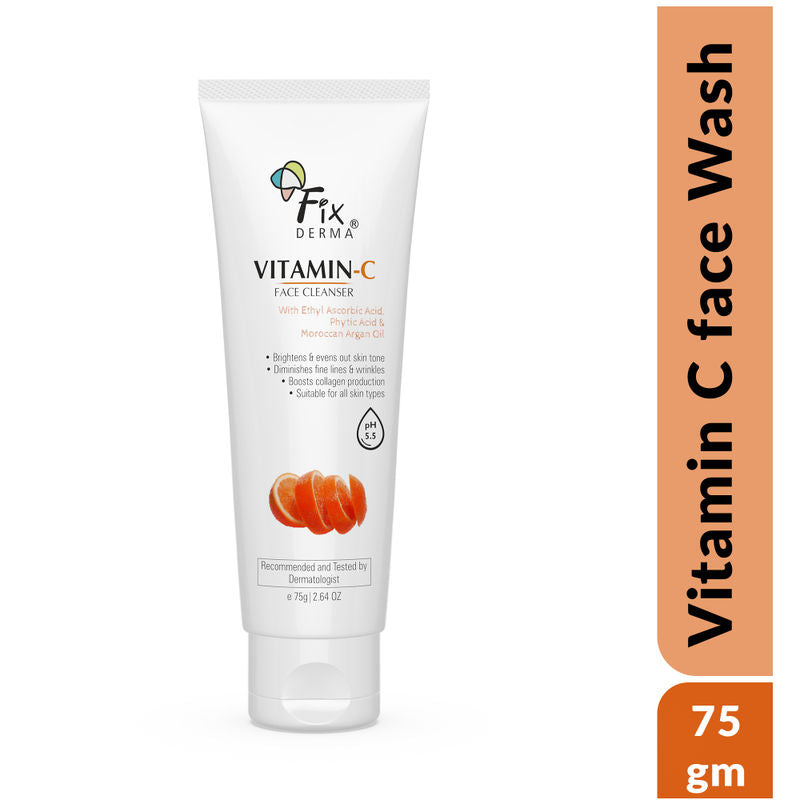
Fixderma Vitamin C Face Wash

Fixderma Vitamin C Face Wash
Fixderma India Pvt Ltd.
fixderma-vitamin-c-face-wash
Cleanse
10085511954725
Morning or Evening?
How often will you use this product?
Notes


Highlights
WHAT IS IT?
Face cleanser with 4 key ingredients
FEATURES
Deep cleansing face cleanser, Enriched with vitamin C, phytic acid, orange fruit extract and Moroccan argan oil, Brightens the skin tone, Reduces dark spots, acne, and acne marks, Fight free radicals, Maintains skin natural oils and moisture levels, Suitable for all skin types, Free of parabens, Vegan and cruelty-free
BEST FOR
sensitive
CHECKS
Paraben-Free
Who Is It For?
What Does It Help With?
Brightening Skin Tone Reducing Dark Spots Acne Acne Marks Fighting Free RadicalsBudget
Affordable (under $30)How To Use
Which routine should it be used in?
Instructions:
Key Information


What Fixderma India Pvt Ltd. Says
Product Description:
Fixderma Vitamin C Face Cleanser is a premium cleansing formulation packed with skin-rejuvenating actives like vitamin C, phytic acid, orange fruit extract, and Moroccan argan oil. The mild cleanser benefits the skin by brightening it, diminishing fine lines and wrinkles, and imparting an even skin tone. The natural surfactant derived from apple amino acids gently cleanses the skin without stripping it of essential moisture.
About the Brand:
Ingredients Overview
Ingredients List
3-O-Ethyl-Ascorbic-Acid, Phytic-Acid, Orange-Fruit-Extract, Moroccan-Argan-Oil
Key Ingredients
3-O-Ethyl Ascorbic Acid, Phytic Acid, Orange Fruit Extract, Moroccan Argan Oil
Ingredients Details
3-o-ethyl Ascorbic Acid
Common Name(s): 3-o-ethyl ascorbic acid
DESCRIPTION
What It Does: Loosens corneocyte adhesion in the stratum corneum, accelerating cell turnover, refining skin texture, and improving radiance.
Why It's Used: Organic acids at cosmetic ph values provide controlled keratolytic exfoliation that improves skin texture, pore appearance, and radiance without mechanical irritation.
How It Works: At appropriate ph, the acid's undissociated form penetrates the stratum corneum and dissolves the ionic bonds between corneocyte desmosomes (calcium chelation mechanism), facilitating controlled desquamation and cell renewal.
Typically Found In: Toners,exfoliants,serums,peels,cleansers
TECHNICAL DETAILS
Primary Category: Exfoliants
Secondary Functions: Brightening,keratolytic
Application Areas:

Facial Skincare

Body Care
Hair Care
Beard Care
Color Cosmetics (Makeup)
Dietary/Oral Supplements
Typical Concentration Range: 0.5–20%
SOURCING & ETHICS
Vegan Status: Yes
Halal Status: Yes
Source Notes: Synthetic or plant-derived acid; no animal components.
SKIN COMPATIBILITY
Irritancy Rating: 2
Comedogenicity Rating: 0
Sensitivity Concerns: May cause irritation or stinging in sensitive or barrier-compromised skin at high concentrations; patch test recommended.
Safe for Sensitive Skin: Conditional
SAFETY & COMPATIBILITY
Safety Profile: Safe within recommended ph and concentration ranges. sensitization risk increases above 10% aha. patch test recommended for sensitive skin. mildly irritating to some individuals at typical cosmetic use concentrations.
Works Well With: Niacinamide,hyaluronic acid,ceramides,vitamin c
Avoid Combining With: High concentrations on sensitive/broken skin; avoid with physical exfoliants
SCIENTIFIC NOTE
Cosmetic acids function at the pka boundary: only the undissociated acid (rcooh) penetrates the stratum corneum lipid barrier, while the ionized carboxylate (rcoo⁻) does not. the henderson-hasselbalch equation governs the fraction of active species at formulation ph; typically 0.5–3.0% undissociated acid provides efficacy while minimizing irritation.
Last Verified: 2025-01-15
Primary Sources: Cosing eu database; pcpc cosmetic ingredient safety reviews; ingredient-specific safety and efficacy literature
Phytic Acid
Common Name(s): Inositol hexaphosphate,ip6,phytate
CAS Number: 83-86-3
DESCRIPTION
What It Does: Provides multi-function brightening through copper chelation, antioxidant, and gentle exfoliant activity.
Why It's Used: Multi-function brightener — phytic acid's six phosphate groups provide copper chelation for tyrosinase inhibition alongside direct antioxidant and gentle aha-like exfoliation in a natural grain-derived compound.
How It Works: Six phosphate groups provide multiple copper-chelating sites for tyrosinase active site copper removal. also chelates iron for antioxidant (fenton reaction inhibition). mild acidic ph provides gentle aha-like exfoliation. found naturally in rice bran, legumes.
Typically Found In: Natural brightening products,multi-function serums,rice-derived formulas
TECHNICAL DETAILS
Primary Category: Active ingredient – ip6 brightening chelator
Secondary Functions: Melanin inhibition,hyperpigmentation reduction
Application Areas:
Facial Skincare
Body Care
Hair Care
Beard Care
Color Cosmetics (Makeup)
Dietary/Oral Supplements
Typical Concentration Range: 0.1%–5%
SOURCING & ETHICS
Vegan Status: Yes – from rice bran, wheat, legumes
Halal Status: Yes
Source Notes: Synthetic or plant-derived.
SKIN COMPATIBILITY
Irritancy Rating: 1/5 – very low
Comedogenicity Rating: 0/5 – non-comedogenic
Sensitivity Concerns: Non-irritating; well-tolerated.
Safe for Sensitive Skin: Yes
SAFETY & COMPATIBILITY
Safety Profile: Excellent safety profile. use with spf for maximum efficacy. ewg score: 1.
Works Well With: Niacinamide,vitamin c,alpha-arbutin,tranexamic acid,spf
Avoid Combining With: No significant incompatibilities
SCIENTIFIC NOTE
Phytic acid's hexaphosphate structure gives it six chelating sites for metal ions — iron and copper are the primary targets. by chelating both copper (tyrosinase cofactor) and iron (fenton reaction catalyst), phytic acid simultaneously inhibits melanin synthesis and prevents oxidative damage — a dual brightening + antioxidant mechanism from a single plant-derived molecule.
Last Verified: 2026-03-12
Primary Sources: Cosing database,graf phytic acid review