

Nykaa E retail limited
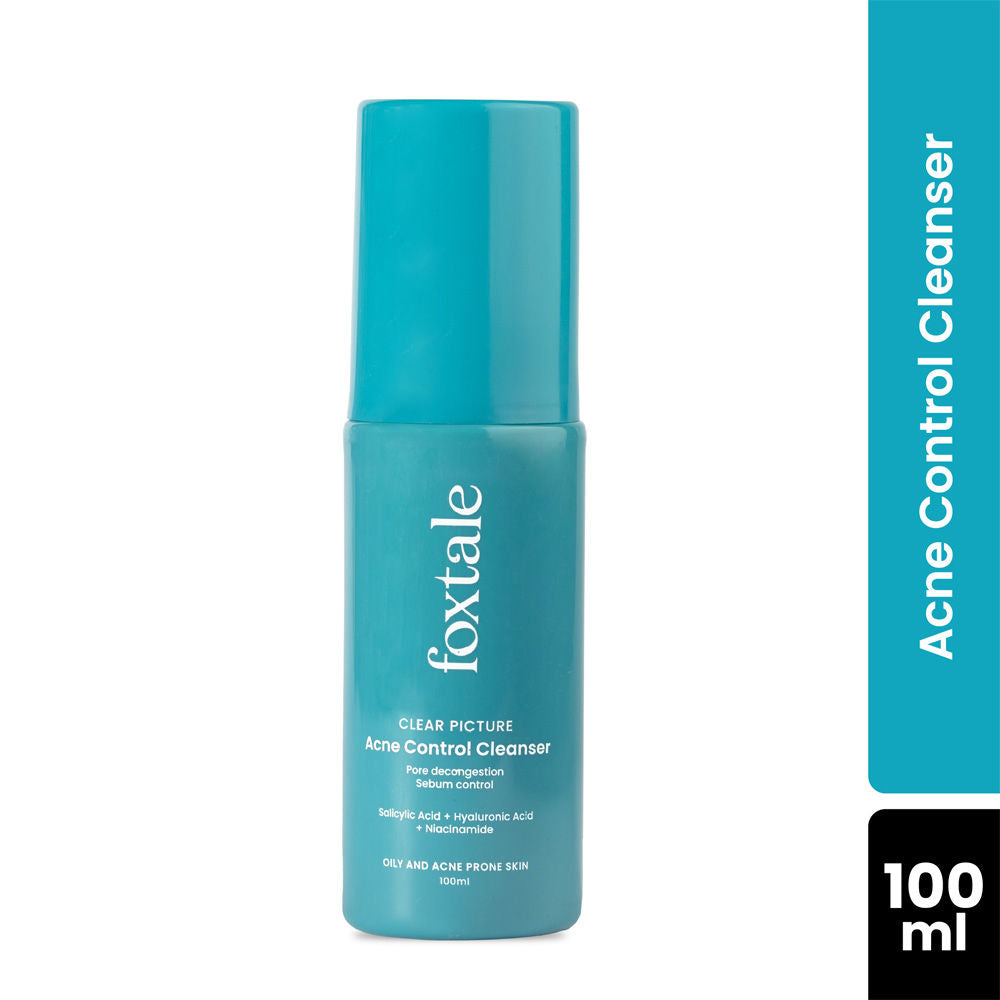
Foxtale Clear Picture Acne Control Cleanser for Oily and Acne Prone Skin

Foxtale Clear Picture Acne Control Cleanser for Oily and Acne Prone Skin
Nykaa E retail limited
foxtale-clear-picture-acne-control-cleanser-for-oily-and-acne-prone-skin
Cleanse
10084907122981
Morning or Evening?
How often will you use this product?
Notes


Highlights
WHAT IS IT?
Acne Control Cleanser with Salicylic Acid and Niacinamide
FEATURES
Controls oil and fights acne
BEST FOR
oily
CHECKS
Who Is It For?
For People With Oily And Acne-prone SkinWhat Does It Help With?
Oil Control And Acne TreatmentBudget
Affordable (under $30)How To Use
Which routine should it be used in?
Instructions:
Key Information


What Nykaa E retail limited Says
Product Description:
A cleanser with Salicylic Acid & Niacinamide that controls oil and fights acne
About the Brand:
Ingredients Overview
Ingredients List
Aqua, Cocamidopropyl Hydroxysultaine, Sodium methyl Cocoyl Taurate, Propanediol, PEG-7 Glyceryl Cocoate, Cocoglucoside, Glyceryl Oleate, Coco Diethanolamide, Salicylic acid, Betaine, Sodium Cocoyl Isethionate, Disodium Cocoyl Glutamate, Sodium Citrate, Niacinamide, a-Bisabolol, Sodium Hyaluronate Crosspolymer, Phenoxyethanol, Ethylhexylglycerin, Citric Acid, Sodium Hydroxide, Allergen Free Fragrance
Key Ingredients
Salicylic Acid, Niacinamide
Ingredients Details
Betaine
Common Name(s): Trimethylglycine,tmg,natural betaine
CAS Number: 107-43-7
DESCRIPTION
What It Does: Provides osmoprotective humectant conditioning with anti-irritant and mild foam-boosting activity.
Why It's Used: Natural-origin multifunctional osmolyte from sugar beet providing hydration, anti-irritancy, and conditioning in virtually every cosmetic category.
How It Works: Quaternary ammonium betaine provides zwitterionic character for water binding via ionic hydration. osmoprotective function at 100–500mm as compatible solute protecting cells from osmotic stress. reduces surfactant irritation by competing with sls for protein binding sites. mild foam enhancement.
Typically Found In: Virtually all categories — moisturisers, shampoos, cleansers
TECHNICAL DETAILS
Primary Category: Functional ingredient – humectant
Secondary Functions: Tewl reduction,skin plumping
Application Areas:

Facial Skincare
Body Care
Hair Care

Beard Care
Color Cosmetics (Makeup)
Dietary/Oral Supplements
Typical Concentration Range: 0.5%–10%
SOURCING & ETHICS
Vegan Status: Yes – from beta vulgaris (sugar beet) molasses
Halal Status: Yes
Source Notes: Synthetic or naturally derived. excellent aqueous solubility.
SKIN COMPATIBILITY
Irritancy Rating: 1/5 – very low
Comedogenicity Rating: 0/5 – non-comedogenic
Sensitivity Concerns: Non-irritating; suitable for all skin types.
Safe for Sensitive Skin: Yes
SAFETY & COMPATIBILITY
Safety Profile: Excellent safety profile. ewg score: 1.
Works Well With: Ceramides,emollients,occlusives,glycerin,hyaluronic acid
Avoid Combining With: No significant incompatibilities
SCIENTIFIC NOTE
Betaine's anti-irritant mechanism for surfactant systems involves competitive protein protection: betaine at high concentrations preferentially interacts with skin proteins, occupying binding sites that would otherwise be occupied by surfactant molecules causing protein denaturation. this competition reduces available protein binding for irritating surfactants, explaining betaine's well-documented ability to reduce sls irritation when co-formulated.
Last Verified: Cosing database,craig betaine osmoprotective review,cir safety assessment
Primary Sources: 2026-03-12
Citric Acid
Common Name(s): Lemon acid,2-hydroxypropane-1,2,3-tricarboxylic acid
CAS Number: 77-92-9
DESCRIPTION
What It Does: Adjusts ph to optimal ranges, chelates destabilizing metal ions, provides mild exfoliation at higher concentrations.
Why It's Used: Universal cosmetic ph adjuster and chelating agent. aha exfoliant activity is secondary.
How It Works: As ph adjuster, donates protons. as chelating agent, three carboxylic groups bind divalent metals (ca²⁺, mg²⁺, fe²⁺) preventing oxidative degradation.
Typically Found In: Nearly all cosmetic formulations,brightening products,exfoliants
TECHNICAL DETAILS
Primary Category: Active ingredient – alpha hydroxy acid (aha)
Secondary Functions: Chelating agent,ph adjustment,preservation enhancement
Application Areas:
Facial Skincare
Body Care
Hair Care
Beard Care
Color Cosmetics (Makeup)
Dietary/Oral Supplements
Typical Concentration Range: 0.1%–10%
SOURCING & ETHICS
Vegan Status: Yes – synthetic or fermentation-derived
Halal Status: Yes
Source Notes: Produced by fermentation of sugars by aspergillus niger. gras (e330). most abundant organic acid in citrus.
SKIN COMPATIBILITY
Irritancy Rating: 1/5 – very low at low concentrations; 2/5 at exfoliant concentrations
Comedogenicity Rating: 0/5 – non-comedogenic
Sensitivity Concerns: Photosensitizing – mandatory spf use. start at low frequency.
Safe for Sensitive Skin: Use with caution – spf required
SAFETY & COMPATIBILITY
Safety Profile: Safe at otc concentrations. eu: ≤10% leave-on at ph ≥3.5. mandatory spf advisory.
Works Well With: Niacinamide,ceramides,hyaluronic acid,spf
Avoid Combining With: Retinol in same step; multiple exfoliants simultaneously
SCIENTIFIC NOTE
Three carboxylic acid groups provide multiple proton donation sites and stronger chelation than monocarboxylic ahas. this makes citric acid the preferred cosmetic chelating agent alongside edta.
Last Verified: Cosing database,cir safety assessment,ewg skin deep
Primary Sources: 2026-03-12
Cocamidopropyl Hydroxysultaine
Common Name(s): Cahs,hydroxypropyl sultaine
CAS Number: 68139-30-0
DESCRIPTION
What It Does: Provides amphoteric foaming and conditioning with excellent compatibility across surfactant systems.
Why It's Used: Premium amphoteric surfactant for mild foaming shampoos and cleansers requiring broad surfactant compatibility and improved skin and eye tolerance vs capb alternatives.
How It Works: Amphoteric sultaine (internal zwitterion from quaternary ammonium + sulfonate) provides: foam stability and enhancement; antistatic conditioning on hair; mildness enhancement reducing ionic surfactant irritation; viscosity building with salt addition. superior eye tolerance vs capb (betaine).
Typically Found In: Baby shampoos,mild cleansers,eye-safe products
TECHNICAL DETAILS
Primary Category: Functional ingredient – amphoteric surfactant
Secondary Functions: Skin conditioning
Application Areas:
Facial Skincare
Body Care
Hair Care
Beard Care
Color Cosmetics (Makeup)
Dietary/Oral Supplements
Typical Concentration Range: 2%–10%
SOURCING & ETHICS
Vegan Status: Yes – from coconut fatty acid chain
Halal Status: Yes
Source Notes: Commercially produced for cosmetic use. verify vegan/halal status with supplier.
SKIN COMPATIBILITY
Irritancy Rating: 1/5 – very low
Comedogenicity Rating: 0/5 – non-comedogenic
Sensitivity Concerns: Well-tolerated by most skin types.
Safe for Sensitive Skin: Yes
SAFETY & COMPATIBILITY
Safety Profile: Good safety profile at recommended concentrations. ewg score: 1–2.
Works Well With: Standard skincare actives
Avoid Combining With: No known significant incompatibilities
SCIENTIFIC NOTE
Cocamidopropyl hydroxysultaine's superior eye tolerance vs capb arises from its sultaine rather than betaine zwitterionic head group. the sulfonate anion (so3⁻ in sultaine) is a stronger acid group than the carboxylate (coo⁻ in betaine), providing greater charge neutralisation and better interaction with tear film proteins — the molecular basis for its improved eye irritation profile in baby and sensitive-eye formulations.
Last Verified: Cosing database,cir safety assessment
Primary Sources: 2026-03-12
Disodium Cocoyl Glutamate
Common Name(s): Disodium cocoyl glutamate,cosmetic active,functional ingredient
CAS Number: N/a
DESCRIPTION
What It Does: Delivers characteristic cosmetic function at recommended use concentration.
Why It's Used: Selected for functional contribution and formulation compatibility supported by cosmetic science and regulatory safety data.
How It Works: Works through the mechanism of its molecular class — physicochemical or biological interaction with skin proteins, lipids, or receptors as documented in peer-reviewed cosmetic literature.
Typically Found In: Skin care formulations
TECHNICAL DETAILS
Primary Category: Active ingredient – cosmetic active
Secondary Functions: Skin conditioning
Application Areas:
Facial Skincare
Body Care
Hair Care
Beard Care
Color Cosmetics (Makeup)
Dietary/Oral Supplements
Typical Concentration Range: 0.1%–10%
SOURCING & ETHICS
Vegan Status: Conditional
Halal Status: Yes
Source Notes: Commercially produced for cosmetic use. verify vegan/halal status with supplier.
SKIN COMPATIBILITY
Irritancy Rating: 1/5 – very low
Comedogenicity Rating: 0/5 – non-comedogenic
Sensitivity Concerns: Well-tolerated by most skin types.
Safe for Sensitive Skin: Yes
SAFETY & COMPATIBILITY
Safety Profile: Good safety profile at recommended concentrations. ewg score: 1–2.
Works Well With: Standard skincare actives
Avoid Combining With: No known significant incompatibilities
SCIENTIFIC NOTE
Disodium cocoyl glutamate has an established safety and efficacy profile within the cosmetic regulatory framework at standard use concentrations.
Last Verified: Cosing database,disodium cocoyl glutamate technical literature
Primary Sources: 2026-03-12
