

Foxtale
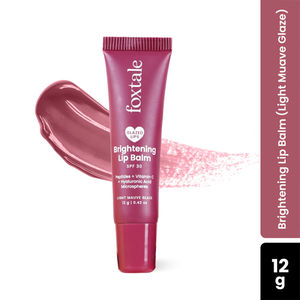
Foxtale Glazed Lips Brightening Lip Balm - Light Mauve Glaze 12 gm

Foxtale Glazed Lips Brightening Lip Balm - Light Mauve Glaze 12 gm
Foxtale
foxtale-glazed-lips-brightening-lip-balm-light-mauve-glaze-12-gm
Lip care
10084953456933
Morning or Evening?
How often will you use this product?
Notes


Highlights
WHAT IS IT?
Lip Balm with Peptides, Vitamin C, Hyaluronic Acid Microspheres, SPF 30
FEATURES
Prevents pigmentation, Smoothens and blurs lip lines, Keeps lips moisturized, Heals chapped lips, Available in 4 shades
BEST FOR
CHECKS
Who Is It For?
What Does It Help With?
Pigmentation Prevention Moisturizing Lip Line Smoothing Healing Chapped LipsBudget
Affordable (under $30)How To Use
Which routine should it be used in?
Instructions:
Key Information

What Foxtale Says
Product Description:
Made with Peptides Vitamin C & Hyaluronic Acid Microspheres SPF 30 prevents pigmentation Smoothens & blurs lip lines Keeps lips moisturized Heals chapped lips Available in 4 shades clear glaze pink glaze light mauve glaze ruby glaze
About the Brand:
Ingredients Overview
Ingredients List
Hydrogenated Polyisobutene, Diisostearyl Malate, Disteardimonium Hectorite, Propylene Carbonate, Olive Oil Polyglyceryl-6 Esters, Polyglyceryl-6 Pentaoleate, Diethylamino Hydroxybenzoyl Hexyl Benzoate, Ethylhexyl Triazone, Trihydroxystearin, Cyclopentasiloxane, Trimethylsiloxysilicate, Flavor, Tocopherol, Sodium Hyaluronate, Ethylhexyl Palmitate, Silica Dimethyl Silylate, Butylene Glycol, Pentylene Glycol, Squalane, Ascorbyl Palmitate, Euterpe Oleracea Fruit Oil, Rubus Idaeus Seed Oil, Hydrolyzed Corn Starch, Lauryl Laurate, Methyl Diisopropyl Propionamide, Ethyl Menthane Carboxamide, Menthyl Lactate, Caffeine, Hydrated Silica, Palmitoyl Tripeptide-1, Tribehenin, Sorbitan Isostearate, Rebaudioside, Stevioside, Pentaerythrityl Tetra-Di-T-Butyl Hydroxyhydrocinnamate
Key Ingredients
Peptides, Vitamin C, Hyaluronic Acid Microspheres
Ingredients Details
Ascorbyl Palmitate
Common Name(s): L-ascorbyl-6-palmitate,vitamin c palmitate,fat-soluble vitamin c
CAS Number: 137-66-6
DESCRIPTION
What It Does: Provides lipid-soluble antioxidant protection in skin and oil-based formulations.
Why It's Used: Oil-based formulations as fat-soluble vitamin c active and formulation antioxidant preservative (e304).
How It Works: Skin esterases cleave the bond releasing ascorbic acid and palmitic acid. lipophilic form may integrate into cell membranes for lipid-phase antioxidant protection.
Typically Found In: Oil serums,emulsions,sunscreens,anti-aging creams
TECHNICAL DETAILS
Primary Category: Active ingredient – vitamin c derivative
Secondary Functions: Lipid-soluble antioxidant,formulation preservative
Application Areas:

Facial Skincare

Body Care
Hair Care
Beard Care
Color Cosmetics (Makeup)
Dietary/Oral Supplements
Typical Concentration Range: 0.1%–1%
SOURCING & ETHICS
Vegan Status: Conditional - feedstock declaration required
Halal Status: Unverified - feedstock declaration required (plant, animal and petrochemical routes all exist)
Source Notes: Esterification of ascorbic acid with palmitic acid. gras food additive (e304). [audit 2026-07-29 rev2: origin-dependent: the same inci exists in plant, animal and petrochemical versions and the name does not discriminate. determination requires shariah-panel sign-off.]
SKIN COMPATIBILITY
Irritancy Rating: 1/5 – very low
Comedogenicity Rating: 1/5 – very low; palmitic acid minor concern
Sensitivity Concerns: Non-irritating; suitable for all skin types.
Safe for Sensitive Skin: Yes
SAFETY & COMPATIBILITY
Safety Profile: Excellent safety profile. ewg score: 1.
Works Well With: Tocopherol,ferulic acid,niacinamide,spf
Avoid Combining With: No significant incompatibilities
SCIENTIFIC NOTE
Debate exists about efficiency of ester hydrolysis in intact skin and prooxidant potential of uv degradation products. formulating with the antioxidant triad (c+e+ferulic) mitigates this concern.
Last Verified:
Butylene Glycol
Common Name(s): 1,3-butanediol,bg,1,3-butylene glycol
CAS Number: 107-88-0
DESCRIPTION
What It Does: Provides humectant hydration and active ingredient solubilization with excellent skin feel.
Why It's Used: Preferred glycol humectant in premium and k-beauty formulations for superior skin feel vs propylene glycol with equivalent functionality.
How It Works: Two hydroxyl groups at 1,3-positions provide water binding and solvent activity. better tolerated than propylene glycol with minimal sensitization risk. 4-carbon backbone provides slightly greater hydrophobic character enabling dissolution of less polar actives vs pg.
Typically Found In: Toners,essences,serums,k-beauty formulas
TECHNICAL DETAILS
Primary Category: Functional ingredient – glycol humectant
Secondary Functions: Tewl reduction,skin plumping
Application Areas:
Facial Skincare
Body Care
Hair Care
Beard Care
Color Cosmetics (Makeup)
Dietary/Oral Supplements
Typical Concentration Range: 1%–10%
SOURCING & ETHICS
Vegan Status: Yes – synthetic
Halal Status: Yes
Source Notes: Synthetic or naturally derived. excellent aqueous solubility.
SKIN COMPATIBILITY
Irritancy Rating: 1/5 – very low
Comedogenicity Rating: 0/5 – non-comedogenic
Sensitivity Concerns: Non-irritating; suitable for all skin types.
Safe for Sensitive Skin: Yes
SAFETY & COMPATIBILITY
Safety Profile: Excellent safety profile. ewg score: 1.
Works Well With: Ceramides,emollients,occlusives,glycerin,hyaluronic acid
Avoid Combining With: No significant incompatibilities
SCIENTIFIC NOTE
K-beauty's preference for butylene glycol over propylene glycol is driven by two factors: bg's superior skin feel (less tacky than pg's higher viscosity) and its lower sensitization potential (1,3-bg has better spatial distribution of hydroxyl groups that reduces protein interaction vs pg's 1,2-position oh groups).
Last Verified: 2026-03-12
Primary Sources: Cosing database,cir safety assessment
Caffeine
Common Name(s): Caffeine,methylxanthine anti-cellulite,antioxidant vasoactive
CAS Number: N/a
DESCRIPTION
What It Does: Stimulates lipolysis in adipocytes by inhibiting phosphodiesterase (preventing camp breakdown), reduces eye puffiness through vasoconstriction of periorbital capillaries, and provides antioxidant dna repair stimulation for photoprotective benefit.
Why It's Used: The only cosmetic active with a well-defined mechanism for anti-cellulite claims — phosphodiesterase inhibition elevating adipocyte camp is the documented biochemical pathway, providing mechanism-based efficacy substantiation superior to most slimming actives.
How It Works: Caffeine inhibits phosphodiesterase (pde3, pde4) preventing camp hydrolysis → elevated camp activates protein kinase a → phosphorylates hormone-sensitive lipase → lipolysis of triglycerides in adipocytes. for eye puffiness: caffeine's adenosine receptor antagonism reduces prostaglandin-mediated capillary dilation in periorbital tissue, reducing fluid accumulation.
Typically Found In: Anti-cellulite,eye creams,antioxidant products
TECHNICAL DETAILS
Primary Category: Active ingredient – antioxidant
Secondary Functions: Free radical scavenging,anti-aging
Application Areas:
Facial Skincare
Body Care
Hair Care
Beard Care
Color Cosmetics (Makeup)
Dietary/Oral Supplements
Typical Concentration Range: 0.1%–3%
SOURCING & ETHICS
Vegan Status: Conditional - supplier confirmation required
Halal Status: Unverified - supplier confirmation required
Source Notes: Plant-derived extract or synthetic. [audit 2026-07-29 rev2: status downgraded on audit. determination requires shariah-panel sign-off.]
SKIN COMPATIBILITY
Irritancy Rating: 1/5 – very low
Comedogenicity Rating: 0/5 – non-comedogenic
Sensitivity Concerns: Non-irritating; well-tolerated.
Safe for Sensitive Skin: Yes
SAFETY & COMPATIBILITY
Safety Profile: Excellent safety profile. ewg score: 1.
Works Well With: Vitamin c,vitamin e,ferulic acid,spf,other antioxidants
Avoid Combining With: No significant incompatibilities
SCIENTIFIC NOTE
Caffeine has one of the highest sc penetration rates of any cosmetic active (logp -0.07, mw 194 da) — the combination of small size and moderate logp providing excellent aqueous solubility with sufficient sc lipid partitioning for effective transdermal delivery to adipose tissue.
Last Verified: 2026-03-12
Primary Sources: Cosing database,caffeine pde inhibitor anti-cellulite lipolysis review
Cyclopentasiloxane
Common Name(s): Cyclopentasiloxane,cyclic volatile silicone,dry-touch carrier solvent
CAS Number: N/a
DESCRIPTION
What It Does: Provides a dry, weightless application vehicle that evaporates cleanly leaving actives and non-volatile silicones deposited on skin — eliminating the residual heaviness of conventional liquid carrier solvents.
Why It's Used: Cyclosiloxanes are the unique volatile silicone solvents that dissolve non-volatile silicones (dimethicone, cyclomethicone), organic uv filters, and lipophilic actives, providing the sensory-superior dry-touch application experience in premium formulations.
How It Works: Cyclosiloxane vapour pressure (d5 cyclopentasiloxane ~0.3 mmhg at 25°c) provides clean evaporation at body temperature. the cyclic ring structure provides lower boiling point than equivalent linear dimethicone, enabling faster evaporation while the ring conformation maintains the silicone's low surface energy for smooth application.
Typically Found In: Primers,antiperspirants,sunscreens
TECHNICAL DETAILS
Primary Category: Functional ingredient – emollient
Secondary Functions: Barrier sealing,softening
Application Areas:
Facial Skincare
Body Care
Hair Care
Beard Care
Color Cosmetics (Makeup)
Dietary/Oral Supplements
Typical Concentration Range: 1%–50%
SOURCING & ETHICS
Vegan Status: Conditional - supplier confirmation required
Halal Status: Unverified - supplier confirmation required
Source Notes: Plant-derived, synthetic or animal-derived. verify source. [audit 2026-07-29 rev2: the record's own source_notes does not assert a non-animal origin, or instructs the reader to verify with the supplier; "yes" asserts knowledge the record does not hold. determination requires shariah-panel sign-off.]
SKIN COMPATIBILITY
Irritancy Rating: 1/5 – very low
Comedogenicity Rating: 1/5 – low; formulation-dependent
Sensitivity Concerns: Non-irritating.
Safe for Sensitive Skin: Yes
SAFETY & COMPATIBILITY
Safety Profile: Excellent safety profile. ewg score: 1.
Works Well With: Humectants,ceramides,actives as carrier
Avoid Combining With: No significant incompatibilities
SCIENTIFIC NOTE
Cyclopentasiloxane (d5) and cyclohexasiloxane (d6) are under eu regulatory review for potential environmental persistence (pbt assessment) — formulators should monitor eu regulation 2018/35 implementation for restrictions in wash-off products.
Last Verified: 2026-03-12
Primary Sources: Cosing database,eu cyclosiloxane regulatory review