

Nykaa E retail limited
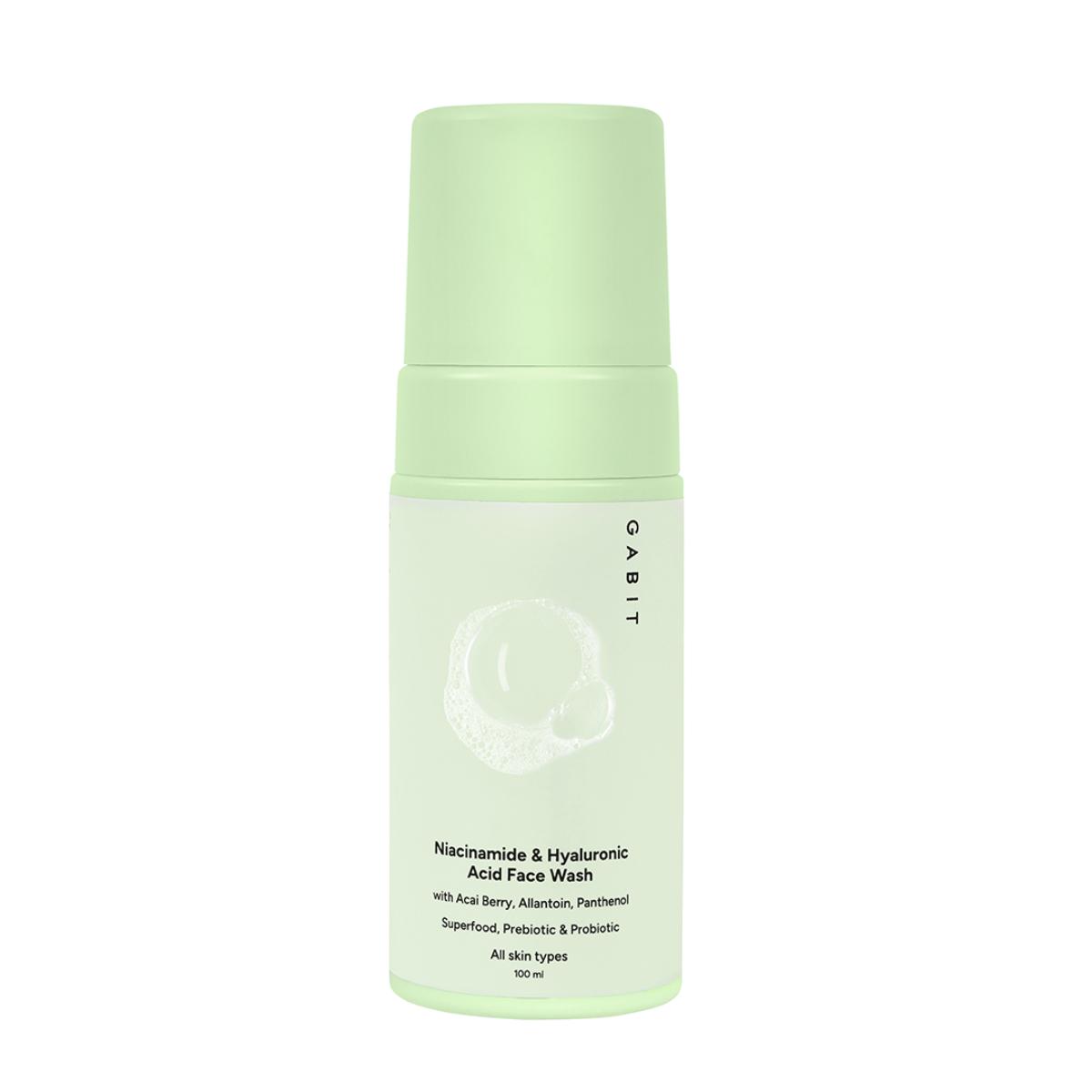
GABIT NIACINAMIDE & HYALURONIC ACID FOAMING FACE WASH WITH VITAMIN B5 FOR GLOWING SKIN(100ML)

GABIT NIACINAMIDE & HYALURONIC ACID FOAMING FACE WASH WITH VITAMIN B5 FOR GLOWING SKIN(100ML)
Nykaa E retail limited
gabit-niacinamide-hyaluronic-acid-foaming-face-wash-with-vitamin-b5-for-glowing-skin-100ml
Cleanse
10084819075365
Morning or Evening?
How often will you use this product?
Notes


Highlights
WHAT IS IT?
Foaming Face Wash with Niacinamide and Hyaluronic Acid
FEATURES
BEST FOR
CHECKS
Who Is It For?
What Does It Help With?
Glowing SkinBudget
Affordable (under $30)How To Use
Which routine should it be used in?
Instructions:
Key Information


About the Brand:
Ingredients Overview
Ingredients List
Aqua, Glycerine, Disodium Cocoyl Glutamate, Disodium Cocoamphodiacetate, Propanediol, Sodium PCA, Maltooligosyl Glucoside, Hydrogenated Starch Hydrolysate, Niacinamide, Inulin, Gluconolactone, Sodium Benzoate, Trehalose, Panthenol, Bifida Ferment Lysate, Sodium Gluconate, Allantoin, Sodium Hyaluronate, Euterpe Oleracea Fruit Extract, Non-allergen Fragrance, Citric Acid
Key Ingredients
niacinamide,hyaluronic-acid,vitamin-B5
Ingredients Details
Allantoin
Common Name(s): 5-ureidohydantoin,glyoxyldiureide,aluminum dihydroxy allantoinate
CAS Number: 97-59-6
DESCRIPTION
What It Does: Soothes irritation, accelerates wound healing, promotes skin cell renewal, and provides mild keratolytic exfoliation.
Why It's Used: Gold standard multi-function soothing active – one of the most widely used cosmetic ingredients across all product types for its exceptional tolerability and clinically proven multi-action skin conditioning.
How It Works: Promotes keratinocyte proliferation and fibroblast migration for wound healing. mild keratolytic activity by disrupting corneocyte binding. anti-irritant via direct protein binding and anti-inflammatory cytokine reduction. humectant activity via hydroxyl groups.
Typically Found In: Post-procedure products,sensitive skin formulas,wound care,anti-acne treatments,baby products
TECHNICAL DETAILS
Primary Category: Active ingredient – soothing / anti-inflammatory
Secondary Functions: Wound healing,keratolytic,anti-irritant
Application Areas:

Facial Skincare
Body Care

Hair Care
Beard Care
Color Cosmetics (Makeup)
Dietary/Oral Supplements
Typical Concentration Range: 0.1%–2%
SOURCING & ETHICS
Vegan Status: Conditional - feedstock declaration required
Halal Status: Unverified - feedstock declaration required (plant, animal and petrochemical routes all exist)
Source Notes: Plant-derived extract or synthetic. [audit 2026-07-29 rev2: origin-dependent: the same inci exists in plant, animal and petrochemical versions and the name does not discriminate. determination requires shariah-panel sign-off.]
SKIN COMPATIBILITY
Irritancy Rating: 1/5 – very low
Comedogenicity Rating: 0/5 – non-comedogenic
Sensitivity Concerns: Exceptionally well-tolerated; suitable for all skin types including baby and compromised skin.
Safe for Sensitive Skin: Yes – particularly recommended for sensitive skin
SAFETY & COMPATIBILITY
Safety Profile: Excellent safety profile. ewg score: 1.
Works Well With: Ceramides,panthenol,allantoin,hyaluronic acid,centella asiatica
Avoid Combining With: No significant incompatibilities
SCIENTIFIC NOTE
Allantoin's keratinocyte proliferation stimulation occurs via receptor-mediated signaling (possibly machr activation) rather than non-specific irritation-driven proliferation, making it a true wound-healing stimulant rather than a pro-inflammatory proliferative signal.
Last Verified: 2026-03-12
Primary Sources: Cosing database,cir safety assessment,araújo et al. allantoin review
Bifida Ferment Lysate
Common Name(s): Bifida ferment lysate,postbiotic ferment,bioactive metabolite complex
CAS Number: N/a
DESCRIPTION
What It Does: Supports skin microbiome balance, delivers anti-inflammatory postbiotic metabolites, and provides biotransformed botanical actives with 10–50× improved sc penetration versus native glycoside forms.
Why It's Used: Preferred over live probiotic formats for conventional cosmetic stability and preservation compatibility, while delivering equivalent microbiome-supportive postbiotic metabolites.
How It Works: Multi-organism fermentation produces organic acids (acidifying skin surface ph to 4.5–5.5), bacteriocins, and β-glucosidases that deglycosylate botanical polyphenols to their more penetrant aglycone forms. tlr2-active cell wall fragments train skin immune cells toward anti-inflammatory tolerance.
Typically Found In: Microbiome skin care,anti-inflammatory
TECHNICAL DETAILS
Primary Category: Active ingredient – skin microbiome support
Secondary Functions: Microbiome balance,prebiotic effect
Application Areas:
Facial Skincare
Body Care
Hair Care
Beard Care
Color Cosmetics (Makeup)
Dietary/Oral Supplements
Typical Concentration Range: 0.5%–15%
SOURCING & ETHICS
Vegan Status: Yes
Halal Status: Yes
Source Notes: Fermentation-derived or plant-extracted.
SKIN COMPATIBILITY
Irritancy Rating: 1/5 – very low
Comedogenicity Rating: 0/5 – non-comedogenic
Sensitivity Concerns: Non-irritating; beneficial for sensitive skin.
Safe for Sensitive Skin: Yes
SAFETY & COMPATIBILITY
Safety Profile: Excellent safety profile. ewg score: 1.
Works Well With: Ceramides,niacinamide,soothing actives
Avoid Combining With: No significant incompatibilities
SCIENTIFIC NOTE
Multi-organism postbiotic biotransformation selectively generates free aglycone polyphenols with 30–50 da lower molecular weight and higher logp for significantly improved stratum corneum penetration.
Last Verified: 2026-03-12
Primary Sources: Cosing database,multi-organism ferment postbiotic review
Citric Acid
Common Name(s): Lemon acid,2-hydroxypropane-1,2,3-tricarboxylic acid
CAS Number: 77-92-9
DESCRIPTION
What It Does: Adjusts ph to optimal ranges, chelates destabilizing metal ions, provides mild exfoliation at higher concentrations.
Why It's Used: Universal cosmetic ph adjuster and chelating agent. aha exfoliant activity is secondary.
How It Works: As ph adjuster, donates protons. as chelating agent, three carboxylic groups bind divalent metals (ca²⁺, mg²⁺, fe²⁺) preventing oxidative degradation.
Typically Found In: Nearly all cosmetic formulations,brightening products,exfoliants
TECHNICAL DETAILS
Primary Category: Active ingredient – alpha hydroxy acid (aha)
Secondary Functions: Chelating agent,ph adjustment,preservation enhancement
Application Areas:
Facial Skincare
Body Care
Hair Care
Beard Care
Color Cosmetics (Makeup)
Dietary/Oral Supplements
Typical Concentration Range: 0.1%–10%
SOURCING & ETHICS
Vegan Status: Yes – synthetic or fermentation-derived
Halal Status: Yes
Source Notes: Produced by fermentation of sugars by aspergillus niger. gras (e330). most abundant organic acid in citrus.
SKIN COMPATIBILITY
Irritancy Rating: 1/5 – very low at low concentrations; 2/5 at exfoliant concentrations
Comedogenicity Rating: 0/5 – non-comedogenic
Sensitivity Concerns: Photosensitizing – mandatory spf use. start at low frequency.
Safe for Sensitive Skin: Use with caution – spf required
SAFETY & COMPATIBILITY
Safety Profile: Safe at otc concentrations. eu: ≤10% leave-on at ph ≥3.5. mandatory spf advisory.
Works Well With: Niacinamide,ceramides,hyaluronic acid,spf
Avoid Combining With: Retinol in same step; multiple exfoliants simultaneously
SCIENTIFIC NOTE
Three carboxylic acid groups provide multiple proton donation sites and stronger chelation than monocarboxylic ahas. this makes citric acid the preferred cosmetic chelating agent alongside edta.
Last Verified: 2026-03-12
Primary Sources: Cosing database,cir safety assessment,ewg skin deep
Disodium Cocoamphodiacetate
Common Name(s): Dccda,sodium cocoamphoacetate
CAS Number: 68650-39-5
DESCRIPTION
What It Does: Provides gentle, low-irritation cleansing particularly suitable for eye area and baby products.
Why It's Used: Baby wash and eye-area cleanser primary surfactant for minimum-irritation cleansing at sensitive skin and eye contact areas.
How It Works: Amphoteric structure with lower cationicity than capb reduces positive charge-mediated protein binding. very low eye irritation in draize test. conditioning activity via residual cationic character interaction with keratin.
Typically Found In: Baby washes,eye makeup removers,gentle eye-area cleansers
TECHNICAL DETAILS
Primary Category: Functional ingredient – amphoteric mild surfactant
Secondary Functions: Skin conditioning
Application Areas:
Facial Skincare
Body Care
Hair Care
Beard Care
Color Cosmetics (Makeup)
Dietary/Oral Supplements
Typical Concentration Range: 2%–15%
SOURCING & ETHICS
Vegan Status: Conditional - supplier confirmation required
Halal Status: Unverified - supplier confirmation required
Source Notes: Commercially produced for cosmetic use. verify vegan/halal status with supplier. [audit 2026-07-29 rev2: the record's own source_notes does not assert a non-animal origin, or instructs the reader to verify with the supplier; "yes" asserts knowledge the record does not hold. determination requires shariah-panel sign-off.]
SKIN COMPATIBILITY
Irritancy Rating: 1/5 – very low
Comedogenicity Rating: 0/5 – non-comedogenic
Sensitivity Concerns: Well-tolerated by most skin types.
Safe for Sensitive Skin: Yes
SAFETY & COMPATIBILITY
Safety Profile: Good safety profile at recommended concentrations. ewg score: 1–2.
Works Well With: Standard skincare actives
Avoid Combining With: No known significant incompatibilities
SCIENTIFIC NOTE
Eye irritation testing (draize rabbit eye test and human volunteer eye sting test) demonstrates disodium cocoamphodiacetate has among the lowest irritation scores of any commercial surfactant, making it the preferred primary surfactant for 'no-more-tears' baby shampoo formulations and eye-area cleansers.
Last Verified: 2026-03-12
Primary Sources: Cosing database,cir safety assessment