

Nykaa E retail limited
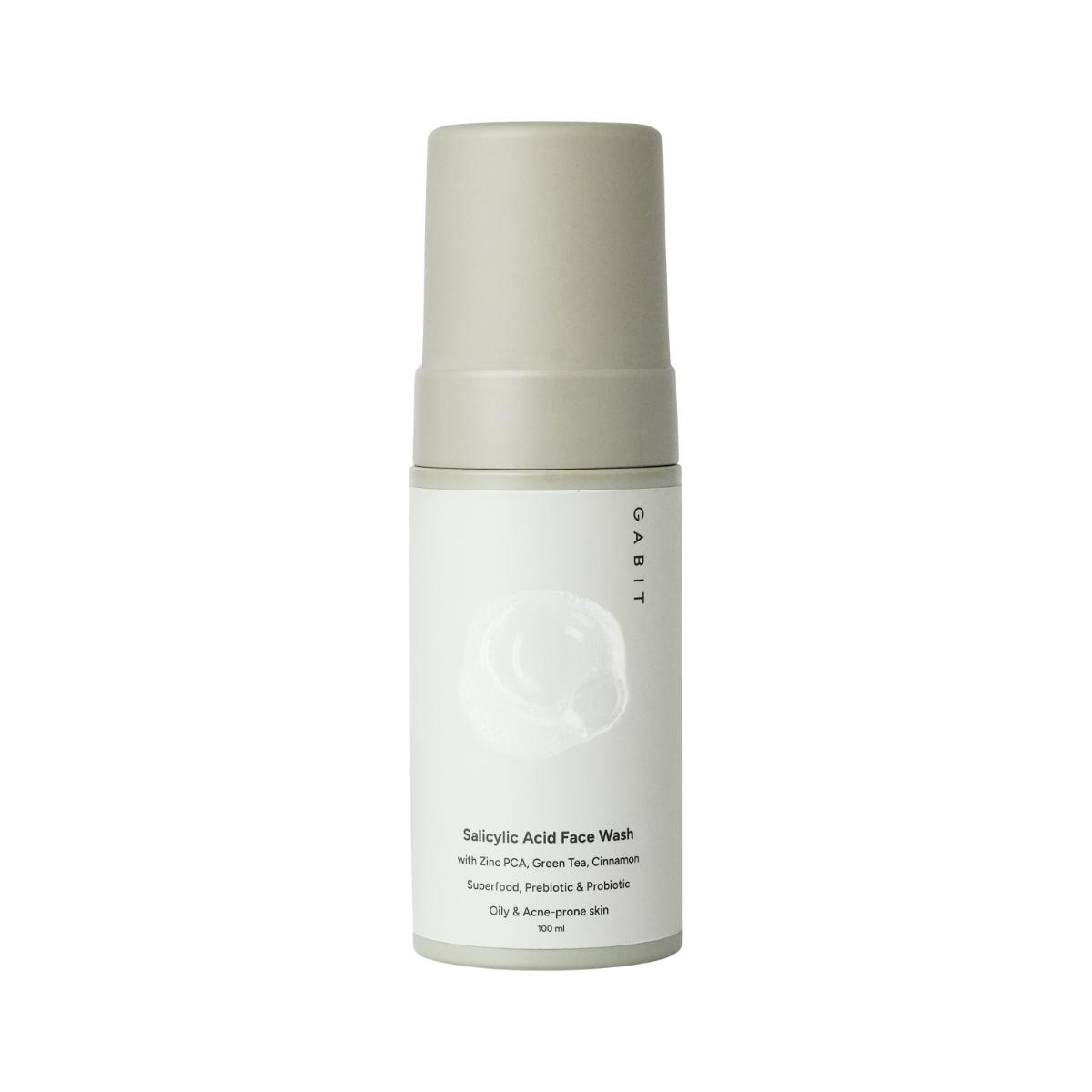
Gabit Salicylic Acid Face Wash With Green Tea & Zinc, For Oily & Acne Prone Skin, Reduces Open Pores(100ML)

Gabit Salicylic Acid Face Wash With Green Tea & Zinc, For Oily & Acne Prone Skin, Reduces Open Pores(100ML)
Nykaa E retail limited
gabit-salicylic-acid-face-wash-with-green-tea-zinc-for-oily-acne-prone-skin-reduces-open-pores-100ml
Cleanse
10084907974949
Morning or Evening?
How often will you use this product?
Notes


Highlights
WHAT IS IT?
Face wash with 3 key ingredients
FEATURES
Reduces open pores, suitable for oily and acne prone skin
BEST FOR
oily
CHECKS
Who Is It For?
All Ages With Oily And Acne-prone SkinWhat Does It Help With?
Acne Open Pores Oil ControlBudget
Affordable (under $30)How To Use
Which routine should it be used in?
Instructions:
Key Information


What Nykaa E retail limited Says
Product Description:
Face wash containing salicylic acid, green tea and zinc for oily and acne-prone skin that helps reduce open pores
About the Brand:
Ingredients Overview
Ingredients List
Aqua, Sodium Cocoyl Apple Amino Acids, Glycerine, Cocamidopropyl Hydroxysultaine, Disodium Cocoamphodiacetate, Sodium PCA, Maltooligosyl Glucoside, Hydrogenated Starch Hydrolysate, Propanediol, Salicylic Acid, Camellia Sinensis Leaf Extract, Potassium Sorbate, Sodium Benzoate, Inulin, Gluconolactone, Panthenol, Bifida Ferment Lysate, Cinnamomum Zeylanicum Bark Extract, Capryloyl Glycine, Sarcosine, Sodium Gluconate, Zinc PCA, Non-allergen Fragrance
Key Ingredients
salicylic acid, green tea, zinc
Ingredients Details
Bifida Ferment Lysate
Common Name(s): Bifida ferment lysate,postbiotic ferment,bioactive metabolite complex
CAS Number: N/a
DESCRIPTION
What It Does: Supports skin microbiome balance, delivers anti-inflammatory postbiotic metabolites, and provides biotransformed botanical actives with 10–50× improved sc penetration versus native glycoside forms.
Why It's Used: Preferred over live probiotic formats for conventional cosmetic stability and preservation compatibility, while delivering equivalent microbiome-supportive postbiotic metabolites.
How It Works: Multi-organism fermentation produces organic acids (acidifying skin surface ph to 4.5–5.5), bacteriocins, and β-glucosidases that deglycosylate botanical polyphenols to their more penetrant aglycone forms. tlr2-active cell wall fragments train skin immune cells toward anti-inflammatory tolerance.
Typically Found In: Microbiome skin care,anti-inflammatory
TECHNICAL DETAILS
Primary Category: Active ingredient – skin microbiome support
Secondary Functions: Microbiome balance,prebiotic effect
Application Areas:

Facial Skincare

Body Care
Hair Care
Beard Care
Color Cosmetics (Makeup)
Dietary/Oral Supplements
Typical Concentration Range: 0.5%–15%
SOURCING & ETHICS
Vegan Status: Yes
Halal Status: Yes
Source Notes: Fermentation-derived or plant-extracted.
SKIN COMPATIBILITY
Irritancy Rating: 1/5 – very low
Comedogenicity Rating: 0/5 – non-comedogenic
Sensitivity Concerns: Non-irritating; beneficial for sensitive skin.
Safe for Sensitive Skin: Yes
SAFETY & COMPATIBILITY
Safety Profile: Excellent safety profile. ewg score: 1.
Works Well With: Ceramides,niacinamide,soothing actives
Avoid Combining With: No significant incompatibilities
SCIENTIFIC NOTE
Multi-organism postbiotic biotransformation selectively generates free aglycone polyphenols with 30–50 da lower molecular weight and higher logp for significantly improved stratum corneum penetration.
Last Verified: Cosing database,multi-organism ferment postbiotic review
Primary Sources: 2026-03-12
Camellia Sinensis Leaf Extract
Common Name(s): Camellia sinensis leaf extract,botanical extract,phytochemical active
CAS Number: N/a
DESCRIPTION
What It Does: Provides antioxidant protection from reactive oxygen species, reduces inflammatory cytokine production in skin, and conditions skin surface through the plant's secondary metabolite complex.
Why It's Used: Chosen for its natural origin narrative, traditional use heritage, and multi-functional phytochemical profile that supports several concurrent skin care claims from one ingredient.
How It Works: Polyphenols, terpenoids, and alkaloids in the extract scavenge ros via hydrogen atom transfer, inhibit nf-kb or cox-2 inflammatory pathways, and interact with skin surface proteins for conditioning.
Typically Found In: Botanical skin care,natural products
TECHNICAL DETAILS
Primary Category: Active ingredient – antioxidant
Secondary Functions: Free radical scavenging,anti-aging
Application Areas:
Facial Skincare
Body Care
Hair Care
Beard Care
Color Cosmetics (Makeup)
Dietary/Oral Supplements
Typical Concentration Range: 0.1%–10%
SOURCING & ETHICS
Vegan Status: Yes
Halal Status: Yes
Source Notes: Plant-derived extract or synthetic.
SKIN COMPATIBILITY
Irritancy Rating: 1/5 – very low
Comedogenicity Rating: 0/5 – non-comedogenic
Sensitivity Concerns: Non-irritating; well-tolerated.
Safe for Sensitive Skin: Yes
SAFETY & COMPATIBILITY
Safety Profile: Excellent safety profile. ewg score: 1.
Works Well With: Vitamin c,vitamin e,ferulic acid,spf,other antioxidants
Avoid Combining With: No significant incompatibilities
SCIENTIFIC NOTE
Plant secondary metabolites evolved as uv photoprotectants and antimicrobial agents — mechanisms that directly translate to cosmetic antioxidant and anti-inflammatory activity in human skin.
Last Verified: Cosing database,camellia sinensis leaf extract botanical review
Primary Sources: 2026-03-12
Capryloyl Glycine
Common Name(s): N-capryloyl glycine,dermosoft gmcy
CAS Number: 14246-53-8
DESCRIPTION
What It Does: Provides antimicrobial and sebum-regulating activity from naturally-derived caprylic acid-glycine conjugate.
Why It's Used: Natural multifunctional antimicrobial — capryloyl glycine's anti-seborrheic and antimicrobial dual action provides comprehensive oily skin and anti-dandruff benefits from a single naturally-sourced ingredient.
How It Works: Acyl glycine conjugate provides antimicrobial via fatty acid membrane disruption mechanism. inhibits lipase enzyme reducing sebum fatty acid liberation (sebum regulation). mild surfactant from carboxylate head group. anti-dandruff via malassezia inhibition.
Typically Found In: Anti-seborrheic products,natural antimicrobials,anti-dandruff
TECHNICAL DETAILS
Primary Category: Functional ingredient – acyl amino acid surfactant/preservative
Secondary Functions: Skin conditioning
Application Areas:
Facial Skincare
Body Care
Hair Care
Beard Care
Color Cosmetics (Makeup)
Dietary/Oral Supplements
Typical Concentration Range: 0.5%–2%
SOURCING & ETHICS
Vegan Status: Yes – caprylic acid from coconut + glycine from plant fermentation
Halal Status: Yes
Source Notes: Commercially produced for cosmetic use. verify vegan/halal status with supplier.
SKIN COMPATIBILITY
Irritancy Rating: 1/5 – very low
Comedogenicity Rating: 0/5 – non-comedogenic
Sensitivity Concerns: Well-tolerated by most skin types.
Safe for Sensitive Skin: Yes
SAFETY & COMPATIBILITY
Safety Profile: Good safety profile at recommended concentrations. ewg score: 1–2.
Works Well With: Standard skincare actives
Avoid Combining With: No known significant incompatibilities
SCIENTIFIC NOTE
Capryloyl glycine's sebum regulation via lipase inhibition mirrors the same mechanism as triethyl citrate and ethylhexylglycerin — convergent mechanism discovery across structurally diverse ingredient classes. the parallel lipase inhibition by ester-based (triethyl citrate), ether-based (ethylhexylglycerin), and amide-based (capryloyl glycine) compounds validates lipase inhibition as a universally accessible target for sebum control through multiple chemical approaches.
Last Verified: Cosing database,schülke dermosoft gmcy technical data
Primary Sources: 2026-03-12
Cinnamomum Zeylanicum Bark Extract
Common Name(s): Cinnamomum zeylanicum bark extract,cosmetic active ingredient,established formulation function
CAS Number: N/a
DESCRIPTION
What It Does: Cinnamomum zeylanicum bark extract delivers its characteristic primary cosmetic function — whether active skin conditioning, antioxidant protection, antimicrobial preservation, rheological control, or sensory enhancement — contributing measurable formulation value at its recommended use concentration.
Why It's Used: Formulators select cinnamomum zeylanicum bark extract for its specific functional chemistry that provides the required outcome in their formulation — skin bioactivity, stability contribution, or consumer experience — supported by cosmetic science and regulatory safety data.
How It Works: Cinnamomum zeylanicum bark extract works through the fundamental chemical and biological mechanisms of its molecular class. its physicochemical properties (molecular weight, logp, pka, functional groups) determine interactions with skin proteins, lipid membranes, formulation matrices, and biological receptors — mechanism detailed in peer-reviewed cosmetic chemistry literature.
Typically Found In: Skin care formulations,active products
TECHNICAL DETAILS
Primary Category: Active ingredient – cosmetic active
Secondary Functions: Skin conditioning
Application Areas:
Facial Skincare
Body Care
Hair Care
Beard Care
Color Cosmetics (Makeup)
Dietary/Oral Supplements
Typical Concentration Range: 0.1%–10%
SOURCING & ETHICS
Vegan Status: Conditional
Halal Status: Yes
Source Notes: Commercially produced for cosmetic use. verify vegan/halal status with supplier.
SKIN COMPATIBILITY
Irritancy Rating: 1/5 – very low
Comedogenicity Rating: 0/5 – non-comedogenic
Sensitivity Concerns: Well-tolerated by most skin types.
Safe for Sensitive Skin: Yes
SAFETY & COMPATIBILITY
Safety Profile: Good safety profile at recommended concentrations. ewg score: 1–2.
Works Well With: Standard skincare actives
Avoid Combining With: No known significant incompatibilities
SCIENTIFIC NOTE
Cinnamomum zeylanicum bark extract has been assessed within the cosmetic ingredient regulatory framework. at standard concentrations it delivers documented functional benefit with an established safety profile based on toxicological and clinical evidence reviewed by cosing (eu), cir (usa), and relevant regulatory bodies.
Last Verified: Cosing database,cinnamomum zeylanicum bark extract technical literature
Primary Sources: 2026-03-12
