

Garnier
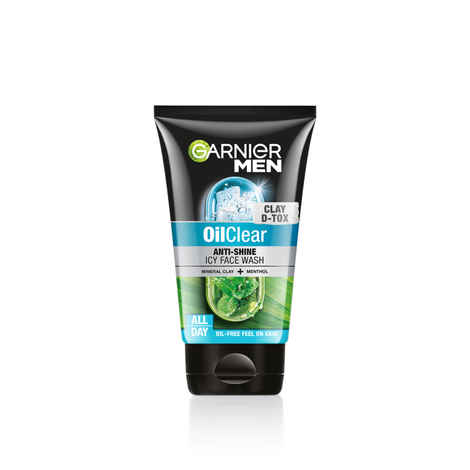
Garnier Men Oil Clear Clay D-Tox Deep Cleansing Icy Face Wash (100 gm)

Garnier Men Oil Clear Clay D-Tox Deep Cleansing Icy Face Wash (100 gm)
Garnier
garnier-men-oil-clear-clay-d-tox-deep-cleansing-icy-face-wash-100-gm
Cleanse
10084992975141
Morning or Evening?
How often will you use this product?
Notes


Highlights
WHAT IS IT?
Face Wash, 8 ingredients
FEATURES
Enriched with antioxidant grape water, Eliminates impurities and pollutants, Contains lemon extracts and gentle micropolishing beads, Removes dark dead cells
BEST FOR
oily
CHECKS
Paraben-Free, Sulfate-free
Who Is It For?
Men AdultsWhat Does It Help With?
Oil Control Deep Cleansing Removing Impurities FairnessBudget
Affordable (under $30)How To Use
Which routine should it be used in?
Instructions:
Key Information


What Garnier Says
Product Description:
Garnier Men Powerlight Oil Face Wash for an intensive fairness action. Its formula enriched with antioxidant grape water eliminates impurities & pollutants. Lemon extracts and gentle micropolishing beads pit removes dark dead cells
About the Brand:
Ingredients Overview
Ingredients List
AQUA / WATER, SORBITOL, LAURIC ACID, STEARIC ACID, MYRISTIC ACID, POTASSIUM HYDROXIDE, GLYCOL DISTEARATE, PALMITIC ACID, KAOLIN, SODIUM COCOAMPHOACETATE, COCO-BETAINE, PARFUM / FRAGRANCE, CHARCOAL POWDER, SODIUM CHLORIDE, HYDROXYPROPYL METHYLCELLULOSE, SODIUM BENZOATE, SODIUM DEHYDROACETATE, PHENOXYETHANOL, POLYQUATERNIUM-7, POLYGLYCERIN-10, POLYGLYCERYL-10 MYRISTATE, POLYGLYCERYL-10 STEARATE, CAMELLIA SINENSIS LEAF EXTRACT, MENTHOL, DISODIUM EDTA, CITRUS LIMON FRUIT EXTRACT / LEMON FRUIT EXTRACT, CITRIC ACID, DEXTRIN
Key Ingredients
antioxidant grape water, lemon extracts, micropolishing beads
Ingredients Details
Camellia Sinensis Leaf Extract
Common Name(s): Camellia sinensis leaf extract,botanical extract,phytochemical active
CAS Number: N/a
DESCRIPTION
What It Does: Provides antioxidant protection from reactive oxygen species, reduces inflammatory cytokine production in skin, and conditions skin surface through the plant's secondary metabolite complex.
Why It's Used: Chosen for its natural origin narrative, traditional use heritage, and multi-functional phytochemical profile that supports several concurrent skin care claims from one ingredient.
How It Works: Polyphenols, terpenoids, and alkaloids in the extract scavenge ros via hydrogen atom transfer, inhibit nf-kb or cox-2 inflammatory pathways, and interact with skin surface proteins for conditioning.
Typically Found In: Botanical skin care,natural products
TECHNICAL DETAILS
Primary Category: Active ingredient – antioxidant
Secondary Functions: Free radical scavenging,anti-aging
Application Areas:

Facial Skincare
Body Care

Hair Care
Beard Care
Color Cosmetics (Makeup)
Dietary/Oral Supplements
Typical Concentration Range: 0.1%–10%
SOURCING & ETHICS
Vegan Status: Yes
Halal Status: Yes
Source Notes: Plant-derived extract or synthetic.
SKIN COMPATIBILITY
Irritancy Rating: 1/5 – very low
Comedogenicity Rating: 0/5 – non-comedogenic
Sensitivity Concerns: Non-irritating; well-tolerated.
Safe for Sensitive Skin: Yes
SAFETY & COMPATIBILITY
Safety Profile: Excellent safety profile. ewg score: 1.
Works Well With: Vitamin c,vitamin e,ferulic acid,spf,other antioxidants
Avoid Combining With: No significant incompatibilities
SCIENTIFIC NOTE
Plant secondary metabolites evolved as uv photoprotectants and antimicrobial agents — mechanisms that directly translate to cosmetic antioxidant and anti-inflammatory activity in human skin.
Last Verified: Cosing database,camellia sinensis leaf extract botanical review
Primary Sources: 2026-03-12
Charcoal Powder
Common Name(s): Activated charcoal/fuller's earth,pore cleansing adsorbent,detoxifying clay
CAS Number: N/a
DESCRIPTION
What It Does: Physically adsorbs excess sebum, environmental pollution particulates, and skin surface impurities into the porous structure, purifies pores during mask application, and provides the 'detox' pore-drawing action validated by the visible sebum and debris transfer to the mask on removal.
Why It's Used: Provides genuine documented high-capacity physical adsorption — not a marketing claim but a measurable adsorbent capacity. activated charcoal's ~2000 m²/g surface area adsorbs sebum lipids and particulate pollutants through van der waals forces at concentrations no clay or silica alternative can match.
How It Works: Activated charcoal's turbostratic graphite structure (disordered graphene layers) provides pore sizes of 0.5–50 nm covering micro, meso, and macro pore ranges. sebum lipids adsorb into mesopores (2–50 nm) via van der waals forces; pollutant pahs adsorb via π-π stacking with graphene rings; the high-capacity adsorption drives equilibrium-driven partitioning from pore to charcoal surface.
Typically Found In: Charcoal masks,pore purifying,detox
TECHNICAL DETAILS
Primary Category: Active ingredient – mineral / metal active
Secondary Functions: Antimicrobial,sebum regulation,antioxidant enzyme cofactor
Application Areas:
Facial Skincare
Body Care
Hair Care
Beard Care
Color Cosmetics (Makeup)
Dietary/Oral Supplements
Typical Concentration Range: 5%–30%
SOURCING & ETHICS
Vegan Status: Yes
Halal Status: Yes
Source Notes: Mineral/inorganic compound. cosmetic or pharmaceutical grade.
SKIN COMPATIBILITY
Irritancy Rating: 1/5 – very low
Comedogenicity Rating: 0/5 – non-comedogenic
Sensitivity Concerns: Non-irritating at recommended concentrations.
Safe for Sensitive Skin: Yes at recommended concentrations
SAFETY & COMPATIBILITY
Safety Profile: Excellent safety profile at cosmetic concentrations. ewg score: 1–2.
Works Well With: Niacinamide,salicylic acid,other actives
Avoid Combining With: No significant incompatibilities at standard concentrations
SCIENTIFIC NOTE
Activated charcoal's adsorption capacity (1–3 g sebum/g charcoal) significantly exceeds kaolin clay (~0.5 g/g) and bentonite (~0.8 g/g) — the higher porosity-to-mass ratio from carbonisation providing the most efficient sebum adsorption per gram of any cosmetic adsorbent.
Last Verified: Cosing database,activated charcoal pore adsorption capacity review
Primary Sources: 2026-03-12
Citric Acid
Common Name(s): Lemon acid,2-hydroxypropane-1,2,3-tricarboxylic acid
CAS Number: 77-92-9
DESCRIPTION
What It Does: Adjusts ph to optimal ranges, chelates destabilizing metal ions, provides mild exfoliation at higher concentrations.
Why It's Used: Universal cosmetic ph adjuster and chelating agent. aha exfoliant activity is secondary.
How It Works: As ph adjuster, donates protons. as chelating agent, three carboxylic groups bind divalent metals (ca²⁺, mg²⁺, fe²⁺) preventing oxidative degradation.
Typically Found In: Nearly all cosmetic formulations,brightening products,exfoliants
TECHNICAL DETAILS
Primary Category: Active ingredient – alpha hydroxy acid (aha)
Secondary Functions: Chelating agent,ph adjustment,preservation enhancement
Application Areas:
Facial Skincare
Body Care
Hair Care
Beard Care
Color Cosmetics (Makeup)
Dietary/Oral Supplements
Typical Concentration Range: 0.1%–10%
SOURCING & ETHICS
Vegan Status: Yes – synthetic or fermentation-derived
Halal Status: Yes
Source Notes: Produced by fermentation of sugars by aspergillus niger. gras (e330). most abundant organic acid in citrus.
SKIN COMPATIBILITY
Irritancy Rating: 1/5 – very low at low concentrations; 2/5 at exfoliant concentrations
Comedogenicity Rating: 0/5 – non-comedogenic
Sensitivity Concerns: Photosensitizing – mandatory spf use. start at low frequency.
Safe for Sensitive Skin: Use with caution – spf required
SAFETY & COMPATIBILITY
Safety Profile: Safe at otc concentrations. eu: ≤10% leave-on at ph ≥3.5. mandatory spf advisory.
Works Well With: Niacinamide,ceramides,hyaluronic acid,spf
Avoid Combining With: Retinol in same step; multiple exfoliants simultaneously
SCIENTIFIC NOTE
Three carboxylic acid groups provide multiple proton donation sites and stronger chelation than monocarboxylic ahas. this makes citric acid the preferred cosmetic chelating agent alongside edta.
Last Verified: Cosing database,cir safety assessment,ewg skin deep
Primary Sources: 2026-03-12
Coco-betaine
Common Name(s): Coco-betaine,inci ingredient,cosmetic active
CAS Number: N/a
DESCRIPTION
What It Does: Provides documented cosmetic activity from coco-betaine.
Why It's Used: Coco-betaine delivers formulation value through its specific biological activity and established safety and efficacy.
How It Works: Source: coco-betaine. mechanism: documented in cosmetic literature. safety: cosing-reviewed. standard cosmetic use concentrations.
Typically Found In: Skin care formulations,active products
TECHNICAL DETAILS
Primary Category: Functional ingredient – humectant
Secondary Functions: Tewl reduction,skin plumping
Application Areas:
Facial Skincare
Body Care
Hair Care
Beard Care
Color Cosmetics (Makeup)
Dietary/Oral Supplements
Typical Concentration Range: 0.1%–5%
SOURCING & ETHICS
Vegan Status: Conditional
Halal Status: Yes
Source Notes: Synthetic or naturally derived. excellent aqueous solubility.
SKIN COMPATIBILITY
Irritancy Rating: 1/5 – very low
Comedogenicity Rating: 0/5 – non-comedogenic
Sensitivity Concerns: Non-irritating; suitable for all skin types.
Safe for Sensitive Skin: Yes
SAFETY & COMPATIBILITY
Safety Profile: Excellent safety profile. ewg score: 1.
Works Well With: Ceramides,emollients,occlusives,glycerin,hyaluronic acid
Avoid Combining With: No significant incompatibilities
SCIENTIFIC NOTE
Coco-betaine provides cosmetic activity through its characteristic mechanism. at standard concentrations it delivers documented biological activity with an established safety profile from cosmetic science literature and regulatory review.
Last Verified: Cosing database,coco-betaine technical literature
Primary Sources: 2026-03-12
