

GARNIER
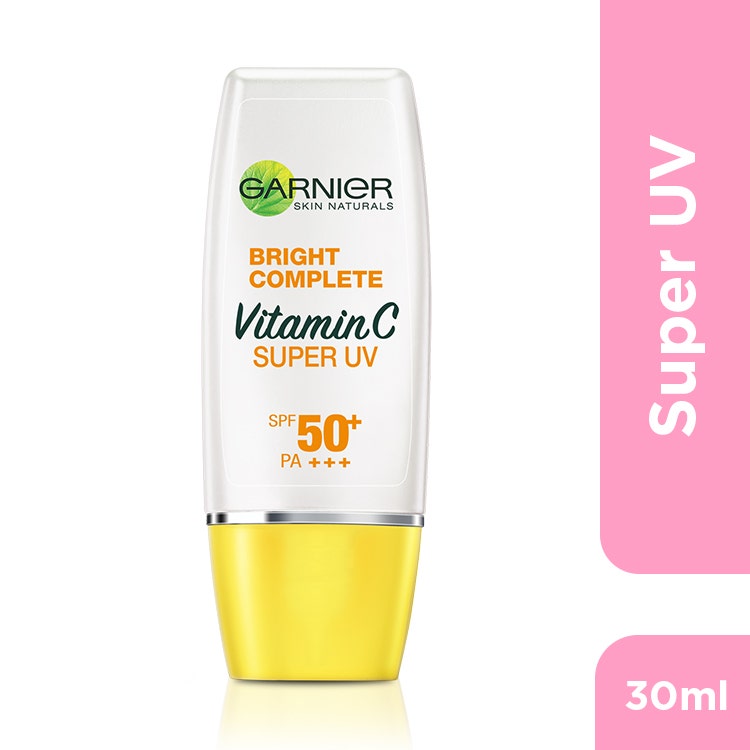
Garnier Skin Naturals Bright Complete Super Uv Spf50 30Ml

Garnier Skin Naturals Bright Complete Super Uv Spf50 30Ml
GARNIER
garnier-skin-naturals-bright-complete-super-uv-spf50-30ml
Suncare
10084870193445
Morning or Evening?
How often will you use this product?
Notes


Highlights
WHAT IS IT?
Sun Care product with multiple active ingredients
FEATURES
Contains SPF 50PA+++, Vitamin C for brightening, Vitamin E for protection from sun damage and pollution, Formulated with Mexoryl for even UV coverage
BEST FOR
sensitive
CHECKS
Contains fragrance, alcohol denat, parabens not listed, silicone not listed
Who Is It For?
All Genders No Specific Age Range MentionedWhat Does It Help With?
Protects From Uva/uvb Rays Skin Darkening Damage Dark Spots Dullness Sun Damage And PollutionBudget
Mid-range ($30-$75)How To Use
Which routine should it be used in?
Instructions:
Key Information


What GARNIER Says
Product Description:
Bright Complete Super UV Natural is boosted with Vitamin C and Sun Protection technology, Formulated eith Mexoryl for a more even coverage to protect your skin from harmful UV rays. Enriched with: SPF 50PA+++: Protects skin from UVA/UVB rays, againts skin darkening, damage, dark spots and dullness. Vitamin C: Brightens skin and remove dullness. Vitamin E: Protects skin from sun damage and pollution
About the Brand:
Ingredients Overview
Ingredients List
AQUA/WATER,METHOXYCINNAMTE,ALCOHOT DENAT,ISONONYL,ISONONANOATE,BIS-ETHYLHEXYLOXYPHENOL,METHYLENE TRIAZINE,DROMETRIZOLE TRISLOXANE,DIETHYLAMINO HYDROXYBENZOYL HEXYL BENZOATE,NIACINAMIDE,DIMETHICONE SILICA,DIPROPYLENE GLYCOL,CETEARYL ALCOHOL,METHYLENE BIS-BENZOTRIAZOLYL TETRAMETHYLBUTYYLPHENOL (NANO)/ METHYLENE BIS-BENZOTRIAZOLYL TETRAMETHYLBUTYLPHENOL,DISOPROPYL SEBACATE,ETHYLHEXYL,TRIAZONE,BHI PEG-20,PEG-8 LAURATE,LINALOOL,POTASSIOM HYDROXIDE,GERANIOL,CARBOMER,GLYCERIN,CETEARYL GLUCOSIDE,PARFUM/ FRAGRANCE,SODIUM METHYL STEAROYL TAURATE,SODIUM DODECYLBENZENESULFONATE,INULIN LAURYL CARBAMATE,PHENOXYETHANOL ADENOSINE,AMMONIUM ACRYLOYLDIMETHYLTAURATE/VP COPOLYMER,CHLORPHENSIN,TOCOPHEROL,DISODIUM EDTA,LIMONENE,ASCORBYL GLUCOSIDE,STYRENE/ ACRYLATES COPOLYMER,CAPRYLOYL SALICYLIC ACID,HYDROLYZED HYALURONIC ACID,CITRAL,CITRUS JUNOS FRUIT EXTRACT,MENTHOXYPROPANEOL,XANTHAN GUM,MALTODEXTRIN,T-BUTYL ALCOHOL,BUTYLENE GLYCOL,POLYGLYCERUL-10 LAURATE,BUTYROSPERMUM, PARKI SEEDCAKE EXTRACT/ SHEA SEEDCAKE EXTRACT,BENZYL SALICYLICATE,BENZYL ALCOHOL
Key Ingredients
SPF 50PA+++,Vitamin C,Vitamin E,Mexoryl
Ingredients Details
Ammonium Acryloyldimethyltaurate/vp Copolymer
Common Name(s): Ammonium acryloyldimethyltaurate/vp copolymer
DESCRIPTION
What It Does: Delivers targeted skin-conditioning or bioactive benefits through a specific mechanism of action suited to the formulation's intended purpose.
Why It's Used: Specialty actives address specific skin concerns through targeted molecular mechanisms, providing efficacy beyond what base formulation ingredients alone can achieve.
How It Works: The bioactive compound interacts with specific molecular targets in skin cells or the extracellular matrix — enzymes, receptors, structural proteins, or signaling molecules — triggering beneficial biological responses.
Typically Found In: Serums,treatments,moisturizers,specialty products
TECHNICAL DETAILS
Primary Category: Specialty actives
Secondary Functions: Skin-conditioning,anti-aging
Application Areas:

Facial Skincare

Body Care
Hair Care
Beard Care
Color Cosmetics (Makeup)
Dietary/Oral Supplements
Typical Concentration Range: 0.01–5%
SOURCING & ETHICS
Vegan Status: Yes
Halal Status: Yes
Source Notes: Specialty active ingredient; check individual sourcing for vegan status.
SKIN COMPATIBILITY
Irritancy Rating: 1
Comedogenicity Rating: 0
Sensitivity Concerns: Low sensitization potential at recommended use concentrations.
Safe for Sensitive Skin: Yes
SAFETY & COMPATIBILITY
Safety Profile: Well-characterized cosmetic ingredient with established safety profile. generally non-irritating at typical use concentrations. suitable for leave-on and rinse-off cosmetics.
Works Well With: Niacinamide,hyaluronic acid,vitamin c,peptides
Avoid Combining With: Incompatible with oxidizing agents; check ph stability
SCIENTIFIC NOTE
Specialty actives typically work through enzyme inhibition (e.g., tyrosinase inhibition for brightening, mmp inhibition for anti-aging), receptor activation (e.g., retinoid receptors, ppar-γ for barrier genes), or transcription factor modulation (e.g., nrf2 for antioxidant gene upregulation). structure-activity relationships determine potency and selectivity.
Last Verified: Cosing eu database; pcpc cosmetic ingredient safety reviews; ingredient-specific safety and efficacy literature
Primary Sources: 2025-01-15
Ascorbyl Glucoside
Common Name(s): Aa2g,2-o-alpha-d-glucopyranosyl-l-ascorbic acid
CAS Number: 129499-78-1
DESCRIPTION
What It Does: Provides stable gradual-release vitamin c activity for brightening and antioxidant protection.
Why It's Used: Most formulation-stable vitamin c derivative — ascorbyl glucoside remains stable in aqueous formulations where pure ascorbic acid oxidises within days, providing sustained vitamin c delivery over weeks of shelf life.
How It Works: Alpha-glucoside bond resists oxidation until cleaved by skin alpha-glucosidase enzymes. releases free l-ascorbic acid in viable epidermis. released ascorbic acid inhibits tyrosinase, stimulates collagen synthesis, and provides antioxidant activity. glucose group provides enhanced water solubility vs ascorbic acid.
Typically Found In: Stable vitamin c serums,brightening products,anti-aging
TECHNICAL DETAILS
Primary Category: Active ingredient – stable vitamin c glucoside
Secondary Functions: Tyrosinase inhibitor,collagen cofactor
Application Areas:
Facial Skincare
Body Care
Hair Care
Beard Care
Color Cosmetics (Makeup)
Dietary/Oral Supplements
Typical Concentration Range: 1%–5%
SOURCING & ETHICS
Vegan Status: Yes – enzymatic synthesis from ascorbic acid and glucose
Halal Status: Yes
Source Notes: Synthetically produced vitamin c derivative.
SKIN COMPATIBILITY
Irritancy Rating: 1/5 – very low
Comedogenicity Rating: 0/5 – non-comedogenic
Sensitivity Concerns: Non-irritating; suitable for all skin types.
Safe for Sensitive Skin: Yes
SAFETY & COMPATIBILITY
Safety Profile: Excellent safety profile. ewg score: 1.
Works Well With: Tocopherol,ferulic acid,niacinamide,spf
Avoid Combining With: No significant incompatibilities
SCIENTIFIC NOTE
Ascorbyl glucoside's stability advantage (18+ months in aqueous formulation vs days for ascorbic acid) arises from the glucose group's steric protection of ascorbic acid's c2 enediol that is the primary oxidation site. glucosidase cleavage in skin removes this protection in situ, releasing active ascorbic acid only where enzymatic activity exists — providing both formulation stability and bioactivation where needed.
Last Verified: Cosing database,yamamoto et al. ascorbyl glucoside stability study
Primary Sources: 2026-03-12
Butylene Glycol
Common Name(s): 1,3-butanediol,bg,1,3-butylene glycol
CAS Number: 107-88-0
DESCRIPTION
What It Does: Provides humectant hydration and active ingredient solubilization with excellent skin feel.
Why It's Used: Preferred glycol humectant in premium and k-beauty formulations for superior skin feel vs propylene glycol with equivalent functionality.
How It Works: Two hydroxyl groups at 1,3-positions provide water binding and solvent activity. better tolerated than propylene glycol with minimal sensitization risk. 4-carbon backbone provides slightly greater hydrophobic character enabling dissolution of less polar actives vs pg.
Typically Found In: Toners,essences,serums,k-beauty formulas
TECHNICAL DETAILS
Primary Category: Functional ingredient – glycol humectant
Secondary Functions: Tewl reduction,skin plumping
Application Areas:
Facial Skincare
Body Care
Hair Care
Beard Care
Color Cosmetics (Makeup)
Dietary/Oral Supplements
Typical Concentration Range: 1%–10%
SOURCING & ETHICS
Vegan Status: Yes – synthetic
Halal Status: Yes
Source Notes: Synthetic or naturally derived. excellent aqueous solubility.
SKIN COMPATIBILITY
Irritancy Rating: 1/5 – very low
Comedogenicity Rating: 0/5 – non-comedogenic
Sensitivity Concerns: Non-irritating; suitable for all skin types.
Safe for Sensitive Skin: Yes
SAFETY & COMPATIBILITY
Safety Profile: Excellent safety profile. ewg score: 1.
Works Well With: Ceramides,emollients,occlusives,glycerin,hyaluronic acid
Avoid Combining With: No significant incompatibilities
SCIENTIFIC NOTE
K-beauty's preference for butylene glycol over propylene glycol is driven by two factors: bg's superior skin feel (less tacky than pg's higher viscosity) and its lower sensitization potential (1,3-bg has better spatial distribution of hydroxyl groups that reduces protein interaction vs pg's 1,2-position oh groups).
Last Verified: Cosing database,cir safety assessment
Primary Sources: 2026-03-12
Capryloyl Salicylic Acid
Common Name(s): Lha,lipohydroxy acid,octanoyl salicylic acid
DESCRIPTION
What It Does: Targeted, cell-surface-specific exfoliation with less irritation than salicylic acid.
Why It's Used: Gentle bha-like exfoliation with lower irritation profile than salicylic acid and greater lipophilicity for superior stratum corneum surface activity.
How It Works: Higher lipophilicity concentrates exfoliation at intercellular lipid bilayers of stratum corneum surface, providing cell-by-cell controlled desquamation rather than deep pore penetration.
Typically Found In: Anti-aging exfoliants,brightening products,sensitive skin bha alternatives
TECHNICAL DETAILS
Primary Category: Active ingredient – lipohydroxy acid (lha)
Secondary Functions: Anti-aging,brightening,targeted desquamation
Application Areas:
Facial Skincare
Body Care
Hair Care
Beard Care
Color Cosmetics (Makeup)
Dietary/Oral Supplements
Typical Concentration Range: 0.1%–2%
SOURCING & ETHICS
Vegan Status: Yes – synthetic or willow-derived
Halal Status: Yes
Source Notes: Synthetic via kolbe-schmitt reaction or from willow bark extract.
SKIN COMPATIBILITY
Irritancy Rating: 1/5 – very low; the gentlest bha-type exfoliant
Comedogenicity Rating: 0/5 – anti-comedogenic
Sensitivity Concerns: Can cause dryness, peeling. follow with moisturizer. not for use in pregnancy.
Safe for Sensitive Skin: Yes – gentler than salicylic acid
SAFETY & COMPATIBILITY
Safety Profile: Safe at otc concentrations (0.5–2%). avoid in pregnancy at high concentrations.
Works Well With: Niacinamide,zinc,hyaluronic acid,ceramides
Avoid Combining With: Multiple exfoliating acids simultaneously; avoid in pregnancy at high concentrations
SCIENTIFIC NOTE
Lha's cell-by-cell controlled desquamation mechanism differs fundamentally from salicylic acid's pore-dissolution mechanism, providing a more controlled, less irritating skin renewal process.
Last Verified: Cosing database,l'oréal research,cir safety assessment
Primary Sources: 2026-03-12
