

GLAD2GLOW
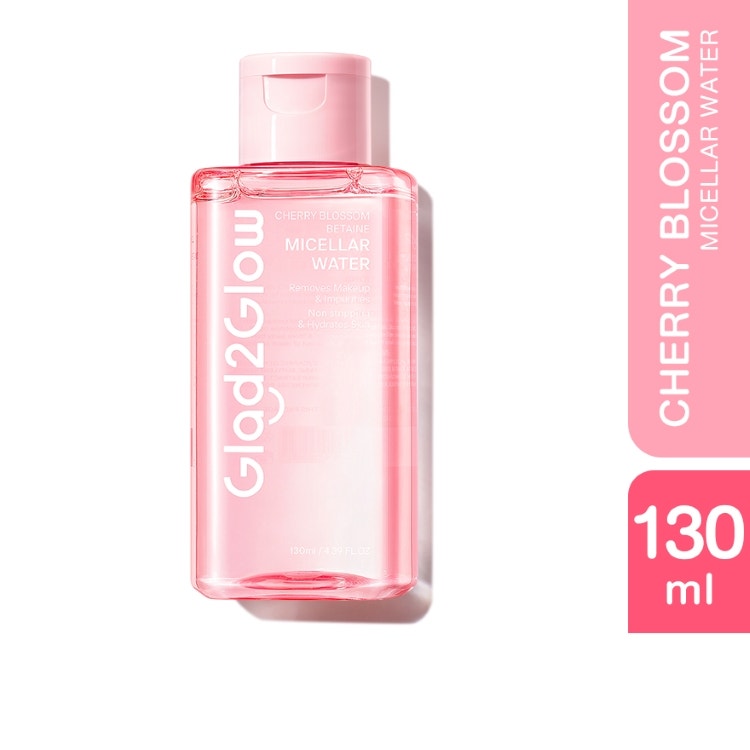
Glad2Glow Cherry Blossom Betaine Micellar Water 130Ml

Glad2Glow Cherry Blossom Betaine Micellar Water 130Ml
GLAD2GLOW
glad2glow-cherry-blossom-betaine-micellar-water-130ml
Cleanse
10084881531173
Morning or Evening?
How often will you use this product?
Notes


Highlights
WHAT IS IT?
Micellar Water, 9 ingredients
FEATURES
Removes Waterproof Makeup And Dirt, Feels Refreshing, Light As Toner, Gentle On The Eyes, Fresh And Moist Feeling, Non-Sticky
BEST FOR
all
CHECKS
None stated explicitly
Who Is It For?
What Does It Help With?
Cleansing Makeup And DirtBudget
Affordable (under $30)How To Use
Which routine should it be used in?
Instructions:
Key Information


What GLAD2GLOW Says
Product Description:
Micellar Water Containing Cherry Blossom And Betaine, Feels Refreshing To The Skin And Is As Light As Toner. Cleans Waterproof Makeup And Dirt With One Swipe, Is Gentle On The Eyes, And Gives A Fresh And Moist Feeling, Without A Sticky Feeling After Cleansing The Face. Suitable For All Skin Types.
About the Brand:
Ingredients Overview
Ingredients List
Aqua,Peg-6-Caprylic/Capric-Glycerides,Propylene-Glycol,Betaine,Butylene-Glycol,Prunus-Speciosa-Flower-Extract,Sorbitol,Disodium-Edta,Chlorphenesin,Polyaminopropyl-Biguanide
Key Ingredients
Cherry Blossom,Betaine
Ingredients Details
Betaine
Common Name(s): Trimethylglycine,tmg,natural betaine
CAS Number: 107-43-7
DESCRIPTION
What It Does: Provides osmoprotective humectant conditioning with anti-irritant and mild foam-boosting activity.
Why It's Used: Natural-origin multifunctional osmolyte from sugar beet providing hydration, anti-irritancy, and conditioning in virtually every cosmetic category.
How It Works: Quaternary ammonium betaine provides zwitterionic character for water binding via ionic hydration. osmoprotective function at 100–500mm as compatible solute protecting cells from osmotic stress. reduces surfactant irritation by competing with sls for protein binding sites. mild foam enhancement.
Typically Found In: Virtually all categories — moisturisers, shampoos, cleansers
TECHNICAL DETAILS
Primary Category: Functional ingredient – humectant
Secondary Functions: Tewl reduction,skin plumping
Application Areas:

Facial Skincare
Body Care
Hair Care

Beard Care
Color Cosmetics (Makeup)
Dietary/Oral Supplements
Typical Concentration Range: 0.5%–10%
SOURCING & ETHICS
Vegan Status: Yes – from beta vulgaris (sugar beet) molasses
Halal Status: Yes
Source Notes: Synthetic or naturally derived. excellent aqueous solubility.
SKIN COMPATIBILITY
Irritancy Rating: 1/5 – very low
Comedogenicity Rating: 0/5 – non-comedogenic
Sensitivity Concerns: Non-irritating; suitable for all skin types.
Safe for Sensitive Skin: Yes
SAFETY & COMPATIBILITY
Safety Profile: Excellent safety profile. ewg score: 1.
Works Well With: Ceramides,emollients,occlusives,glycerin,hyaluronic acid
Avoid Combining With: No significant incompatibilities
SCIENTIFIC NOTE
Betaine's anti-irritant mechanism for surfactant systems involves competitive protein protection: betaine at high concentrations preferentially interacts with skin proteins, occupying binding sites that would otherwise be occupied by surfactant molecules causing protein denaturation. this competition reduces available protein binding for irritating surfactants, explaining betaine's well-documented ability to reduce sls irritation when co-formulated.
Last Verified: Cosing database,craig betaine osmoprotective review,cir safety assessment
Primary Sources: 2026-03-12
Chlorphenesin
Common Name(s): 3-(4-chlorophenoxy)-1,2-propanediol,globacid
CAS Number: 104-29-0
DESCRIPTION
What It Does: Provides gram-negative focused preservation complementary to phenoxyethanol for comprehensive spectrum coverage.
Why It's Used: Phenoxyethanol complement — chlorphenesin's gram-negative and antifungal coverage complements phenoxyethanol's gram-positive activity for full-spectrum preservation at lower individual concentrations.
How It Works: 4-chlorophenol ether glycol disrupts bacterial and fungal membranes. strong gram-negative activity (pseudomonas, e. coli). good candida antifungal activity. used with phenoxyethanol for synergistic broad-spectrum coverage. ph stable 3-9.
Typically Found In: Comprehensive preservation systems,baby products (low concentration)
TECHNICAL DETAILS
Primary Category: Functional ingredient – glycerol ether preservative
Secondary Functions: Skin conditioning
Application Areas:
Facial Skincare
Body Care
Hair Care
Beard Care
Color Cosmetics (Makeup)
Dietary/Oral Supplements
Typical Concentration Range: 0.1%–0.3%
SOURCING & ETHICS
Vegan Status: Yes – synthetic
Halal Status: Yes
Source Notes: Commercially produced for cosmetic use. verify vegan/halal status with supplier.
SKIN COMPATIBILITY
Irritancy Rating: 1/5 – very low
Comedogenicity Rating: 0/5 – non-comedogenic
Sensitivity Concerns: Well-tolerated by most skin types.
Safe for Sensitive Skin: Yes
SAFETY & COMPATIBILITY
Safety Profile: Eu max 0.3% cosmetics. good safety profile. synergistic combination with phenoxyethanol (0.3% pe + 0.1% chlorphenesin often equivalent to 1% pe alone).
Works Well With: Standard skincare actives
Avoid Combining With: No known significant incompatibilities
SCIENTIFIC NOTE
Chlorphenesin + phenoxyethanol synergy operates through a classic spectrum-filling combination: phenoxyethanol provides strong gram-positive antimicrobial activity while chlorphenesin provides gram-negative and antifungal coverage. the combination's minimum inhibitory concentration sum is subadditive (provides equivalent preservation at combined concentrations below what either alone would require) — textbook pharmacological synergy enabling lower total preservative load.
Last Verified: Cosing database,eu preservative annex v,cir safety assessment
Primary Sources: 2026-03-12
Sorbitol
Common Name(s): D-glucitol,l-glucitol,sorbol
CAS Number: 50-70-4
DESCRIPTION
What It Does: Attracts and retains moisture providing skin softening and hydration.
Why It's Used: Widely used, cost-effective humectant and formulation ingredient in moisturizers, toothpastes, and personal care.
How It Works: 6 hydroxyl groups provide strong water binding through hydrogen bonding. metabolized slowly by skin as an osmolyte.
Typically Found In: Moisturizers,body lotions,toothpaste,shampoos,many personal care products
TECHNICAL DETAILS
Primary Category: Functional ingredient – sugar alcohol humectant
Secondary Functions: Formulation solvent,viscosity modifier
Application Areas:
Facial Skincare
Body Care
Hair Care
Beard Care
Color Cosmetics (Makeup)
Dietary/Oral Supplements
Typical Concentration Range: 1%–30%
SOURCING & ETHICS
Vegan Status: Yes – plant-derived (corn, apples) or synthetic
Halal Status: Yes
Source Notes: Produced by catalytic hydrogenation of glucose. derived from corn starch or other carbohydrate sources. gras food-approved.
SKIN COMPATIBILITY
Irritancy Rating: 1/5 – very low
Comedogenicity Rating: 0/5 – non-comedogenic
Sensitivity Concerns: Non-irritating; suitable for all skin types.
Safe for Sensitive Skin: Yes
SAFETY & COMPATIBILITY
Safety Profile: Excellent safety profile. ewg score: 1.
Works Well With: Ceramides,emollients,occlusives,glycerin,hyaluronic acid
Avoid Combining With: No significant incompatibilities
SCIENTIFIC NOTE
Sorbitol's osmolyte function in cells (accumulates in response to osmotic stress) suggests it may provide protection to skin cells under dehydrating environmental conditions, complementing its well-established surface humectant activity.
Last Verified: Cosing database,cir safety assessment,ewg skin deep
Primary Sources: 2026-03-12
