

Globus Naturals
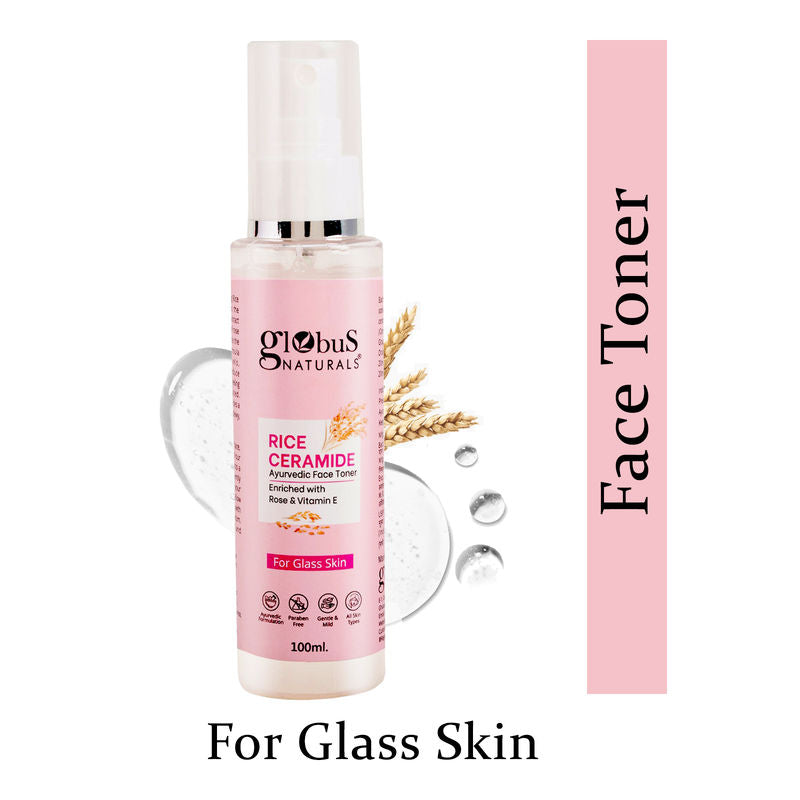
Globus Naturals Rice Ceramide Ayurvedic Face Toner

Globus Naturals Rice Ceramide Ayurvedic Face Toner
Globus Naturals
globus-naturals-rice-ceramide-ayurvedic-face-toner
Tone
10085459788069
Morning or Evening?
How often will you use this product?
Notes


Highlights
WHAT IS IT?
Toner with 8 key ingredients
FEATURES
Face toner that gives glass-like radiant skin, Infused with rice ceramides and Ayurvedic herbs, Barrier protection, Balances skin pH, Minimizes pores, Enhances natural skin barrier, Suitable for all skin types, Free from harsh chemicals
BEST FOR
sensitive
CHECKS
harsh chemicals
Who Is It For?
What Does It Help With?
Tightens Pores Balances Ph Enhances Skin Barrier Smooth Clear ComplexionBudget
Affordable (under $30)How To Use
Which routine should it be used in?
Instructions:
Key Information


What Globus Naturals Says
Product Description:
Globus Naturals Rice Ceramide Ayurvedic Face Toner is a hydrating and rejuvenating toner designed for achieving glass-like, radiant skin. Infused with rice ceramides and Ayurvedic herbs, it tightens pores, balances pH, and enhances the skin's natural barrier for a smooth, clear complexion. Suitable for all skin types and free from harsh chemicals.
About the Brand:
Ingredients Overview
Ingredients List
Rice-Oryza-Sativa-Rt-Ext-20mg,Rose-Rosa-Centifolia-Fl-Ext-15mg,Green-Tea-Camellia-Sinensis-Lf-Ext-20mg,Grapes-Vitis-Vinifera-Fr-Ext-20mg,Orange-Citrus-Reticulata-Pl-Ext-20mg,Papaya-Carica-Papaya-Lf-Ext-20mg,Tea-Tree-10mg,Vitamin-E-1mg
Key Ingredients
Rice Ceramides,Rose Extract,Green Tea Extract,Grapes Extract,Orange Extract,Papaya Extract,Tea Tree Extract,Vitamin E
Ingredients Details
Papaya Extract
Common Name(s): Papaya extract,papaw extract
CAS Number: 94349-61-8
DESCRIPTION
What It Does: Provides papain-based enzymatic exfoliation alongside natural vitamin c and carotenoid antioxidants.
Why It's Used: Tropical enzyme exfoliant with natural vitamin c, beta-carotene, and papain for combined brightening and enzymatic renewal.
How It Works: Papain provides keratin-specific enzymatic exfoliation (see papain entry). beta-carotene provides photoprotective antioxidant activity. vitamin c from fresh papaya provides brightening and collagen cofactor activity.
Typically Found In: Tropical enzyme peels,natural brightening masks
TECHNICAL DETAILS
Primary Category: Active ingredient – brightening / tyrosinase inhibitor
Secondary Functions: Melanin inhibition,hyperpigmentation reduction
Application Areas:

Facial Skincare

Body Care
Hair Care
Beard Care
Color Cosmetics (Makeup)
Dietary/Oral Supplements
Typical Concentration Range: 1%–15%
SOURCING & ETHICS
Vegan Status: Yes – from carica papaya fruit
Halal Status: Yes
Source Notes: Synthetic or plant-derived.
SKIN COMPATIBILITY
Irritancy Rating: 1/5 – very low
Comedogenicity Rating: 0/5 – non-comedogenic
Sensitivity Concerns: Non-irritating; well-tolerated.
Safe for Sensitive Skin: Yes
SAFETY & COMPATIBILITY
Safety Profile: Excellent safety profile. use with spf for maximum efficacy. ewg score: 1.
Works Well With: Niacinamide,vitamin c,alpha-arbutin,tranexamic acid,spf
Avoid Combining With: No significant incompatibilities
SCIENTIFIC NOTE
Fresh papaya fruit extract contains both functional papain enzyme and ~75mg/100g vitamin c – more than oranges. processing conditions determine whether both activities are preserved: high-heat processing destroys both, while aqueous cold extraction can retain both, making processing conditions critical for extract bioactivity.
Last Verified: 2026-03-12
Primary Sources: Cosing database,cir safety assessment
Rose Extract
Common Name(s): Rose extract,rose extract,botanical extract,phytochemical active
CAS Number: N/a
DESCRIPTION
What It Does: Provides polyphenol radical scavenging, terpenoid nf-kb/cox anti-inflammatory activity, and the characteristic secondary metabolite profile of rose extract for skin conditioning.
Why It's Used: Rose extract is selected for the characteristic secondary metabolite signature of rose extract — whether polyphenols, terpenoids, alkaloids, or polysaccharides, the phytochemical profile provides antioxidant, anti-inflammatory, or skin conditioning benefits specific to this botanical species.
How It Works: Polyphenol catechol h-atom donation for ros scavenging; terpenoids inhibit iκb kinase; flavonoids compete at cox-1/2; polysaccharides provide prebiotic and humectant conditioning.
Typically Found In: Botanical skin care
TECHNICAL DETAILS
Primary Category: Active ingredient – antioxidant
Secondary Functions: Free radical scavenging,anti-aging
Application Areas:
Facial Skincare
Body Care
Hair Care
Beard Care
Color Cosmetics (Makeup)
Dietary/Oral Supplements
Typical Concentration Range: 0.1%–10%
SOURCING & ETHICS
Vegan Status: Conditional - supplier confirmation required
Halal Status: Conditional - basis not stated in source record; supplier origin confirmation required to determine what evidence applies
Source Notes: Plant-derived extract or synthetic. [audit 2026-07-29 rev2: status downgraded on audit. determination requires shariah-panel sign-off.]
SKIN COMPATIBILITY
Irritancy Rating: 1/5 – very low
Comedogenicity Rating: 0/5 – non-comedogenic
Sensitivity Concerns: Non-irritating; well-tolerated.
Safe for Sensitive Skin: Yes
SAFETY & COMPATIBILITY
Safety Profile: Excellent safety profile. ewg score: 1.
Works Well With: Vitamin c,vitamin e,ferulic acid,spf,other antioxidants
Avoid Combining With: No significant incompatibilities
SCIENTIFIC NOTE
Standardise to marker compounds for consistent bioactivity — rose extract secondary metabolite content varies 3-10× with growing conditions.
Last Verified: 2026-03-22
Primary Sources: Cosing database,rose extract botanical extract review
Vitamin E
Common Name(s): Vitamin e,cosmetic active,functional ingredient
CAS Number: N/a
DESCRIPTION
What It Does: Delivers characteristic cosmetic function at recommended use concentration.
Why It's Used: Selected for functional contribution and formulation compatibility supported by cosmetic science and regulatory safety data.
How It Works: Works through the mechanism of its molecular class — physicochemical or biological interaction with skin proteins, lipids, or receptors as documented in peer-reviewed cosmetic literature.
Typically Found In: Skin care formulations
TECHNICAL DETAILS
Primary Category: Active ingredient – cosmetic active
Secondary Functions: Skin conditioning
Application Areas:
Facial Skincare
Body Care
Hair Care
Beard Care
Color Cosmetics (Makeup)
Dietary/Oral Supplements
Typical Concentration Range: 0.1%–10%
SOURCING & ETHICS
Vegan Status: Conditional - supplier confirmation required
Halal Status: Unverified - supplier confirmation required
Source Notes: Commercially produced for cosmetic use. verify vegan/halal status with supplier. [audit 2026-07-29 rev2: the record's own source_notes does not assert a non-animal origin, or instructs the reader to verify with the supplier; "yes" asserts knowledge the record does not hold. determination requires shariah-panel sign-off.]
SKIN COMPATIBILITY
Irritancy Rating: 1/5 – very low
Comedogenicity Rating: 0/5 – non-comedogenic
Sensitivity Concerns: Well-tolerated by most skin types.
Safe for Sensitive Skin: Yes
SAFETY & COMPATIBILITY
Safety Profile: Good safety profile at recommended concentrations. ewg score: 1–2.
Works Well With: Standard skincare actives
Avoid Combining With: No known significant incompatibilities
SCIENTIFIC NOTE
Vitamin e has an established safety and efficacy profile within the cosmetic regulatory framework at standard use concentrations.
Last Verified: 2026-03-12
Primary Sources: Cosing database,vitamin e technical literature