
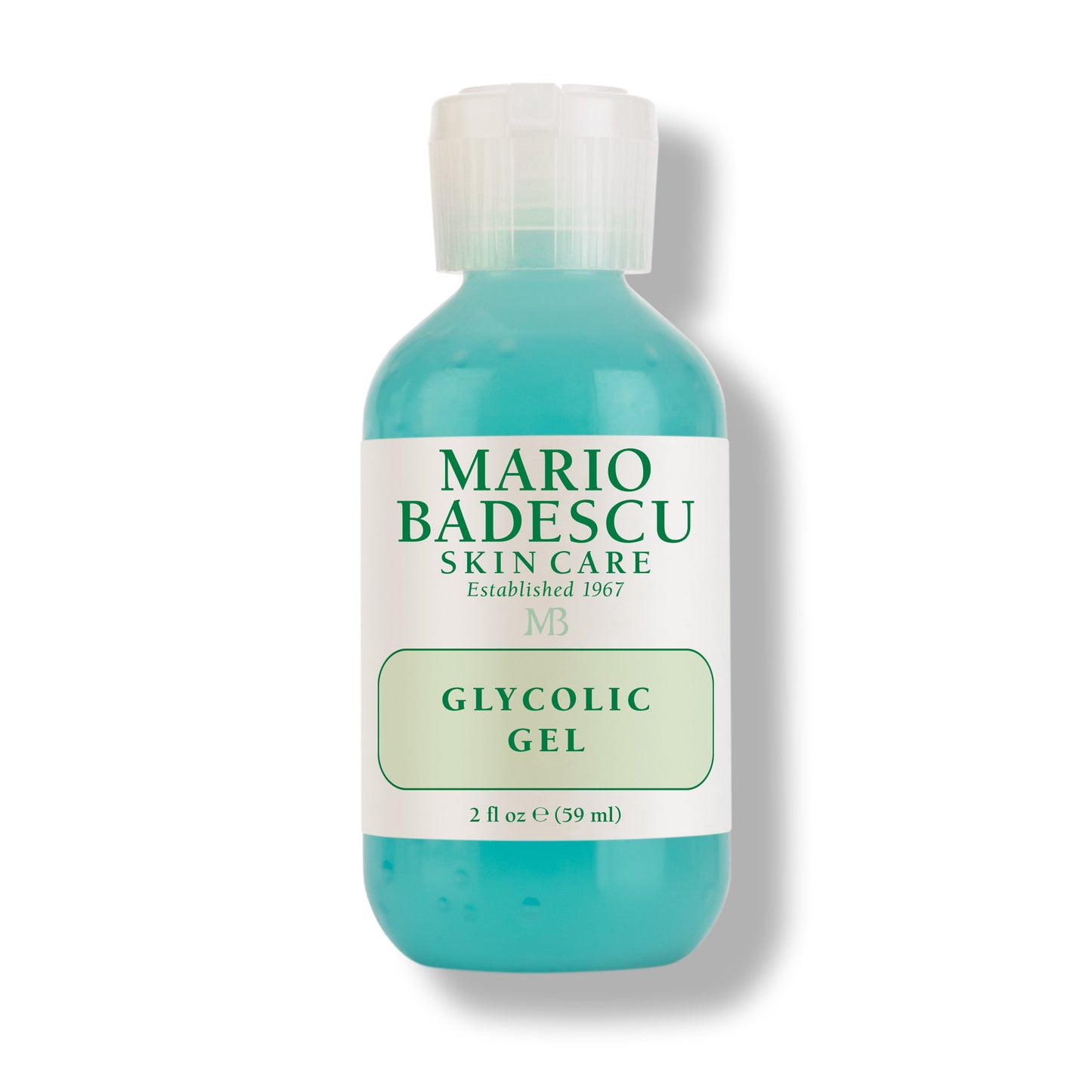

Mario Badescu
Glycolic Gel

Glycolic Gel
Mario Badescu
glycolic-gel
Serum
9818368737573
Morning or Evening?
How often will you use this product?
Notes


Highlights
WHAT IS IT?
Glycolic acid treatment gel
FEATURES
Lightweight, oil-free formula that resurfaces and refines skin texture
BEST FOR
oily, congested skin
CHECKS
Free of alcohol, silicon, oil, paraben, sulfate
Who Is It For?
Adults With Congested Oily SkinWhat Does It Help With?
Pore Congestion Dull Skin Uneven Texture Skin ClarityBudget
Affordable (under $30)How To Use
Which routine should it be used in?
Instructions:
Key Information


What Mario Badescu Says
Product Description:
Oil-free, lightweight gel that resurfaces and refines to help reduce pore congestion and brighten dull, uneven skin. Helps boost skin's clarity
About the Brand:
Ingredients Overview
Ingredients List
Aqua (Water, Eau), Propylene Glycol, Glycolic Acid, Sclerotium Gum, Citrus Grandis (Grapefruit) Fruit Extract, Caprylyl Glycol, Hexylene Glycol, Butyl Methoxydibenzoylmethane, Ethylhexyl Methoxycinnamate, PPG-26-Buteth-26, Ethylhexyl Salicylate, PEG-40 Hydrogenated Castor Oil, Sodium Chloride, Parfum (Fragrance), Phenoxyethanol, Ci 42090 (Blue 1), Ci 45410 (Red 28), Ci 19140 (Yellow 5)
Key Ingredients
glycolic-acid, butyl Methoxydibenzoylmethane, ethylhexyl Methoxycinnamate, ethylhexyl Salicylate
Ingredients Details
Glycolic Acid
Common Name(s): Hydroxyacetic acid,2-hydroxyacetic acid
CAS Number: 79-14-1
DESCRIPTION
What It Does: Provides maximum aha efficacy from the smallest most penetrating alpha-hydroxy acid.
Why It's Used: The most potent aha — glycolic acid's smallest molecular size provides the deepest penetration and highest efficacy of any alpha-hydroxy acid for exfoliation and anti-aging.
How It Works: Smallest aha (mw 76) provides deepest stratum corneum penetration. disrupts corneodesmosomes reducing cohesion. stimulates fibroblast collagen i and iii synthesis. efficacy is ph-dependent — free acid fraction determines activity.
Typically Found In: Chemical peels,body lotions,anti-aging serums,exfoliating toners
TECHNICAL DETAILS
Primary Category: Active ingredient – primary aha
Secondary Functions: Brightening,collagen stimulation
Application Areas:

Facial Skincare
Body Care

Hair Care
Beard Care
Color Cosmetics (Makeup)
Dietary/Oral Supplements
Typical Concentration Range: 1%–10% cosmetic; higher professional
SOURCING & ETHICS
Vegan Status: Yes – synthetic or fermentation-derived
Halal Status: Yes
Source Notes: Fermentation-derived or synthetic. ph must be ≤4.0 for aha activity.
SKIN COMPATIBILITY
Irritancy Rating: 2/5 – low to moderate
Comedogenicity Rating: 0/5 – non-comedogenic
Sensitivity Concerns: Photosensitizing – mandatory spf use. start at low frequency.
Safe for Sensitive Skin: Use with caution – spf required
SAFETY & COMPATIBILITY
Safety Profile: Eu cosmetics: max 10% leave-on, ph ≥3.5, mandatory sun protection advisory. professional peel concentrations regulated separately.
Works Well With: Niacinamide,ceramides,hyaluronic acid,spf
Avoid Combining With: Retinol in same step; multiple exfoliants simultaneously
SCIENTIFIC NOTE
Glycolic acid's ph-dependent efficacy is critical: at ph 3.0 ~100% is in the free acid (membrane-permeable) form; at ph 3.5 ~70%; at ph 4.0 ~50%. the eu ph ≥3.5 requirement reduces free acid proportion, lowering efficacy but also reducing irritation — why professional peel concentrations at lower ph are far more active than equivalent cosmetic concentrations.
Last Verified: 2026-03-12
Primary Sources: Cosing database,eu aha guidelines,cir safety assessment