

Good Vibes
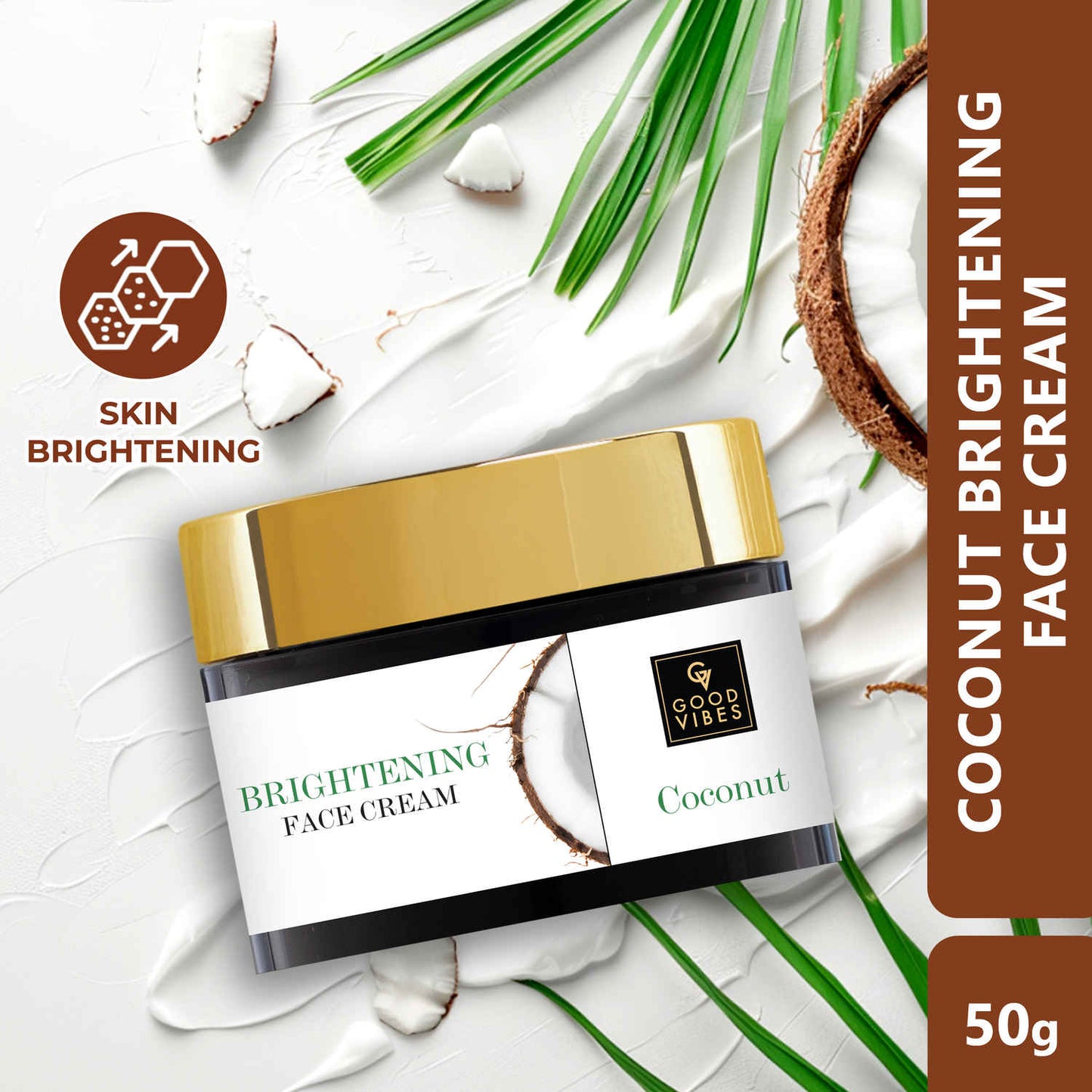
Good Vibes Coconut Brightening Face Cream | Moisturizing, Provides Glow | No Parabens, No Sulphates, No Mineral Oil, No Animal Testing (50 gm)

Good Vibes Coconut Brightening Face Cream | Moisturizing, Provides Glow | No Parabens, No Sulphates, No Mineral Oil, No Animal Testing (50 gm)
Good Vibes
good-vibes-coconut-brightening-face-cream-moisturizing-provides-glow-no-parabens-no-sulphates-no-mineral-oil-no-animal-testing-50-gm
Moisturize
10084949033253
Morning or Evening?
How often will you use this product?
Notes


Highlights
WHAT IS IT?
Face Cream with Coconut ingredient
FEATURES
Moisturizing, Provides Glow, Contains Coconut ingredient, Deeply conditions skin, Softens and smoothens, Repairs skin tissue wear and tear, Soothes dry skin, Prevents premature ageing, Firms skin, Suitable for damaged dry and dull skin
BEST FOR
dry
CHECKS
No Parabens, No Sulphates, No Mineral Oil, No Animal Testing
Who Is It For?
What Does It Help With?
Moisturizing Glowing Skin Repairing Soothing Dry Skin Anti-ageing Firming SkinBudget
Affordable (under $30)How To Use
Which routine should it be used in?
Instructions:
Key Information


What Good Vibes Says
Product Description:
Coconut is a natural ingredient that is so refreshing and calming for the skin. The Good Vibes Coconut Brightening Cream provides your skin with a moisturized radiant glow. It acts as a moisturiser that deeply conditions your skin making it softer and smoother to feel. It also helps repair the wear and tear of tissues on your skin. It gently soothes dry skin to hydrate thoroughly. The magic of Coconut prevents premature ageing and makes your skin firm bringing back the flawless feeling of youth in you. This cool cream is best recommended for damaged dry and dull skin. Brace yourselves for the magic of Coconut in a naturally nurturing Face Cream
About the Brand:
Ingredients Overview
Ingredients List
Coconut Oil, Jojoba Oil, Wheat Germ Oil, Glycerin, Green Tea Extract, Aloe Vera Extract, Cucumber Extract, Caprylic Triglyceride, Arbutin, Hydrogenated Polydecene, Sodium Acrylates Copolymer, Disodium EDTA, Calendula Extract, Liquorice Extract, PPG-1 Trideceth-6, Fragrance
Key Ingredients
Coconut
Ingredients Details
Arbutin
Common Name(s): Arbutin,cosmetic active,functional ingredient
CAS Number: N/a
DESCRIPTION
What It Does: Delivers characteristic cosmetic function — skin conditioning, protection, preservation, or active biological benefit — at recommended use concentration.
Why It's Used: Selected for its functional contribution and formulation compatibility — supported by cosmetic science literature and regulatory safety assessment.
How It Works: Works through the mechanism of its molecular class — physicochemical interaction with the formulation or biological interaction with skin proteins, lipids, or receptors as documented in peer-reviewed literature.
Typically Found In: Skin care formulations
TECHNICAL DETAILS
Primary Category: Active ingredient – cosmetic active
Secondary Functions: Skin conditioning
Application Areas:

Facial Skincare

Body Care
Hair Care
Beard Care
Color Cosmetics (Makeup)
Dietary/Oral Supplements
Typical Concentration Range: 0.1%–10%
SOURCING & ETHICS
Vegan Status: Conditional
Halal Status: Yes
Source Notes: Commercially produced for cosmetic use. verify vegan/halal status with supplier.
SKIN COMPATIBILITY
Irritancy Rating: 1/5 – very low
Comedogenicity Rating: 0/5 – non-comedogenic
Sensitivity Concerns: Well-tolerated by most skin types.
Safe for Sensitive Skin: Yes
SAFETY & COMPATIBILITY
Safety Profile: Good safety profile at recommended concentrations. ewg score: 1–2.
Works Well With: Standard skincare actives
Avoid Combining With: No known significant incompatibilities
SCIENTIFIC NOTE
Arbutin delivers documented functional benefit with an established safety profile within the cosmetic regulatory framework (cosing eu, cir usa).
Last Verified: Cosing database,arbutin technical literature
Primary Sources: 2026-03-12
Calendula Extract
Common Name(s): Pot marigold extract,calendula extract
CAS Number: 84776-23-8
DESCRIPTION
What It Does: Heals wounds, reduces inflammation, and soothes irritated skin through faradiol triterpenoid and flavonoid activity.
Why It's Used: Clinically proven traditional wound healing botanical with anti-inflammatory activity comparable to prescription diclofenac in some studies for skin wounds.
How It Works: Faradiol esters inhibit cox-1/cox-2 providing anti-inflammatory activity. polysaccharides promote fibroblast and keratinocyte proliferation. isorhamnetin and narcissin flavonoids provide antioxidant protection. oleanolic acid provides antimicrobial activity.
Typically Found In: Wound healing products,baby products,sensitive skin,post-procedure care
TECHNICAL DETAILS
Primary Category: Active ingredient – soothing / anti-inflammatory
Secondary Functions: Faradiol triterpenoid anti-inflammatory,wound healing
Application Areas:
Facial Skincare
Body Care
Hair Care
Beard Care
Color Cosmetics (Makeup)
Dietary/Oral Supplements
Typical Concentration Range: 0.1%–5%
SOURCING & ETHICS
Vegan Status: Yes – calendula officinalis flower-derived
Halal Status: Yes
Source Notes: Plant-derived extract or synthetic.
SKIN COMPATIBILITY
Irritancy Rating: 1/5 – very low
Comedogenicity Rating: 0/5 – non-comedogenic
Sensitivity Concerns: Non-irritating; ideal for reactive and sensitive skin.
Safe for Sensitive Skin: Yes – particularly recommended for sensitive skin
SAFETY & COMPATIBILITY
Safety Profile: Excellent safety profile. ewg score: 1.
Works Well With: Ceramides,panthenol,allantoin,hyaluronic acid,centella asiatica
Avoid Combining With: No significant incompatibilities
SCIENTIFIC NOTE
Faradiol monoester and diester triterpenoids are among the most potent naturally occurring cox inhibitors – ic50 values comparable to indomethacin (a prescription nsaid) for cox-2 inhibition. this explains calendula's clinically observed anti-inflammatory potency exceeding expectations for a cosmetic ingredient.
Last Verified: Cosing database,preethi & kuttan calendula anti-inflammatory study,cir safety assessment
Primary Sources: 2026-03-12
Coconut Oil
Common Name(s): Coconut oil,botanical oil,phytochemical active
CAS Number: N/a
DESCRIPTION
What It Does: Provides antioxidant protection from reactive oxygen species, reduces inflammatory cytokine production in skin, and conditions skin through the plant's phytochemical complex.
Why It's Used: Natural origin narrative, traditional use heritage, and multi-functional phytochemical profile supporting concurrent skin care claims from one ingredient.
How It Works: Polyphenols, terpenoids, and alkaloids scavenge ros via h• donation, inhibit nf-kb or cox-2 inflammatory pathways, and interact with skin surface proteins for conditioning.
Typically Found In: Botanical skin care,natural products
TECHNICAL DETAILS
Primary Category: Active ingredient – antioxidant
Secondary Functions: Free radical scavenging,anti-aging
Application Areas:
Facial Skincare
Body Care
Hair Care
Beard Care
Color Cosmetics (Makeup)
Dietary/Oral Supplements
Typical Concentration Range: 0.1%–10%
SOURCING & ETHICS
Vegan Status: Conditional
Halal Status: Yes
Source Notes: Plant-derived extract or synthetic.
SKIN COMPATIBILITY
Irritancy Rating: 1/5 – very low
Comedogenicity Rating: 0/5 – non-comedogenic
Sensitivity Concerns: Non-irritating; well-tolerated.
Safe for Sensitive Skin: Yes
SAFETY & COMPATIBILITY
Safety Profile: Excellent safety profile. ewg score: 1.
Works Well With: Vitamin c,vitamin e,ferulic acid,spf,other antioxidants
Avoid Combining With: No significant incompatibilities
SCIENTIFIC NOTE
Plant secondary metabolites evolved as photoprotectants and antimicrobials — mechanisms directly applicable to cosmetic antioxidant and anti-inflammatory activity in human skin.
Last Verified: Cosing database,coconut oil botanical review
Primary Sources: 2026-03-12
Cucumber Extract
Common Name(s): Cucumber extract,cucumber juice
DESCRIPTION
What It Does: Soothes and refreshes irritated skin with anti-inflammatory and astringent properties.
Why It's Used: Classic gentle soothing botanical for sensitive skin formulations with astringent, hydrating, and depuffing properties.
How It Works: Caffeic acid inhibits prostaglandin synthesis. cucurbitacins provide anti-inflammatory activity. high water content provides hydration. ascorbic acid provides antioxidant support. silica provides mild astringency.
Typically Found In: Toners,eye gels,sensitive skin products,after-sun formulations
TECHNICAL DETAILS
Primary Category: Active ingredient – soothing / anti-inflammatory
Secondary Functions: Gentle soothing,astringent,depuffing
Application Areas:
Facial Skincare
Body Care
Hair Care
Beard Care
Color Cosmetics (Makeup)
Dietary/Oral Supplements
Typical Concentration Range: 0.5%–20%
SOURCING & ETHICS
Vegan Status: Yes – plant-derived
Halal Status: Yes
Source Notes: Plant-derived extract or synthetic.
SKIN COMPATIBILITY
Irritancy Rating: 1/5 – very low
Comedogenicity Rating: 0/5 – non-comedogenic
Sensitivity Concerns: Non-irritating; ideal for reactive and sensitive skin.
Safe for Sensitive Skin: Yes – particularly recommended for sensitive skin
SAFETY & COMPATIBILITY
Safety Profile: Excellent safety profile. ewg score: 1.
Works Well With: Ceramides,panthenol,allantoin,hyaluronic acid,centella asiatica
Avoid Combining With: No significant incompatibilities
SCIENTIFIC NOTE
Cucumber's traditional use for puffy eyes has a physiological basis – the combination of mild astringency (silica-mediated protein contraction), anti-inflammatory (caffeic acid), and coolness (high water content evaporation) provides a triple-action depuffing effect that explains its enduring use.
Last Verified: Cosing database,cir safety assessment
Primary Sources: 2026-03-12
