

HADA LABO
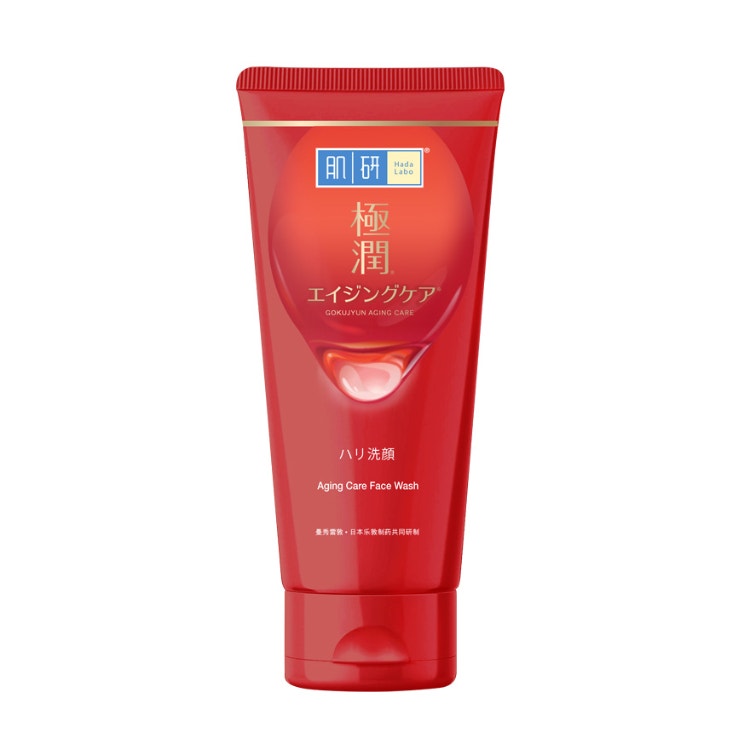
Hada Labo Aging Care Face Wash 100G

Hada Labo Aging Care Face Wash 100G
HADA LABO
hada-labo-aging-care-face-wash-100g
Cleanse
10084787650853
Morning or Evening?
How often will you use this product?
Notes


Highlights
WHAT IS IT?
Face Wash combining Retinol, Collagen, 2 Peptides, 3 Hyaluronic Acids
FEATURES
Restores elasticity, combats collagen loss, firms skin, minimizes fine lines, nourishes moisture barrier, brightens skin, deeply hydrates, minimizes pores, skin pH balanced, low irritation, free from harsh chemicals
BEST FOR
sensitive
CHECKS
Free of alcohol, paraben, colorant, artificial fragrance, mineral oil, MIT
Who Is It For?
What Does It Help With?
Signs Of Aging Dull Skin Fine Lines Elasticity Loss Hydration Pore MinimizationBudget
Mid-range ($30-$75)How To Use
Which routine should it be used in?
Instructions:
Key Information


What HADA LABO Says
Product Description:
Hada Labo Aging Care Face Wash combine Retinol, Collagen, 2 Peptides, and 3 Hyaluronic Acids designed to address the signs of aging. It effectively reveals more youthful radiance and smoother skin. The foam has a luxurious and dense texture, leaving the skin hydrated without any tightness after washing. Retinol & Collagen restore elasticity and combat collagen loss, promoting firmer, fuller skin. 2 Peptides effectively firm the skin and minimize fine lines. 8 Amino Acids and 3 Ceramides nourish and strengthen skin's moisture barrier. Vitamin C and Niacinamide brighten dull skin and strengthen the skin barrier. 3 types of Hyaluronic Acids deeply hydrate, leaving skin soft and moisturized. Mushroom Extract minimizes pores and refines skin texture. Skin pH balanced and gentle care for delicate skin. Free of alcohol, paraben, colorant, artificial fragrance, mineral oil and MIT. Low irritation and suitable for sensitive skin.
About the Brand:
Ingredients Overview
Ingredients List
Water,Glycerin,Sodium-Cocoyl-Glycinate,Butylene-Glycol,Hydroxypropyl-Starch-Phosphate,Sodium-Methyl-Cocoyl-Taurate,Decyl-Glucoside,Cocamidopropyl-Betaine,Citric-Acid,Glyceryl-Stearate-SE,Potassium-Cocoyl-Glycinate,Myristic-Acid,Styrene/Acrylates-Copolymer,Polyquaternium-7,Phenoxyethanol,Lauric-Acid,Disodium-EDTA,Sodium-Chloride,Chlorphenesin,Salicylic-Acid,Hydroxypropyl-Methylcellulose,Citrus-Medica-Limonum-(Lemon)-Peel-Oil,Citrus-Paradisi-(Grapefruit)-Peel-Oil,BHT,Ethylhexylglycerin,Sodium-Benzoate,Sodium-Citrate,Sodium-Acetylated-Hyaluronate,Sodium-Hyaluronate,Hydrolyzed-Sodium-Hyaluronate,Glyoxal,3-O-Ethyl-Ascorbic-Acid,Niacinamide,Mannitol,Retinyl-Propionate,Fomes-Officinalis-(Mushroom)-Extract,Betaine,Sodium-Lauroyl-Lactylate,Sodium-PCA,Hydrolyzed-Algin,Sodium-Lactate,Pentylene-Glycol,PCA,Serine,Alanine,Collagen,Glycine,Ceramide-NP,Phytosphingosine,Ceramide-AP,Cholesterol,1,2-Hexanediol,Glutamic-Acid,Xanthan-Gum,Lysine-HCL,Threonine,PEG-40-Hydrogenated-Castor-Oil,Carbomer,Arginine,Acetyl-Tetrapeptide-11,Acetyl-Tetrapeptide-9,Proline,Ceramide-EOP
Key Ingredients
Retinol,Collagen,Peptides,Hyaluronic Acids,Vitamin C,Niacinamide,Mushroom Extract,Ceramides
Ingredients Details
Alanine
Common Name(s): L-alanine,2-aminopropanoic acid
CAS Number: 56-41-7
DESCRIPTION
What It Does: Provides nmf-type humectant moisture retention and skin conditioning.
Why It's Used: Simple, well-tolerated nmf amino acid humectant for skin conditioning formulations.
How It Works: Small methyl side chain contributes to protein hydrophobic core but as free amino acid provides direct humectant activity via amino and carboxyl groups. converted to pyruvate for cellular atp production via gluconeogenesis.
Typically Found In: Nmf moisturizers,skin conditioning products
TECHNICAL DETAILS
Primary Category: Active ingredient – amino acid
Secondary Functions: Nmf component,cellular energy
Application Areas:

Facial Skincare

Body Care
Hair Care
Beard Care
Color Cosmetics (Makeup)
Dietary/Oral Supplements
Typical Concentration Range: 0.5%–5%
SOURCING & ETHICS
Vegan Status: Yes – plant-derived or synthetic
Halal Status: Yes
Source Notes: Fermentation-derived or synthetic. natural skin component.
SKIN COMPATIBILITY
Irritancy Rating: 1/5 – very low
Comedogenicity Rating: 0/5 – non-comedogenic
Sensitivity Concerns: Non-irritating; endogenous skin molecule.
Safe for Sensitive Skin: Yes
SAFETY & COMPATIBILITY
Safety Profile: Excellent safety profile. natural skin nmf component. ewg score: 1.
Works Well With: Hyaluronic acid,ceramides,peptides,other amino acids
Avoid Combining With: No significant incompatibilities
SCIENTIFIC NOTE
Free alanine is among the most abundant amino acids in the stratum corneum nmf, where it contributes to the aqueous phase hydration that keeps the stratum corneum flexible and functional.
Last Verified: Cosing database,cir safety assessment
Primary Sources: 2026-03-12
Betaine
Common Name(s): Trimethylglycine,tmg,natural betaine
CAS Number: 107-43-7
DESCRIPTION
What It Does: Provides osmoprotective humectant conditioning with anti-irritant and mild foam-boosting activity.
Why It's Used: Natural-origin multifunctional osmolyte from sugar beet providing hydration, anti-irritancy, and conditioning in virtually every cosmetic category.
How It Works: Quaternary ammonium betaine provides zwitterionic character for water binding via ionic hydration. osmoprotective function at 100–500mm as compatible solute protecting cells from osmotic stress. reduces surfactant irritation by competing with sls for protein binding sites. mild foam enhancement.
Typically Found In: Virtually all categories — moisturisers, shampoos, cleansers
TECHNICAL DETAILS
Primary Category: Functional ingredient – humectant
Secondary Functions: Tewl reduction,skin plumping
Application Areas:
Facial Skincare
Body Care
Hair Care
Beard Care
Color Cosmetics (Makeup)
Dietary/Oral Supplements
Typical Concentration Range: 0.5%–10%
SOURCING & ETHICS
Vegan Status: Yes – from beta vulgaris (sugar beet) molasses
Halal Status: Yes
Source Notes: Synthetic or naturally derived. excellent aqueous solubility.
SKIN COMPATIBILITY
Irritancy Rating: 1/5 – very low
Comedogenicity Rating: 0/5 – non-comedogenic
Sensitivity Concerns: Non-irritating; suitable for all skin types.
Safe for Sensitive Skin: Yes
SAFETY & COMPATIBILITY
Safety Profile: Excellent safety profile. ewg score: 1.
Works Well With: Ceramides,emollients,occlusives,glycerin,hyaluronic acid
Avoid Combining With: No significant incompatibilities
SCIENTIFIC NOTE
Betaine's anti-irritant mechanism for surfactant systems involves competitive protein protection: betaine at high concentrations preferentially interacts with skin proteins, occupying binding sites that would otherwise be occupied by surfactant molecules causing protein denaturation. this competition reduces available protein binding for irritating surfactants, explaining betaine's well-documented ability to reduce sls irritation when co-formulated.
Last Verified: Cosing database,craig betaine osmoprotective review,cir safety assessment
Primary Sources: 2026-03-12
Bht
Common Name(s): Bht
DESCRIPTION
What It Does: Delivers targeted skin-conditioning or bioactive benefits through a specific mechanism of action suited to the formulation's intended purpose.
Why It's Used: Specialty actives address specific skin concerns through targeted molecular mechanisms, providing efficacy beyond what base formulation ingredients alone can achieve.
How It Works: The bioactive compound interacts with specific molecular targets in skin cells or the extracellular matrix — enzymes, receptors, structural proteins, or signaling molecules — triggering beneficial biological responses.
Typically Found In: Serums,treatments,moisturizers,specialty products
TECHNICAL DETAILS
Primary Category: Specialty actives
Secondary Functions: Skin-conditioning,anti-aging
Application Areas:
Facial Skincare
Body Care
Hair Care
Beard Care
Color Cosmetics (Makeup)
Dietary/Oral Supplements
Typical Concentration Range: 0.01–5%
SOURCING & ETHICS
Vegan Status: Yes
Halal Status: Yes
Source Notes: Specialty active ingredient; check individual sourcing for vegan status.
SKIN COMPATIBILITY
Irritancy Rating: 1
Comedogenicity Rating: 0
Sensitivity Concerns: Low sensitization potential at recommended use concentrations.
Safe for Sensitive Skin: Yes
SAFETY & COMPATIBILITY
Safety Profile: Well-characterized cosmetic ingredient with established safety profile. generally non-irritating at typical use concentrations. suitable for leave-on and rinse-off cosmetics.
Works Well With: Niacinamide,hyaluronic acid,vitamin c,peptides
Avoid Combining With: Incompatible with oxidizing agents; check ph stability
SCIENTIFIC NOTE
Specialty actives typically work through enzyme inhibition (e.g., tyrosinase inhibition for brightening, mmp inhibition for anti-aging), receptor activation (e.g., retinoid receptors, ppar-γ for barrier genes), or transcription factor modulation (e.g., nrf2 for antioxidant gene upregulation). structure-activity relationships determine potency and selectivity.
Last Verified: Cosing eu database; pcpc cosmetic ingredient safety reviews; ingredient-specific safety and efficacy literature
Primary Sources: 2025-01-15
Chlorphenesin
Common Name(s): 3-(4-chlorophenoxy)-1,2-propanediol,globacid
CAS Number: 104-29-0
DESCRIPTION
What It Does: Provides gram-negative focused preservation complementary to phenoxyethanol for comprehensive spectrum coverage.
Why It's Used: Phenoxyethanol complement — chlorphenesin's gram-negative and antifungal coverage complements phenoxyethanol's gram-positive activity for full-spectrum preservation at lower individual concentrations.
How It Works: 4-chlorophenol ether glycol disrupts bacterial and fungal membranes. strong gram-negative activity (pseudomonas, e. coli). good candida antifungal activity. used with phenoxyethanol for synergistic broad-spectrum coverage. ph stable 3-9.
Typically Found In: Comprehensive preservation systems,baby products (low concentration)
TECHNICAL DETAILS
Primary Category: Functional ingredient – glycerol ether preservative
Secondary Functions: Skin conditioning
Application Areas:
Facial Skincare
Body Care
Hair Care
Beard Care
Color Cosmetics (Makeup)
Dietary/Oral Supplements
Typical Concentration Range: 0.1%–0.3%
SOURCING & ETHICS
Vegan Status: Yes – synthetic
Halal Status: Yes
Source Notes: Commercially produced for cosmetic use. verify vegan/halal status with supplier.
SKIN COMPATIBILITY
Irritancy Rating: 1/5 – very low
Comedogenicity Rating: 0/5 – non-comedogenic
Sensitivity Concerns: Well-tolerated by most skin types.
Safe for Sensitive Skin: Yes
SAFETY & COMPATIBILITY
Safety Profile: Eu max 0.3% cosmetics. good safety profile. synergistic combination with phenoxyethanol (0.3% pe + 0.1% chlorphenesin often equivalent to 1% pe alone).
Works Well With: Standard skincare actives
Avoid Combining With: No known significant incompatibilities
SCIENTIFIC NOTE
Chlorphenesin + phenoxyethanol synergy operates through a classic spectrum-filling combination: phenoxyethanol provides strong gram-positive antimicrobial activity while chlorphenesin provides gram-negative and antifungal coverage. the combination's minimum inhibitory concentration sum is subadditive (provides equivalent preservation at combined concentrations below what either alone would require) — textbook pharmacological synergy enabling lower total preservative load.
Last Verified: Cosing database,eu preservative annex v,cir safety assessment
Primary Sources: 2026-03-12
