

HIJAU
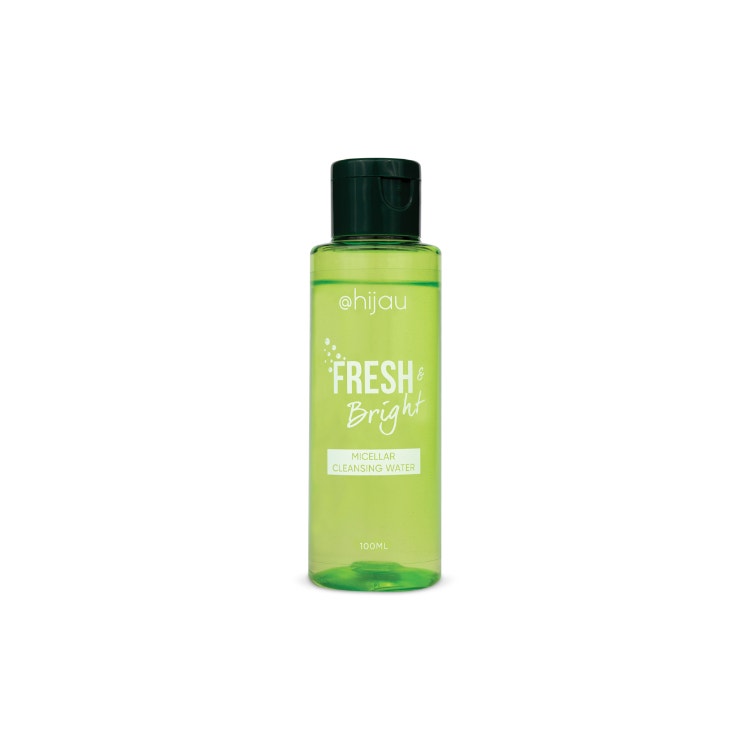
Hijau Fresh & Bright Micellar Cleansing Water

Hijau Fresh & Bright Micellar Cleansing Water
HIJAU
hijau-fresh-bright-micellar-cleansing-water
Cleanse
10085110907173
Morning or Evening?
How often will you use this product?
Notes


Highlights
WHAT IS IT?
Micellar Cleansing Water with 7 main ingredients
FEATURES
Formulated with Vitamin C to brighten skin tone, removes makeup and impurities, soothes and calms skin, paraben-free, fragrance free, alcohol-free, mineral oil-free, no-rinse, soap-free
BEST FOR
sensitive
CHECKS
Paraben, Fragrance, Alcohol, Mineral oil, Soap
Who Is It For?
What Does It Help With?
Brightens Skin Tone Cleanses Skin Soothes And Calms SkinBudget
Affordable (under $30)How To Use
Which routine should it be used in?
Instructions:
Key Information


What HIJAU Says
Product Description:
Formulated with Vitamin C to brighten skin tone while keeping skin clean, clear and fresh. Removes makeup & Impurities. Brightens skin tone. Soothes and calms skin. Paraben-free, Fragrance free, Alcohol-free, Mineral oil-free, No-rinse & Soap-free.
About the Brand:
Ingredients Overview
Ingredients List
Water,Polyglyceryl-4-Caprate,Sorbitol,Butylene-Glycol,Phenoxyethanol,Caprylyl-Glycol,Triethanolamine,3-o-Ethyl-Ascorbic-Acid,Prunus-Yedoensis-Leaf-Extract
Key Ingredients
3-o-Ethyl Ascorbic Acid,Prunus Yedoensis Leaf Extract
Ingredients Details
Phenoxyethanol
Common Name(s): 2-phenoxyethanol,rose ether,ethylene glycol monophenyl ether
CAS Number: 122-99-6
DESCRIPTION
What It Does: Prevents microbial contamination and spoilage in cosmetic formulations.
Why It's Used: The benchmark cosmetic preservative – eu-permitted up to 1%, effective against virtually all cosmetically relevant microorganisms, and excellent tolerability.
How It Works: Phenol ring provides broad antimicrobial activity via disruption of bacterial and fungal cell membranes and inhibition of enzymatic activity. effective against gram-positive and gram-negative bacteria, yeasts (candida), and molds (aspergillus). activity ph range: 3-9.
Typically Found In: All cosmetic formulations as primary preservative
TECHNICAL DETAILS
Primary Category: Functional ingredient – broad-spectrum preservative
Secondary Functions: Skin conditioning
Application Areas:

Facial Skincare

Body Care
Hair Care
Beard Care
Color Cosmetics (Makeup)
Dietary/Oral Supplements
Typical Concentration Range: 0.1%–1% (eu max 1%)
SOURCING & ETHICS
Vegan Status: Yes – synthetic
Halal Status: Yes
Source Notes: Commercially produced for cosmetic use. verify vegan/halal status with supplier.
SKIN COMPATIBILITY
Irritancy Rating: 1/5 – very low
Comedogenicity Rating: 0/5 – non-comedogenic
Sensitivity Concerns: Well-tolerated by most skin types.
Safe for Sensitive Skin: Yes
SAFETY & COMPATIBILITY
Safety Profile: Eu cosmetics regulation max 1%. sccs assessed as safe at ≤1%. avoid use around eyes in baby products per some country regulations. ewg score: 4.
Works Well With: Standard skincare actives
Avoid Combining With: No known significant incompatibilities
SCIENTIFIC NOTE
Phenoxyethanol's widespread adoption as the primary cosmetic preservative followed the phaseout of parabens from many formulations in the 2000s-2010s. despite having a comparable or better safety profile to parabens, it is often cited in 'free-from' formulations – a consumer perception issue rather than a scientific safety concern.
Last Verified: Cosing database,sccs opinion on phenoxyethanol,cir safety assessment
Primary Sources: 2026-03-12
Sorbitol
Common Name(s): D-glucitol,l-glucitol,sorbol
CAS Number: 50-70-4
DESCRIPTION
What It Does: Attracts and retains moisture providing skin softening and hydration.
Why It's Used: Widely used, cost-effective humectant and formulation ingredient in moisturizers, toothpastes, and personal care.
How It Works: 6 hydroxyl groups provide strong water binding through hydrogen bonding. metabolized slowly by skin as an osmolyte.
Typically Found In: Moisturizers,body lotions,toothpaste,shampoos,many personal care products
TECHNICAL DETAILS
Primary Category: Functional ingredient – sugar alcohol humectant
Secondary Functions: Formulation solvent,viscosity modifier
Application Areas:
Facial Skincare
Body Care
Hair Care
Beard Care
Color Cosmetics (Makeup)
Dietary/Oral Supplements
Typical Concentration Range: 1%–30%
SOURCING & ETHICS
Vegan Status: Yes – plant-derived (corn, apples) or synthetic
Halal Status: Yes
Source Notes: Produced by catalytic hydrogenation of glucose. derived from corn starch or other carbohydrate sources. gras food-approved.
SKIN COMPATIBILITY
Irritancy Rating: 1/5 – very low
Comedogenicity Rating: 0/5 – non-comedogenic
Sensitivity Concerns: Non-irritating; suitable for all skin types.
Safe for Sensitive Skin: Yes
SAFETY & COMPATIBILITY
Safety Profile: Excellent safety profile. ewg score: 1.
Works Well With: Ceramides,emollients,occlusives,glycerin,hyaluronic acid
Avoid Combining With: No significant incompatibilities
SCIENTIFIC NOTE
Sorbitol's osmolyte function in cells (accumulates in response to osmotic stress) suggests it may provide protection to skin cells under dehydrating environmental conditions, complementing its well-established surface humectant activity.
Last Verified: Cosing database,cir safety assessment,ewg skin deep
Primary Sources: 2026-03-12
Triethanolamine
Common Name(s): Triethanolamine,cosmetic active,functional ingredient
CAS Number: N/a
DESCRIPTION
What It Does: Delivers characteristic cosmetic function at recommended use concentration.
Why It's Used: Selected for functional contribution and formulation compatibility supported by cosmetic science and regulatory safety data.
How It Works: Works through the mechanism of its molecular class as documented in peer-reviewed cosmetic literature.
Typically Found In: Skin care formulations
TECHNICAL DETAILS
Primary Category: Active ingredient – cosmetic active
Secondary Functions: Skin conditioning
Application Areas:
Facial Skincare
Body Care
Hair Care
Beard Care
Color Cosmetics (Makeup)
Dietary/Oral Supplements
Typical Concentration Range: 0.1%–10%
SOURCING & ETHICS
Vegan Status: Conditional
Halal Status: Yes
Source Notes: Commercially produced for cosmetic use. verify vegan/halal status with supplier.
SKIN COMPATIBILITY
Irritancy Rating: 1/5 – very low
Comedogenicity Rating: 0/5 – non-comedogenic
Sensitivity Concerns: Well-tolerated by most skin types.
Safe for Sensitive Skin: Yes
SAFETY & COMPATIBILITY
Safety Profile: Good safety profile at recommended concentrations. ewg score: 1–2.
Works Well With: Standard skincare actives
Avoid Combining With: No known significant incompatibilities
SCIENTIFIC NOTE
Triethanolamine has an established safety profile within the cosmetic regulatory framework at standard use concentrations.
Last Verified: Cosing database,triethanolamine technical literature
Primary Sources: 2026-03-12
Water
Common Name(s): Water,purified water,deionised water,inci water
CAS Number: 7732-18-5
DESCRIPTION
What It Does: Provides the universal solvent and vehicle for water-soluble actives and the continuous phase of all o/w emulsions.
Why It's Used: The most essential cosmetic ingredient — aqua (water) is listed first on virtually all water-containing cosmetic inci labels as the highest-concentration ingredient, serving as the foundation of the global cosmetics industry.
How It Works: Acts as solvent for all water-soluble ingredients (glycols, amino acids, water-soluble actives). forms the continuous external phase of o/w emulsions (lotions, creams, serums). provides aqueous environment for enzymatic and chemical reactions between actives. ph adjustment medium.
Typically Found In: Virtually all cosmetic products — the most universal cosmetic ingredient globally
TECHNICAL DETAILS
Primary Category: Functional ingredient – water
Secondary Functions: Skin conditioning
Application Areas:
Facial Skincare
Body Care
Hair Care
Beard Care
Color Cosmetics (Makeup)
Dietary/Oral Supplements
Typical Concentration Range: Varies widely — up to 95% in some toners and serums
SOURCING & ETHICS
Vegan Status: Yes – water (deionised/purified)
Halal Status: Yes
Source Notes: Cosmetic-grade water is purified (deionised, distilled, or ro filtered) to prevent mineral content interference with formulation stability. european pharmacopoeial water (aqua purificata ph. eur.) is the quality standard for pharmaceutical and high-end cosmetic formulations.
SKIN COMPATIBILITY
Irritancy Rating: 1/5 – non-irritant
Comedogenicity Rating: 0/5 – non-comedogenic
Sensitivity Concerns: Well-tolerated by most skin types.
Safe for Sensitive Skin: Yes
SAFETY & COMPATIBILITY
Safety Profile: Good safety profile at recommended concentrations. ewg score: 1–2.
Works Well With: Standard skincare actives
Avoid Combining With: No known significant incompatibilities
SCIENTIFIC NOTE
Water's position as the first inci ingredient on most cosmetic labels reflects the regulatory requirement to list ingredients in descending concentration order — meaning water is the most abundant ingredient in the majority of cosmetic products. the fundamental role of water as the universal cosmetic solvent and vehicle makes it simultaneously the most important cosmetic ingredient and the one that requires the most sophisticated formulation chemistry to control — every emulsifier, thickener, preservative, and ph adjuster exists primarily to manage water's interaction with other ingredients in formulation.
Last Verified: Cosing database,eu cosmetics regulation 1223/2009 inci requirements,ph. eur. aqua purificata monograph
Primary Sources: 2026-03-12
