

Himalaya
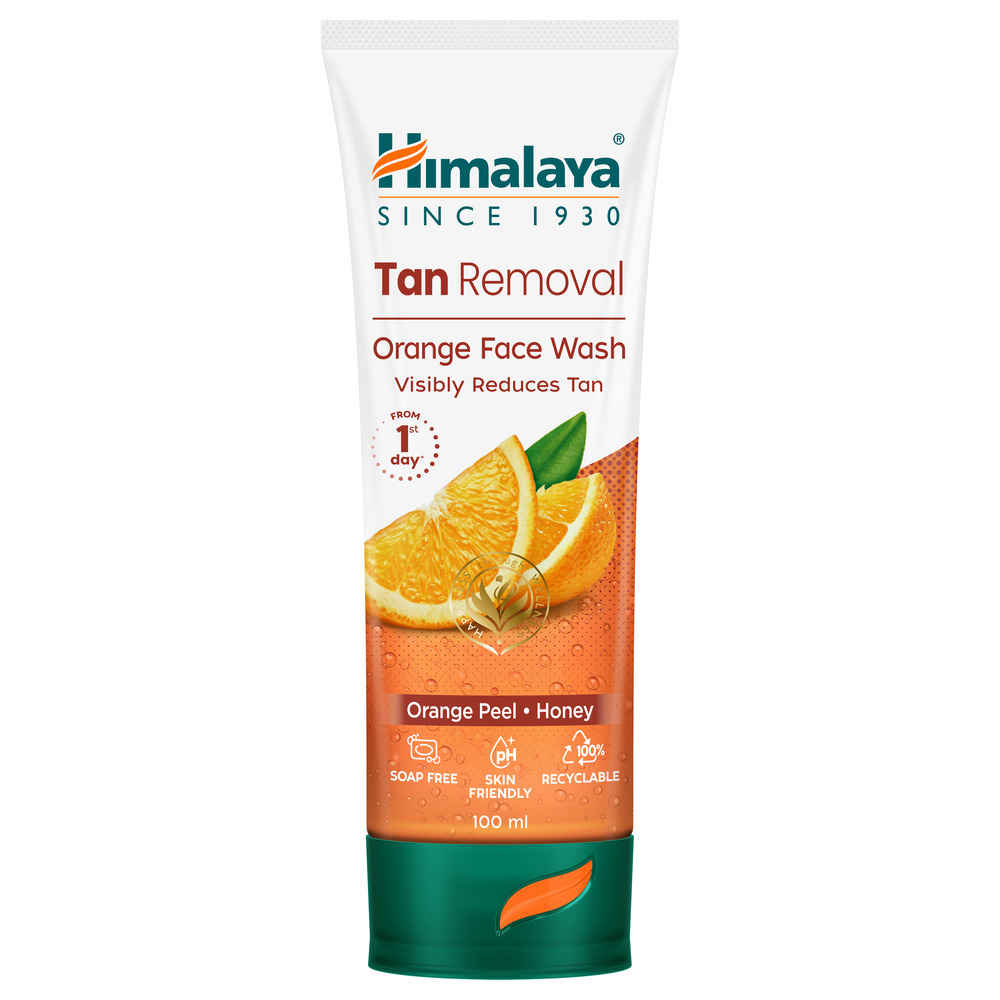
Himalaya Tan Removal Orange Face Wash (100 ml)

Himalaya Tan Removal Orange Face Wash (100 ml)
Himalaya
himalaya-tan-removal-orange-face-wash-100-ml
Cleanse
10085084430629
Morning or Evening?
How often will you use this product?
Notes


Highlights
WHAT IS IT?
Face Wash, 3 main key ingredients
FEATURES
Deeply cleanses skin, helps reduce tan, tones, exfoliates, moisturizes
BEST FOR
sensitive
CHECKS
no fragrance info available, no alcohol info available
Who Is It For?
All Genders Age Range Info Not Explicitly AvailableWhat Does It Help With?
Tan Removal Cleansing Moisturizing ExfoliationBudget
Affordable (under $30)How To Use
Which routine should it be used in?
Instructions:
Key Information


What Himalaya Says
Product Description:
Himalaya's Tan Removal Orange Face Wash is a natural formula that deeply cleanses skin and helps reduce tan. Enriched with natural ingredients like Orange Peel extract, Papain and Honey, it effectively tones, exfoliates, and moisturizes skin right from the first application. Key Ingredients. Papain - Papain a rejuvenating enzyme exfoliates the skin, washes away dead dry skin and impurities and helps reduce tan. Orange Peel - Orange Peel a potent cleanser with citric properties conditions and improves skin texture. It protects skin from damage caused by free radicals. Honey - Honey is a humectant moisture retainer that helps hydrate skin. It seals in moisture resulting in soft and supple skin
About the Brand:
Ingredients Overview
Ingredients List
Papain,Orange-Peel-Extract,Honey
Key Ingredients
Papain,Orange Peel,Honey
Ingredients Details
Honey
Common Name(s): Honey,bee-derived humectant antimicrobial,wound healing active
CAS Number: N/a
DESCRIPTION
What It Does: Provides humectant moisture retention from the hygroscopic fructose/glucose matrix, antimicrobial activity from enzymatically generated h₂o₂ and (in manuka) methylglyoxal, anti-inflammatory activity from phenolic compounds, and wound healing promotion from growth factor activation.
Why It's Used: Honey is the only food-derived ingredient with documented clinical wound healing efficacy in medical grade form (medihoney) — combining humectancy, antimicrobial, anti-inflammatory, and healing activity in a gras, consumer-familiar ingredient.
How It Works: Glucose oxidase in honey catalyses glucose + o₂ → gluconolactone + h₂o₂ — providing sustained low-level h₂o₂ generation that provides bactericidal activity without tissue toxicity. manuka honey's methylglyoxal (mgo) provides additional non-peroxide antimicrobial activity through protein glycation of bacterial enzymes.
Typically Found In: Wound care,anti-aging,humectant products
TECHNICAL DETAILS
Primary Category: Active ingredient – cosmetic active
Secondary Functions: Skin conditioning
Application Areas:

Facial Skincare

Body Care
Hair Care
Beard Care
Color Cosmetics (Makeup)
Dietary/Oral Supplements
Typical Concentration Range: 1%–20%
SOURCING & ETHICS
Vegan Status: No – bee-derived
Halal Status: Conditional
Source Notes: Commercially produced for cosmetic use. verify vegan/halal status with supplier.
SKIN COMPATIBILITY
Irritancy Rating: 1/5 – very low
Comedogenicity Rating: 0/5 – non-comedogenic
Sensitivity Concerns: Well-tolerated by most skin types.
Safe for Sensitive Skin: Yes
SAFETY & COMPATIBILITY
Safety Profile: Good safety profile at recommended concentrations. ewg score: 1–2.
Works Well With: Standard skincare actives
Avoid Combining With: No known significant incompatibilities
SCIENTIFIC NOTE
Manuka honey's unique mānuka factor (umf) grades correlate with methylglyoxal (mgo) concentration — umf10+ (mgo 263 mg/kg) provides bactericidal activity against mrsa at concentrations achievable in topical formulation.
Last Verified: Cosing database,honey manuka honey wound healing antimicrobial review
Primary Sources: 2026-03-12
Papain
Common Name(s): Carica papaya enzyme,papaya protease
CAS Number: 9001-73-4
DESCRIPTION
What It Does: Gently digests dead keratin proteins for enzymatic exfoliation without acid irritation.
Why It's Used: Gentle enzymatic exfoliant for acid-sensitive skin types requiring exfoliation without ph-dependent aha/bha irritation.
How It Works: Cysteine protease specifically cleaves peptide bonds in keratin proteins at neutral ph, dissolving corneocyte protein bridges without requiring acidic ph. activity is ph- and temperature-dependent (optimal ph 6.5, 37°c). also gently solubilizes sebum plugs.
Typically Found In: Enzyme peels,gentle exfoliants,sensitive skin exfoliants,brightening masks
TECHNICAL DETAILS
Primary Category: Active ingredient – enzyme
Secondary Functions: Protein-specific exfoliation,neutral-ph keratolysis
Application Areas:
Facial Skincare
Body Care
Hair Care
Beard Care
Color Cosmetics (Makeup)
Dietary/Oral Supplements
Typical Concentration Range: 1%–10% (active enzyme)
SOURCING & ETHICS
Vegan Status: Yes – from carica papaya latex
Halal Status: Yes
Source Notes: Plant-derived (papaya, pineapple) or fermentation-derived.
SKIN COMPATIBILITY
Irritancy Rating: 2/5 – low to moderate; potential sensitization with repeated exposure
Comedogenicity Rating: 0/5 – non-comedogenic
Sensitivity Concerns: Patch test recommended; potential for enzymatic sensitization.
Safe for Sensitive Skin: Use with caution – potential sensitization
SAFETY & COMPATIBILITY
Safety Profile: Latex allergy cross-reactivity possible. avoid high concentrations on compromised skin.
Works Well With: Ahas (synergistic),hyaluronic acid,ceramides
Avoid Combining With: High concentrations on sensitive or compromised skin
SCIENTIFIC NOTE
Papain's specificity for peptide bonds at hydrophobic residues (leu, phe, val) in keratin provides preferential digestion of the abundant hydrophobic corneocyte proteins, causing selective dissolution of corneocyte protein bridges without disrupting the non-protein lipid matrix of the stratum corneum.
Last Verified: Cosing database,cir safety assessment,enzyme exfoliant review literature
Primary Sources: 2026-03-12
