
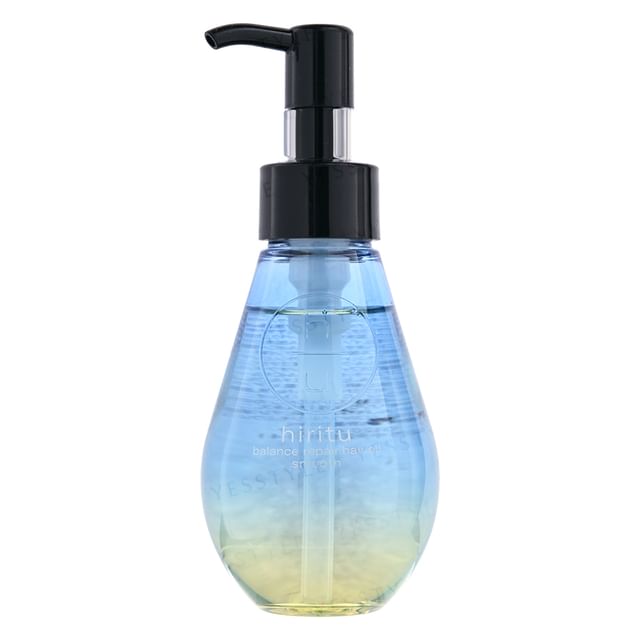

Hiritu
Hiritu Balance Repair Hair Oil Smooth 100ml
A deeply nourishing hair oil designed to smooth and repair frizzy, damaged hair. Maintains the hair’s optimal balance (80% protein, 15% moisture, and 5% oil) for straight, smooth hair that is easy to manage. Offers a lightweight, non-silicone formula that absorbs quickly without leaving a greasy residue. Contains a rich blend of swell hair repairing ingredients to provide intense hydration and a pleasant pear and musk scent. Includes cuticle care ingredients to strengthen hair and improve its elasticity, reducing breakage and split ends. Protects hair from heat damage with its heat care ingredients. Suitable for all hair types. Made in Japan.
Sulfate-free
Paraben-free
Silicone-free
Natural
Heat Protection
Anti-Frizz
Optimized for Your Environment & Lifestyle
Nykaa
In stock
Recommended

Hiritu Balance Repair Hair Oil Smooth 100ml
Hiritu
hiritu-balance-repair-hair-oil-smooth-100ml
Hair Oil
10407590068517
Morning or Evening?
How often will you use this product?
Notes


Secure payment protection
Your Biodata Compatibility Analysis
Based on your 6 hair health indices and environmental factors
Poor Match
Significant incompatibilities
Growth Cycle Health Index
Hair Match
Hair Health Index Alignment
Optimal for OSI, SSI, DI, HSI
Ingredient Efficacy
Matching Ingredient Score
Environment Compatibility
Current UV, Air Quality & Humidity
Why This Works for Your Specific Profile
Damage Index:
Damaged hair structure cannot withstand product intensity causing increased breakage and further compromise
Water Quality:
Fine hair becomes weighed down and greasy from heavy formulation
Hair:
Porous structure over-absorbs product leading to buildup, stiffness, or excessive dryness
Active Lifestyle:
High activity and frequent washing rapidly strip product benefits requiring excessive reapplication
Your Hair Profile Integration
Your Hair Archetype

Density Level

Washing Frequency

Shedding Level

Oil Level
Your Hair Health Indices
Oil Secretion (OSI)
Very low oil production
Scalp Sensitivity (SSI)
Very low sensitivity
Growth Rate (CMR)
Poor metabolism rate
Damage Index (DI)
Minimal damage
Hair Strength (HSI)
Very weak strength
Softness Index (SI)
Significant improvement needed
Water & Environmental Integration

Water:


Expected Results & Timeline
Key Highlights

What is it?
Hair oil with multiple repairing ingredients

Who Is It For
All ages and genders

Budget
Rs. 2,399.06 - Rs. 4,798.12

Timeline
Immediate smoothing and repair
Why You’ll Love It

What Does It Help With?
Frizz, damage repair, dryness, breakage, split ends

Best for
Damage Repair

Features
Lightweight, non-silicone formula; absorbs quickly without greasy residue; pleasant pear and musk scent; strengthens hair and improves elasticity; protects from heat damage

Checks
Ingredients Overview
Ingredients List
triethylhexanoin, ethylhexyl-palmitate, cetyl-ethylhexanoate, squalane, argania-spinosa-kernel-oil, macadamia-ternifolia-seed-oil, meadowfoam-estolide, hydrolyzed-silk, hydrolyzed-keratin-(wool), hydrolyzed-keratin-(cashmere), hydrolyzed-pea-protein, hydrolyzed-royal-jelly-protein, hydrolyzed-rice-protein, hydrolyzed-soy-protein, isostearoyl-hydrolyzed-keratin-(wool), isostearoyl-hydrolyzed-silk, hematin, dilauroyl-glutamate-lysine-Na, cyclohexane-1,4-dicarboxylic-acid-bis-ethoxy-diglycol, steardimonium-hydroxypropyl-hydrolyzed-keratin-(wool), macadamia-nut-fatty-acid-phytosterol, meadowfoam-delta-lactone, gamma-docosalactone, (dihydroxy-methyl-siloxy-propoxy)-hydroxypropyl-hydrolyzed-silk, hydrolyzed-sesame-protein-PG-propyl-methyl-silane-diol, quaternium-33-(wool), citric-acid, zein, polyquaternium-10, polyquaternium-65, fullerene, glycyrrhizic-acid-2K, (methacrylic-acid-glycerin-amide-ethyl/methacrylic-acid-stearyl)-copolymer, hydrolyzed-silk, hydrolyzed-conchiolin, hydrolyzed-hyaluronic-acid, hyaluronic-acid-hydroxypropyl-trimonium, ceramide-NG, ceramide-NP, ceramide-AP, PCA-Na, sodium-lactate, arginine, aspartic-acid, PCA, glycine, alanine, serine, valine, proline, threonine, isoleucine, histidine, phenylalanine, argania-spinosa-kernel-oil, jojoba-seed-oil, moringa-seed-oil, chia-seed-oil, roman-chamomile-flower-extract, calendula-flower-extract, cornflower-flower-extract, chamomile-flower-extract, st.-john’s-wort-flower/leaf/stem-extract, linden-flower-extract, cholesterol-(wool), PPG-3-caprylyl-ether, stearamidopropyl-dimethylamine, sebacic-acid-diethyl, isostearic-acid, isononyl-isononanoate, distearyldimonium-chloride, sodium-benzoate, EDTA-2Na, BG, DPG, PG, PVP, ethanol, tocopherol, phenoxyethanol, fragrance
Key Ingredients
argania-spinosa-kernel-oil, macadamia-ternifolia-seed-oil, hydrolyzed-silk, hydrolyzed-keratin-(wool), hydrolyzed-keratin-(cashmere), hydrolyzed-pea-protein, hydrolyzed-royal-jelly-protein, hydrolyzed-rice-protein, hydrolyzed-soy-protein, isostearoyl-hydrolyzed-keratin-(wool)
Ingredients Details
Gamma-docosalactone
Common Name(s): Gamma-docosalactone
DESCRIPTION
What It Does: Delivers targeted skin-conditioning or bioactive benefits through a specific mechanism of action suited to the formulation's intended purpose.
Why It's Used: Specialty actives address specific skin concerns through targeted molecular mechanisms, providing efficacy beyond what base formulation ingredients alone can achieve.
How It Works: The bioactive compound interacts with specific molecular targets in skin cells or the extracellular matrix — enzymes, receptors, structural proteins, or signaling molecules — triggering beneficial biological responses.
Typically Found In: Serums,treatments,moisturizers,specialty products
TECHNICAL DETAILS
Primary Category: Specialty actives
Secondary Functions: Skin-conditioning,anti-aging
Application Areas:

Facial Skincare

Body Care
Hair Care
Beard Care
Color Cosmetics (Makeup)
Dietary/Oral Supplements
Typical Concentration Range: 0.01–5%
SOURCING & ETHICS
Vegan Status: Conditional - supplier confirmation required
Halal Status: Unverified - supplier confirmation required
Source Notes: Specialty active ingredient; check individual sourcing for vegan status. [audit 2026-07-29 rev2: the record's own source_notes does not assert a non-animal origin, or instructs the reader to verify with the supplier; "yes" asserts knowledge the record does not hold. determination requires shariah-panel sign-off.]
SKIN COMPATIBILITY
Irritancy Rating: 1
Comedogenicity Rating: 0
Sensitivity Concerns: Low sensitization potential at recommended use concentrations.
Safe for Sensitive Skin: Yes
SAFETY & COMPATIBILITY
Safety Profile: Well-characterized cosmetic ingredient with established safety profile. generally non-irritating at typical use concentrations. suitable for leave-on and rinse-off cosmetics.
Works Well With: Niacinamide,hyaluronic acid,vitamin c,peptides
Avoid Combining With: Incompatible with oxidizing agents; check ph stability
SCIENTIFIC NOTE
Specialty actives typically work through enzyme inhibition (e.g., tyrosinase inhibition for brightening, mmp inhibition for anti-aging), receptor activation (e.g., retinoid receptors, ppar-γ for barrier genes), or transcription factor modulation (e.g., nrf2 for antioxidant gene upregulation). structure-activity relationships determine potency and selectivity.
Last Verified: 2025-01-15
Primary Sources: Cosing eu database; pcpc cosmetic ingredient safety reviews; ingredient-specific safety and efficacy literature
Hematin
Common Name(s): Hematin
DESCRIPTION
What It Does: Delivers targeted skin-conditioning or bioactive benefits through a specific mechanism of action suited to the formulation's intended purpose.
Why It's Used: Specialty actives address specific skin concerns through targeted molecular mechanisms, providing efficacy beyond what base formulation ingredients alone can achieve.
How It Works: The bioactive compound interacts with specific molecular targets in skin cells or the extracellular matrix — enzymes, receptors, structural proteins, or signaling molecules — triggering beneficial biological responses.
Typically Found In: Serums,treatments,moisturizers,specialty products
TECHNICAL DETAILS
Primary Category: Specialty actives
Secondary Functions: Skin-conditioning,anti-aging
Application Areas:
Facial Skincare
Body Care
Hair Care
Beard Care
Color Cosmetics (Makeup)
Dietary/Oral Supplements
Typical Concentration Range: 0.01–5%
SOURCING & ETHICS
Vegan Status: Conditional - supplier confirmation required
Halal Status: Unverified - supplier confirmation required
Source Notes: Specialty active ingredient; check individual sourcing for vegan status. [audit 2026-07-29 rev2: the record's own source_notes does not assert a non-animal origin, or instructs the reader to verify with the supplier; "yes" asserts knowledge the record does not hold. determination requires shariah-panel sign-off.]
SKIN COMPATIBILITY
Irritancy Rating: 1
Comedogenicity Rating: 0
Sensitivity Concerns: Low sensitization potential at recommended use concentrations.
Safe for Sensitive Skin: Yes
SAFETY & COMPATIBILITY
Safety Profile: Well-characterized cosmetic ingredient with established safety profile. generally non-irritating at typical use concentrations. suitable for leave-on and rinse-off cosmetics.
Works Well With: Niacinamide,hyaluronic acid,vitamin c,peptides
Avoid Combining With: Incompatible with oxidizing agents; check ph stability
SCIENTIFIC NOTE
Specialty actives typically work through enzyme inhibition (e.g., tyrosinase inhibition for brightening, mmp inhibition for anti-aging), receptor activation (e.g., retinoid receptors, ppar-γ for barrier genes), or transcription factor modulation (e.g., nrf2 for antioxidant gene upregulation). structure-activity relationships determine potency and selectivity.
Last Verified: 2025-01-15
Primary Sources: Cosing eu database; pcpc cosmetic ingredient safety reviews; ingredient-specific safety and efficacy literature
Polyquaternium-10
Common Name(s): Pq-10,hydroxyethylcellulose ethyl trimethylammonium chloride,jr-400
CAS Number: 54351-50-7
DESCRIPTION
What It Does: Provides film-forming conditioning and detangling with heat protection in a polymer that adsorbs substantively to hair.
Why It's Used: The most widely used cationic polymer conditioner – provides excellent conditioning and detangling while adsorbing strongly to damaged hair areas that need conditioning most.
How It Works: Cationic quaternary ammonium groups along the polymer backbone adsorb to anionic sites on hair keratin. higher charge density on damaged hair (more negative sites) leads to preferential adsorption where conditioning is needed. polymer film formation provides heat protection and volume.
Typically Found In: Shampoos,2-in-1 products,conditioners,styling products
TECHNICAL DETAILS
Primary Category: Functional ingredient – cationic polymer conditioner
Secondary Functions: Skin conditioning
Application Areas:
Facial Skincare
Body Care
Hair Care
Beard Care
Color Cosmetics (Makeup)
Dietary/Oral Supplements
Typical Concentration Range: 0.1%–2%
SOURCING & ETHICS
Vegan Status: Conditional - supplier confirmation required
Halal Status: Unverified - supplier confirmation required
Source Notes: Commercially produced for cosmetic use. verify vegan/halal status with supplier. [audit 2026-07-29 rev2: the record's own source_notes does not assert a non-animal origin, or instructs the reader to verify with the supplier; "yes" asserts knowledge the record does not hold. determination requires shariah-panel sign-off.]
SKIN COMPATIBILITY
Irritancy Rating: 1/5 – very low
Comedogenicity Rating: 0/5 – non-comedogenic
Sensitivity Concerns: Well-tolerated by most skin types.
Safe for Sensitive Skin: Yes
SAFETY & COMPATIBILITY
Safety Profile: Good safety profile at recommended concentrations. ewg score: 1–2.
Works Well With: Standard skincare actives
Avoid Combining With: No known significant incompatibilities
SCIENTIFIC NOTE
Polyquaternium-10's 'self-targeting' to damaged hair sites is a unique smart conditioning mechanism. as hair damage increases negative charge density by exposing keratin's aspartate and glutamate carboxylate groups, pq-10's cationic polymer backbone adsorbs preferentially to these high-charge damage sites – automatically delivering more conditioning where the hair needs it most.
Last Verified: 2026-03-12
Primary Sources: Cosing database,robbins hair science,cir safety assessment
Polyquaternium-65
Common Name(s): Polyquaternium-65,cationic conditioning polymer,substantive film-former
CAS Number: N/a
DESCRIPTION
What It Does: Deposits a conditioning film on hair and skin through electrostatic attraction to negative surfaces, reduces hair friction for improved detangling and combability, eliminates static charge, and provides anti-frizz humidity resistance.
Why It's Used: Cationic polymers provide hair conditioning that resists rinsing — the permanent positive quaternary ammonium groups drive substantive deposition that persists between washes, unlike small-molecule conditioning agents that wash out completely.
How It Works: At conditioner/shampoo ph 4.5–5.5, hair cuticle carries net negative charge (isoelectric point ~ph 3.5). polyquaternium cations electrostatically adsorb to the cuticle, depositing a film that persists during rinsing through favourable interfacial partitioning versus bulk-phase desorption equilibrium.
Typically Found In: Shampoos,conditioners,leave-in products
TECHNICAL DETAILS
Primary Category: Active ingredient – cosmetic active
Secondary Functions: Skin conditioning
Application Areas:
Facial Skincare
Body Care
Hair Care
Beard Care
Color Cosmetics (Makeup)
Dietary/Oral Supplements
Typical Concentration Range: 0.1%–3%
SOURCING & ETHICS
Vegan Status: Conditional - supplier confirmation required
Halal Status: Unverified - supplier confirmation required
Source Notes: Commercially produced for cosmetic use. verify vegan/halal status with supplier. [audit 2026-07-29 rev2: the record's own source_notes does not assert a non-animal origin, or instructs the reader to verify with the supplier; "yes" asserts knowledge the record does not hold. determination requires shariah-panel sign-off.]
SKIN COMPATIBILITY
Irritancy Rating: 1/5 – very low
Comedogenicity Rating: 0/5 – non-comedogenic
Sensitivity Concerns: Well-tolerated by most skin types.
Safe for Sensitive Skin: Yes
SAFETY & COMPATIBILITY
Safety Profile: Good safety profile at recommended concentrations. ewg score: 1–2.
Works Well With: Standard skincare actives
Avoid Combining With: No known significant incompatibilities
SCIENTIFIC NOTE
Different polyquaternium architectures: pq-7 (acrylamide/quaternary acrylate) → leave-on film flexibility; pq-10 (hydroxyethylcellulose/quats) → strong hair substantivity; pq-83/102/103 → specialty deposition profiles. number indicates specific backbone chemistry and application optimisation.
Last Verified: 2026-03-12
Primary Sources: Cosing database,polyquaternium-65 cationic conditioning polymer review
Personalized Usage Instructions
How to Use
Step 1
Apply an appropriate amount to towel-dried or dry hair, focusing on damaged areas
Step 2
Style as usual
Medical Chemicals

Protein/Moisture
- Protein/Moisture balance
pH Level
- Acidic

Porosity Taget
- All Porosity Levels
Customized for Your Profile
Scalp Condtions
Sensitive Scalp, pH Balanced
Climate Suitability
Humid, Dry, UV Protection
Clinical Claims
Frequency
Apply an appropriate amount to towel-dried or dry hair, focusing on damaged areas. Style as usual.