

Nykaa E retail limited
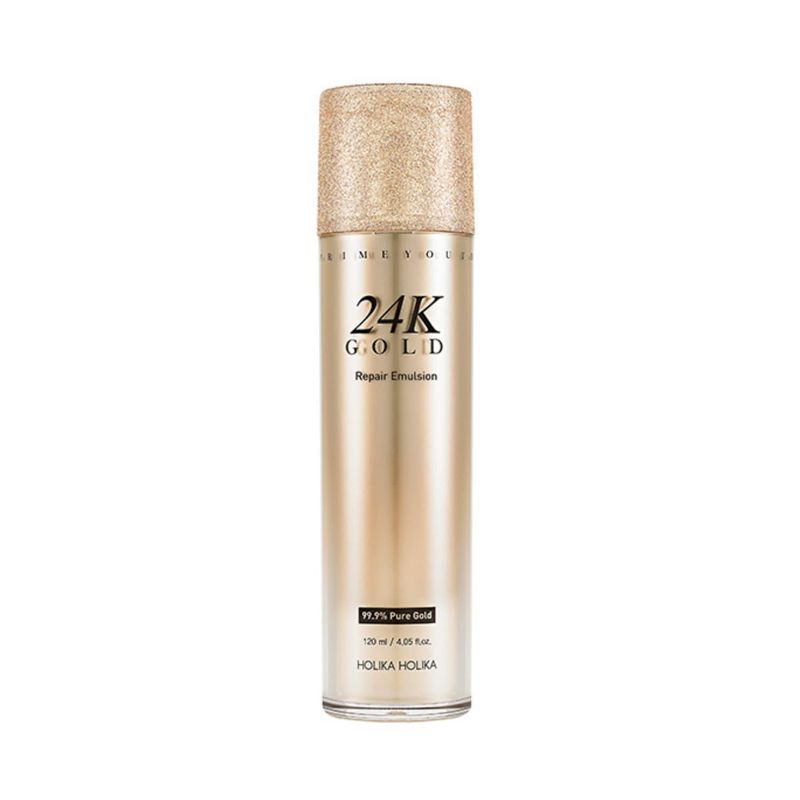
Holika Holika Prime Youth 24K Gold Repair Emulsion

Holika Holika Prime Youth 24K Gold Repair Emulsion
Nykaa E retail limited
holika-holika-prime-youth-24k-gold-repair-emulsion
Moisturize
10084728668453
Morning or Evening?
How often will you use this product?
Notes


Highlights
WHAT IS IT?
Emulsion with multiple key ingredients including 24K gold and various peptides and extracts
FEATURES
Improves skin elasticity and firmness, slows skin aging, contains 99.9% pure 24K colloidal gold, accelerates collagen synthesis and cell regeneration, fades fine lines and wrinkles, restores brightness and plumpness, provides hydration to dry skin, soothes inflamed and irritated skin, regulates sebum production, lightweight consistency
BEST FOR
dry
CHECKS
Fragrance,Alcohol,Silicone,Paraben
Who Is It For?
Not Specified Age Range And GenderWhat Does It Help With?
Skin Elasticity Firmness Anti-aging Hydration Soothing Inflammation Even Skin ToneBudget
Premium ($76-$150)How To Use
Which routine should it be used in?
Instructions:
Key Information


What Nykaa E retail limited Says
Product Description:
Holika Holika Prime Youth 24K Gold Repair Emulsion is light-weight and contains 99.9% pure 24K colloidal gold, which calms and rejuvenates the skin to create a radiant and healthy complexion. The formula helps attain an even skin tone and revives fatigued skin by locking in moisture for several hours. It is easy to carry during travel and is suitable for a quick moisture boost touch-up. Caviar extract restores the skin's protein balance and accelerates collagen synthesis, firming and tightening the skin. The peptide complex strengthens the dermis, giving the skin a much-needed lift. Royal jelly strengthens tissues with toning and regenerating effects. Other nutritional ingredients like omega-3, adenosine, fatty acids, and 47 other vitamins and minerals help keep skin plump, refreshed, and glowing. The Gold range is a fast-moving Korean skincare collection best paired with other products from the range. For effective results, use morning and night.
About the Brand:
Ingredients Overview
Ingredients List
Water,Glycerin,Cetyl-Ethylhexanoate,1,2-Hexanediol,Hydrogenated-Poly-(C6-14-Olefin),Niacinamide,Cetearyl-Alcohol,Butylene-Glycol,Polysorbate-60,Dimethicone,Butyrospermum-Parkii-(Shea)-Butter,Xanthan-Gum,Hydroxypropyl,Palmitic-Acid,Stearic-Acid,Centella-Asiatica-Extract,Betaine,Fragrance,Portulaca-Oleracea-Extract,Dipropylene-Glycol,Disodium-EDTA,Eclipta-Prostrata-Leaf-Extract,Laminaria-Japonica-Extract,Sorbitan-Stearate,Ethylhexylglycerin,Adenosine,Hydroxyethyl-Acrylate/Sodium-Acryloyldimethyl-Taurate,Chamomilla-Recutita-(Matricaria)-Flower-Extract,Rosmarinus-Officinalis-(Rosemary)-Leaf-Extract,Fructooligosaccharides,Hydrogenated-Lecithin,Amaranthus-Caudatus-Seed-Extract,Beta-Glucan,Gold,Lecithin,Ulmus-Davidiana-Root-Extract,Ficus-Carica-(Fig)-Fruit-Extract,Sorbitan,Alcohol,Myristic-Acid,Hydrolyzed-Hyaluronic-Acid,Ceramide-NP,Royal-Jelly-Extract,CI-19140,Caviar-Extract,Coix-Lacryma-Jobi-Ma-Yuen-Seed-Extract,Tocopherol,CI-17200,Caprylyl-Glycol,Acetyl-Hexapeptide-8,Copper-Tripeptide-1,Hexapeptide-9,Nonapeptide-1,Palmitoyl-Pentapeptide-4,Palmitoyl-Tetrapeptide-7,Palmitoyl-Tripeptide-1,Tripeptide-1,Limonene,Linalool
Key Ingredients
24K colloidal gold,Caviar extract,Peptide complex,Royal jelly,Niacinamide,Adenosine,Omega-3
Ingredients Details
1-2-hexanediol
Common Name(s): 1-2-hexanediol,cosmetic active,functional ingredient
CAS Number: N/a
DESCRIPTION
What It Does: Delivers characteristic cosmetic function at recommended use concentration.
Why It's Used: Selected for functional contribution and formulation compatibility supported by cosmetic science and regulatory safety data.
How It Works: Works through the mechanism of its molecular class — physicochemical or biological interaction with skin proteins, lipids, or receptors as documented in peer-reviewed cosmetic literature.
Typically Found In: Skin care formulations
TECHNICAL DETAILS
Primary Category: Active ingredient – cosmetic active
Secondary Functions: Skin conditioning
Application Areas:

Facial Skincare

Body Care
Hair Care
Beard Care
Color Cosmetics (Makeup)
Dietary/Oral Supplements
Typical Concentration Range: 0.1%–10%
SOURCING & ETHICS
Vegan Status: Conditional - supplier confirmation required
Halal Status: Unverified - supplier confirmation required
Source Notes: Commercially produced for cosmetic use. verify vegan/halal status with supplier. [audit 2026-07-29 rev2: the record's own source_notes does not assert a non-animal origin, or instructs the reader to verify with the supplier; "yes" asserts knowledge the record does not hold. determination requires shariah-panel sign-off.]
SKIN COMPATIBILITY
Irritancy Rating: 1/5 – very low
Comedogenicity Rating: 0/5 – non-comedogenic
Sensitivity Concerns: Well-tolerated by most skin types.
Safe for Sensitive Skin: Yes
SAFETY & COMPATIBILITY
Safety Profile: Good safety profile at recommended concentrations. ewg score: 1–2.
Works Well With: Standard skincare actives
Avoid Combining With: No known significant incompatibilities
SCIENTIFIC NOTE
1-2-hexanediol has an established safety and efficacy profile within the cosmetic regulatory framework at standard use concentrations.
Last Verified: 2026-03-12
Primary Sources: Cosing database,1-2-hexanediol technical literature
Adenosine
Common Name(s): Adenine riboside,9-beta-d-ribofuranosyladenine
CAS Number: 58-61-7
DESCRIPTION
What It Does: Reduces fine lines, stimulates collagen, firms skin, and reduces inflammation.
Why It's Used: Fda-recognized anti-wrinkle active with multi-action collagen stimulation + wrinkle reduction + anti-inflammatory efficacy.
How It Works: Activates adenosine a2a receptors on fibroblasts stimulating collagen type i. also activates pka pathway promoting atp production and reducing inflammatory cytokines.
Typically Found In: Anti-aging serums,wrinkle treatments,korean skincare
TECHNICAL DETAILS
Primary Category: Active ingredient – purine nucleoside / anti-aging
Secondary Functions: Collagen stimulation,anti-inflammatory,cell energy
Application Areas:
Facial Skincare
Body Care
Hair Care
Beard Care
Color Cosmetics (Makeup)
Dietary/Oral Supplements
Typical Concentration Range: 0.04%–0.1%
SOURCING & ETHICS
Vegan Status: Conditional - supplier confirmation required
Halal Status: Unverified - supplier confirmation required
Source Notes: Synthetically produced for cosmetic use. [audit 2026-07-29 rev2: status downgraded on audit. determination requires shariah-panel sign-off.]
SKIN COMPATIBILITY
Irritancy Rating: 1/5 – very low
Comedogenicity Rating: 0/5 – non-comedogenic
Sensitivity Concerns: Non-irritating; excellent tolerability.
Safe for Sensitive Skin: Yes
SAFETY & COMPATIBILITY
Safety Profile: Excellent safety profile. fda-recognized as safe and effective anti-wrinkle ingredient. ewg score: 1.
Works Well With: Other b vitamins,niacinamide,antioxidant complexes
Avoid Combining With: No significant incompatibilities
SCIENTIFIC NOTE
A 2002 clinical study demonstrated 0.04% adenosine cream significantly reduced wrinkle depth and increased skin elasticity after 4 weeks. fda recognition requires controlled clinical trial evidence.
Last Verified: 2026-03-12
Primary Sources: Cosing database,adenosine anti-aging clinical data,fda otc anti-wrinkle monograph
Alcohol
Common Name(s): Alcohol,cosmetic active,functional ingredient
CAS Number: N/a
DESCRIPTION
What It Does: Delivers characteristic cosmetic function at recommended use concentration.
Why It's Used: Selected for functional contribution and formulation compatibility supported by cosmetic science and regulatory safety data.
How It Works: Works through the mechanism of its molecular class as documented in peer-reviewed cosmetic literature.
Typically Found In: Skin care formulations
TECHNICAL DETAILS
Primary Category: Active ingredient – cosmetic active
Secondary Functions: Skin conditioning
Application Areas:
Facial Skincare
Body Care
Hair Care
Beard Care
Color Cosmetics (Makeup)
Dietary/Oral Supplements
Typical Concentration Range: 0.1%–10%
SOURCING & ETHICS
Vegan Status: Yes - standard ethanol routes are non-animal; confirm denaturant origin
Halal Status: Conditional - ethanol production route and residual concentration; jurisdiction-dependent, refer to certifier stance
Source Notes: Commercially produced for cosmetic use. verify vegan/halal status with supplier. [audit 2026-07-29 rev2: ethanol pathway; determination depends on route, on whether the plant also produces beverage alcohol, and on residual concentration. determination requires shariah-panel sign-off.]
SKIN COMPATIBILITY
Irritancy Rating: 1/5 – very low
Comedogenicity Rating: 0/5 – non-comedogenic
Sensitivity Concerns: Well-tolerated by most skin types.
Safe for Sensitive Skin: Yes
SAFETY & COMPATIBILITY
Safety Profile: Good safety profile at recommended concentrations. ewg score: 1–2.
Works Well With: Standard skincare actives
Avoid Combining With: No known significant incompatibilities
SCIENTIFIC NOTE
Alcohol has an established safety profile within the cosmetic regulatory framework at standard use concentrations.
Last Verified: 2026-03-12
Primary Sources: Cosing database,alcohol technical literature
Beta-glucan
Common Name(s): Beta-1,3/1,6-glucan,yeast beta-glucan,oat beta-glucan
CAS Number: 9041-22-9
DESCRIPTION
What It Does: Reduces inflammation, deeply hydrates, stimulates collagen synthesis, accelerates wound healing.
Why It's Used: Used in anti-aging, sensitive skin, post-procedure, and eczema care for multi-action anti-inflammatory, moisturizing, and regenerative benefits.
How It Works: Binds to dectin-1 and cr3 receptors on macrophages and keratinocytes activating tgf-beta and collagen synthesis pathways. also activates macrophage phagocytosis for wound healing. humectant from polysaccharide hydroxyl groups.
Typically Found In: Anti-aging serums,sensitive skin products,post-procedure care,eczema treatments
TECHNICAL DETAILS
Primary Category: Active ingredient – polysaccharide / immunomodulator
Secondary Functions: Immunomodulator,wound healing,collagen stimulation
Application Areas:
Facial Skincare
Body Care
Hair Care
Beard Care
Color Cosmetics (Makeup)
Dietary/Oral Supplements
Typical Concentration Range: 0.1%–5%
SOURCING & ETHICS
Vegan Status: Conditional - supplier confirmation required
Halal Status: Unverified - supplier confirmation required
Source Notes: Derived from saccharomyces cerevisiae yeast (1,3/1,6-linked) or avena sativa oats (1,3/1,4-linked). molecular weight affects penetration – lower mw for skin penetration vs high mw for surface hydration. [audit 2026-07-29 rev2: the record's own source_notes does not assert a non-animal origin, or instructs the reader to verify with the supplier; "yes" asserts knowledge the record does not hold. determination requires shariah-panel sign-off.]
SKIN COMPATIBILITY
Irritancy Rating: 1/5 – very low
Comedogenicity Rating: 0/5 – non-comedogenic
Sensitivity Concerns: Non-irritating; ideal for reactive and sensitive skin.
Safe for Sensitive Skin: Yes – particularly recommended for sensitive skin
SAFETY & COMPATIBILITY
Safety Profile: Excellent safety profile. ewg score: 1.
Works Well With: Ceramides,panthenol,allantoin,hyaluronic acid,centella asiatica
Avoid Combining With: No significant incompatibilities
SCIENTIFIC NOTE
Yeast beta-1,3/1,6-glucan receptor binding to dectin-1 on keratinocytes activates tgf-beta1, the key pro-collagen cytokine, stimulating fibroblast collagen production. this makes beta-glucan one of the few non-retinoid, non-peptide ingredients with direct receptor-mediated collagen stimulation.
Last Verified: 2026-03-12
Primary Sources: Cosing database,wasser (2002) beta-glucan review,cir safety assessment