

Pai Skincare
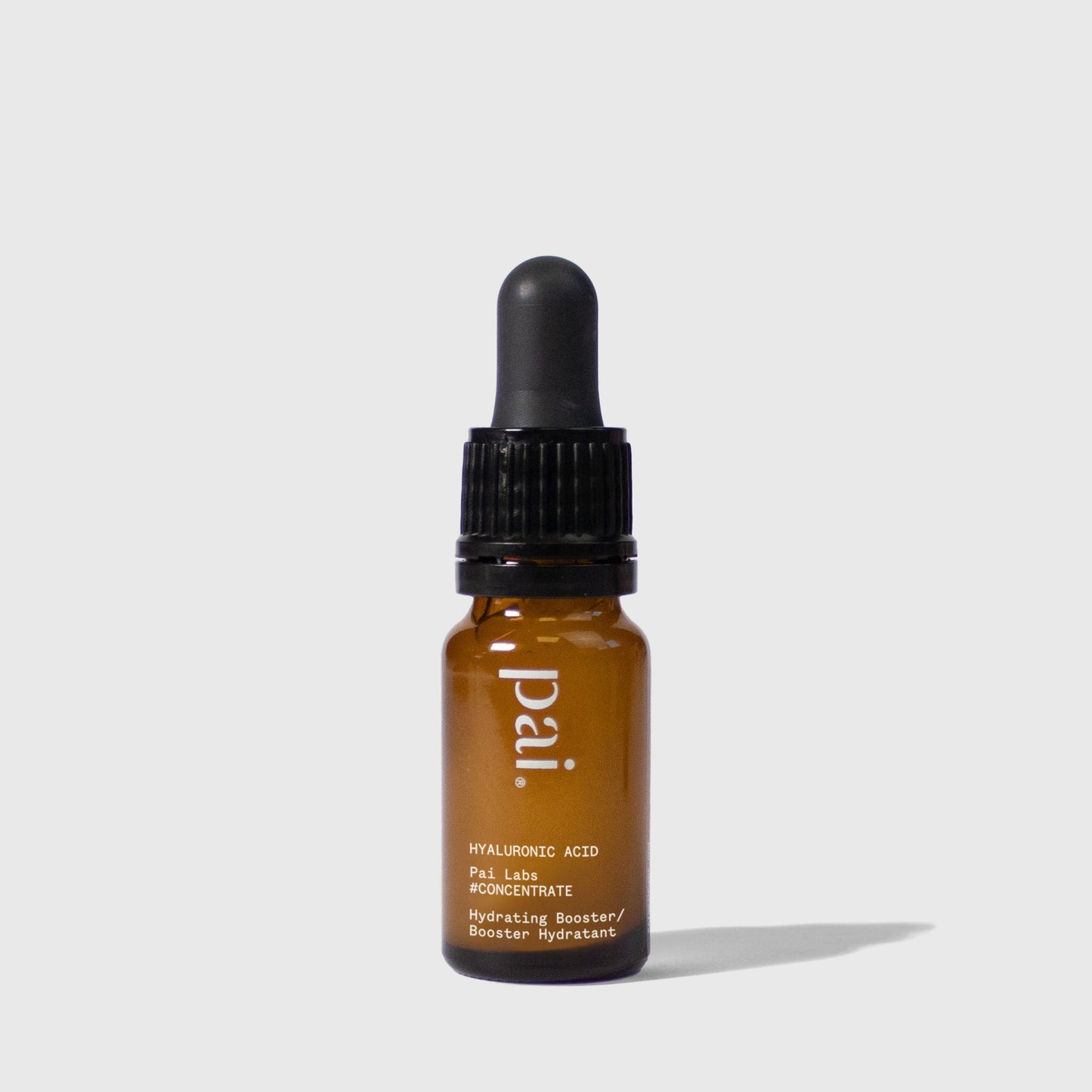
Hyaluronic Acid 0.3% Hydrating Booster

Hyaluronic Acid 0.3% Hydrating Booster
Pai Skincare
hyaluronic-acid-0-3-hydrating-booster
Serum
9628132081957
Morning or Evening?
How often will you use this product?
Notes


Highlights
WHAT IS IT?
Hydrating booster serum with 18 ingredients
FEATURES
Concentrated dose of hyaluronic acid, multi-sized molecules for optimized hydration, certified natural, fragrance-free
BEST FOR
All skin types, especially dry and sensitive skin
CHECKS
Does not contain fragrance
Who Is It For?
Adults Both Women And MenWhat Does It Help With?
Hydration Smoothing PlumpingBudget
Mid-rangeHow To Use
Which routine should it be used in?
Instructions:
Key Information


What Pai Skincare Says
Product Description:
All-natural booster drops for dry, sensitive skin
About the Brand:
Ingredients Overview
Ingredients List
AQUA, GLYCERIN, HYDROLYZED GLYCOSAMINOGLYCANS, PENTYLENE GLYCOL, PERSEA GRATISSIMA OIL (avocado oil), COCONUT ALKANES, XANTHAN GUM, VACCINIUM MYRTILLUS SEED OIL (blueberry seed oil), INULIN, SODIUM STEAROYL LACTYLATE, CAPRYLYL GLYCOL, SODIUM HYALURONATE, TAPIOCA STARCH, FRUCTOSE, TOCOPHEROL (vitamin e), ALGIN, HYALURONIC ACID, LACTIC ACID
Key Ingredients
Hyaluronic Acid, Avocado Oil, Blueberry Seed Oil
Ingredients Details
Coconut Alkanes
Common Name(s): Coconut alkanes,cosmetic active,functional ingredient
CAS Number: N/a
DESCRIPTION
What It Does: Delivers characteristic cosmetic function at recommended use concentration.
Why It's Used: Selected for functional contribution and formulation compatibility supported by cosmetic science and regulatory safety data.
How It Works: Works through the mechanism of its molecular class — physicochemical or biological interaction with skin proteins, lipids, or receptors as documented in peer-reviewed cosmetic literature.
Typically Found In: Skin care formulations
TECHNICAL DETAILS
Primary Category: Active ingredient – cosmetic active
Secondary Functions: Skin conditioning
Application Areas:

Facial Skincare

Body Care
Hair Care
Beard Care
Color Cosmetics (Makeup)
Dietary/Oral Supplements
Typical Concentration Range: 0.1%–10%
SOURCING & ETHICS
Vegan Status: Conditional
Halal Status: Yes
Source Notes: Commercially produced for cosmetic use. verify vegan/halal status with supplier.
SKIN COMPATIBILITY
Irritancy Rating: 1/5 – very low
Comedogenicity Rating: 0/5 – non-comedogenic
Sensitivity Concerns: Well-tolerated by most skin types.
Safe for Sensitive Skin: Yes
SAFETY & COMPATIBILITY
Safety Profile: Good safety profile at recommended concentrations. ewg score: 1–2.
Works Well With: Standard skincare actives
Avoid Combining With: No known significant incompatibilities
SCIENTIFIC NOTE
Coconut alkanes has an established safety and efficacy profile within the cosmetic regulatory framework at standard use concentrations.
Last Verified: Cosing database,coconut alkanes technical literature
Primary Sources: 2026-03-12
Glycerin
Common Name(s): Glycerol,glycerine,1,2,3-propanetriol
CAS Number: 56-81-5
DESCRIPTION
What It Does: Glycerin pulls water from the environment and deeper skin layers into the outer skin layer (epidermis), boosting moisture levels and keeping skin soft, smooth, and plump.
Why It's Used: It is used in virtually every moisturizer, serum, and cleanser because it is highly effective at hydrating skin, is well-tolerated by all skin types, and enhances the texture and spreadability of formulations.
How It Works: As a humectant, glycerin forms hydrogen bonds with water molecules, trapping them in the skin. it also reinforces the skin barrier by integrating into lipid structures between skin cells.
Typically Found In: Moisturizers,serums,cleansers,toners,sheet masks,sunscreens,body lotions,shampoos,conditioners
TECHNICAL DETAILS
Primary Category: Humectant
Secondary Functions: Skin barrier support,emollient,solvent
Application Areas:
Facial Skincare
Body Care
Hair Care
Beard Care
Color Cosmetics (Makeup)
Dietary/Oral Supplements
Typical Concentration Range: 1%–30% (typical: 3–10%)
SOURCING & ETHICS
Vegan Status: Yes – plant-derived (coconut, soy, palm) or synthetic
Halal Status: Yes – when plant-derived or synthetic; verify source with supplier
Source Notes: Derived from plant oils via hydrolysis or saponification; synthetic versions also available. palm-derived glycerin carries sustainability concerns.
SKIN COMPATIBILITY
Irritancy Rating: 1/5 – very low; non-irritating at all standard concentrations
Comedogenicity Rating: 0/5 – non-comedogenic
Sensitivity Concerns: Extremely rare allergic reactions; generally safe for all skin types including sensitive and baby skin
Safe for Sensitive Skin: Yes
SAFETY & COMPATIBILITY
Safety Profile: Widely recognized as safe. ewg hazard score: 1. no significant concerns for irritation, sensitization, or toxicity at typical concentrations (up to 50%).
Works Well With: Hyaluronic acid,ceramides,niacinamide,panthenol,urea,peptides,retinol,ahas/bhas
Avoid Combining With: No known incompatibilities at standard concentrations
SCIENTIFIC NOTE
Glycerin is an endogenous skin component found naturally in the stratum corneum. aquaporin-3 channels in keratinocytes facilitate glycerin transport, making it integral to natural skin hydration pathways.
Last Verified: Cosing database,cir safety assessment,ewg skin deep,inci decoder
Primary Sources: 2026-03-12
Hydrolyzed Glycosaminoglycans
Common Name(s): Natural polysaccharide,prebiotic or humectant biopolymer,skin conditioning
CAS Number: N/a
DESCRIPTION
What It Does: Provides skin surface hydration through hydroxyl group water binding, supports beneficial skin microbiome organisms as a selective fermentation substrate, and forms a conditioning film that reduces tewl.
Why It's Used: Natural polysaccharides combine humectant function with microbiome prebiotic activity — a dual benefit unavailable from synthetic humectants like glycerin, important for microbiome-conscious formulation.
How It Works: Hydroxyl groups on the polysaccharide backbone bind water through hydrogen bonding (5–7 h₂o molecules per sugar unit) providing hygroscopic moisture retention. fructans and inulins are selectively fermented by beneficial lactobacillus skin commensals providing a prebiotic microbiome benefit.
Typically Found In: Hydrating,microbiome support,barrier
TECHNICAL DETAILS
Primary Category: Functional ingredient – humectant
Secondary Functions: Tewl reduction,skin plumping
Application Areas:
Facial Skincare
Body Care
Hair Care
Beard Care
Color Cosmetics (Makeup)
Dietary/Oral Supplements
Typical Concentration Range: 0.1%–5%
SOURCING & ETHICS
Vegan Status: Yes
Halal Status: Yes
Source Notes: Synthetic or naturally derived. excellent aqueous solubility.
SKIN COMPATIBILITY
Irritancy Rating: 1/5 – very low
Comedogenicity Rating: 0/5 – non-comedogenic
Sensitivity Concerns: Non-irritating; suitable for all skin types.
Safe for Sensitive Skin: Yes
SAFETY & COMPATIBILITY
Safety Profile: Excellent safety profile. ewg score: 1.
Works Well With: Ceramides,emollients,occlusives,glycerin,hyaluronic acid
Avoid Combining With: No significant incompatibilities
SCIENTIFIC NOTE
Inulin-type fructans specifically promote lactobacillus growth over pathogenic s. aureus — the selective fermentation providing a natural prebiotic differentiation for microbiome-targeted skin care claims.
Last Verified: Cosing database,natural polysaccharide humectant prebiotic review
Primary Sources: 2026-03-12
Inulin
Common Name(s): Chicory inulin,polyfructose,fructan
CAS Number: 9005-80-5
DESCRIPTION
What It Does: Provides prebiotic microbiome feeding alongside humectant hydration from natural chicory fructan.
Why It's Used: The skin prebiotic — inulin selectively feeds bifidobacterium and lactobacillus beneficial skin bacteria, supporting a healthy skin microbiome that improves barrier function and reduces inflammatory skin conditions.
How It Works: Beta-2,1-fructosidic bonds provide selective fermentation by beneficial bacteria (bifidobacterium, lactobacillus) but not pathogens (s. aureus). prebiotic selectivity supports healthy microbiome composition. multiple hydroxyl groups provide humectant water binding. film-forming property provides hair detangling.
Typically Found In: Prebiotic skin care,microbiome-supporting products,natural conditioners
TECHNICAL DETAILS
Primary Category: Active ingredient – prebiotic polysaccharide
Secondary Functions: Tewl reduction,skin plumping
Application Areas:
Facial Skincare
Body Care
Hair Care
Beard Care
Color Cosmetics (Makeup)
Dietary/Oral Supplements
Typical Concentration Range: 0.5%–5%
SOURCING & ETHICS
Vegan Status: Yes – from cichorium intybus (chicory) root
Halal Status: Yes
Source Notes: Synthetic or naturally derived. excellent aqueous solubility.
SKIN COMPATIBILITY
Irritancy Rating: 1/5 – very low
Comedogenicity Rating: 0/5 – non-comedogenic
Sensitivity Concerns: Non-irritating; suitable for all skin types.
Safe for Sensitive Skin: Yes
SAFETY & COMPATIBILITY
Safety Profile: Excellent safety profile. ewg score: 1.
Works Well With: Ceramides,emollients,occlusives,glycerin,hyaluronic acid
Avoid Combining With: No significant incompatibilities
SCIENTIFIC NOTE
Inulin's prebiotic selectivity on skin microbiome mirrors its well-documented gut prebiotic activity: the beta-2,1-fructosidic bond can only be cleaved by inulinase enzymes present in bifidobacterium and lactobacillus but not in pathogenic bacteria lacking this enzyme. topical application provides selective nutrition that shifts microbiome composition toward beneficial bacteria — the cosmetic application of the same prebiotics science that transformed gut health understanding.
Last Verified: Cosing database,callewaert et al. skin microbiome prebiotic study
Primary Sources: 2026-03-12
