

Pure Fiji
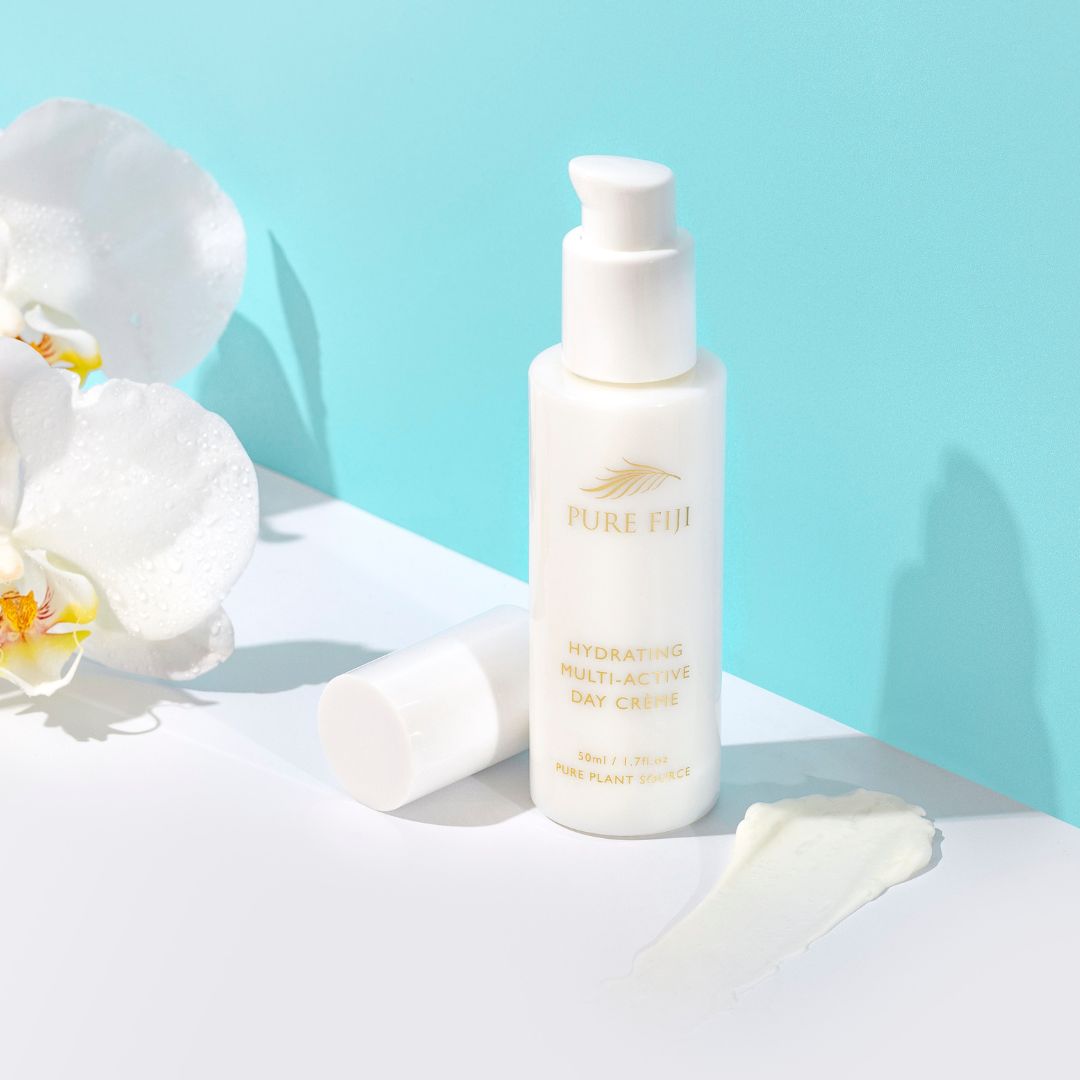
Hydrating Multi Active Day Crème (1.7oz/50ml)

Hydrating Multi Active Day Crème (1.7oz/50ml)
Pure Fiji
hydrating-multi-active-day-creme-1-7oz-50ml
Moisturize
9706861855013
Morning or Evening?
How often will you use this product?
Notes


Highlights
WHAT IS IT?
Day cream moisturizer
FEATURES
Ultra-hydrating, boosts hydration, increases cellular water flow, improves moisture-holding potential
BEST FOR
specific skin type
CHECKS
Free of parabens, phthalates, phenoxyethanol, sulfates, artifical colors, synthetics, PEGs, GMOs
Who Is It For?
Specific Age Rangefor Both Women And MenWhat Does It Help With?
Hydration Moisture RetentionBudget
Mid-rangeHow To Use
Which routine should it be used in?
Instructions:
Key Information

What Pure Fiji Says
Product Description:
This ultra-hydrating day crème will dramatically boost hydration by increasing cellular water flow as well as moisture-holding potential.
About the Brand:
Ingredients Overview
Ingredients List
Calophyllum Inophyllum (Dilo Leaf) and Terminalia, Catappa (Beach Almond) Hydrosol, Cocos Nucifera (Virgin Coconut) Oil, Macadamia Ternifolia (Macadamia Nut) Oil, Emulsifying Wax NF, Imperata Cylindrica (Ngi Grass) Extract, Kinetin Cocos Nucifera (Green Coconut) Extract, PEG-100 Hydrogenated Castor Oil, Glycerine, Glyceryl Mono Stearate, Thermus Thermophilus ferment and Glycerine, Aleurites Moluccana (Sikeci Nut) Oil, Calophyllum Inophyllum (DIlo Nut) Oil, Passiflora Incarnata (Passionflower) Extract, Dimethicone, Phenyl Trimethicone, Tocopherol Acetate (Vitamin E), Phenoxyethanol, Fragrance, Cetyl Alcohol, Xanthan Gum
Key Ingredients
Dilo leaf hydrosol, beach almond leaf hydrosol, hyaluronic acid, ngi grass, cold-pressed organic oils, Kinetin
Ingredients Details
Glycerine
Common Name(s): Glycerin,universal humectant,water-binding skin conditioning
CAS Number: N/a
DESCRIPTION
What It Does: Attracts and retains moisture in the sc, improves skin barrier function at low concentrations, provides gentle keratolytic softening, and acts as a co-solvent for water-soluble actives.
Why It's Used: The reference humectant — lowest cost, best safety profile, universal formulation compatibility, and present naturally in the sc via lipase-mediated glycerolipid hydrolysis makes glycerin the industry standard against which all humectants are benchmarked.
How It Works: Three hydroxyl groups form 6 h-bonds with water molecules per glycerol unit — the highest oh-group density per carbon of any commercial humectant. glycerin also down-regulates epidermal serine proteases that overactivate in dry sc, improving desquamation and barrier integrity.
Typically Found In: All cosmetics,universal
TECHNICAL DETAILS
Primary Category: Functional ingredient – humectant
Secondary Functions: Tewl reduction,skin plumping
Application Areas:

Facial Skincare
Body Care
Hair Care

Beard Care
Color Cosmetics (Makeup)
Dietary/Oral Supplements
Typical Concentration Range: 1%–40%
SOURCING & ETHICS
Vegan Status: Yes
Halal Status: Yes
Source Notes: Synthetic or naturally derived. excellent aqueous solubility.
SKIN COMPATIBILITY
Irritancy Rating: 1/5 – very low
Comedogenicity Rating: 0/5 – non-comedogenic
Sensitivity Concerns: Non-irritating; suitable for all skin types.
Safe for Sensitive Skin: Yes
SAFETY & COMPATIBILITY
Safety Profile: Excellent safety profile. ewg score: 1.
Works Well With: Ceramides,emollients,occlusives,glycerin,hyaluronic acid
Avoid Combining With: No significant incompatibilities
SCIENTIFIC NOTE
Epidermal lipases hydrolyse sc glycerophospholipids during cornification, releasing glycerol that contributes to the natural nmf — topical glycerin directly supplements this endogenous sc humectant pool.
Last Verified: 2026-03-12
Primary Sources: Cosing database,glycerin universal humectant review
Peg-100 Hydrogenated Castor Oil
Common Name(s): Peg-100 hydrogenated castor oil
DESCRIPTION
What It Does: Nourishes and softens skin through its balanced fatty acid profile, while antioxidant compounds protect against oxidative skin damage.
Why It's Used: Plant oils provide physiologically compatible lipid structures that integrate into the skin barrier and deliver fat-soluble antioxidants directly to skin cells.
How It Works: Fatty acids integrate into stratum corneum lipid lamellae, reinforcing the lipid barrier. antioxidants (tocopherols, carotenoids, polyphenols) neutralize ros through electron donation or singlet oxygen quenching.
Typically Found In: Face oils,serums,moisturizers,hair treatments,body oils
TECHNICAL DETAILS
Primary Category: Plant oils
Secondary Functions: Emollient,antioxidant
Application Areas:
Facial Skincare
Body Care
Hair Care
Beard Care
Color Cosmetics (Makeup)
Dietary/Oral Supplements
Typical Concentration Range: 0.5–30%
SOURCING & ETHICS
Vegan Status: Yes
Halal Status: Yes
Source Notes: Cold-pressed or solvent-extracted plant oil; no animal components.
SKIN COMPATIBILITY
Irritancy Rating: 1
Comedogenicity Rating: 2
Sensitivity Concerns: Low sensitization potential at recommended use concentrations.
Safe for Sensitive Skin: Yes
SAFETY & COMPATIBILITY
Safety Profile: Well-characterized cosmetic ingredient with established safety profile. generally non-irritating at typical use concentrations. suitable for leave-on and rinse-off cosmetics.
Works Well With: Vitamin e,ceramides,other plant oils,squalane
Avoid Combining With: Strong oxidizers (accelerate rancidity)
SCIENTIFIC NOTE
Vegetable oils are triglyceride matrices where the fatty acid composition determines skin compatibility, barrier function, and comedogenicity. oleic acid-rich oils (>60%) soften barrier lipids and enhance penetration; linoleic acid-rich oils reinforce ceramide-poor stratum corneum; saturated fatty acid-rich oils provide occlusion without skin penetration.
Last Verified: 2025-01-15
Primary Sources: Cosing eu database; pcpc cosmetic ingredient safety reviews; aocs plant oil composition databases; fatty acid pharmacology reviews