
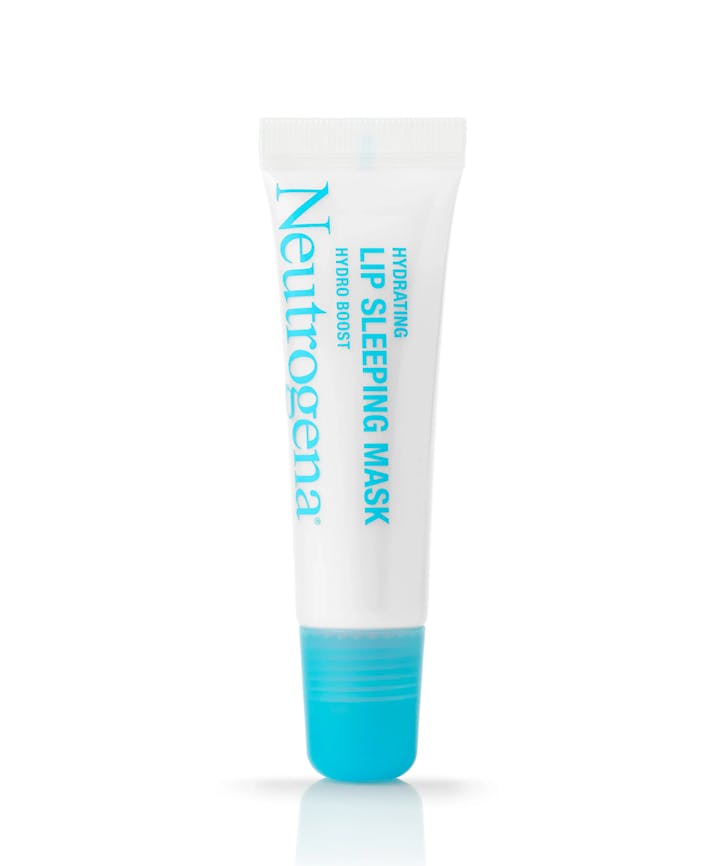

Neutrogena
Hydro Boost Hydrating Lip Sleeping Mask With Hyaluronic Acid

Hydro Boost Hydrating Lip Sleeping Mask With Hyaluronic Acid
Neutrogena
hydro-boost-hydrating-lip-sleeping-mask-with-hyaluronic-acid
Lip care
9818409599269
Morning or Evening?
How often will you use this product?
Notes


Highlights
WHAT IS IT?
Lip sleeping mask with hyaluronic acid
FEATURES
Hydrates lips overnight, Contains purified Hyaluronic Acid, Leaves lips smoother and more supple
BEST FOR
sensitive
CHECKS
Free of fragrance, dyes, parabens, phthalates, sulfates, alcohol
Who Is It For?
All Ages And GendersWhat Does It Help With?
Lip Hydration Softening LipsBudget
Affordable (under $30)How To Use
Which routine should it be used in?
Instructions:
Key Information

What Neutrogena Says
Product Description:
Neutrogena® Hydro Boost Hydrating Clear Lip Sleeping Mask is designed to hydrate your lips overnight. Designed to work while you sleep, this luxurious, leave-on lip hydration mask contains purified Hyaluronic Acid, an essential hydrator recognized by dermatologists.
About the Brand:
Ingredients Overview
Ingredients List
Petrolatum, Polybutene, Diisostearyl-Malate, Silica-Dimethyl-Silylate, Microcrystalline-Wax, VP/Hexadecene-Copolymer, Tocopherol, Dehydroacetic-Acid, Hydrolyzed-Hyaluronic-Acid, Polyglyceryl-2-Triisostearate, Iron-Oxides, Titanium-Dioxide
Key Ingredients
Purified Hyaluronic Acid, Tocopherol
Ingredients Details
Dehydroacetic Acid
Common Name(s): Dha preservative,3-acetyl-6-methyl-2h-pyran-2,4(3h)-dione
CAS Number: 520-45-6
DESCRIPTION
What It Does: Provides broad-spectrum preservation effective at higher ph than benzoate or sorbate.
Why It's Used: Ph-flexible preservative for formulations at ph 5-7 where sodium benzoate and potassium sorbate lose efficacy.
How It Works: Cyclic dicarbonyl pyranone structure provides ph-independent antimicrobial activity (active form is the neutral molecule, not ph-dependent ionisation). effective ph 4-8 (much broader than benzoate/sorbate). good antifungal vs aspergillus and candida. often used as sodium salt (sodium dehydroacetate) for water solubility.
Typically Found In: Higher ph cosmetics,anti-fungal preservation systems
TECHNICAL DETAILS
Primary Category: Functional ingredient – pyranone preservative
Secondary Functions: Skin conditioning
Application Areas:

Facial Skincare

Body Care
Hair Care
Beard Care
Color Cosmetics (Makeup)
Dietary/Oral Supplements
Typical Concentration Range: 0.1%–0.6%
SOURCING & ETHICS
Vegan Status: Conditional - supplier confirmation required
Halal Status: Unverified - supplier confirmation required
Source Notes: Commercially produced for cosmetic use. verify vegan/halal status with supplier. [audit 2026-07-29 rev2: the record's own source_notes does not assert a non-animal origin, or instructs the reader to verify with the supplier; "yes" asserts knowledge the record does not hold. determination requires shariah-panel sign-off.]
SKIN COMPATIBILITY
Irritancy Rating: 1/5 – very low
Comedogenicity Rating: 0/5 – non-comedogenic
Sensitivity Concerns: Well-tolerated by most skin types.
Safe for Sensitive Skin: Yes
SAFETY & COMPATIBILITY
Safety Profile: Eu max 0.6% as dehydroacetic acid. less commonly used than benzoate/sorbate due to higher cost.
Works Well With: Standard skincare actives
Avoid Combining With: No known significant incompatibilities
SCIENTIFIC NOTE
Dehydroacetic acid's ph-independent antimicrobial activity arises from a fundamentally different mechanism vs benzoate/sorbate: rather than requiring the acidic free acid form (ph-dependent ionisation), dha's cyclic diketone structure is itself the active antimicrobial form. this means dha provides equivalent antimicrobial activity at ph 5 and ph 7 — completely unlike the ph-sensitive preservatives that lose activity above ph 5.
Last Verified: 2026-03-12
Primary Sources: Cosing database,eu preservative annex v,cir safety assessment
Diisostearyl Malate
Common Name(s): Diisostearyl malate,cosmetic active,functional ingredient
CAS Number: N/a
DESCRIPTION
What It Does: Delivers characteristic cosmetic function at recommended use concentration.
Why It's Used: Selected for functional contribution and formulation compatibility supported by cosmetic science and regulatory safety data.
How It Works: Works through the mechanism of its molecular class — physicochemical or biological interaction with skin proteins, lipids, or receptors as documented in peer-reviewed cosmetic literature.
Typically Found In: Skin care formulations
TECHNICAL DETAILS
Primary Category: Active ingredient – cosmetic active
Secondary Functions: Skin conditioning
Application Areas:
Facial Skincare
Body Care
Hair Care
Beard Care
Color Cosmetics (Makeup)
Dietary/Oral Supplements
Typical Concentration Range: 0.1%–10%
SOURCING & ETHICS
Vegan Status: Conditional - supplier confirmation required
Halal Status: Unverified - supplier confirmation required
Source Notes: Commercially produced for cosmetic use. verify vegan/halal status with supplier. [audit 2026-07-29 rev2: the record's own source_notes does not assert a non-animal origin, or instructs the reader to verify with the supplier; "yes" asserts knowledge the record does not hold. determination requires shariah-panel sign-off.]
SKIN COMPATIBILITY
Irritancy Rating: 1/5 – very low
Comedogenicity Rating: 0/5 – non-comedogenic
Sensitivity Concerns: Well-tolerated by most skin types.
Safe for Sensitive Skin: Yes
SAFETY & COMPATIBILITY
Safety Profile: Good safety profile at recommended concentrations. ewg score: 1–2.
Works Well With: Standard skincare actives
Avoid Combining With: No known significant incompatibilities
SCIENTIFIC NOTE
Diisostearyl malate has an established safety and efficacy profile within the cosmetic regulatory framework at standard use concentrations.
Last Verified: 2026-03-12
Primary Sources: Cosing database,diisostearyl malate technical literature
Hydrolyzed Hyaluronic Acid
Common Name(s): Hyaluronic acid,gold standard humectant,multi-weight skin plumper
CAS Number: N/a
DESCRIPTION
What It Does: Hydrates skin at multiple depths depending on mw, provides visible plumping from dermal water retention, reduces tewl, and supports barrier integrity and fibroblast proliferation.
Why It's Used: The reference humectant in cosmetics — ha's 1,000× water binding capacity, skin-endogenous origin, and compatibility with all skin types make it the standard against which all humectants are benchmarked.
How It Works: High-mw ha (>1000 kda) films the surface reducing tewl; medium-mw (100–1000 kda) hydrates outer epidermis; low-mw (<50 kda) reaches dermis for plumping. each weight class binds water through carboxylate and amide group h-bonding across the (glcua-glcnac)ₙ disaccharide backbone.
Typically Found In: Hydrating serums,moisturisers,anti-aging
TECHNICAL DETAILS
Primary Category: Functional ingredient – humectant
Secondary Functions: Tewl reduction,skin plumping
Application Areas:
Facial Skincare
Body Care
Hair Care
Beard Care
Color Cosmetics (Makeup)
Dietary/Oral Supplements
Typical Concentration Range: 0.01%–2%
SOURCING & ETHICS
Vegan Status: Conditional - feedstock declaration required
Halal Status: Unverified - feedstock declaration required (plant, animal and petrochemical routes all exist)
Source Notes: Synthetic or naturally derived. excellent aqueous solubility. [audit 2026-07-29 rev2: origin-dependent: the same inci exists in plant, animal and petrochemical versions and the name does not discriminate. determination requires shariah-panel sign-off.]
SKIN COMPATIBILITY
Irritancy Rating: 1/5 – very low
Comedogenicity Rating: 0/5 – non-comedogenic
Sensitivity Concerns: Non-irritating; suitable for all skin types.
Safe for Sensitive Skin: Yes
SAFETY & COMPATIBILITY
Safety Profile: Excellent safety profile. ewg score: 1.
Works Well With: Ceramides,emollients,occlusives,glycerin,hyaluronic acid
Avoid Combining With: No significant incompatibilities
SCIENTIFIC NOTE
Ha production by streptococcus zooepidemicus fermentation provides high-purity, animal-free hyaluronic acid at molecular weights 50 kda–3 mda — batch selection determines the intended skin depth target.
Last Verified: 2026-03-12
Primary Sources: Cosing database,hyaluronic acid multi-weight humectant review
Microcrystalline Wax
Common Name(s): Microcrystalline wax,petrowax micro,microwax
CAS Number: 63231-60-7
DESCRIPTION
What It Does: Provides flexible, adhesive structure for cosmetic sticks and pencils with superior oil-binding vs paraffin.
Why It's Used: Premium stick cosmetic wax – superior flexibility and oil binding vs paraffin for smooth-applying, non-brittle lip and eye products.
How It Works: Highly branched c30-c75 isoalkanes provide irregular microcrystalline structure (smaller crystals than paraffin). irregular packing provides more flexible, less brittle wax. better oil retention in interstices between microcrystals. higher melting point (60-90°c) than paraffin.
Typically Found In: Lipsticks,eye pencils,solid stick products
TECHNICAL DETAILS
Primary Category: Functional ingredient – microcrystalline petroleum wax
Secondary Functions: Skin conditioning
Application Areas:
Facial Skincare
Body Care
Hair Care
Beard Care
Color Cosmetics (Makeup)
Dietary/Oral Supplements
Typical Concentration Range: 1%–25%
SOURCING & ETHICS
Vegan Status: Conditional - supplier confirmation required
Halal Status: Unverified - supplier confirmation required
Source Notes: Commercially produced for cosmetic use. verify vegan/halal status with supplier. [audit 2026-07-29 rev2: the record's own source_notes does not assert a non-animal origin, or instructs the reader to verify with the supplier; "yes" asserts knowledge the record does not hold. determination requires shariah-panel sign-off.]
SKIN COMPATIBILITY
Irritancy Rating: 1/5 – very low
Comedogenicity Rating: 0/5 – non-comedogenic
Sensitivity Concerns: Well-tolerated by most skin types.
Safe for Sensitive Skin: Yes
SAFETY & COMPATIBILITY
Safety Profile: Good safety profile at recommended concentrations. ewg score: 1–2.
Works Well With: Standard skincare actives
Avoid Combining With: No known significant incompatibilities
SCIENTIFIC NOTE
Microcrystalline wax's flexibility advantage over paraffin arises from its branched molecular structure preventing the tight, regular crystalline packing that makes paraffin brittle. the irregular microcrystal structure interlocks with liquid oil molecules, providing superior oil binding that prevents sweating (oil migration to surface) in finished stick products during storage.
Last Verified: 2026-03-12
Primary Sources: Cosing database,cir safety assessment