

Jan Marini
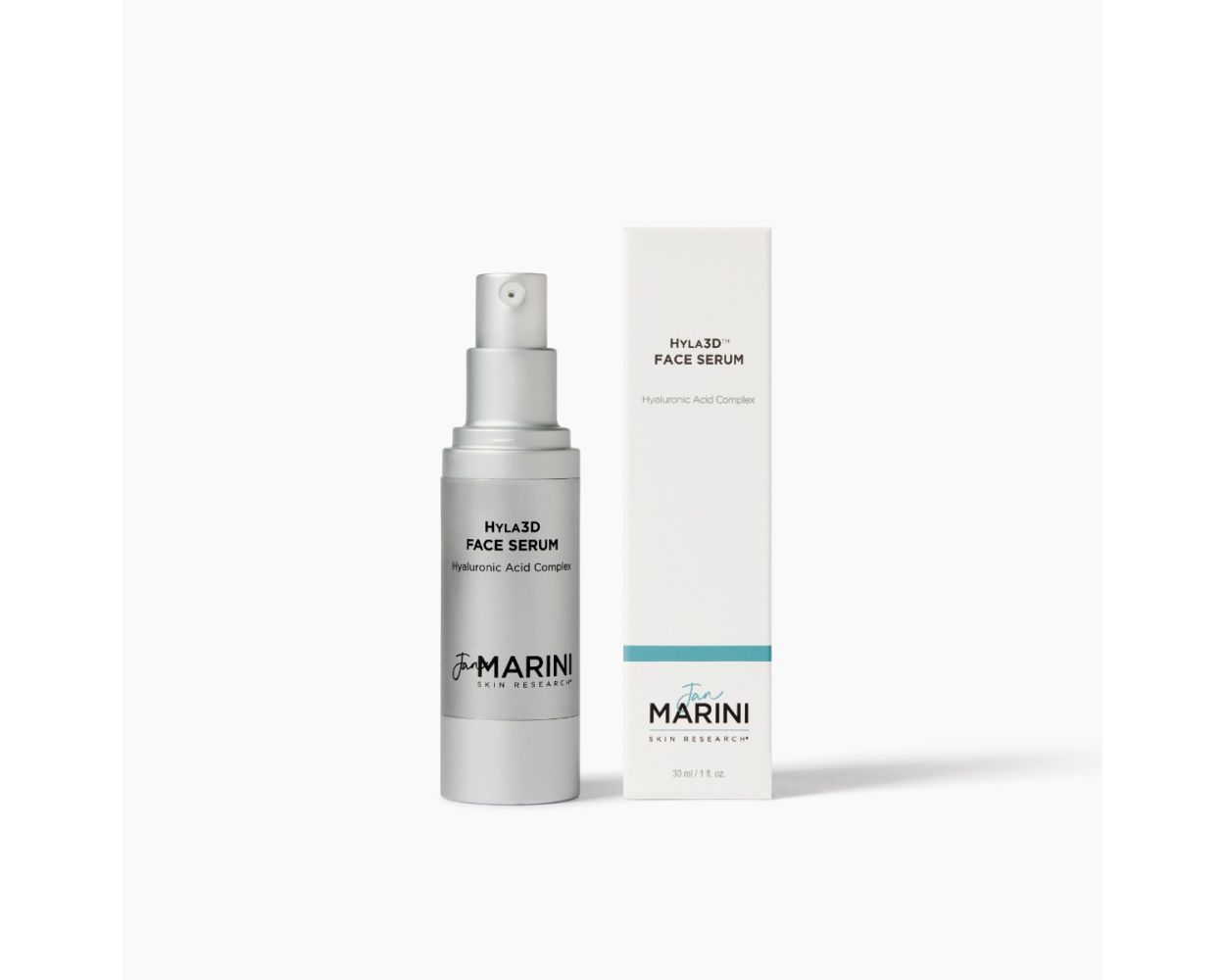
Hyla3D® Face Serum

Hyla3D® Face Serum
Jan Marini
hyla3d-r-face-serum
Serum
9706805592357
Morning or Evening?
How often will you use this product?
Notes


Highlights
WHAT IS IT?
Hyaluronic Acid Complex serum
FEATURES
Patented combination of 5 advanced Hyaluronic Acid supporting technologies, weightless serum, supports HA, elastin and overall skin quality
BEST FOR
All skin types
CHECKS
Paraben-free
Who Is It For?
Adults Both Women And MenWhat Does It Help With?
Revitalizes And Restores Skin's Hydration And Youthful VolumeBudget
PremiumHow To Use
Which routine should it be used in?
Instructions:
Key Information


What Jan Marini Says
Product Description:
Hyla3D® Face Serum's patented combination of 5 advanced Hyaluronic Acid (HA) supporting technologies provides lasting HA to the skin in a weightless serum – perfect for combining into any skin care routine on any skin type. In addition, multiple advanced technologies unique to Hyla3D® Face Serum further support HA, elastin and overall skin quality.
About the Brand:
Ingredients Overview
Ingredients List
Water/Aqua/Eau, Glycerin, Acrylates/C10-30 Alkyl Acrylate Crosspolymer, Sodium Hyaluronate, Sodium Hyaluronate Crosspolymer, Saccharomyces Lysate Extract, Oligopeptide-24, Ubiquinone, Calcium Ketogluconate, Peucedanum Graveolens (Dill) Extract, Panthenol, Lecithin, Hydrogenated Lecithin, Tocopherol, Butylene Glycol, Dimethicone/Vinyl Dimethicone Crosspolymer, Xanthan Gum, Caprylic/Capric Triglyceride, Glycine Soja (Soybean) Oil, Sodium Hydroxide, Potassium Phosphate, Pentylene Glycol, Ethylhexylglycerin, Caprylyl Glycol, Sodium Oleate, Citric Acid, Isoceteth-10, Silica, Lactobacillus Ferment, Alcohol, Hexylene Glycol, Disodium EDTA, Phenoxyethanol
Key Ingredients
Liposomal Encapsulated HA, Cross-Linked HA, Ultra-Low Molecular Weight HA, Traditional HA, HA Peptide (Oligopeptide-24), Tissue Respiratory Factor (Saccharomyces Lysate Extract), Calcium Ketogluconate (HA Booster), CoQ10, Lys'lastine
Ingredients Details
Acrylates/c10-30 Alkyl Acrylate Crosspolymer
Common Name(s): Acrylates/c10-30 alkyl acrylate crosspolymer
DESCRIPTION
What It Does: Delivers targeted skin-conditioning or bioactive benefits through a specific mechanism of action suited to the formulation's intended purpose.
Why It's Used: Specialty actives address specific skin concerns through targeted molecular mechanisms, providing efficacy beyond what base formulation ingredients alone can achieve.
How It Works: The bioactive compound interacts with specific molecular targets in skin cells or the extracellular matrix — enzymes, receptors, structural proteins, or signaling molecules — triggering beneficial biological responses.
Typically Found In: Serums,treatments,moisturizers,specialty products
TECHNICAL DETAILS
Primary Category: Specialty actives
Secondary Functions: Skin-conditioning,anti-aging
Application Areas:

Facial Skincare

Body Care
Hair Care
Beard Care
Color Cosmetics (Makeup)
Dietary/Oral Supplements
Typical Concentration Range: 0.01–5%
SOURCING & ETHICS
Vegan Status: Yes
Halal Status: Yes
Source Notes: Specialty active ingredient; check individual sourcing for vegan status.
SKIN COMPATIBILITY
Irritancy Rating: 1
Comedogenicity Rating: 0
Sensitivity Concerns: Low sensitization potential at recommended use concentrations.
Safe for Sensitive Skin: Yes
SAFETY & COMPATIBILITY
Safety Profile: Well-characterized cosmetic ingredient with established safety profile. generally non-irritating at typical use concentrations. suitable for leave-on and rinse-off cosmetics.
Works Well With: Niacinamide,hyaluronic acid,vitamin c,peptides
Avoid Combining With: Incompatible with oxidizing agents; check ph stability
SCIENTIFIC NOTE
Specialty actives typically work through enzyme inhibition (e.g., tyrosinase inhibition for brightening, mmp inhibition for anti-aging), receptor activation (e.g., retinoid receptors, ppar-γ for barrier genes), or transcription factor modulation (e.g., nrf2 for antioxidant gene upregulation). structure-activity relationships determine potency and selectivity.
Last Verified: Cosing eu database; pcpc cosmetic ingredient safety reviews; ingredient-specific safety and efficacy literature
Primary Sources: 2025-01-15
Calcium Ketogluconate
Common Name(s): Calcium ketogluconate,calcium ketogluconate,cosmetic functional ingredient,established active
CAS Number: N/a
DESCRIPTION
What It Does: Provides the characteristic cosmetic function of its ingredient class through molecular chemistry at recommended use concentration.
Why It's Used: Calcium ketogluconate is selected for the specific functional properties of its molecular class — the chemical architecture of calcium ketogluconate delivers the required cosmetic performance through documented interactions with skin biology and formulation matrix.
How It Works: Functional groups interact with formulation components and skin through h-bonding, ionic association, surface adsorption, or receptor activity as appropriate to the molecular class.
Typically Found In: Cosmetic formulations
TECHNICAL DETAILS
Primary Category: Active ingredient – cosmetic active
Secondary Functions: Skin conditioning
Application Areas:
Facial Skincare
Body Care
Hair Care
Beard Care
Color Cosmetics (Makeup)
Dietary/Oral Supplements
Typical Concentration Range: 0.1%–10%
SOURCING & ETHICS
Vegan Status: Conditional
Halal Status: Yes
Source Notes: Commercially produced for cosmetic use. verify vegan/halal status with supplier.
SKIN COMPATIBILITY
Irritancy Rating: 1/5 – very low
Comedogenicity Rating: 0/5 – non-comedogenic
Sensitivity Concerns: Well-tolerated by most skin types.
Safe for Sensitive Skin: Yes
SAFETY & COMPATIBILITY
Safety Profile: Good safety profile at recommended concentrations. ewg score: 1–2.
Works Well With: Standard skincare actives
Avoid Combining With: No known significant incompatibilities
SCIENTIFIC NOTE
Safety documented in cosing at standard formulation concentrations.
Last Verified: Cosing database,calcium ketogluconate technical review
Primary Sources: 2026-03-22
Glycerin
Common Name(s): Glycerol,glycerine,1,2,3-propanetriol
CAS Number: 56-81-5
DESCRIPTION
What It Does: Glycerin pulls water from the environment and deeper skin layers into the outer skin layer (epidermis), boosting moisture levels and keeping skin soft, smooth, and plump.
Why It's Used: It is used in virtually every moisturizer, serum, and cleanser because it is highly effective at hydrating skin, is well-tolerated by all skin types, and enhances the texture and spreadability of formulations.
How It Works: As a humectant, glycerin forms hydrogen bonds with water molecules, trapping them in the skin. it also reinforces the skin barrier by integrating into lipid structures between skin cells.
Typically Found In: Moisturizers,serums,cleansers,toners,sheet masks,sunscreens,body lotions,shampoos,conditioners
TECHNICAL DETAILS
Primary Category: Humectant
Secondary Functions: Skin barrier support,emollient,solvent
Application Areas:
Facial Skincare
Body Care
Hair Care
Beard Care
Color Cosmetics (Makeup)
Dietary/Oral Supplements
Typical Concentration Range: 1%–30% (typical: 3–10%)
SOURCING & ETHICS
Vegan Status: Yes – plant-derived (coconut, soy, palm) or synthetic
Halal Status: Yes – when plant-derived or synthetic; verify source with supplier
Source Notes: Derived from plant oils via hydrolysis or saponification; synthetic versions also available. palm-derived glycerin carries sustainability concerns.
SKIN COMPATIBILITY
Irritancy Rating: 1/5 – very low; non-irritating at all standard concentrations
Comedogenicity Rating: 0/5 – non-comedogenic
Sensitivity Concerns: Extremely rare allergic reactions; generally safe for all skin types including sensitive and baby skin
Safe for Sensitive Skin: Yes
SAFETY & COMPATIBILITY
Safety Profile: Widely recognized as safe. ewg hazard score: 1. no significant concerns for irritation, sensitization, or toxicity at typical concentrations (up to 50%).
Works Well With: Hyaluronic acid,ceramides,niacinamide,panthenol,urea,peptides,retinol,ahas/bhas
Avoid Combining With: No known incompatibilities at standard concentrations
SCIENTIFIC NOTE
Glycerin is an endogenous skin component found naturally in the stratum corneum. aquaporin-3 channels in keratinocytes facilitate glycerin transport, making it integral to natural skin hydration pathways.
Last Verified: Cosing database,cir safety assessment,ewg skin deep,inci decoder
Primary Sources: 2026-03-12
Oligopeptide-24
Common Name(s): Oligopeptide-24,oligopeptide-24,oligopeptide-24,anti-aging signal peptide
CAS Number: N/a
DESCRIPTION
What It Does: Stimulates fibroblast collagen i, iii, iv synthesis and inhibits mmp-1 matrix metalloproteinase collagen degradation — providing clinically measurable wrinkle reduction and skin firmness at 1–5000 ppm concentrations.
Why It's Used: Oligopeptide sequences provide optimal receptor-binding geometry — long enough for full receptor docking with appropriate conformational flexibility while short enough for formulation stability and sc penetration.
How It Works: Peptide receptor binding → map kinase or smad cascade → col1a1/col3a1 upregulation + mmp-1/mmp-3 downregulation. spps synthesis provides >98% sequence purity for reproducible pharmacological response.
Typically Found In: Anti-aging serums,collagen products
TECHNICAL DETAILS
Primary Category: Active ingredient – peptide
Secondary Functions: Collagen synthesis,anti-aging
Application Areas:
Facial Skincare
Body Care
Hair Care
Beard Care
Color Cosmetics (Makeup)
Dietary/Oral Supplements
Typical Concentration Range: 1–5000 ppm
SOURCING & ETHICS
Vegan Status: Yes
Halal Status: Yes
Source Notes: Synthetically produced via solid-phase peptide synthesis (spps).
SKIN COMPATIBILITY
Irritancy Rating: 1/5 – very low
Comedogenicity Rating: 0/5 – non-comedogenic
Sensitivity Concerns: Non-irritating at recommended concentrations.
Safe for Sensitive Skin: Yes
SAFETY & COMPATIBILITY
Safety Profile: Excellent safety profile. ewg score: 1.
Works Well With: Retinoids,niacinamide,vitamin c,hyaluronic acid
Avoid Combining With: Strong acids below ph 3.5; oxidising agents
SCIENTIFIC NOTE
Inci registry numbering: each numbered oligopeptide designates a unique amino acid sequence — different numbers target different receptor subtypes (tgf-β r1/2, egf-r, integrin α2β1, α5β1, αvβ3) for complementary anti-aging mechanisms.
Last Verified: Cosing database,oligopeptide-24 signal peptide anti-aging review
Primary Sources: 2026-03-22
