

Nykaa E retail limited
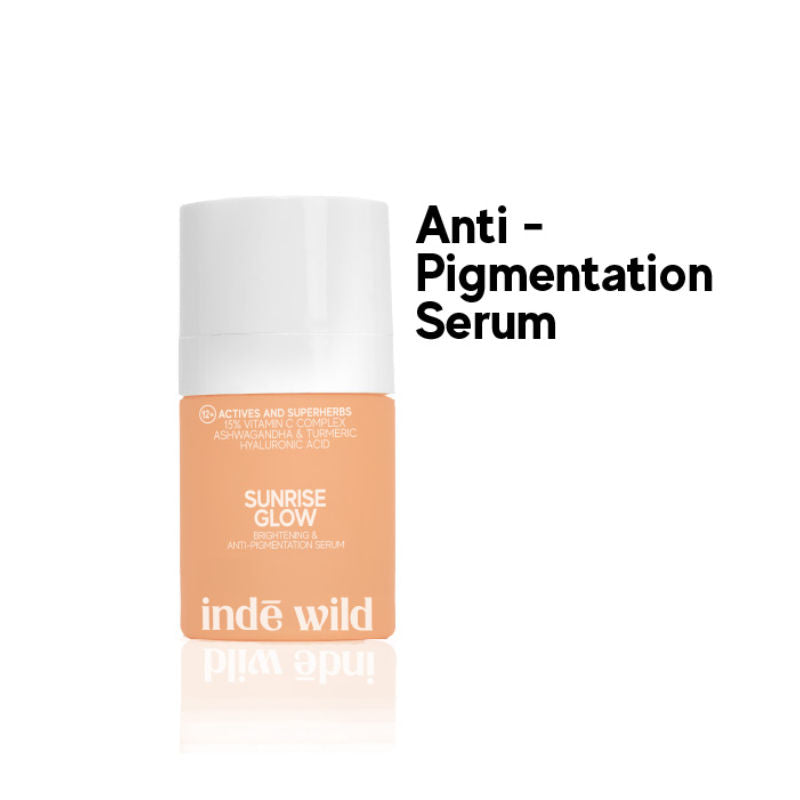
inde wild 15% Vitamin C With Turmeric & Niacinamide

inde wild 15% Vitamin C With Turmeric & Niacinamide
Nykaa E retail limited
inde-wild-15-vitamin-c-with-turmeric-niacinamide
Serum
10084730011941
Morning or Evening?
How often will you use this product?
Notes


Highlights
WHAT IS IT?
Brightening serum with 15% Vitamin C complex and 10+ active ingredients
FEATURES
15% stabilized Vitamin C, Vitamin E, Ferulic Acid, Niacinamide, Hyaluronic Acid, Ayurvedic Turmeric, Ashwagandha, enhanced stability against oxidation, optimal skin absorption, boosted antioxidant protection, brightens skin, repairs and hydrates, diminishes dark spots
BEST FOR
sensitive
CHECKS
No artificial preservatives or perfume mentioned
Who Is It For?
All Genders Adult Age Range Not SpecifiedWhat Does It Help With?
Brightening Skin Repairing Hydrating Diminishing Dark Spots Antioxidant Protection Anti-agingBudget
Premium ($76-$150)How To Use
Which routine should it be used in?
Instructions:
Key Information


What Nykaa E retail limited Says
Product Description:
Activate your mornings with the gold standard multi-hyphenate brightening serum. Packed with 15% stabilized Vitamin C complex, along with 10+ potent actives like Vitamin E, Ferulic Acid, Niacinamide, Hyaluronic Acid, and Ayurvedic superfoods Turmeric and Ashwagandha, it's designed to bottle the benefits of multiple serums into one targeted super-serum. Our formulation helps brighten, repair, and hydrate your skin, while diminishing dark spots. The result? A radiant, glowing complexion that shines from within. Benefits include enhanced stability to prevent oxidation, optimal absorption for deeper penetration targeting imperfections, and boosted antioxidant protection against environmental stressors.
About the Brand:
Ingredients Overview
Ingredients List
Aqua, 3-O-Ethyl Ascorbic Acid, Propanediol, Niacinamide, Polyglyceryl-6 Caprylate, Polyglyceryl-4 Caprate, Tocopheryl Acetate, Sodium Hyaluronate, Polyglyceryl-10 Laurate, Glycerin, Bisabolol, Ferulic Acid, Polyglyceryl-10 Myristate, Xanthan Gum,Hydroxyacetophenone, Sclerotium Gum, Lecithin, Caprylyl Glycol, Withania somnifera Extract, Curcuma longa Extract, Pullulan, 1,2-hexanediol , Sorbitol, Citric Acid, Biosaccharide Gum-4, Pentylene Glycol, Silica, Phenoxyethanol, Scenedesmus Rubescens Extract, 1,2 Hexanediol, Ascorbic Acid, Gold, Glutathione.
Key Ingredients
Vitamin C complex, Vitamin E, Ferulic Acid, Niacinamide, Hyaluronic Acid, Turmeric, Ashwagandha
Ingredients Details
1-2-hexanediol
Common Name(s): 1-2-hexanediol,cosmetic active,functional ingredient
CAS Number: N/a
DESCRIPTION
What It Does: Delivers characteristic cosmetic function at recommended use concentration.
Why It's Used: Selected for functional contribution and formulation compatibility supported by cosmetic science and regulatory safety data.
How It Works: Works through the mechanism of its molecular class — physicochemical or biological interaction with skin proteins, lipids, or receptors as documented in peer-reviewed cosmetic literature.
Typically Found In: Skin care formulations
TECHNICAL DETAILS
Primary Category: Active ingredient – cosmetic active
Secondary Functions: Skin conditioning
Application Areas:

Facial Skincare

Body Care
Hair Care
Beard Care
Color Cosmetics (Makeup)
Dietary/Oral Supplements
Typical Concentration Range: 0.1%–10%
SOURCING & ETHICS
Vegan Status: Conditional - supplier confirmation required
Halal Status: Unverified - supplier confirmation required
Source Notes: Commercially produced for cosmetic use. verify vegan/halal status with supplier. [audit 2026-07-29 rev2: the record's own source_notes does not assert a non-animal origin, or instructs the reader to verify with the supplier; "yes" asserts knowledge the record does not hold. determination requires shariah-panel sign-off.]
SKIN COMPATIBILITY
Irritancy Rating: 1/5 – very low
Comedogenicity Rating: 0/5 – non-comedogenic
Sensitivity Concerns: Well-tolerated by most skin types.
Safe for Sensitive Skin: Yes
SAFETY & COMPATIBILITY
Safety Profile: Good safety profile at recommended concentrations. ewg score: 1–2.
Works Well With: Standard skincare actives
Avoid Combining With: No known significant incompatibilities
SCIENTIFIC NOTE
1-2-hexanediol has an established safety and efficacy profile within the cosmetic regulatory framework at standard use concentrations.
Last Verified: 2026-03-12
Primary Sources: Cosing database,1-2-hexanediol technical literature
3-o-ethyl Ascorbic Acid
Common Name(s): 3-o-ethyl ascorbic acid
DESCRIPTION
What It Does: Loosens corneocyte adhesion in the stratum corneum, accelerating cell turnover, refining skin texture, and improving radiance.
Why It's Used: Organic acids at cosmetic ph values provide controlled keratolytic exfoliation that improves skin texture, pore appearance, and radiance without mechanical irritation.
How It Works: At appropriate ph, the acid's undissociated form penetrates the stratum corneum and dissolves the ionic bonds between corneocyte desmosomes (calcium chelation mechanism), facilitating controlled desquamation and cell renewal.
Typically Found In: Toners,exfoliants,serums,peels,cleansers
TECHNICAL DETAILS
Primary Category: Exfoliants
Secondary Functions: Brightening,keratolytic
Application Areas:
Facial Skincare
Body Care
Hair Care
Beard Care
Color Cosmetics (Makeup)
Dietary/Oral Supplements
Typical Concentration Range: 0.5–20%
SOURCING & ETHICS
Vegan Status: Yes
Halal Status: Yes
Source Notes: Synthetic or plant-derived acid; no animal components.
SKIN COMPATIBILITY
Irritancy Rating: 2
Comedogenicity Rating: 0
Sensitivity Concerns: May cause irritation or stinging in sensitive or barrier-compromised skin at high concentrations; patch test recommended.
Safe for Sensitive Skin: Conditional
SAFETY & COMPATIBILITY
Safety Profile: Safe within recommended ph and concentration ranges. sensitization risk increases above 10% aha. patch test recommended for sensitive skin. mildly irritating to some individuals at typical cosmetic use concentrations.
Works Well With: Niacinamide,hyaluronic acid,ceramides,vitamin c
Avoid Combining With: High concentrations on sensitive/broken skin; avoid with physical exfoliants
SCIENTIFIC NOTE
Cosmetic acids function at the pka boundary: only the undissociated acid (rcooh) penetrates the stratum corneum lipid barrier, while the ionized carboxylate (rcoo⁻) does not. the henderson-hasselbalch equation governs the fraction of active species at formulation ph; typically 0.5–3.0% undissociated acid provides efficacy while minimizing irritation.
Last Verified: 2025-01-15
Primary Sources: Cosing eu database; pcpc cosmetic ingredient safety reviews; ingredient-specific safety and efficacy literature
Ascorbic Acid
Common Name(s): Vitamin c,l-ascorbic acid,l-ascorbate
CAS Number: 50-81-7
DESCRIPTION
What It Does: Ascorbic acid neutralizes free radicals, stimulates collagen production, inhibits melanin synthesis for a brighter complexion, and supports skin repair.
Why It's Used: It is used because it offers comprehensive antioxidant and brightening benefits supported by extensive clinical evidence. it is the most bioavailable form of vitamin c for topical application.
How It Works: As an antioxidant, it donates electrons to neutralize reactive oxygen species. it is an essential cofactor for the hydroxylation of proline and lysine in collagen synthesis. it inhibits tyrosinase, the enzyme responsible for melanin production, reducing hyperpigmentation.
Typically Found In: Vitamin c serums,brightening moisturizers,antioxidant formulations,spf products,eye creams
TECHNICAL DETAILS
Primary Category: Active ingredient – vitamin c
Secondary Functions: Collagen booster,tyrosinase inhibitor,ph adjuster
Application Areas:
Facial Skincare
Body Care
Hair Care
Beard Care
Color Cosmetics (Makeup)
Dietary/Oral Supplements
Typical Concentration Range: 5%–20% (effective range: 10–20%; ph must be below 3.5 for activity)
SOURCING & ETHICS
Vegan Status: Yes – synthetically produced or corn/plant-derived
Halal Status: Yes
Source Notes: Commercially produced by reichstein synthesis or guangxi fermentation process from glucose. some plant-derived versions exist.
SKIN COMPATIBILITY
Irritancy Rating: 2/5 – low to moderate; low ph formulations can cause initial tingling or stinging, especially at concentrations above 15%
Comedogenicity Rating: 0/5 – non-comedogenic
Sensitivity Concerns: Acidic ph can irritate sensitive or compromised skin barriers. highly unstable – oxidizes rapidly when exposed to air, light, and heat (turns orange/brown). use in the morning under spf.
Safe for Sensitive Skin: Use with caution – start at lower concentrations (5–10%). stabilized derivative forms (vitamin c derivatives) may be better tolerated.
SAFETY & COMPATIBILITY
Safety Profile: Very safe; well-studied. key concern is formulation stability, not safety. ewg hazard score: 1.
Works Well With: Vitamin e (tocopherol) – synergistic antioxidant effect,ferulic acid – stabilizing and boosting,spf,hyaluronic acid,niacinamide (use at different times if concentrations are high)
Avoid Combining With: Retinol (use at separate times – ph incompatibility),benzoyl peroxide (oxidizes vitamin c),ahas/bhas (cumulative irritation risk)
SCIENTIFIC NOTE
L-ascorbic acid is the only form of vitamin c that is proven bioactive in skin at the molecular level. its instability (rapid oxidation) has driven development of numerous stable derivatives including ascorbyl glucoside, magnesium ascorbyl phosphate, and ascorbyl tetraisopalmitate.
Last Verified: ##########
Primary Sources: Cosing database,cir safety assessment,pinnell et al. studies,journal of the american academy of dermatology
Biosaccharide Gum-4
Common Name(s): Biosaccharide gum-4,biosaccharide gum-4,microbial exopolysaccharide,biotechnology polysaccharide active
CAS Number: N/a
DESCRIPTION
What It Does: Provides moisture retention from the polysaccharide's multiple hydroxyl groups, film-forming conditioning from the polymer chain architecture, and in some grades prebiotic selective fermentation by beneficial skin microbiome organisms.
Why It's Used: Microbial biosaccharides provide pharmaceutical-grade consistency unavailable from plant polysaccharides — controlled fermentation delivers the same polysaccharide structure and mw distribution every batch for reproducible clinical performance.
How It Works: Microbial eps fermentation in defined bioreactor medium → specific polysaccharide backbone structure determined by organism's transferase enzymes → consistent mw distribution (mw/mn < 1.5) → reproducible rheological and biological properties. the specific polysaccharide structure determines: moisture retention (h-bonding density), film quality (chain flexibility), and prebiotic selectivity (monosaccharide composition).
Typically Found In: Skin care,microbiome formulas
TECHNICAL DETAILS
Primary Category: Active ingredient – skin microbiome support
Secondary Functions: Microbiome balance,prebiotic effect
Application Areas:
Facial Skincare
Body Care
Hair Care
Beard Care
Color Cosmetics (Makeup)
Dietary/Oral Supplements
Typical Concentration Range: 0.1%–5%
SOURCING & ETHICS
Vegan Status: Yes
Halal Status: Yes
Source Notes: Fermentation-derived or plant-extracted.
SKIN COMPATIBILITY
Irritancy Rating: 1/5 – very low
Comedogenicity Rating: 0/5 – non-comedogenic
Sensitivity Concerns: Non-irritating; beneficial for sensitive skin.
Safe for Sensitive Skin: Yes
SAFETY & COMPATIBILITY
Safety Profile: Excellent safety profile. ewg score: 1.
Works Well With: Ceramides,niacinamide,soothing actives
Avoid Combining With: No significant incompatibilities
SCIENTIFIC NOTE
Biosaccharide gum grades are organism-specific — each biosaccharide gum number designates a specific organism and structure with distinct functional properties. formulators should characterise the specific grade's viscosity, water retention, and prebiotic activity for target application.
Last Verified: 2026-03-22
Primary Sources: Cosing database,biosaccharide gum-4 microbial eps review