

Nykaa E retail limited
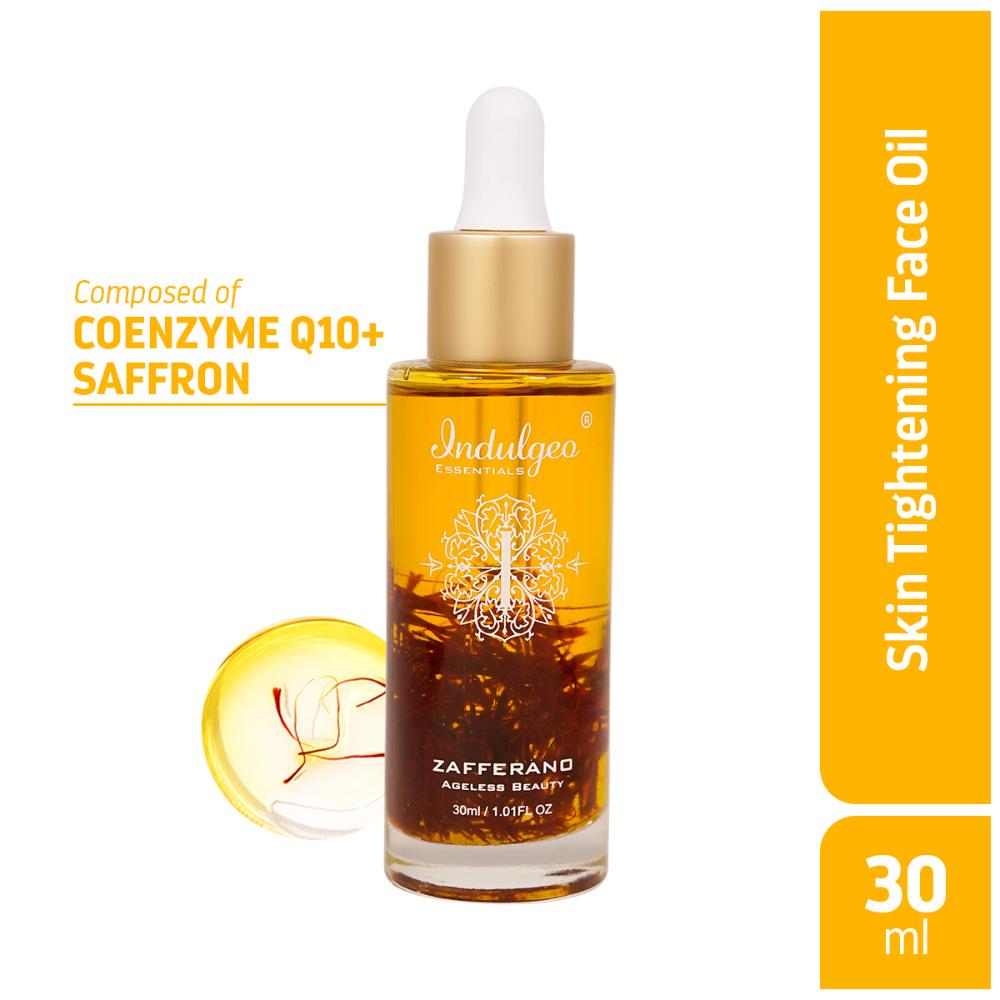
Indulgeo Essentials Ageless Beauty Zafferano Oil With Saffron, Lupin Seed Extract, Coenzyme Q10

Indulgeo Essentials Ageless Beauty Zafferano Oil With Saffron, Lupin Seed Extract, Coenzyme Q10
Nykaa E retail limited
indulgeo-essentials-ageless-beauty-zafferano-oil-with-saffron-lupin-seed-extract-coenzyme-q10
Face Oil
10085025710373
Morning or Evening?
How often will you use this product?
Notes


Highlights
WHAT IS IT?
Face Oil with Saffron, Lupin Seed Extract, and Coenzyme Q10
FEATURES
BEST FOR
CHECKS
Who Is It For?
What Does It Help With?
Anti-aging BenefitsBudget
Premium ($76-$150)How To Use
Which routine should it be used in?
Instructions:
Key Information

About the Brand:
Ingredients Overview
Ingredients List
Saffron Threads (Crocus Sativus)**, Lupin Seed Extract (L. albus)***, Squalane Sugarcane***, Hog Plum Oil (Spondias Mombin)***, Rosehip Seed Oil (Rosa Canina)*, Argan Oil (Argania Spinosa)**, Hemp Oil (Cannabis Sativa)**, Damask Rose (Rosa Damascena)*, Bergamot Oil (Citrus Aurantium Var or Citrus Bergamia)*, Coenzyme Q10*
Key Ingredients
saffron, lupin seed extract, coenzyme q10
Ingredients Details
Coenzyme Q10
Common Name(s): Coq10,coenzyme q10,ubiquinol-10
CAS Number: 303-98-0
DESCRIPTION
What It Does: Replenishes age-declining coq10 for mitochondrial energy support and membrane antioxidant protection.
Why It's Used: The only cosmetic ingredient directly targeting mitochondrial function decline in aging – coq10 skin levels decrease significantly after age 30 and topical supplementation directly addresses this documented deficiency.
How It Works: Ubiquinone/ubiquinol cycle (oxidized/reduced forms) carries electrons in mitochondrial complexes i-iii for atp production. reduced ubiquinol quenches lipid peroxyl radicals in inner mitochondrial membrane and plasma membrane. coq10 depletion in aging skin reduces atp production capacity and membrane antioxidant defense simultaneously.
Typically Found In: Anti-aging serums,mitochondrial skincare,antioxidant products
TECHNICAL DETAILS
Primary Category: Active ingredient – antioxidant
Secondary Functions: Mitochondrial electron transport,membrane lipid antioxidant
Application Areas:

Facial Skincare
Body Care

Hair Care
Beard Care
Color Cosmetics (Makeup)
Dietary/Oral Supplements
Typical Concentration Range: 0.01%–1%
SOURCING & ETHICS
Vegan Status: Conditional - supplier confirmation required
Halal Status: Unverified - supplier confirmation required
Source Notes: Ubiquinol (reduced, active form) provides better bioavailability than ubiquinone, though skin converts ubiquinone to ubiquinol enzymatically. requires oil-phase formulation for stability. [audit 2026-07-29 rev2: the record's own source_notes does not assert a non-animal origin, or instructs the reader to verify with the supplier; "yes" asserts knowledge the record does not hold. determination requires shariah-panel sign-off.]
SKIN COMPATIBILITY
Irritancy Rating: 1/5 – very low
Comedogenicity Rating: 0/5 – non-comedogenic
Sensitivity Concerns: Non-irritating; well-tolerated.
Safe for Sensitive Skin: Yes
SAFETY & COMPATIBILITY
Safety Profile: Excellent safety profile. ewg score: 1.
Works Well With: Vitamin c,vitamin e,ferulic acid,spf,other antioxidants
Avoid Combining With: No significant incompatibilities
SCIENTIFIC NOTE
Coq10's role in the mitochondrial electron transport chain places it at the nexus of aging biology – mitochondrial coq10 declines approximately 50% from age 20 to 80, and this decline is mechanistically linked to reduced atp production, increased mitochondrial superoxide leak, and mtdna damage that collectively constitute the 'mitochondrial theory of aging' at the cellular level.
Last Verified: 2026-03-12
Primary Sources: Cosing database,crane ubiquinone review,shindo et al. coq10 skin aging study