

Innisfree
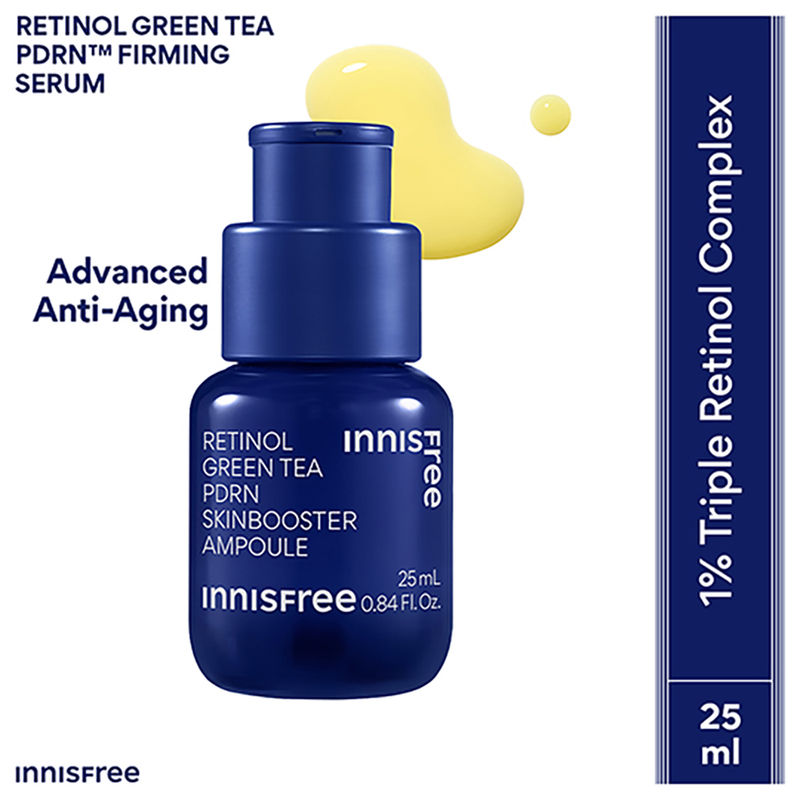
Innisfree 1% Retinol Green Tea VEGAN PDRN Ampoule Anti-Aging, Brightening & Skin-Soothing Serum

Innisfree 1% Retinol Green Tea VEGAN PDRN Ampoule Anti-Aging, Brightening & Skin-Soothing Serum
Innisfree
innisfree-1-retinol-green-tea-vegan-pdrn-ampoule-anti-aging-brightening-skin-soothing-serum
Serum
10084730929445
Morning or Evening?
How often will you use this product?
Notes


Highlights
WHAT IS IT?
Ampoule serum with retinol and Green Tea PDRN
FEATURES
Skin-boosting ampoule with retinol and Green Tea PDRN, Smooths skin texture and minimizes pores, Boosts elasticity and firmness, Enhances natural radiance for a healthy glow, Promotes skin rejuvenation and resilience, Accelerates cell turnover for smoother, firmer skin, Lightweight texture absorbs quickly without irritation, Provides a luminous, revitalized finish, Suitable for nightly use to target signs of aging
BEST FOR
sensitive
CHECKS
Does not cause irritation, Contains no artificial fragrances
Who Is It For?
Adults All GendersWhat Does It Help With?
Signs Of Aging Uneven Skin Texture Enlarged Pores Dullness Loss Of ElasticityBudget
Premium ($76-$150)How To Use
Which routine should it be used in?
Instructions:
Key Information


What Innisfree Says
Product Description:
Reveal your best skin yet with this skin-boosting ampoule, formulated with retinol and Green Tea PDRN to visibly smooth texture, tighten pores, and enhance elasticity. This powerful blend works to refine uneven skin, reduce the look of fine lines, and promote a radiant, youthful glow from within. Green Tea PDRN, derived from Lactobacillus Ferment Lysate of Green Tea, supports skin rejuvenation and boosts resilience, while retinol accelerates cell turnover for smoother, firmer skin. The lightweight texture absorbs quickly, delivering potent actives deep into the skin without irritation. Perfect for those seeking a multi-functional serum that targets signs of aging, refines pores, and brightens the complexion. Add this ampoule to your nightly routine for visibly smoother, more elastic skin with a luminous finish. Unlock the secret to radiant, revitalized skin with every drop!
About the Brand:
Ingredients Overview
Ingredients List
Lactobacillus-Ferment-Lysate,Glycerin,Propanediol,Water-Aqua-Eau,Dipropylene-Glycol,Butylene-Glycol,Niacinamide,1,2-Hexanediol,Squalane,Glyceryl-Polymethacrylate,Dimethyl-Isosorbide,Methyl-Trimethicone,Cetearyl-Alcohol,Hydroxyethyl-Urea,Ammonium-Acryloyldimethyltaurate/Vp-Copolymer,Helianthus-Annuus-(Sunflower)-Seed-Oil,Glycine-Soja-(Soybean)-Oil,Allantoin,Glyceryl-Stearate,Xanthan-Gum,Tocopherol,Tocopheryl-Acetate,Pentylene-Glycol,Dipotassium-Glycyrrhizate,Sodium-Stearoyl-Glutamate,Hydrogenated-Lecithin,Daucus-Carota-Sativa-(Carrot)-Root-Extract,Hydroxypinacolone-Retinoate,Stearic-Acid,Polyglyceryl-3-Methylglucose-Distearate,Sodium-Polyacrylate,Sodium-Metaphosphate,Kojyl-Methylenedioxy-Cinnamate,Palmitic-Acid,Ethylhexylglycerin,Adenosine,Retinol,Sodium-Hyaluronate,Hyaluronic-Acid,Hydrolyzed-Vegetable-Protein,Achillea-Millefolium-Extract,Beta-Carotene,Myristic-Acid,Lauric-Acid,Pullulan,Zein,Camellia-Sinensis-Leaf-Extract,Pectin,Citric-Acid
Key Ingredients
Retinol,Green Tea PDRN,Lactobacillus Ferment Lysate
Ingredients Details
1-2-hexanediol
Common Name(s): 1-2-hexanediol,cosmetic active,functional ingredient
CAS Number: N/a
DESCRIPTION
What It Does: Delivers characteristic cosmetic function at recommended use concentration.
Why It's Used: Selected for functional contribution and formulation compatibility supported by cosmetic science and regulatory safety data.
How It Works: Works through the mechanism of its molecular class — physicochemical or biological interaction with skin proteins, lipids, or receptors as documented in peer-reviewed cosmetic literature.
Typically Found In: Skin care formulations
TECHNICAL DETAILS
Primary Category: Active ingredient – cosmetic active
Secondary Functions: Skin conditioning
Application Areas:

Facial Skincare

Body Care
Hair Care
Beard Care
Color Cosmetics (Makeup)
Dietary/Oral Supplements
Typical Concentration Range: 0.1%–10%
SOURCING & ETHICS
Vegan Status: Conditional - supplier confirmation required
Halal Status: Unverified - supplier confirmation required
Source Notes: Commercially produced for cosmetic use. verify vegan/halal status with supplier. [audit 2026-07-29 rev2: the record's own source_notes does not assert a non-animal origin, or instructs the reader to verify with the supplier; "yes" asserts knowledge the record does not hold. determination requires shariah-panel sign-off.]
SKIN COMPATIBILITY
Irritancy Rating: 1/5 – very low
Comedogenicity Rating: 0/5 – non-comedogenic
Sensitivity Concerns: Well-tolerated by most skin types.
Safe for Sensitive Skin: Yes
SAFETY & COMPATIBILITY
Safety Profile: Good safety profile at recommended concentrations. ewg score: 1–2.
Works Well With: Standard skincare actives
Avoid Combining With: No known significant incompatibilities
SCIENTIFIC NOTE
1-2-hexanediol has an established safety and efficacy profile within the cosmetic regulatory framework at standard use concentrations.
Last Verified: 2026-03-12
Primary Sources: Cosing database,1-2-hexanediol technical literature
Adenosine
Common Name(s): Adenine riboside,9-beta-d-ribofuranosyladenine
CAS Number: 58-61-7
DESCRIPTION
What It Does: Reduces fine lines, stimulates collagen, firms skin, and reduces inflammation.
Why It's Used: Fda-recognized anti-wrinkle active with multi-action collagen stimulation + wrinkle reduction + anti-inflammatory efficacy.
How It Works: Activates adenosine a2a receptors on fibroblasts stimulating collagen type i. also activates pka pathway promoting atp production and reducing inflammatory cytokines.
Typically Found In: Anti-aging serums,wrinkle treatments,korean skincare
TECHNICAL DETAILS
Primary Category: Active ingredient – purine nucleoside / anti-aging
Secondary Functions: Collagen stimulation,anti-inflammatory,cell energy
Application Areas:
Facial Skincare
Body Care
Hair Care
Beard Care
Color Cosmetics (Makeup)
Dietary/Oral Supplements
Typical Concentration Range: 0.04%–0.1%
SOURCING & ETHICS
Vegan Status: Conditional - supplier confirmation required
Halal Status: Unverified - supplier confirmation required
Source Notes: Synthetically produced for cosmetic use. [audit 2026-07-29 rev2: status downgraded on audit. determination requires shariah-panel sign-off.]
SKIN COMPATIBILITY
Irritancy Rating: 1/5 – very low
Comedogenicity Rating: 0/5 – non-comedogenic
Sensitivity Concerns: Non-irritating; excellent tolerability.
Safe for Sensitive Skin: Yes
SAFETY & COMPATIBILITY
Safety Profile: Excellent safety profile. fda-recognized as safe and effective anti-wrinkle ingredient. ewg score: 1.
Works Well With: Other b vitamins,niacinamide,antioxidant complexes
Avoid Combining With: No significant incompatibilities
SCIENTIFIC NOTE
A 2002 clinical study demonstrated 0.04% adenosine cream significantly reduced wrinkle depth and increased skin elasticity after 4 weeks. fda recognition requires controlled clinical trial evidence.
Last Verified: 2026-03-12
Primary Sources: Cosing database,adenosine anti-aging clinical data,fda otc anti-wrinkle monograph
Allantoin
Common Name(s): 5-ureidohydantoin,glyoxyldiureide,aluminum dihydroxy allantoinate
CAS Number: 97-59-6
DESCRIPTION
What It Does: Soothes irritation, accelerates wound healing, promotes skin cell renewal, and provides mild keratolytic exfoliation.
Why It's Used: Gold standard multi-function soothing active – one of the most widely used cosmetic ingredients across all product types for its exceptional tolerability and clinically proven multi-action skin conditioning.
How It Works: Promotes keratinocyte proliferation and fibroblast migration for wound healing. mild keratolytic activity by disrupting corneocyte binding. anti-irritant via direct protein binding and anti-inflammatory cytokine reduction. humectant activity via hydroxyl groups.
Typically Found In: Post-procedure products,sensitive skin formulas,wound care,anti-acne treatments,baby products
TECHNICAL DETAILS
Primary Category: Active ingredient – soothing / anti-inflammatory
Secondary Functions: Wound healing,keratolytic,anti-irritant
Application Areas:
Facial Skincare
Body Care
Hair Care
Beard Care
Color Cosmetics (Makeup)
Dietary/Oral Supplements
Typical Concentration Range: 0.1%–2%
SOURCING & ETHICS
Vegan Status: Conditional - feedstock declaration required
Halal Status: Unverified - feedstock declaration required (plant, animal and petrochemical routes all exist)
Source Notes: Plant-derived extract or synthetic. [audit 2026-07-29 rev2: origin-dependent: the same inci exists in plant, animal and petrochemical versions and the name does not discriminate. determination requires shariah-panel sign-off.]
SKIN COMPATIBILITY
Irritancy Rating: 1/5 – very low
Comedogenicity Rating: 0/5 – non-comedogenic
Sensitivity Concerns: Exceptionally well-tolerated; suitable for all skin types including baby and compromised skin.
Safe for Sensitive Skin: Yes – particularly recommended for sensitive skin
SAFETY & COMPATIBILITY
Safety Profile: Excellent safety profile. ewg score: 1.
Works Well With: Ceramides,panthenol,allantoin,hyaluronic acid,centella asiatica
Avoid Combining With: No significant incompatibilities
SCIENTIFIC NOTE
Allantoin's keratinocyte proliferation stimulation occurs via receptor-mediated signaling (possibly machr activation) rather than non-specific irritation-driven proliferation, making it a true wound-healing stimulant rather than a pro-inflammatory proliferative signal.
Last Verified: 2026-03-12
Primary Sources: Cosing database,cir safety assessment,araújo et al. allantoin review
Beta-carotene
Common Name(s): Provitamin a,all-trans-beta-carotene
CAS Number: 7235-40-7
DESCRIPTION
What It Does: Neutralizes free radicals, provides photoprotection support, conditions skin, and imparts healthy skin tone.
Why It's Used: Natural antioxidant, skin conditioning, and natural colorant with additional provitamin a activity.
How It Works: Quenches singlet oxygen and free radicals. enzymatic cleavage yields retinal. accumulates in stratum corneum for photoprotective antioxidant defense.
Typically Found In: Self-tanners,sunscreens,natural colorants,anti-aging formulations
TECHNICAL DETAILS
Primary Category: Active ingredient – vitamin a derivative
Secondary Functions: Uv protection support,natural colorant,vitamin a precursor
Application Areas:
Facial Skincare
Body Care
Hair Care
Beard Care
Color Cosmetics (Makeup)
Dietary/Oral Supplements
Typical Concentration Range: 0.01%–1%
SOURCING & ETHICS
Vegan Status: Conditional - supplier confirmation required
Halal Status: Unverified - supplier confirmation required
Source Notes: Derived from dunaliella salina algae, carrot oil, or synthesized. algae-derived most sustainable. [audit 2026-07-29 rev2: the record's own source_notes does not assert a non-animal origin, or instructs the reader to verify with the supplier; "yes" asserts knowledge the record does not hold. determination requires shariah-panel sign-off.]
SKIN COMPATIBILITY
Irritancy Rating: 1/5 – very low
Comedogenicity Rating: 0/5 – non-comedogenic
Sensitivity Concerns: Very well-tolerated; high concentrations may impart orange tint.
Safe for Sensitive Skin: Yes
SAFETY & COMPATIBILITY
Safety Profile: Safe at cosmetic concentrations. use spf. avoid during pregnancy. ewg score: 2.
Works Well With: Niacinamide,ceramides,hyaluronic acid,spf,tocopherol
Avoid Combining With: No significant incompatibilities
SCIENTIFIC NOTE
Beta-carotene accumulates in the stratum corneum and provides measurable photoprotection against uv-induced oxidative stress when applied topically. not a replacement for uv filters.
Last Verified: 2026-03-12
Primary Sources: Cosing database,cir safety assessment,stahl & sies carotenoid review