

Innisfree
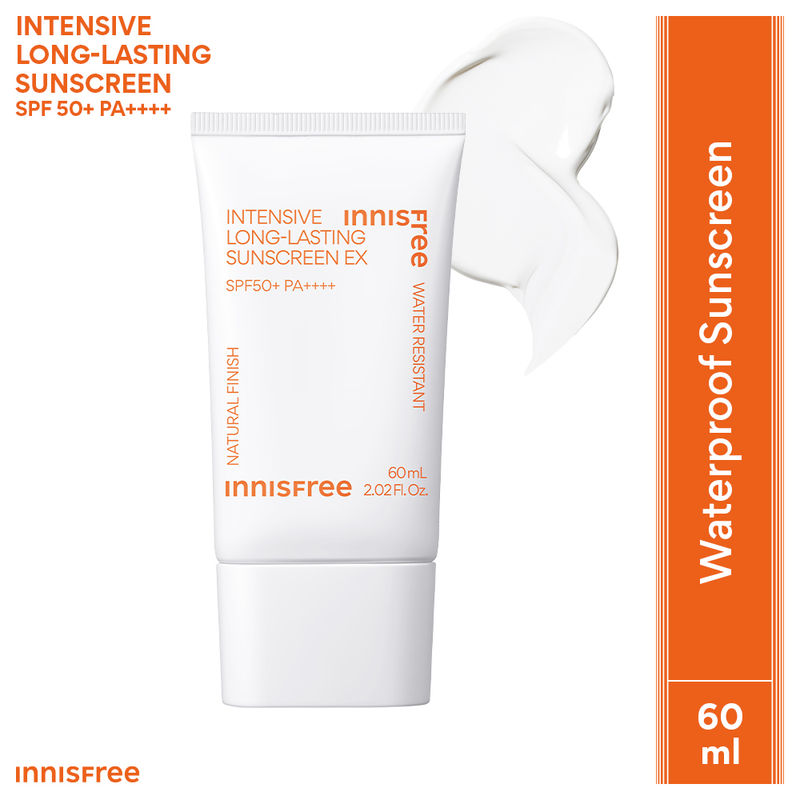
Innisfree Intensive Long Lasting Sunscreen SPF 50+ PA++++ - Natural Finish

Innisfree Intensive Long Lasting Sunscreen SPF 50+ PA++++ - Natural Finish
Innisfree
innisfree-intensive-long-lasting-sunscreen-spf-50-pa-natural-finish
Suncare
10084969382181
Morning or Evening?
How often will you use this product?
Notes


Highlights
WHAT IS IT?
Sunscreen
FEATURES
Intensive long-lasting protection, Natural finish, SPF 50+ PA++++, Easy to blend, No white cast, Lightweight, Moisturizing
BEST FOR
combination
CHECKS
No white cast, Non-greasy
Who Is It For?
All Genders No Specific Age Range AvailableWhat Does It Help With?
Sun Protection Moisturizes Skin Provides Long-lasting ProtectionBudget
Mid-range ($30-$75)How To Use
Which routine should it be used in?
Instructions:
Key Information


What Innisfree Says
Product Description:
Explore the entire range of Face Sunscreen available on Nykaa. Shop more Innisfree products here. You can browse through the complete world of Innisfree Face Sunscreen.
About the Brand:
Ingredients Overview
Ingredients List
Water, Hamamelis Virginiana (Witch Hazel) Leaf Extract, Opuntia Coccinellifera Fruit Extract, Citrus Unshiu (Satsuma Mandarin) Peel Extract, Disteardimonium Hectorite, Magnesium Sulfate, Bis-Ethylhexyloxyphenol Methoxyphenyl Triazine, PEG-10 Dimethicone, Caprylyl Glycol, Cetyl PEG/PPG-10/1 Dimethicone, Cyclopentasiloxane, Propanediol, Helianthus Annuus (Sunflower) Seed Oil, Citric Acid, Camellia Japonica (Japanese Camellia) Leaf Extract, Ethylhexyl Salicylate, Fragrance, Vinyl Dimethicone/Methicone Silsesquioxane Crosspolymer, Ethylhexylglycerin, Mica (CI 77019), Sodium Benzoate, Glyceryl Caprylate, Ethylhexyl Methoxycinnamate, Zinc Oxide (CI 77947), Linalool, Limonene, Triethoxycaprylylsilane, Dipropylene Glycol, Dicaprylyl Carbonate, Potassium Sorbate, Centella Asiatica (Gotu Kola) Extract, Methicone, Helianthus Annuus (Sunflower) Seed Oil Unsaponifiables, Butylphenyl Methylpropional, Glycerin, Echium Plantagineum Seed Oil, Orchid Extract, Polyglyceryl-6 Polyricinoleate, Phenoxyethanol, Octyldodecanol, Camellia Sinensis (Green Tea) Leaf Extract, Benzyl Salicylate, Cardiospermum Halicacabum Flower/Leaf/Vine Extract, Homosalate, Chromium Oxide Greens (CI 77288), Calcium Aluminum Borosilicate, Butylene Glycol, Tocopherol, Iron Oxides (CI 77492), Portulaca Oleracea (Green Purslane) Extract
Key Ingredients
Ingredients Details
Benzyl Salicylate
Common Name(s): Benzyl 2-hydroxybenzoate,salicylate ester
CAS Number: 118-58-1
DESCRIPTION
What It Does: Provides floral-balsamic scent with uv-absorbing fixative properties.
Why It's Used: Natural jasmine-associated fragrance ester with mild uv protection contribution for fragranced sun-exposed products.
How It Works: Salicylate ester absorbs uv-b mildly. provides fixative function by slowing evaporation of lighter fragrance top notes. naturally in jasmine absolute (1-3%). good skin absorption.
Typically Found In: Floral fragrances,sun-exposed products
TECHNICAL DETAILS
Primary Category: Fragrance component – floral fixative
Secondary Functions: Skin conditioning
Application Areas:

Facial Skincare

Body Care
Hair Care
Beard Care
Color Cosmetics (Makeup)
Dietary/Oral Supplements
Typical Concentration Range: 0.001%–1%
SOURCING & ETHICS
Vegan Status: Yes – from jasmine absolute, or synthetic
Halal Status: Yes
Source Notes: Commercially produced for cosmetic use. verify vegan/halal status with supplier.
SKIN COMPATIBILITY
Irritancy Rating: 1/5 – very low
Comedogenicity Rating: 0/5 – non-comedogenic
Sensitivity Concerns: Well-tolerated by most skin types.
Safe for Sensitive Skin: Yes
SAFETY & COMPATIBILITY
Safety Profile: Eu cosmetics regulation: declared fragrance allergen. ifra guidelines apply.
Works Well With: Standard skincare actives
Avoid Combining With: No known significant incompatibilities
SCIENTIFIC NOTE
Benzyl salicylate's salicylate moiety provides uv absorption in the uvb range (absorbs at 295-315nm) despite not being a registered uv filter. its occurrence in jasmine absolute means natural jasmine-fragranced products inherently contain a mild uv absorber – an incidental benefit of the natural fragrance chemistry that wasn't intentionally designed as photoprotection.
Last Verified: Cosing database,ifra standards
Primary Sources: 2026-03-12
Bis-ethylhexyloxyphenol Methoxyphenyl Triazine
Common Name(s): Bis-ethylhexyloxyphenol methoxyphenyl triazine,antimicrobial biocide,broad-spectrum preservative-grade
CAS Number: N/a
DESCRIPTION
What It Does: Kills bacteria, fungi, and viruses on skin and within formulations through membrane disruption, protein denaturation, or enzyme inhibition — providing antiseptic, preservation, or therapeutic antimicrobial protection.
Why It's Used: Chosen when broad-spectrum antimicrobial coverage including gram-negative bacteria (particularly pseudomonas) is required, where standard cosmetic preservatives provide insufficient protection for challenge tests.
How It Works: Cationic biocides (qacs) adsorb electrostatically to negative microbial surfaces then insert hydrophobic chains into lipid bilayers, collapsing membrane potential. non-ionic biocides (triclosan) inhibit fatty acid synthesis (fabi enoyl reductase). oxidants (h₂o₂, chlorine dioxide) oxidise microbial thiol enzymes non-specifically.
Typically Found In: Antiseptics,therapeutic skin care
TECHNICAL DETAILS
Primary Category: Active ingredient – cosmetic active
Secondary Functions: Skin conditioning
Application Areas:
Facial Skincare
Body Care
Hair Care
Beard Care
Color Cosmetics (Makeup)
Dietary/Oral Supplements
Typical Concentration Range: Check regulatory limits
SOURCING & ETHICS
Vegan Status: Yes
Halal Status: Yes
Source Notes: Commercially produced for cosmetic use. verify vegan/halal status with supplier.
SKIN COMPATIBILITY
Irritancy Rating: 1/5 – very low
Comedogenicity Rating: 0/5 – non-comedogenic
Sensitivity Concerns: Well-tolerated by most skin types.
Safe for Sensitive Skin: Yes
SAFETY & COMPATIBILITY
Safety Profile: Good safety profile at recommended concentrations. ewg score: 1–2.
Works Well With: Standard skincare actives
Avoid Combining With: No known significant incompatibilities
SCIENTIFIC NOTE
Regulatory limits vary significantly by compound and application — formulators must verify permitted concentrations in target market (eu annex v, fda otc monographs) before formulating at functional concentrations.
Last Verified: Cosing database,bis-ethylhexyloxyphenol methoxyphenyl triazine antimicrobial regulatory review
Primary Sources: 2026-03-12
Butylene Glycol
Common Name(s): 1,3-butanediol,bg,1,3-butylene glycol
CAS Number: 107-88-0
DESCRIPTION
What It Does: Provides humectant hydration and active ingredient solubilization with excellent skin feel.
Why It's Used: Preferred glycol humectant in premium and k-beauty formulations for superior skin feel vs propylene glycol with equivalent functionality.
How It Works: Two hydroxyl groups at 1,3-positions provide water binding and solvent activity. better tolerated than propylene glycol with minimal sensitization risk. 4-carbon backbone provides slightly greater hydrophobic character enabling dissolution of less polar actives vs pg.
Typically Found In: Toners,essences,serums,k-beauty formulas
TECHNICAL DETAILS
Primary Category: Functional ingredient – glycol humectant
Secondary Functions: Tewl reduction,skin plumping
Application Areas:
Facial Skincare
Body Care
Hair Care
Beard Care
Color Cosmetics (Makeup)
Dietary/Oral Supplements
Typical Concentration Range: 1%–10%
SOURCING & ETHICS
Vegan Status: Yes – synthetic
Halal Status: Yes
Source Notes: Synthetic or naturally derived. excellent aqueous solubility.
SKIN COMPATIBILITY
Irritancy Rating: 1/5 – very low
Comedogenicity Rating: 0/5 – non-comedogenic
Sensitivity Concerns: Non-irritating; suitable for all skin types.
Safe for Sensitive Skin: Yes
SAFETY & COMPATIBILITY
Safety Profile: Excellent safety profile. ewg score: 1.
Works Well With: Ceramides,emollients,occlusives,glycerin,hyaluronic acid
Avoid Combining With: No significant incompatibilities
SCIENTIFIC NOTE
K-beauty's preference for butylene glycol over propylene glycol is driven by two factors: bg's superior skin feel (less tacky than pg's higher viscosity) and its lower sensitization potential (1,3-bg has better spatial distribution of hydroxyl groups that reduces protein interaction vs pg's 1,2-position oh groups).
Last Verified: Cosing database,cir safety assessment
Primary Sources: 2026-03-12
Butylphenyl Methylpropional
Common Name(s): Fragrance ingredient,eu allergen or aromatic component,olfactory/flavour
CAS Number: N/a
DESCRIPTION
What It Does: Provides specific aromatic character and olfactory experience contributing to product sensory experience and consumer appeal.
Why It's Used: Fragrance components are the primary cause of cosmetic contact sensitisation — eu requires individual label declaration of 26 identified fragrance allergens above threshold concentrations.
How It Works: Terpenoid and phenylpropanoid aromatic chemicals interact with olfactory receptor neurons (orns) in the nasal epithelium — small volatile molecules (logp 2–5, mw 100–300) bind g-protein coupled olfactory receptors triggering neurological scent perception. sensitisation risk from electrophilic reactivity of certain functional groups (aldehydes, α,β-unsaturated carbonyls) with skin proteins.
Typically Found In: All fragrance products
TECHNICAL DETAILS
Primary Category: Active ingredient – cosmetic active
Secondary Functions: Skin conditioning
Application Areas:
Facial Skincare
Body Care
Hair Care
Beard Care
Color Cosmetics (Makeup)
Dietary/Oral Supplements
Typical Concentration Range: Declare on label above threshold (eu)
SOURCING & ETHICS
Vegan Status: Conditional
Halal Status: Yes
Source Notes: Commercially produced for cosmetic use. verify vegan/halal status with supplier.
SKIN COMPATIBILITY
Irritancy Rating: 1/5 – very low
Comedogenicity Rating: 0/5 – non-comedogenic
Sensitivity Concerns: Well-tolerated by most skin types.
Safe for Sensitive Skin: Yes
SAFETY & COMPATIBILITY
Safety Profile: Good safety profile at recommended concentrations. ewg score: 1–2.
Works Well With: Standard skincare actives
Avoid Combining With: No known significant incompatibilities
SCIENTIFIC NOTE
Eu 1223/2009 annex iii allergen threshold: >0.001% in rinse-off, >0.0001% in leave-on — any listed allergen exceeding these levels requires individual inci label declaration separate from the generic fragrance/parfum declaration.
Last Verified: Eu regulation 1223/2009 annex iii,fragrance allergen declaration requirements
Primary Sources: 2026-03-12
