
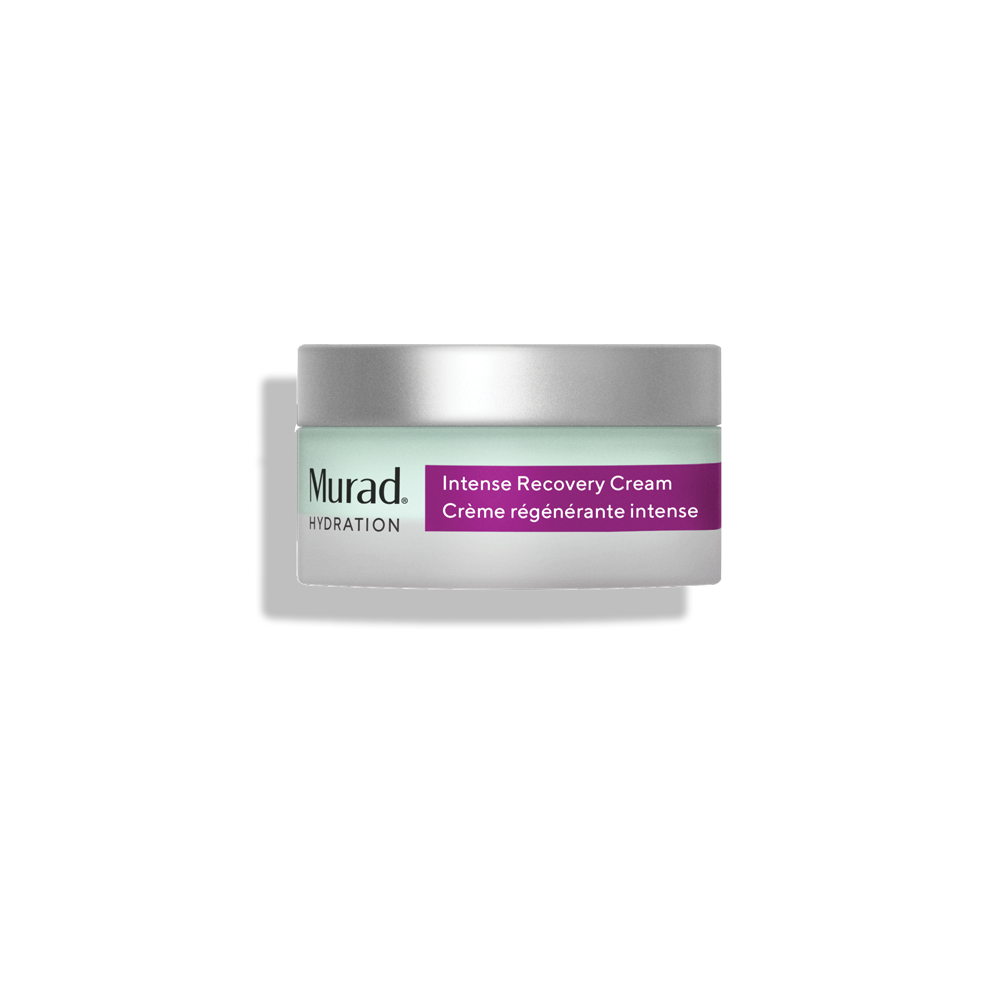

Murad
Intense Recovery Cream

Intense Recovery Cream
Murad
intense-recovery-cream
Moisturize
9784843698469
Morning or Evening?
How often will you use this product?
Notes


Highlights
WHAT IS IT?
Recovery cream for face and eyes
FEATURES
Reduces visible signs of stress-induced aging and redness, contains microalgae extract, deeply moisturizes dry skin
BEST FOR
sensitive
CHECKS
Parabens-free, sulfates-free
Who Is It For?
Adults With Stressed Sensitive SkinWhat Does It Help With?
Stress-induced Aging Redness Facial Tension Dry SkinBudget
Premium ($76-$150)How To Use
Which routine should it be used in?
Instructions:
Key Information

What Murad Says
Product Description:
Clinically proven, comforting cream for face and eyes reduces the visible signs of stress-induced ageing and redness.
About the Brand:
Ingredients Overview
Ingredients List
Water/Aqua/Eau, Ethylhexyl Palmitate, Betaine, Cetearyl Methicone, Cetearyl Alcohol, Cetyl Myristate, Stearyl Dimethicone, Macadamia Ternifolia Seed Oil, Pyrus Malus (Apple) Fruit Extract, Glycerin, Butylene Glycol, Butyrospermum Parkii (Shea) Butter, Polyglyceryl-3 Polydimethylsiloxyethyl Dimethicone, Polysorbate 60, Dimethicone, Behenyl Alcohol, Glycol Distearate, Mentha Viridis (Spearmint) Leaf Oil, Pogostemon Cablin Oil, Citrus Medica Limonum (Lemon) Peel Oil, Lavandula Hybrida Oil, Mentha Arvensis Leaf Oil, Cedrus Atlantica Bark Oil, Chlorella Emersonii Extract, Mirabilis Jalapa Extract, Tocopherol, Helianthus Annuus (Sunflower) Seed Extract, Coccinia Indica Fruit Extract, Solanum Melongena (Eggplant) Fruit Extract, Ocimum Sanctum Leaf Extract, Curcuma Longa (Turmeric) Root Extract, Corallina Officinalis Extract, Ocimum Basilicum (Basil) Flower/Leaf Extract, Simmondsia Chinensis (Jojoba) Seed Oil, Aloe Barbadensis Flower Extract, Melia Azadirachta Leaf Extract, Melia Azadirachta Flower Extract, Urea, Yeast Amino Acids, Trehalose, Inositol, Taurine, Xanthan Gum, Propanediol, Octadecene, Polysorbate 20, Sodium Hydroxide, Disodium EDTA, Hexylene Glycol, Ethylhexylglycerin, Caprylyl Glycol, Phenoxyethanol, Limonene, Linalool
Key Ingredients
microalgae extract
Ingredients Details
Betaine
Common Name(s): Trimethylglycine,tmg,natural betaine
CAS Number: 107-43-7
DESCRIPTION
What It Does: Provides osmoprotective humectant conditioning with anti-irritant and mild foam-boosting activity.
Why It's Used: Natural-origin multifunctional osmolyte from sugar beet providing hydration, anti-irritancy, and conditioning in virtually every cosmetic category.
How It Works: Quaternary ammonium betaine provides zwitterionic character for water binding via ionic hydration. osmoprotective function at 100–500mm as compatible solute protecting cells from osmotic stress. reduces surfactant irritation by competing with sls for protein binding sites. mild foam enhancement.
Typically Found In: Virtually all categories — moisturisers, shampoos, cleansers
TECHNICAL DETAILS
Primary Category: Functional ingredient – humectant
Secondary Functions: Tewl reduction,skin plumping
Application Areas:

Facial Skincare
Body Care
Hair Care

Beard Care
Color Cosmetics (Makeup)
Dietary/Oral Supplements
Typical Concentration Range: 0.5%–10%
SOURCING & ETHICS
Vegan Status: Yes – from beta vulgaris (sugar beet) molasses
Halal Status: Yes
Source Notes: Synthetic or naturally derived. excellent aqueous solubility.
SKIN COMPATIBILITY
Irritancy Rating: 1/5 – very low
Comedogenicity Rating: 0/5 – non-comedogenic
Sensitivity Concerns: Non-irritating; suitable for all skin types.
Safe for Sensitive Skin: Yes
SAFETY & COMPATIBILITY
Safety Profile: Excellent safety profile. ewg score: 1.
Works Well With: Ceramides,emollients,occlusives,glycerin,hyaluronic acid
Avoid Combining With: No significant incompatibilities
SCIENTIFIC NOTE
Betaine's anti-irritant mechanism for surfactant systems involves competitive protein protection: betaine at high concentrations preferentially interacts with skin proteins, occupying binding sites that would otherwise be occupied by surfactant molecules causing protein denaturation. this competition reduces available protein binding for irritating surfactants, explaining betaine's well-documented ability to reduce sls irritation when co-formulated.
Last Verified: Cosing database,craig betaine osmoprotective review,cir safety assessment
Primary Sources: 2026-03-12
Butylene Glycol
Common Name(s): 1,3-butanediol,bg,1,3-butylene glycol
CAS Number: 107-88-0
DESCRIPTION
What It Does: Provides humectant hydration and active ingredient solubilization with excellent skin feel.
Why It's Used: Preferred glycol humectant in premium and k-beauty formulations for superior skin feel vs propylene glycol with equivalent functionality.
How It Works: Two hydroxyl groups at 1,3-positions provide water binding and solvent activity. better tolerated than propylene glycol with minimal sensitization risk. 4-carbon backbone provides slightly greater hydrophobic character enabling dissolution of less polar actives vs pg.
Typically Found In: Toners,essences,serums,k-beauty formulas
TECHNICAL DETAILS
Primary Category: Functional ingredient – glycol humectant
Secondary Functions: Tewl reduction,skin plumping
Application Areas:
Facial Skincare
Body Care
Hair Care
Beard Care
Color Cosmetics (Makeup)
Dietary/Oral Supplements
Typical Concentration Range: 1%–10%
SOURCING & ETHICS
Vegan Status: Yes – synthetic
Halal Status: Yes
Source Notes: Synthetic or naturally derived. excellent aqueous solubility.
SKIN COMPATIBILITY
Irritancy Rating: 1/5 – very low
Comedogenicity Rating: 0/5 – non-comedogenic
Sensitivity Concerns: Non-irritating; suitable for all skin types.
Safe for Sensitive Skin: Yes
SAFETY & COMPATIBILITY
Safety Profile: Excellent safety profile. ewg score: 1.
Works Well With: Ceramides,emollients,occlusives,glycerin,hyaluronic acid
Avoid Combining With: No significant incompatibilities
SCIENTIFIC NOTE
K-beauty's preference for butylene glycol over propylene glycol is driven by two factors: bg's superior skin feel (less tacky than pg's higher viscosity) and its lower sensitization potential (1,3-bg has better spatial distribution of hydroxyl groups that reduces protein interaction vs pg's 1,2-position oh groups).
Last Verified: Cosing database,cir safety assessment
Primary Sources: 2026-03-12
Cetearyl Alcohol
Common Name(s): Cetostearyl alcohol,c16-18 fatty alcohol
CAS Number: 8005-44-5
DESCRIPTION
What It Does: Provides fatty alcohol emulsification and thickening for stable, well-textured emulsions.
Why It's Used: The most widely used fatty alcohol in cosmetics – provides emulsification, thickening, and emolliency simultaneously from a single ingredient with excellent safety profile.
How It Works: Forms bilayer lamellar structures in water with emulsifiers creating a viscous structured network that thickens and stabilizes emulsions. fatty alcohol emolliency provides direct skin conditioning. bilayer formation reduces inter-droplet coalescence in emulsions.
Typically Found In: Creams,lotions,conditioners – virtually all emulsion products
TECHNICAL DETAILS
Primary Category: Functional ingredient – fatty alcohol emulsifier/thickener
Secondary Functions: Barrier sealing,softening
Application Areas:
Facial Skincare
Body Care
Hair Care
Beard Care
Color Cosmetics (Makeup)
Dietary/Oral Supplements
Typical Concentration Range: 1%–25%
SOURCING & ETHICS
Vegan Status: Yes – from vegetable or coconut/palm fatty acids
Halal Status: Yes
Source Notes: Plant-derived, synthetic or animal-derived. verify source.
SKIN COMPATIBILITY
Irritancy Rating: 1/5 – very low
Comedogenicity Rating: 1/5 – low; formulation-dependent
Sensitivity Concerns: Non-irritating.
Safe for Sensitive Skin: Yes
SAFETY & COMPATIBILITY
Safety Profile: Excellent safety profile. ewg score: 1.
Works Well With: Humectants,ceramides,actives as carrier
Avoid Combining With: No significant incompatibilities
SCIENTIFIC NOTE
Cetearyl alcohol's ability to form lamellar liquid crystal structures ('krafft phases') with water and co-emulsifiers provides not only emulsion stability but also enhanced skin penetration via the lamellar skin barrier pathway. these crystalline structures can act as a reservoir for active ingredients, slowly releasing them as the lamellar structure melts on skin contact.
Last Verified: Cosing database,cir safety assessment
Primary Sources: 2026-03-12
Cetearyl Methicone
Common Name(s): Cetearyl methicone,cetearyl methicone,specialty silicone,non-polar skin conditioner
CAS Number: N/a
DESCRIPTION
What It Does: Provides wax-like structuring with silicone conditioning from the combined long alkyl chain and si-o backbone.
Why It's Used: Long-chain synthetic emollients provide precise performance engineering — carbon chain length and branching determining spreading coefficient, viscosity, and wax character for targeted formulation outcomes.
How It Works: Long-chain alkyl modification of dimethicone raises the polymer tm into the wax range — the alkyl side chains crystallise providing wax-type structuring while the si-o backbone provides characteristic silicone dry-touch conditioning.
Typically Found In: Skin care,colour cosmetics,anhydrous products
TECHNICAL DETAILS
Primary Category: Functional ingredient – emollient
Secondary Functions: Barrier sealing,softening
Application Areas:
Facial Skincare
Body Care
Hair Care
Beard Care
Color Cosmetics (Makeup)
Dietary/Oral Supplements
Typical Concentration Range: 1%–30%
SOURCING & ETHICS
Vegan Status: Yes
Halal Status: Yes
Source Notes: Plant-derived, synthetic or animal-derived. verify source.
SKIN COMPATIBILITY
Irritancy Rating: 1/5 – very low
Comedogenicity Rating: 1/5 – low; formulation-dependent
Sensitivity Concerns: Non-irritating.
Safe for Sensitive Skin: Yes
SAFETY & COMPATIBILITY
Safety Profile: Excellent safety profile. ewg score: 1.
Works Well With: Humectants,ceramides,actives as carrier
Avoid Combining With: No significant incompatibilities
SCIENTIFIC NOTE
Long-chain alkyl silicones provide hybrid silicone-wax performance unavailable from either component alone — the combination enabling lip products and colour cosmetics with both silicone-like dry feel and wax-like structural integrity.
Last Verified: Cosing database,cetearyl methicone long-chain emollient silicone wax review
Primary Sources: 2026-03-22
