

ISDIN
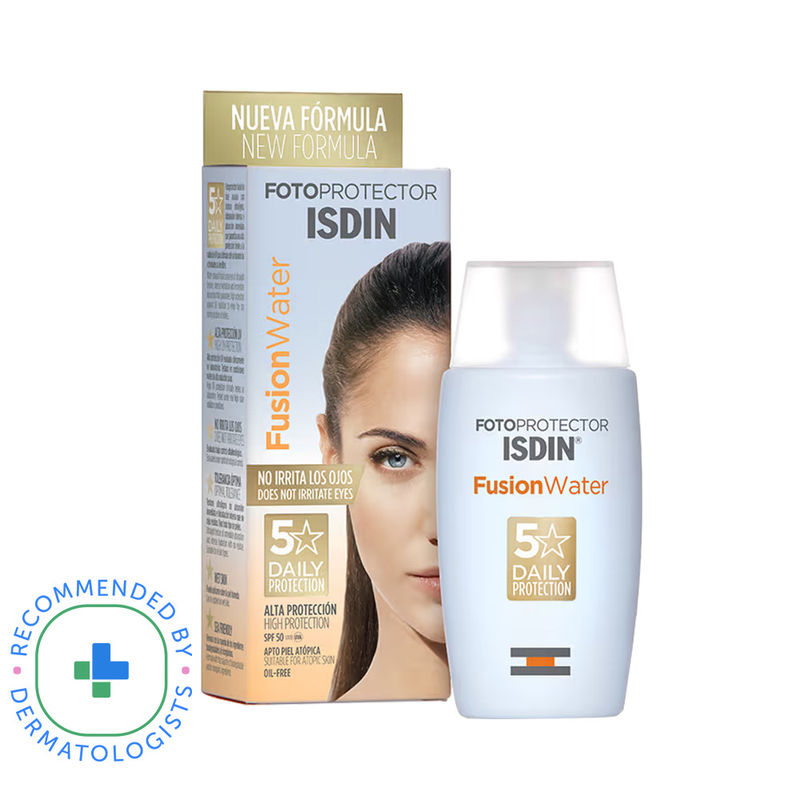
ISDIN Fotoprotector Fusion Water Sunscreen SPF 50 UVB/UVA

ISDIN Fotoprotector Fusion Water Sunscreen SPF 50 UVB/UVA
ISDIN
isdin-fotoprotector-fusion-water-sunscreen-spf-50-uvb-uva
Suncare
10084731126053
Morning or Evening?
How often will you use this product?
Notes


Highlights
WHAT IS IT?
Water-based sunscreen
FEATURES
Broad spectrum UV protection, Non-greasy, No white cast, Usable on wet skin, Safe near eyes, Makeup base, Sea friendly, Paraben free, Dermatologically tested, Suits all skin types, Non-comedogenic
BEST FOR
sensitive
CHECKS
Paraben
Who Is It For?
What Does It Help With?
Protection From Uv Rays Suitable For All Skin Types Including Sensitive And Oily SkinBudget
Premium ($76-$150)How To Use
Which routine should it be used in?
Instructions:
Key Information


What ISDIN Says
Product Description:
Broad spectrum protection from UV Rays, Non-greasy and No white cast, Can be used on wet skin, Can be used safely near eyes, Excellent as a make-up base, Sea friendly
About the Brand:
Ingredients Overview
Ingredients List
aqua-water,octocrylene,propanediol,butyl-methoxydibenzoylmethane,ethylhexyl-salicylate,polymethyl-methacrylate,dimethicone,phenylbenzimidazole-sulfonic-acid,polysilicone-15,propylene-glycol-dicaprylate-dicaprate,bis-ethylhexyloxyphenol-methoxyphenyl-triazine,silica,dimethicone-vinyl-dimethicone-crosspolymer,1-2-hexanediol,hydroxyacetophenone,polysorbate-60,peg-10-dimethicone,sodium-hyaluronate,tocopheryl-acetate,xanthan-gum,caprylyl-glycol,parfum-fragrance,disodium-edta,peg-8,tocopherol,tropolone,ascorbyl-palmitate,ascorbic-acid,citric-acid
Key Ingredients
Octocrylene, Butyl Methoxydibenzoylmethane, Ethylhexyl Salicylate, Phenylbenzimidazole Sulfonic Acid, Bis-Ethylhexyloxyphenol Methoxyphenyl Triazine, Sodium Hyaluronate, Tocopheryl Acetate
Ingredients Details
1-2-hexanediol
Common Name(s): 1-2-hexanediol,cosmetic active,functional ingredient
CAS Number: N/a
DESCRIPTION
What It Does: Delivers characteristic cosmetic function at recommended use concentration.
Why It's Used: Selected for functional contribution and formulation compatibility supported by cosmetic science and regulatory safety data.
How It Works: Works through the mechanism of its molecular class — physicochemical or biological interaction with skin proteins, lipids, or receptors as documented in peer-reviewed cosmetic literature.
Typically Found In: Skin care formulations
TECHNICAL DETAILS
Primary Category: Active ingredient – cosmetic active
Secondary Functions: Skin conditioning
Application Areas:

Facial Skincare

Body Care
Hair Care
Beard Care
Color Cosmetics (Makeup)
Dietary/Oral Supplements
Typical Concentration Range: 0.1%–10%
SOURCING & ETHICS
Vegan Status: Conditional - supplier confirmation required
Halal Status: Unverified - supplier confirmation required
Source Notes: Commercially produced for cosmetic use. verify vegan/halal status with supplier. [audit 2026-07-29 rev2: the record's own source_notes does not assert a non-animal origin, or instructs the reader to verify with the supplier; "yes" asserts knowledge the record does not hold. determination requires shariah-panel sign-off.]
SKIN COMPATIBILITY
Irritancy Rating: 1/5 – very low
Comedogenicity Rating: 0/5 – non-comedogenic
Sensitivity Concerns: Well-tolerated by most skin types.
Safe for Sensitive Skin: Yes
SAFETY & COMPATIBILITY
Safety Profile: Good safety profile at recommended concentrations. ewg score: 1–2.
Works Well With: Standard skincare actives
Avoid Combining With: No known significant incompatibilities
SCIENTIFIC NOTE
1-2-hexanediol has an established safety and efficacy profile within the cosmetic regulatory framework at standard use concentrations.
Last Verified: 2026-03-12
Primary Sources: Cosing database,1-2-hexanediol technical literature
Dimethicone
Common Name(s): Pdms,polydimethylsiloxane,silicone fluid
CAS Number: 9006-65-9
DESCRIPTION
What It Does: Provides silicone-characteristic silky feel and skin protection with adjustable viscosity.
Why It's Used: The benchmark cosmetic silicone – sets the gold standard for silky application feel, spreadability, and skin protection in virtually all skin care categories.
How It Works: Polydimethylsiloxane chain flexibility provides extremely low surface tension and high spreadability. inert si-o backbone provides chemical stability and excellent skin tolerance. occlusive film formation reduces tewl. higher viscosity grades provide more intense conditioning.
Typically Found In: Moisturizers,foundations,primers,sunscreens – nearly universal
TECHNICAL DETAILS
Primary Category: Functional ingredient – polydimethylsiloxane
Secondary Functions: Barrier sealing,softening
Application Areas:
Facial Skincare
Body Care
Hair Care
Beard Care
Color Cosmetics (Makeup)
Dietary/Oral Supplements
Typical Concentration Range: 0.1%–30%
SOURCING & ETHICS
Vegan Status: Conditional - supplier confirmation required
Halal Status: Unverified - supplier confirmation required
Source Notes: Plant-derived, synthetic or animal-derived. verify source. [audit 2026-07-29 rev2: the record's own source_notes does not assert a non-animal origin, or instructs the reader to verify with the supplier; "yes" asserts knowledge the record does not hold. determination requires shariah-panel sign-off.]
SKIN COMPATIBILITY
Irritancy Rating: 1/5 – very low
Comedogenicity Rating: 1/5 – low; formulation-dependent
Sensitivity Concerns: Non-irritating.
Safe for Sensitive Skin: Yes
SAFETY & COMPATIBILITY
Safety Profile: Excellent safety profile. ewg score: 1.
Works Well With: Humectants,ceramides,actives as carrier
Avoid Combining With: No significant incompatibilities
SCIENTIFIC NOTE
Dimethicone's exceptional silky feel arises from its very low intermolecular attractive forces (weak van der waals forces due to non-polar methyl groups) that allow silicone chains to slide freely over skin. the coefficient of kinetic friction for pdms against skin (~0.04) is among the lowest of any cosmetic material – explaining why even small amounts transform product feel.
Last Verified: 2026-03-12
Primary Sources: Cosing database,cir safety assessment
Hydroxyacetophenone
Common Name(s): Para-hydroxyacetophenone,piceol,4-acetylphenol
CAS Number: 99-93-4
DESCRIPTION
What It Does: Provides antioxidant and preservative-boosting activity in a naturally-occurring clean-label phenolic.
Why It's Used: Clean-label preservation support — hydroxyacetophenone provides antioxidant and antimicrobial-boosting properties from a naturally-occurring compound accepted in natural cosmetic certifications.
How It Works: Para-hydroxyl group provides antioxidant radical scavenging. disrupts bacterial cell membrane penetration for preservative system boosting. anti-inflammatory via nf-kb inhibition. occurs naturally in plants including pear and raspberry as a secondary metabolite.
Typically Found In: Natural preservation systems,antioxidant serums,clean beauty
TECHNICAL DETAILS
Primary Category: Functional ingredient – antioxidant preservative booster
Secondary Functions: Free radical scavenging,anti-aging
Application Areas:
Facial Skincare
Body Care
Hair Care
Beard Care
Color Cosmetics (Makeup)
Dietary/Oral Supplements
Typical Concentration Range: 0.1%–1%
SOURCING & ETHICS
Vegan Status: Conditional - supplier confirmation required
Halal Status: Unverified - supplier confirmation required
Source Notes: Plant-derived extract or synthetic. [audit 2026-07-29 rev2: status downgraded on audit. determination requires shariah-panel sign-off.]
SKIN COMPATIBILITY
Irritancy Rating: 1/5 – very low
Comedogenicity Rating: 0/5 – non-comedogenic
Sensitivity Concerns: Non-irritating; well-tolerated.
Safe for Sensitive Skin: Yes
SAFETY & COMPATIBILITY
Safety Profile: Excellent safety profile. ewg score: 1.
Works Well With: Vitamin c,vitamin e,ferulic acid,spf,other antioxidants
Avoid Combining With: No significant incompatibilities
SCIENTIFIC NOTE
Hydroxyacetophenone's natural occurrence in fruits (pear, raspberry, passion fruit) at detectable concentrations provides clean-label justification for use in natural cosmetics. its cosmos certification acceptance reflects the growing demand for functional preservation ingredients that meet natural certification criteria — an ingredient with genuine plant-origin credentials that provides meaningful antimicrobial and antioxidant functions simultaneously.
Last Verified:
Octocrylene
Common Name(s): 2-ethylhexyl 2-cyano-3,3-diphenylacrylate
CAS Number: 6197-30-4
DESCRIPTION
What It Does: Provides uvb-uva-ii uv protection and essential avobenzone photostabilisation.
Why It's Used: The essential combination partner — octocrylene's dual uv filter + avobenzone photostabilisation function makes it virtually irreplaceable for durable broad-spectrum chemical sunscreens requiring uva-i coverage.
How It Works: Cyanocinnamate chromophore absorbs uvb-uva-ii (λmax 303nm). triplet energy transfer from excited avobenzone to octocrylene photostabilises avobenzone (>90% efficiency at 3:1 avobenzone:octocrylene ratio). hydrophobic character enhances water resistance.
Typically Found In: Broad-spectrum sunscreens,avobenzone-containing formulas
TECHNICAL DETAILS
Primary Category: Active ingredient – uv filter and photostabiliser
Secondary Functions: Skin conditioning
Application Areas:
Facial Skincare
Body Care
Hair Care
Beard Care
Color Cosmetics (Makeup)
Dietary/Oral Supplements
Typical Concentration Range: Up to 10% (eu), 10% (us fda)
SOURCING & ETHICS
Vegan Status: Conditional - supplier confirmation required
Halal Status: Unverified - supplier confirmation required
Source Notes: Commercially produced for cosmetic use. verify vegan/halal status with supplier. [audit 2026-07-29 rev2: the record's own source_notes does not assert a non-animal origin, or instructs the reader to verify with the supplier; "yes" asserts knowledge the record does not hold. determination requires shariah-panel sign-off.]
SKIN COMPATIBILITY
Irritancy Rating: 1/5 – very low
Comedogenicity Rating: 0/5 – non-comedogenic
Sensitivity Concerns: Well-tolerated by most skin types.
Safe for Sensitive Skin: Yes
SAFETY & COMPATIBILITY
Safety Profile: Eu max 10%. fda: 10%. ewg score: 3. recent benzophenone impurity concerns from aged product hydrolysis under study.
Works Well With: Standard skincare actives
Avoid Combining With: No known significant incompatibilities
SCIENTIFIC NOTE
Octocrylene's triplet energy transfer photostabilisation of avobenzone operates via a dexter electron exchange mechanism: excited-state avobenzone (triplet) transfers excitation energy to octocrylene via orbital overlap, allowing avobenzone to return to its ground state uv-absorbing form without photodegradation. this energy transfer is only efficient at close molecular proximity — requiring intimate mixing of the two compounds in the formulation oil phase.
Last Verified: 2026-03-12
Primary Sources: Cosing database,fda uv filter otc monograph,sccs octocrylene opinion