

It's Skin
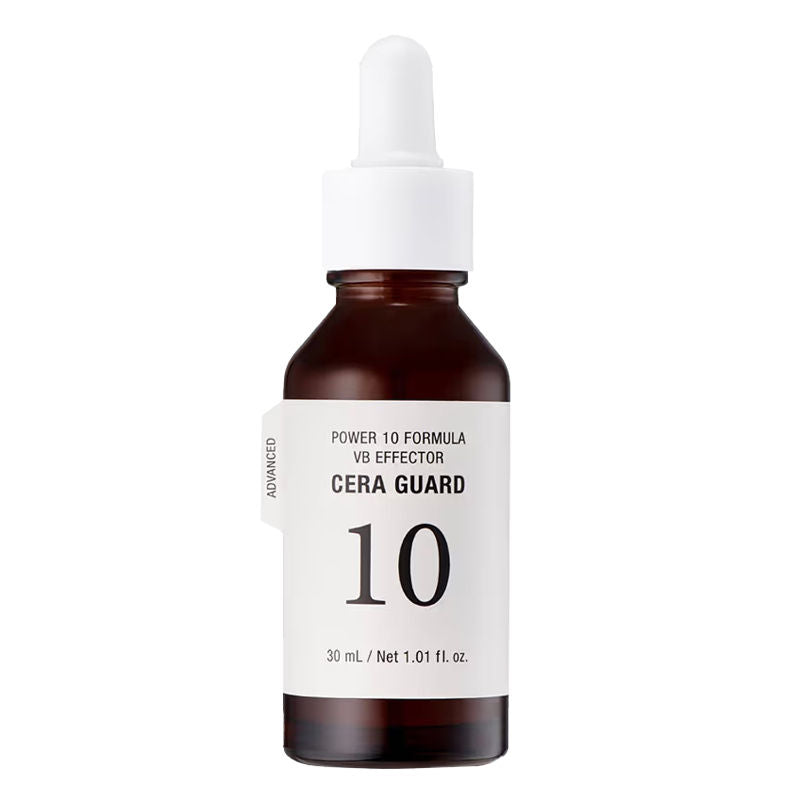
It's Skin Power 10 Formula VB Effector

It's Skin Power 10 Formula VB Effector
It's Skin
its-skin-power-10-formula-vb-effector
Serum
10084732731685
Morning or Evening?
How often will you use this product?
Notes


Highlights
WHAT IS IT?
Face serum with multiple ingredients
FEATURES
Balances skin's oil and sebum production, Retains moisture, Hydrates skin, Reduces acne and blackheads, Suitable for oily skin types
BEST FOR
oily
CHECKS
Does not contain parabens, sulfates, or alcohol (implied from oil-free, sensitive-safe, but explicit exclusions not detailed in content)
Who Is It For?
All Genders No Explicit Age Range MentionedWhat Does It Help With?
Balances Oil Production Controls Acne Formation Reduces Blackheads Hydration Moisture RetentionBudget
Mid-range ($30-$75)How To Use
Which routine should it be used in?
Instructions:
Key Information


What It's Skin Says
Product Description:
Enriched with vitamin B6, It's Skin Power 10 Formula VB Effector balances the skin's oil and sebum production while hydrating the skin and retaining the moisture balance. It controls acne formation and reduces blackheads, giving you soft, smooth, and clear skin.
About the Brand:
Ingredients Overview
Ingredients List
Water,Propanediol,Glycerin,Glycereth-26,Methyl-Gluceth-20,Cetyl-Ethylhexa-Noate,1,2-Hexanediol,Polyglyceryl-3-Methyl-Glucose-Distearate,Pisum-Sativum-(Pea)-Seed-Extract,Glyceryl-Stearate,Hydrogenated-Cocoglycerides,Acrylates/C10-30-Alkyl-Acrylate-Crosspolymer,Cetearyl-Alcohol,Dimethicone,Tromethamine,Lecithin,Adenosine,Limonene,Citrus-Aurantium-Bergamia-(Bergamot)-Fruit-Oil,Disodium-Edta,Panthenol,Linalool,Citronellol,Ceramide-Np,Pelargonium-Graveolens-Flower-Oil,Niacinamide,Amylodextrin,Calcium-Pantothen-Ate,Maltodextrin,Butylene-Glycol,Propylene-Glycol,Sodium-Ascorbyl-Phosphate,Pyridoxine-Hci,Tocopheryl-Acetate,Glycine,Serine,Glu-Tamic-Acid,Aspartic-Acid,Leucine,Alanine-Lysine,Arginine-Tyrosine,Phenylalanine-Proline,Threonine,Valine,Isoleucine,Silica,Histidine,Cysteine,Methionine,Pca
Key Ingredients
Vitamin B6, Niacinamide, Ceramide NP, Panthenol, Adenosine
Ingredients Details
1-2-hexanediol
Common Name(s): 1-2-hexanediol,cosmetic active,functional ingredient
CAS Number: N/a
DESCRIPTION
What It Does: Delivers characteristic cosmetic function at recommended use concentration.
Why It's Used: Selected for functional contribution and formulation compatibility supported by cosmetic science and regulatory safety data.
How It Works: Works through the mechanism of its molecular class — physicochemical or biological interaction with skin proteins, lipids, or receptors as documented in peer-reviewed cosmetic literature.
Typically Found In: Skin care formulations
TECHNICAL DETAILS
Primary Category: Active ingredient – cosmetic active
Secondary Functions: Skin conditioning
Application Areas:

Facial Skincare

Body Care
Hair Care
Beard Care
Color Cosmetics (Makeup)
Dietary/Oral Supplements
Typical Concentration Range: 0.1%–10%
SOURCING & ETHICS
Vegan Status: Conditional - supplier confirmation required
Halal Status: Unverified - supplier confirmation required
Source Notes: Commercially produced for cosmetic use. verify vegan/halal status with supplier. [audit 2026-07-29 rev2: the record's own source_notes does not assert a non-animal origin, or instructs the reader to verify with the supplier; "yes" asserts knowledge the record does not hold. determination requires shariah-panel sign-off.]
SKIN COMPATIBILITY
Irritancy Rating: 1/5 – very low
Comedogenicity Rating: 0/5 – non-comedogenic
Sensitivity Concerns: Well-tolerated by most skin types.
Safe for Sensitive Skin: Yes
SAFETY & COMPATIBILITY
Safety Profile: Good safety profile at recommended concentrations. ewg score: 1–2.
Works Well With: Standard skincare actives
Avoid Combining With: No known significant incompatibilities
SCIENTIFIC NOTE
1-2-hexanediol has an established safety and efficacy profile within the cosmetic regulatory framework at standard use concentrations.
Last Verified: 2026-03-12
Primary Sources: Cosing database,1-2-hexanediol technical literature
Adenosine
Common Name(s): Adenine riboside,9-beta-d-ribofuranosyladenine
CAS Number: 58-61-7
DESCRIPTION
What It Does: Reduces fine lines, stimulates collagen, firms skin, and reduces inflammation.
Why It's Used: Fda-recognized anti-wrinkle active with multi-action collagen stimulation + wrinkle reduction + anti-inflammatory efficacy.
How It Works: Activates adenosine a2a receptors on fibroblasts stimulating collagen type i. also activates pka pathway promoting atp production and reducing inflammatory cytokines.
Typically Found In: Anti-aging serums,wrinkle treatments,korean skincare
TECHNICAL DETAILS
Primary Category: Active ingredient – purine nucleoside / anti-aging
Secondary Functions: Collagen stimulation,anti-inflammatory,cell energy
Application Areas:
Facial Skincare
Body Care
Hair Care
Beard Care
Color Cosmetics (Makeup)
Dietary/Oral Supplements
Typical Concentration Range: 0.04%–0.1%
SOURCING & ETHICS
Vegan Status: Conditional - supplier confirmation required
Halal Status: Unverified - supplier confirmation required
Source Notes: Synthetically produced for cosmetic use. [audit 2026-07-29 rev2: status downgraded on audit. determination requires shariah-panel sign-off.]
SKIN COMPATIBILITY
Irritancy Rating: 1/5 – very low
Comedogenicity Rating: 0/5 – non-comedogenic
Sensitivity Concerns: Non-irritating; excellent tolerability.
Safe for Sensitive Skin: Yes
SAFETY & COMPATIBILITY
Safety Profile: Excellent safety profile. fda-recognized as safe and effective anti-wrinkle ingredient. ewg score: 1.
Works Well With: Other b vitamins,niacinamide,antioxidant complexes
Avoid Combining With: No significant incompatibilities
SCIENTIFIC NOTE
A 2002 clinical study demonstrated 0.04% adenosine cream significantly reduced wrinkle depth and increased skin elasticity after 4 weeks. fda recognition requires controlled clinical trial evidence.
Last Verified: 2026-03-12
Primary Sources: Cosing database,adenosine anti-aging clinical data,fda otc anti-wrinkle monograph
Amylodextrin
Common Name(s): Amylodextrin,natural biopolymer,film-former texture absorbent
CAS Number: N/a
DESCRIPTION
What It Does: Amylodextrin absorbs surface sebum and cosmetic oils through its porous granule structure, provides a silky soft-focus powdery finish on skin from the biopolymer particle's low friction coefficient, forms a breathable protective film on skin and hair, and acts as an excipient carrier or encapsulation matrix for actives in powder formulations.
Why It's Used: Formulators choose amylodextrin as a biodegradable, renewable alternative to synthetic polymers (ptfe, nylon, polyethylene) in powder cosmetics — providing equivalent or superior absorbency and skin feel without microplastic regulatory concerns under eu regulation 2023/2055. natural starch granules have an intrinsically soft, semi-crystalline structure (mohs hardness ~1) that spreads smoothly on skin without abrasion, making them preferred over silica or talc when maximum gentleness is required. modified versions (cross-linked, esterified) extend the range of performance from pure powder through gel-forming to film-forming applications.
How It Works: Amylodextrin works through the physical properties of its semicrystalline polysaccharide granule architecture: (1) oil absorption — starch granules are semicrystalline spheres (amylose crystalline domains surrounded by amorphous amylopectin matrix) with a porous surface and internal channels. surface sebum and oil penetrate the granule via capillary action into these channels and are immobilised by van der waals forces with the polysaccharide chains — providing oil-mattifying at the skin surface; (2) soft-focus texture — granule diameter (5–50 μm, depending on source) and smooth spherical morphology provide low-friction glide between skin surface and the applying finger/brush, with the semicrystalline granule structure being soft enough to deform without sharp edges; (3) film formation — when wetted, starch granules gelatinise (crystalline structure melts to amorphous hydrogel) above 60°c during processing, cooling to form a continuous film. modified starches with crosslinks maintain film integrity without complete gelatinisation; (4) biodegradation — amylase enzymes in soil rapidly hydrolyse the α-1,4 and α-1,6 glycosidic bonds, providing complete mineralisation to co₂ and water — zero environmental persistence compared to synthetic polymer particles.
Typically Found In: Powders,dry shampoos,biodegradable cosmetics
TECHNICAL DETAILS
Primary Category: Active ingredient – cosmetic active
Secondary Functions: Skin conditioning
Application Areas:
Facial Skincare
Body Care
Hair Care
Beard Care
Color Cosmetics (Makeup)
Dietary/Oral Supplements
Typical Concentration Range: 0.5%–30%
SOURCING & ETHICS
Vegan Status: Conditional - supplier confirmation required
Halal Status: Unverified - supplier confirmation required
Source Notes: Commercially produced for cosmetic use. verify vegan/halal status with supplier. [audit 2026-07-29 rev2: the record's own source_notes does not assert a non-animal origin, or instructs the reader to verify with the supplier; "yes" asserts knowledge the record does not hold. determination requires shariah-panel sign-off.]
SKIN COMPATIBILITY
Irritancy Rating: 1/5 – very low
Comedogenicity Rating: 0/5 – non-comedogenic
Sensitivity Concerns: Well-tolerated by most skin types.
Safe for Sensitive Skin: Yes
SAFETY & COMPATIBILITY
Safety Profile: Good safety profile at recommended concentrations. ewg score: 1–2.
Works Well With: Standard skincare actives
Avoid Combining With: No known significant incompatibilities
SCIENTIFIC NOTE
Starch granule oil absorption capacity: oil absorption capacity (oac) of biopolymer powders correlates with granule porosity and internal surface area. rice starch (3–8 μm granules, high surface area) oac ~1.0 g oil/g; tapioca starch (15–35 μm, lower surface area) oac ~0.8 g/g; corn starch (10–25 μm) oac ~0.9 g/g. cross-linked modified starches maintain granule integrity under mechanical stress providing higher effective oac in use conditions. silica (oac ~2.5 g/g) outperforms starches on pure absorbency but the skin feel advantage of the softer biopolymer — particularly the non-abrasive, cushioned texture — justifies the lower oac for sensitive skin powders.
Last Verified: 2026-03-12
Primary Sources: Cosing database,starch biopolymer cosmetic application review
Citronellol
Common Name(s): (r)-3,7-dimethyl-6-octen-1-ol,rhodinol
CAS Number: 106-22-9
DESCRIPTION
What It Does: Provides soft, lasting rose-floral fragrance note.
Why It's Used: Essential rose fragrance monoterpene for lasting smooth floral notes in high-quality perfumery and cosmetic fragrances.
How It Works: Allylic alcohol monoterpene provides fixative property in fragrance blends. good skin substantivity for lasting scent. softer, rounder rose note vs geraniol's fresher character. natural in rose otto at 18-34%.
Typically Found In: Rose perfumes,floral fragrances,luxury skincare
TECHNICAL DETAILS
Primary Category: Fragrance component – monoterpene alcohol
Secondary Functions: Skin conditioning
Application Areas:
Facial Skincare
Body Care
Hair Care
Beard Care
Color Cosmetics (Makeup)
Dietary/Oral Supplements
Typical Concentration Range: 0.001%–1%
SOURCING & ETHICS
Vegan Status: Conditional - supplier confirmation required
Halal Status: Unverified - supplier confirmation required
Source Notes: Commercially produced for cosmetic use. verify vegan/halal status with supplier. [audit 2026-07-29 rev2: the record's own source_notes does not assert a non-animal origin, or instructs the reader to verify with the supplier; "yes" asserts knowledge the record does not hold. determination requires shariah-panel sign-off.]
SKIN COMPATIBILITY
Irritancy Rating: 1/5 – very low
Comedogenicity Rating: 0/5 – non-comedogenic
Sensitivity Concerns: Well-tolerated by most skin types.
Safe for Sensitive Skin: Yes
SAFETY & COMPATIBILITY
Safety Profile: Eu cosmetics regulation: declared fragrance allergen. ifra guidelines apply.
Works Well With: Standard skincare actives
Avoid Combining With: No known significant incompatibilities
SCIENTIFIC NOTE
Citronellol's r-enantiomer (natural) vs s-enantiomer (synthetic) provide meaningfully different scent character – a remarkable demonstration of chiral scent discrimination by olfactory receptors. the (r) form provides the characteristic rose note while the (s) form has a distinctly different, less pleasant character. this enantiomeric scent difference means that the biological handedness of naturally-sourced vs racemic synthetic citronellol produces perceptibly different fragrance quality.
Last Verified: 2026-03-12
Primary Sources: Cosing database,ifra standards