
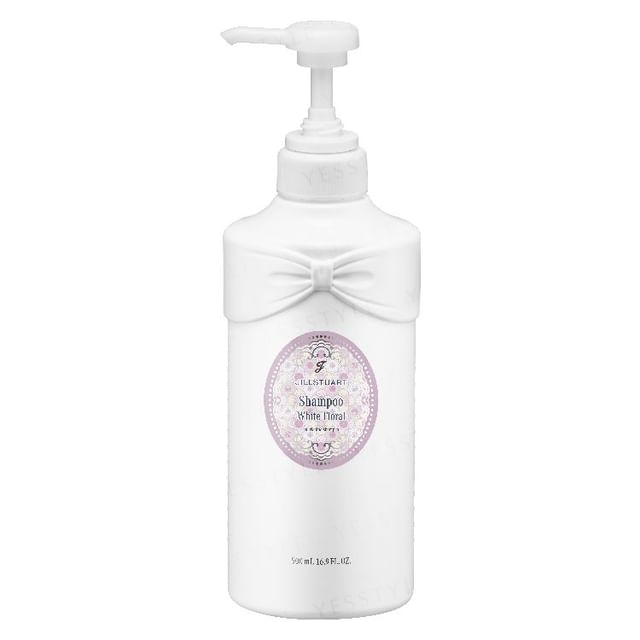

Jill Stuart
Jill Stuart White Floral Shampoo 500ml
A gentle, amino acid–based shampoo that guides hair to a silky, smooth finish. Its Silky Feel formula repairs hair from the inside and outside while the Moist Cuticle Veil forms a hydrating layer on the hair surface. Infused with plant-derived extracts such as Madonna Lily and Chamomile, it nourishes hair while the rich, quick-foaming lather cleanses scalp and hair gently yet effectively. Mild cleansing agents preserve moisture and support a healthy scalp environment. Weakly acidic, alcohol-free, paraben-free, and silicone-free.
Sulfate-free
Paraben-free
Silicone-free
Color-safe
Damage Repair
Dryness
Optimized for Your Environment & Lifestyle
Nykaa
In stock
Recommended

Jill Stuart White Floral Shampoo 500ml
Jill Stuart
jill-stuart-white-floral-shampoo-500ml
Shampoo
10407593115941
Morning or Evening?
How often will you use this product?
Notes


Secure payment protection
Your Biodata Compatibility Analysis
Based on your 6 hair health indices and environmental factors
Poor Match
Significant incompatibilities
Growth Cycle Health Index
Hair Match
Hair Health Index Alignment
Optimal for OSI, SSI, DI, HSI
Ingredient Efficacy
Matching Ingredient Score
Environment Compatibility
Current UV, Air Quality & Humidity
Why This Works for Your Specific Profile
Damage Index:
Very healthy or severely damaged hair falls outside optimal treatment parameters
Water Quality:
Soft or moderately hard water does not require intensive treatment causing over-cleansing and dryness
Hair:
Closed cuticles resist product penetration causing surface buildup without internal benefits
Active Lifestyle:
Activity levels outside optimal range affect product performance and maintenance requirements
Your Hair Profile Integration
Your Hair Archetype

Density Level

Washing Frequency

Shedding Level

Oil Level
Your Hair Health Indices
Oil Secretion (OSI)
Very low oil production
Scalp Sensitivity (SSI)
Very low sensitivity
Growth Rate (CMR)
Poor metabolism rate
Damage Index (DI)
Minimal damage
Hair Strength (HSI)
Very weak strength
Softness Index (SI)
Significant improvement needed
Water & Environmental Integration

Water:


Expected Results & Timeline
Key Highlights

What is it?
Shampoo, 31 ingredients

Who Is It For
Adults, Unisex

Budget
Rs. 4,787.19 - Rs. 9,574.38

Timeline
Immediate
Why You’ll Love It

What Does It Help With?
Damage Repair, Dryness, Frizz, Color Fading

Best for
Damage Repair

Features
Amino acid-based, Silky Feel formula, Moist Cuticle Veil, Plant-derived extracts, Mild cleansing agents, Weakly acidic, Alcohol-free, Paraben-free, Silicone-free

Checks
Sulfate-free, Paraben-free, Silicone-free, Color-safe
Ingredients Overview
Ingredients List
water, sodium-olefin-(c14-16)-sulfonate, cocamidopropyl-betaine, ppg-2-cocamide, sodium-cocoyl-methyl-taurate, tea-cocoyl-glutamate, sodium-laureth-sulfate, fragrance, glycerin, chamomilla-recutita-(matricaria)-flower-extract, hydroxypropyltrimonium-hyaluronate, lilium-candidum-bulb-extract-(madonna-lily-root-extract), hydrolyzed-soy-protein, butylene-glycol, disodium-edta, peg-50-hydrogenated-castor-oil-isostearate, ethyl-olivate, citric-acid, tremella-fuciformis-polysaccharide, polyquaternium-10, sodium-chloride, phenoxyethanol, sodium-benzoate
Key Ingredients
Chamomilla Recutita (Matricaria) Flower Extract, Lilium Candidum Bulb Extract (Madonna Lily Root Extract), Hydrolyzed Soy Protein, Hydroxypropyltrimonium Hyaluronate, Tremella Fuciformis Polysaccharide
Ingredients Details
Chamomilla Recutita (matricaria) Flower Extract
Common Name(s): Chamomilla recutita (matricaria) flower extract,botanical extract,phytochemical active
CAS Number: N/a
DESCRIPTION
What It Does: Provides antioxidant protection from reactive oxygen species, reduces inflammatory cytokine production in skin, and conditions skin surface through the plant's secondary metabolite complex.
Why It's Used: Chosen for its natural origin narrative, traditional use heritage, and multi-functional phytochemical profile that supports several concurrent skin care claims from one ingredient.
How It Works: Polyphenols, terpenoids, and alkaloids in the extract scavenge ros via hydrogen atom transfer, inhibit nf-kb or cox-2 inflammatory pathways, and interact with skin surface proteins for conditioning.
Typically Found In: Botanical skin care,natural products
TECHNICAL DETAILS
Primary Category: Active ingredient – antioxidant
Secondary Functions: Free radical scavenging,anti-aging
Application Areas:

Facial Skincare
Body Care

Hair Care
Beard Care
Color Cosmetics (Makeup)
Dietary/Oral Supplements
Typical Concentration Range: 0.1%–10%
SOURCING & ETHICS
Vegan Status: Yes
Halal Status: Yes
Source Notes: Plant-derived extract or synthetic.
SKIN COMPATIBILITY
Irritancy Rating: 1/5 – very low
Comedogenicity Rating: 0/5 – non-comedogenic
Sensitivity Concerns: Non-irritating; well-tolerated.
Safe for Sensitive Skin: Yes
SAFETY & COMPATIBILITY
Safety Profile: Excellent safety profile. ewg score: 1.
Works Well With: Vitamin c,vitamin e,ferulic acid,spf,other antioxidants
Avoid Combining With: No significant incompatibilities
SCIENTIFIC NOTE
Plant secondary metabolites evolved as uv photoprotectants and antimicrobial agents — mechanisms that directly translate to cosmetic antioxidant and anti-inflammatory activity in human skin.
Last Verified: Cosing database,chamomilla recutita (matricaria) fl botanical review
Primary Sources: 2026-03-12
Fragrance
Common Name(s): Fragrance ingredient,eu allergen or aromatic component,olfactory/flavour
CAS Number: N/a
DESCRIPTION
What It Does: Provides the complete fragrance profile contributing to product sensory experience and consumer appeal.
Why It's Used: Fragrance is a major consumer purchase driver — up to 70% of consumers make purchasing decisions partially based on product scent.
How It Works: Fragrance blends interact with olfactory receptors providing the sensory profile — complex mixtures activate multiple receptor types for rich, multidimensional scent experiences.
Typically Found In: All fragrance products
TECHNICAL DETAILS
Primary Category: Active ingredient – cosmetic active
Secondary Functions: Skin conditioning
Application Areas:
Facial Skincare
Body Care
Hair Care
Beard Care
Color Cosmetics (Makeup)
Dietary/Oral Supplements
Typical Concentration Range: Standard use levels
SOURCING & ETHICS
Vegan Status: Conditional
Halal Status: Yes
Source Notes: Commercially produced for cosmetic use. verify vegan/halal status with supplier.
SKIN COMPATIBILITY
Irritancy Rating: 1/5 – very low
Comedogenicity Rating: 0/5 – non-comedogenic
Sensitivity Concerns: Well-tolerated by most skin types.
Safe for Sensitive Skin: Yes
SAFETY & COMPATIBILITY
Safety Profile: Good safety profile at recommended concentrations. ewg score: 1–2.
Works Well With: Standard skincare actives
Avoid Combining With: No known significant incompatibilities
SCIENTIFIC NOTE
Ifra guidelines set usage limits for fragrance ingredients based on skin sensitisation and phototoxicity assessment for each application category.
Last Verified: Eu regulation 1223/2009 annex iii,ifra standards,fragrance allergen declaration requirements
Primary Sources: 2026-03-12
Glycerin
Common Name(s): Glycerol,glycerine,1,2,3-propanetriol
CAS Number: 56-81-5
DESCRIPTION
What It Does: Glycerin pulls water from the environment and deeper skin layers into the outer skin layer (epidermis), boosting moisture levels and keeping skin soft, smooth, and plump.
Why It's Used: It is used in virtually every moisturizer, serum, and cleanser because it is highly effective at hydrating skin, is well-tolerated by all skin types, and enhances the texture and spreadability of formulations.
How It Works: As a humectant, glycerin forms hydrogen bonds with water molecules, trapping them in the skin. it also reinforces the skin barrier by integrating into lipid structures between skin cells.
Typically Found In: Moisturizers,serums,cleansers,toners,sheet masks,sunscreens,body lotions,shampoos,conditioners
TECHNICAL DETAILS
Primary Category: Humectant
Secondary Functions: Skin barrier support,emollient,solvent
Application Areas:
Facial Skincare
Body Care
Hair Care
Beard Care
Color Cosmetics (Makeup)
Dietary/Oral Supplements
Typical Concentration Range: 1%–30% (typical: 3–10%)
SOURCING & ETHICS
Vegan Status: Yes – plant-derived (coconut, soy, palm) or synthetic
Halal Status: Yes – when plant-derived or synthetic; verify source with supplier
Source Notes: Derived from plant oils via hydrolysis or saponification; synthetic versions also available. palm-derived glycerin carries sustainability concerns.
SKIN COMPATIBILITY
Irritancy Rating: 1/5 – very low; non-irritating at all standard concentrations
Comedogenicity Rating: 0/5 – non-comedogenic
Sensitivity Concerns: Extremely rare allergic reactions; generally safe for all skin types including sensitive and baby skin
Safe for Sensitive Skin: Yes
SAFETY & COMPATIBILITY
Safety Profile: Widely recognized as safe. ewg hazard score: 1. no significant concerns for irritation, sensitization, or toxicity at typical concentrations (up to 50%).
Works Well With: Hyaluronic acid,ceramides,niacinamide,panthenol,urea,peptides,retinol,ahas/bhas
Avoid Combining With: No known incompatibilities at standard concentrations
SCIENTIFIC NOTE
Glycerin is an endogenous skin component found naturally in the stratum corneum. aquaporin-3 channels in keratinocytes facilitate glycerin transport, making it integral to natural skin hydration pathways.
Last Verified: Cosing database,cir safety assessment,ewg skin deep,inci decoder
Primary Sources: 2026-03-12
Hydrolyzed Soy Protein
Common Name(s): Hydrolysed protein,conditioning amino acid complex,film-forming active
CAS Number: N/a
DESCRIPTION
What It Does: Deposits a conditioning, moisture-retaining film on skin and hair from substantive protein-surface adsorption, delivers amino acids for sc keratin compatibility, and provides temporary firming from the protein film's tensile properties.
Why It's Used: Provides the conditioning benefits of structural proteins in a topically deliverable form — molecular weight distribution determines whether surface film formation (high mw) or sc penetration with deeper conditioning (low mw <500 da) predominates.
How It Works: Low-mw protein hydrolysate fractions (<500 da) penetrate the sc via aqueous channels; high-mw fractions adsorb substantively to negative hair and skin surfaces through h-bonding and electrostatic interactions. film formation reduces tewl and provides mechanical smoothing.
Typically Found In: Hair conditioners,skin serums,conditioning
TECHNICAL DETAILS
Primary Category: Functional ingredient – humectant
Secondary Functions: Tewl reduction,skin plumping
Application Areas:
Facial Skincare
Body Care
Hair Care
Beard Care
Color Cosmetics (Makeup)
Dietary/Oral Supplements
Typical Concentration Range: 0.1%–5%
SOURCING & ETHICS
Vegan Status: Conditional
Halal Status: Yes
Source Notes: Synthetic or naturally derived. excellent aqueous solubility.
SKIN COMPATIBILITY
Irritancy Rating: 1/5 – very low
Comedogenicity Rating: 0/5 – non-comedogenic
Sensitivity Concerns: Non-irritating; suitable for all skin types.
Safe for Sensitive Skin: Yes
SAFETY & COMPATIBILITY
Safety Profile: Excellent safety profile. ewg score: 1.
Works Well With: Ceramides,emollients,occlusives,glycerin,hyaluronic acid
Avoid Combining With: No significant incompatibilities
SCIENTIFIC NOTE
Optimal hydrolysis degree for hair conditioning: mw 1,000–5,000 da — large enough for adsorption to hair cuticle, small enough to penetrate the cuticle surface and access cortex damage sites.
Last Verified: Cosing database,hydrolyzed soy protein hydrolysed protein review
Primary Sources: 2026-03-12
Personalized Usage Instructions
How to Use
Step 1
Wet hair and scalp, then take an appropriate amount, lather, wash, and rinse thoroughly
Medical Chemicals

Protein/Moisture
- Moisture
pH Level
- Acidic

Porosity Taget
- Normal Porosity
Customized for Your Profile
Scalp Condtions
Anti-Dandruff, Seborrheic Dermatitis Safe, Sensitive Scalp, pH Balanced, Oil Control, Dry Scalp
Climate Suitability
Humid, Dry, Hard Water, Soft Water, UV Protection, Pollution Shield, Winter, Summer
Clinical Claims
N/A
Frequency
Wet hair and scalp, then take an appropriate amount, lather, wash, and rinse thoroughly.
Product Information

Sulfate-free
Paraben-free
Silicone-free
Color-safe
