

Joico
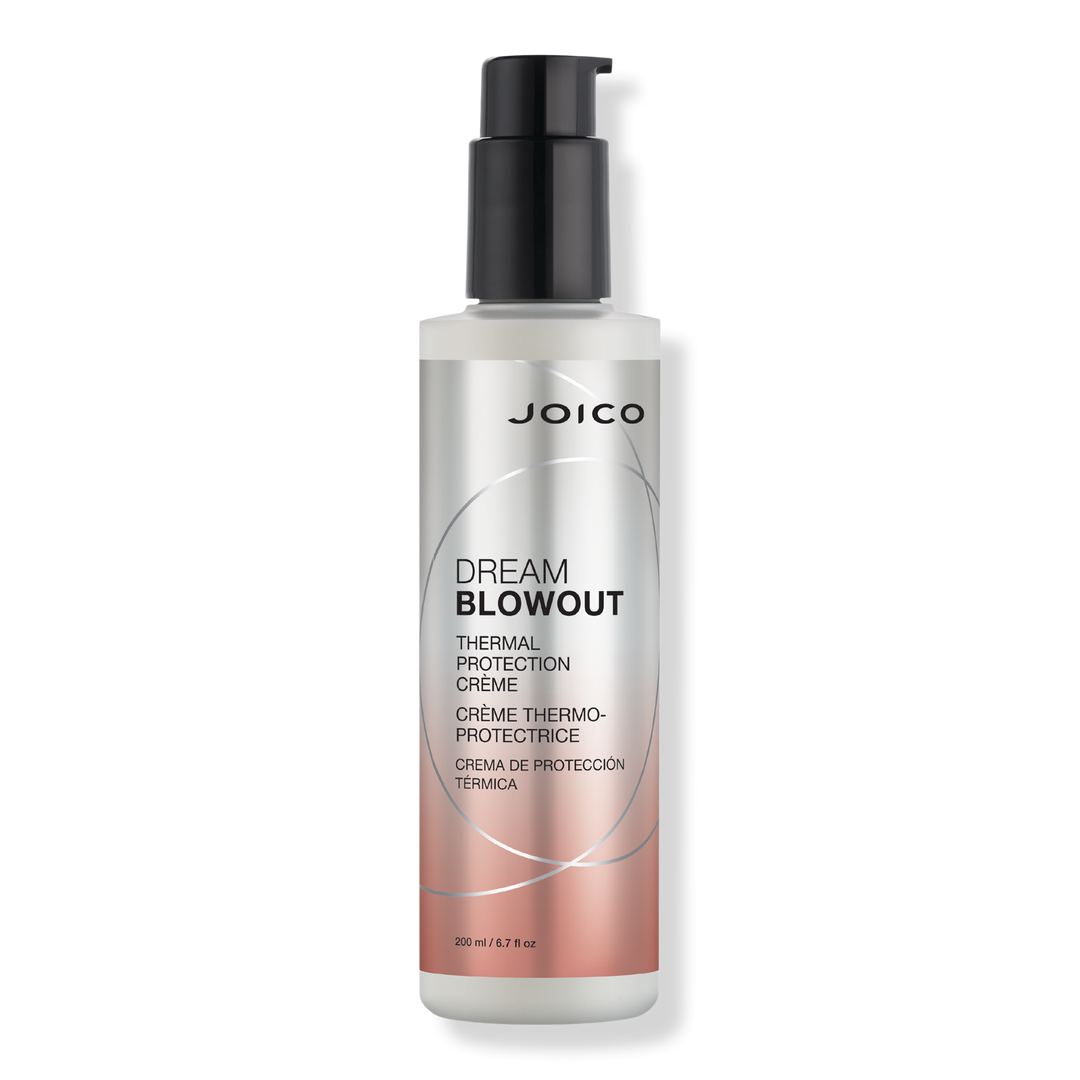
Joico Dream Blowout Thermal Protection Creme
Joico Dream Blowout Thermal Protection Creme cuts drying time in half while safeguarding strands for a full 24 hours against the effects of thermal styling, humidity, frizz, and damage caused by pollution. Enjoy luxurious locks in minutes!
Heat Protection
Anti-Frizz
Color-safe
Frizz
Breakage
Fine
Optimized for Your Environment & Lifestyle
Nykaa
In stock
Recommended

Joico Dream Blowout Thermal Protection Creme
Joico
joico-dream-blowout-thermal-protection-creme
Thermal Protection Creme
10355425476901
Morning or Evening?
How often will you use this product?
Notes


Secure payment protection
Your Biodata Compatibility Analysis
Based on your 6 hair health indices and environmental factors
Poor Match
Significant incompatibilities
Growth Cycle Health Index
Hair Match
Hair Health Index Alignment
Optimal for OSI, SSI, DI, HSI
Ingredient Efficacy
Matching Ingredient Score
Environment Compatibility
Current UV, Air Quality & Humidity
Why This Works for Your Specific Profile
Damage Index:
Damage levels outside specified range may not benefit optimally from product formulation
Water Quality:
Hair:
Closed cuticles resist product penetration causing surface buildup without internal benefits
Active Lifestyle:
Low activity produces insufficient stress or buildup making product intensity unnecessarily harsh
Your Hair Profile Integration
Your Hair Archetype

Density Level

Washing Frequency

Shedding Level

Oil Level
Your Hair Health Indices
Oil Secretion (OSI)
Very low oil production
Scalp Sensitivity (SSI)
Very low sensitivity
Growth Rate (CMR)
Poor metabolism rate
Damage Index (DI)
Minimal damage
Hair Strength (HSI)
Very weak strength
Softness Index (SI)
Significant improvement needed
Water & Environmental Integration

Water:


Expected Results & Timeline
Key Highlights

What is it?
Thermal Protection Creme with 20 ingredients

Who Is It For
Adults

Budget
Rs. 2,592.18 - Rs. 5,184.36

Timeline
Immediate
Why You’ll Love It

What Does It Help With?
Frizz, Breakage

Best for
Frizz

Features
Provides heat protection up to 450°F (232°C), reduces breakage by over 75%, controls frizz and static, up to 50% faster drying time, long-lasting results with protection against humidity

Checks
Cruelty Free
Ingredients Overview
Ingredients List
water-aqua-eau, dimethicone, cetearyl-alcohol, crambe-abyssinica-seed-oil-phytosterol-esters, carthamus-tinctorius-safflower-seed-oil, schinziophyton-rautanenii-kernel-oil, laurdimonium-hydroxypropyl-hydrolyzed-keratin, rosa-canina-fruit-oil, arginine-hcl, phosphatidylcholine, behentrimonium-chloride, polyquaternium-37, dicaprylyl-carbonate, glyceryl-laurate, citric-acid, phenoxyethanol, glyceryl-stearate-se, isopropyl-alcohol, lauryl-glucoside, sodium-gluconate, hydroxycitronellal, linalool, fragrance-parfum
Key Ingredients
manketti-nut-oil, safflower-seed-oil, arginine
Ingredients Details
Arginine
Common Name(s): L-arginine,2-amino-5-guanidinopentanoic acid
CAS Number: 74-79-3
DESCRIPTION
What It Does: Conditions skin, attracts moisture, supports wound healing, and improves microcirculation via no synthesis.
Why It's Used: Multi-functional amino acid for skin hydration, conditioning, and wound healing in peptide and nmf formulations.
How It Works: Guanidinium group binds water (humectant). substrate for nitric oxide synthase (enos) producing nitric oxide that vasodilates capillaries improving skin nutrition. stimulates fibroblast proliferation for wound healing.
Typically Found In: Anti-aging serums,wound healing products,nmf moisturizers,scalp treatments
TECHNICAL DETAILS
Primary Category: Active ingredient – amino acid
Secondary Functions: Wound healing,microcirculation,nmf component
Application Areas:

Facial Skincare

Body Care
Hair Care
Beard Care
Color Cosmetics (Makeup)
Dietary/Oral Supplements
Typical Concentration Range: 0.5%–5%
SOURCING & ETHICS
Vegan Status: Conditional - feedstock declaration required
Halal Status: Unverified - feedstock declaration required (plant, animal and petrochemical routes all exist)
Source Notes: Fermentation-derived or synthetic. natural skin component. [audit 2026-07-29 rev2: origin-dependent: the same inci exists in plant, animal and petrochemical versions and the name does not discriminate. determination requires shariah-panel sign-off.]
SKIN COMPATIBILITY
Irritancy Rating: 1/5 – very low
Comedogenicity Rating: 0/5 – non-comedogenic
Sensitivity Concerns: Non-irritating; endogenous skin molecule.
Safe for Sensitive Skin: Yes
SAFETY & COMPATIBILITY
Safety Profile: Excellent safety profile. natural skin nmf component. ewg score: 1.
Works Well With: Hyaluronic acid,ceramides,peptides,other amino acids
Avoid Combining With: No significant incompatibilities
SCIENTIFIC NOTE
Arginine is a conditionally essential amino acid in wound healing where local demand exceeds synthesis capacity. topical arginine provides the nos substrate locally for no-mediated vasodilation and immune cell function in healing tissue.
Last Verified: 2026-03-12
Primary Sources: Cosing database,cir safety assessment,witte & barbul arginine wound healing review
Dimethicone
Common Name(s): Pdms,polydimethylsiloxane,silicone fluid
CAS Number: 9006-65-9
DESCRIPTION
What It Does: Provides silicone-characteristic silky feel and skin protection with adjustable viscosity.
Why It's Used: The benchmark cosmetic silicone – sets the gold standard for silky application feel, spreadability, and skin protection in virtually all skin care categories.
How It Works: Polydimethylsiloxane chain flexibility provides extremely low surface tension and high spreadability. inert si-o backbone provides chemical stability and excellent skin tolerance. occlusive film formation reduces tewl. higher viscosity grades provide more intense conditioning.
Typically Found In: Moisturizers,foundations,primers,sunscreens – nearly universal
TECHNICAL DETAILS
Primary Category: Functional ingredient – polydimethylsiloxane
Secondary Functions: Barrier sealing,softening
Application Areas:
Facial Skincare
Body Care
Hair Care
Beard Care
Color Cosmetics (Makeup)
Dietary/Oral Supplements
Typical Concentration Range: 0.1%–30%
SOURCING & ETHICS
Vegan Status: Conditional - supplier confirmation required
Halal Status: Unverified - supplier confirmation required
Source Notes: Plant-derived, synthetic or animal-derived. verify source. [audit 2026-07-29 rev2: the record's own source_notes does not assert a non-animal origin, or instructs the reader to verify with the supplier; "yes" asserts knowledge the record does not hold. determination requires shariah-panel sign-off.]
SKIN COMPATIBILITY
Irritancy Rating: 1/5 – very low
Comedogenicity Rating: 1/5 – low; formulation-dependent
Sensitivity Concerns: Non-irritating.
Safe for Sensitive Skin: Yes
SAFETY & COMPATIBILITY
Safety Profile: Excellent safety profile. ewg score: 1.
Works Well With: Humectants,ceramides,actives as carrier
Avoid Combining With: No significant incompatibilities
SCIENTIFIC NOTE
Dimethicone's exceptional silky feel arises from its very low intermolecular attractive forces (weak van der waals forces due to non-polar methyl groups) that allow silicone chains to slide freely over skin. the coefficient of kinetic friction for pdms against skin (~0.04) is among the lowest of any cosmetic material – explaining why even small amounts transform product feel.
Last Verified: 2026-03-12
Primary Sources: Cosing database,cir safety assessment
Hydroxycitronellal
Common Name(s): Hydroxycitronellal,cosmetic active,functional ingredient
CAS Number: N/a
DESCRIPTION
What It Does: Delivers characteristic cosmetic function at recommended use concentration.
Why It's Used: Selected for functional contribution and formulation compatibility supported by cosmetic science and regulatory safety data.
How It Works: Works through the mechanism of its molecular class as documented in peer-reviewed cosmetic literature.
Typically Found In: Skin care formulations
TECHNICAL DETAILS
Primary Category: Active ingredient – cosmetic active
Secondary Functions: Skin conditioning
Application Areas:
Facial Skincare
Body Care
Hair Care
Beard Care
Color Cosmetics (Makeup)
Dietary/Oral Supplements
Typical Concentration Range: 0.1%–10%
SOURCING & ETHICS
Vegan Status: Conditional - supplier confirmation required
Halal Status: Unverified - supplier confirmation required
Source Notes: Commercially produced for cosmetic use. verify vegan/halal status with supplier. [audit 2026-07-29 rev2: the record's own source_notes does not assert a non-animal origin, or instructs the reader to verify with the supplier; "yes" asserts knowledge the record does not hold. determination requires shariah-panel sign-off.]
SKIN COMPATIBILITY
Irritancy Rating: 1/5 – very low
Comedogenicity Rating: 0/5 – non-comedogenic
Sensitivity Concerns: Well-tolerated by most skin types.
Safe for Sensitive Skin: Yes
SAFETY & COMPATIBILITY
Safety Profile: Good safety profile at recommended concentrations. ewg score: 1–2.
Works Well With: Standard skincare actives
Avoid Combining With: No known significant incompatibilities
SCIENTIFIC NOTE
Hydroxycitronellal has an established safety profile within the cosmetic regulatory framework at standard use concentrations.
Last Verified: 2026-03-12
Primary Sources: Cosing database,hydroxycitronellal technical literature
Linalool
Common Name(s): 3,7-dimethyl-1,6-octadien-3-ol,linalyl alcohol
CAS Number: 78-70-6
DESCRIPTION
What It Does: Provides the most common natural floral-citrus fragrance note with additional anti-inflammatory properties.
Why It's Used: The most abundant fragrance terpene in nature – linalool forms the primary scent character of lavender, responsible for lavender's documented aromatherapy calming effects.
How It Works: Monoterpene alcohol activates gaba-a receptors for anti-anxiety activity (same receptor as benzodiazepines). inhibits glutamate-induced excitotoxicity. antimicrobial via membrane disruption. anti-inflammatory via nf-kb inhibition.
Typically Found In: Virtually all fragranced cosmetics
TECHNICAL DETAILS
Primary Category: Fragrance component – tertiary terpene alcohol
Secondary Functions: Skin conditioning
Application Areas:
Facial Skincare
Body Care
Hair Care
Beard Care
Color Cosmetics (Makeup)
Dietary/Oral Supplements
Typical Concentration Range: 0.001%–3%
SOURCING & ETHICS
Vegan Status: Conditional - supplier confirmation required
Halal Status: Unverified - supplier confirmation required
Source Notes: Commercially produced for cosmetic use. verify vegan/halal status with supplier. [audit 2026-07-29 rev2: the record's own source_notes does not assert a non-animal origin, or instructs the reader to verify with the supplier; "yes" asserts knowledge the record does not hold. determination requires shariah-panel sign-off.]
SKIN COMPATIBILITY
Irritancy Rating: 1/5 – very low
Comedogenicity Rating: 0/5 – non-comedogenic
Sensitivity Concerns: Well-tolerated by most skin types.
Safe for Sensitive Skin: Yes
SAFETY & COMPATIBILITY
Safety Profile: Eu cosmetics regulation: declared fragrance allergen on label when >0.001% (leave-on) or >0.01% (rinse-off). ifra guidelines apply.
Works Well With: Standard skincare actives
Avoid Combining With: No known significant incompatibilities
SCIENTIFIC NOTE
Linalool's gaba-a receptor activation provides a pharmacological basis for lavender aromatherapy's documented anxiolytic effects. the same receptor modulation used by benzodiazepine drugs (such as diazepam) is activated by inhaled linalool vapor, providing receptor-mediated calming without the tolerance and dependence associated with pharmaceutical gaba-a modulators.
Last Verified: 2026-03-12
Primary Sources: Cosing database,ifra standards,elisabetsky et al. linalool gaba study
Personalized Usage Instructions
How to Use
Step 1
Apply evenly through clean, damp hair and blow-dry
Medical Chemicals

Protein/Moisture
- Protein/Moisture balance
pH Level
-

Porosity Taget
- Normal Porosity
Customized for Your Profile
Scalp Condtions
Climate Suitability
Humid, Pollution Shield
Clinical Claims
Reduces breakage by over 75% against combing breakage on damaged hair vs. a non-conditioning shampoo
Frequency
Apply evenly through clean, damp hair and blow-dry.
Product Information

Cruelty Free