

Jovees
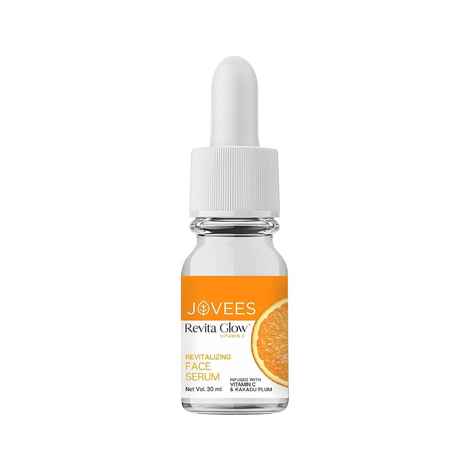
Jovees Herbal Revita Glow Vitamin C Face Serum Infused with Vitamin C & Kakadu Plum | For Skin Brightening & Hyperpigmentation | For All Skin Type | 30 ml

Jovees Herbal Revita Glow Vitamin C Face Serum Infused with Vitamin C & Kakadu Plum | For Skin Brightening & Hyperpigmentation | For All Skin Type | 30 ml
Jovees
jovees-herbal-revita-glow-vitamin-c-face-serum-infused-with-vitamin-c-kakadu-plum-for-skin-brightening-hyperpigmentation-for-all-skin-type-30-ml
Serum
10084959551781
Morning or Evening?
How often will you use this product?
Notes


Highlights
WHAT IS IT?
Vitamin C Face Serum with blend of Vitamin C & Kakadu Plum, 30 ml
FEATURES
Increase skin firmness; Improves appearance of dark spots, signs of aging and sun damage; Reduces appearance of lines and wrinkles; Brightens skin's complexion; Lightweight; Fast-absorbing; All-natural; Oil-free; Suitable for all skin types including with scars and blemishes.
BEST FOR
all skin types including scars and blemishes
CHECKS
No greasy formula
Who Is It For?
What Does It Help With?
Skin Brightening Hyperpigmentation Signs Of Aging Dark Spots Loss Of Firmness Lines And Wrinkles Sun Damage Nourishing SkinBudget
Affordable (under $30)How To Use
Which routine should it be used in?
Instructions:
Key Information


What Jovees Says
Product Description:
Increase Skin firmness Improves the appearance of dark spot signs of aging and sun damage the appearance of lines and wrinkles and the loss of firmness while brightening skin's complexion. It is not greasy which makes it a perfect composition for all skin types including that with scars and blemishes.
About the Brand:
Ingredients Overview
Ingredients List
Kakadu Plum Extract, Grape Seed Extract, Bearberry Extract, Orange peel extract, Vitamin C, Sodium PCA, Glutathione, Zemea, Glycerin, Xanthan Gum, Phenoxyethanol & Ethyl hexyl glycerin, Sodium Gluconate, Parfum, Purified Water
Key Ingredients
Vitamin-C, Kakadu-Plum
Ingredients Details
Bearberry Extract
Common Name(s): Bearberry extract,botanical extract,phytochemical active
CAS Number: N/a
DESCRIPTION
What It Does: Provides antioxidant protection from reactive oxygen species, reduces inflammatory cytokine production in skin, and conditions skin surface through the plant's secondary metabolite complex.
Why It's Used: Chosen for its natural origin narrative, traditional use heritage, and multi-functional phytochemical profile that supports several concurrent skin care claims from one ingredient.
How It Works: Polyphenols, terpenoids, and alkaloids in the extract scavenge ros via hydrogen atom transfer, inhibit nf-kb or cox-2 inflammatory pathways, and interact with skin surface proteins for conditioning.
Typically Found In: Botanical skin care,natural products
TECHNICAL DETAILS
Primary Category: Active ingredient – antioxidant
Secondary Functions: Free radical scavenging,anti-aging
Application Areas:

Facial Skincare
Body Care

Hair Care
Beard Care
Color Cosmetics (Makeup)
Dietary/Oral Supplements
Typical Concentration Range: 0.1%–10%
SOURCING & ETHICS
Vegan Status: Yes
Halal Status: Yes
Source Notes: Plant-derived extract or synthetic.
SKIN COMPATIBILITY
Irritancy Rating: 1/5 – very low
Comedogenicity Rating: 0/5 – non-comedogenic
Sensitivity Concerns: Non-irritating; well-tolerated.
Safe for Sensitive Skin: Yes
SAFETY & COMPATIBILITY
Safety Profile: Excellent safety profile. ewg score: 1.
Works Well With: Vitamin c,vitamin e,ferulic acid,spf,other antioxidants
Avoid Combining With: No significant incompatibilities
SCIENTIFIC NOTE
Plant secondary metabolites evolved as uv photoprotectants and antimicrobial agents — mechanisms that directly translate to cosmetic antioxidant and anti-inflammatory activity in human skin.
Last Verified: 2026-03-12
Primary Sources: Cosing database,bearberry extract botanical review
Glutathione
Common Name(s): Gsh,gamma-l-glutamyl-l-cysteinyl-glycine,reduced glutathione
CAS Number: 70-18-8
DESCRIPTION
What It Does: Provides the body's primary antioxidant defense while reducing melanin production for brightening.
Why It's Used: Master antioxidant for comprehensive oxidative stress protection alongside unique melanin-shifting brightening action (pheomelanin preference).
How It Works: Three-amino acid tripeptide (gamma-glu-cys-gly). thiol group (-sh) provides electron donation for antioxidant activity and detoxification conjugation. shifts melanin synthesis from eumelanin (dark brown) toward pheomelanin (light yellow-red) for brightening. regenerates vitamins c and e from their oxidized forms.
Typically Found In: Brightening serums,antioxidant serums,anti-aging products
TECHNICAL DETAILS
Primary Category: Active ingredient – master cellular antioxidant
Secondary Functions: Melanin shifting brightening,vitamins c+e regeneration,master antioxidant
Application Areas:
Facial Skincare
Body Care
Hair Care
Beard Care
Color Cosmetics (Makeup)
Dietary/Oral Supplements
Typical Concentration Range: 0.1%–5%
SOURCING & ETHICS
Vegan Status: Conditional - supplier confirmation required
Halal Status: Unverified - supplier confirmation required
Source Notes: Produced by yeast fermentation or chemical synthesis. stability challenge – use encapsulated or stabilized forms. [audit 2026-07-29 rev2: status downgraded on audit. determination requires shariah-panel sign-off.]
SKIN COMPATIBILITY
Irritancy Rating: 1/5 – very low
Comedogenicity Rating: 0/5 – non-comedogenic
Sensitivity Concerns: Well-tolerated; some reports of tingling at high concentrations.
Safe for Sensitive Skin: Yes
SAFETY & COMPATIBILITY
Safety Profile: Excellent safety profile. ewg score: 1.
Works Well With: Vitamin c,vitamin e,ferulic acid,spf,other antioxidants
Avoid Combining With: No significant incompatibilities
SCIENTIFIC NOTE
Glutathione's melanin-shifting mechanism (eumelanin→pheomelanin) is entirely different from tyrosinase inhibition. even in the presence of active tyrosinase, glutathione shifts the enzymatic product from dark eumelanin to lighter pheomelanin by chelating copper from the tyrosinase active site and competing for dopa substrate.
Last Verified: 2026-03-12
Primary Sources: Cosing database,villarama & maibach glutathione brightening review,cir safety assessment
Glycerin
Common Name(s): Glycerol,glycerine,1,2,3-propanetriol
CAS Number: 56-81-5
DESCRIPTION
What It Does: Glycerin pulls water from the environment and deeper skin layers into the outer skin layer (epidermis), boosting moisture levels and keeping skin soft, smooth, and plump.
Why It's Used: It is used in virtually every moisturizer, serum, and cleanser because it is highly effective at hydrating skin, is well-tolerated by all skin types, and enhances the texture and spreadability of formulations.
How It Works: As a humectant, glycerin forms hydrogen bonds with water molecules, trapping them in the skin. it also reinforces the skin barrier by integrating into lipid structures between skin cells.
Typically Found In: Moisturizers,serums,cleansers,toners,sheet masks,sunscreens,body lotions,shampoos,conditioners
TECHNICAL DETAILS
Primary Category: Humectant
Secondary Functions: Skin barrier support,emollient,solvent
Application Areas:
Facial Skincare
Body Care
Hair Care
Beard Care
Color Cosmetics (Makeup)
Dietary/Oral Supplements
Typical Concentration Range: 1%–30% (typical: 3–10%)
SOURCING & ETHICS
Vegan Status: Conditional - feedstock declaration required
Halal Status: Unverified - feedstock declaration required (plant, animal and petrochemical routes all exist)
Source Notes: Derived from plant oils via hydrolysis or saponification; synthetic versions also available. palm-derived glycerin carries sustainability concerns. [audit 2026-07-29 rev2: origin-dependent: the same inci exists in plant, animal and petrochemical versions and the name does not discriminate. determination requires shariah-panel sign-off.]
SKIN COMPATIBILITY
Irritancy Rating: 1/5 – very low; non-irritating at all standard concentrations
Comedogenicity Rating: 0/5 – non-comedogenic
Sensitivity Concerns: Extremely rare allergic reactions; generally safe for all skin types including sensitive and baby skin
Safe for Sensitive Skin: Yes
SAFETY & COMPATIBILITY
Safety Profile: Widely recognized as safe. ewg hazard score: 1. no significant concerns for irritation, sensitization, or toxicity at typical concentrations (up to 50%).
Works Well With: Hyaluronic acid,ceramides,niacinamide,panthenol,urea,peptides,retinol,ahas/bhas
Avoid Combining With: No known incompatibilities at standard concentrations
SCIENTIFIC NOTE
Glycerin is an endogenous skin component found naturally in the stratum corneum. aquaporin-3 channels in keratinocytes facilitate glycerin transport, making it integral to natural skin hydration pathways.
Last Verified: 2026-03-12
Primary Sources: Cosing database,cir safety assessment,ewg skin deep,inci decoder
Grape Seed Extract
Common Name(s): Grape seed extract,opc extract,procyanidin extract
CAS Number: 84929-27-1
DESCRIPTION
What It Does: Provides exceptional opc antioxidant activity and collagen-protecting properties from grape seed proanthocyanidins.
Why It's Used: One of the highest orac value plant extracts – provides comprehensive collagen protection alongside direct antioxidant and vascular-strengthening benefits.
How It Works: Opcs (procyanidins b1-b4) bind collagen fibers preventing free-radical collagen degradation. inhibit collagenase and elastase. cross-link collagen fibers increasing mechanical strength. chelate iron and copper preventing metal-catalyzed fenton radical generation. orac value ~20,000μmol te/g.
Typically Found In: Anti-aging serums,antioxidant complexes,premium skincare
TECHNICAL DETAILS
Primary Category: Active ingredient – antioxidant
Secondary Functions: Collagen fiber binding,elastase inhibition,metal chelation
Application Areas:
Facial Skincare
Body Care
Hair Care
Beard Care
Color Cosmetics (Makeup)
Dietary/Oral Supplements
Typical Concentration Range: 0.1%–5%
SOURCING & ETHICS
Vegan Status: Yes – from vitis vinifera seeds
Halal Status: Yes
Source Notes: Plant-derived extract or synthetic.
SKIN COMPATIBILITY
Irritancy Rating: 1/5 – very low
Comedogenicity Rating: 0/5 – non-comedogenic
Sensitivity Concerns: Non-irritating; well-tolerated.
Safe for Sensitive Skin: Yes
SAFETY & COMPATIBILITY
Safety Profile: Excellent safety profile. ewg score: 1.
Works Well With: Vitamin c,vitamin e,ferulic acid,spf,other antioxidants
Avoid Combining With: No significant incompatibilities
SCIENTIFIC NOTE
Grape seed opcs' direct binding to collagen fibers (via hydroxyl group-collagen hydroxyprolyl hydrogen bonding) is a unique antioxidant mechanism – not simply scavenging free radicals near collagen, but physically binding to collagen fibers creating a protective opc coating that reduces collagen's susceptibility to free radical attack.
Last Verified: 2026-03-12
Primary Sources: Cosing database,fine vitis vinifera opc review