

Jovees
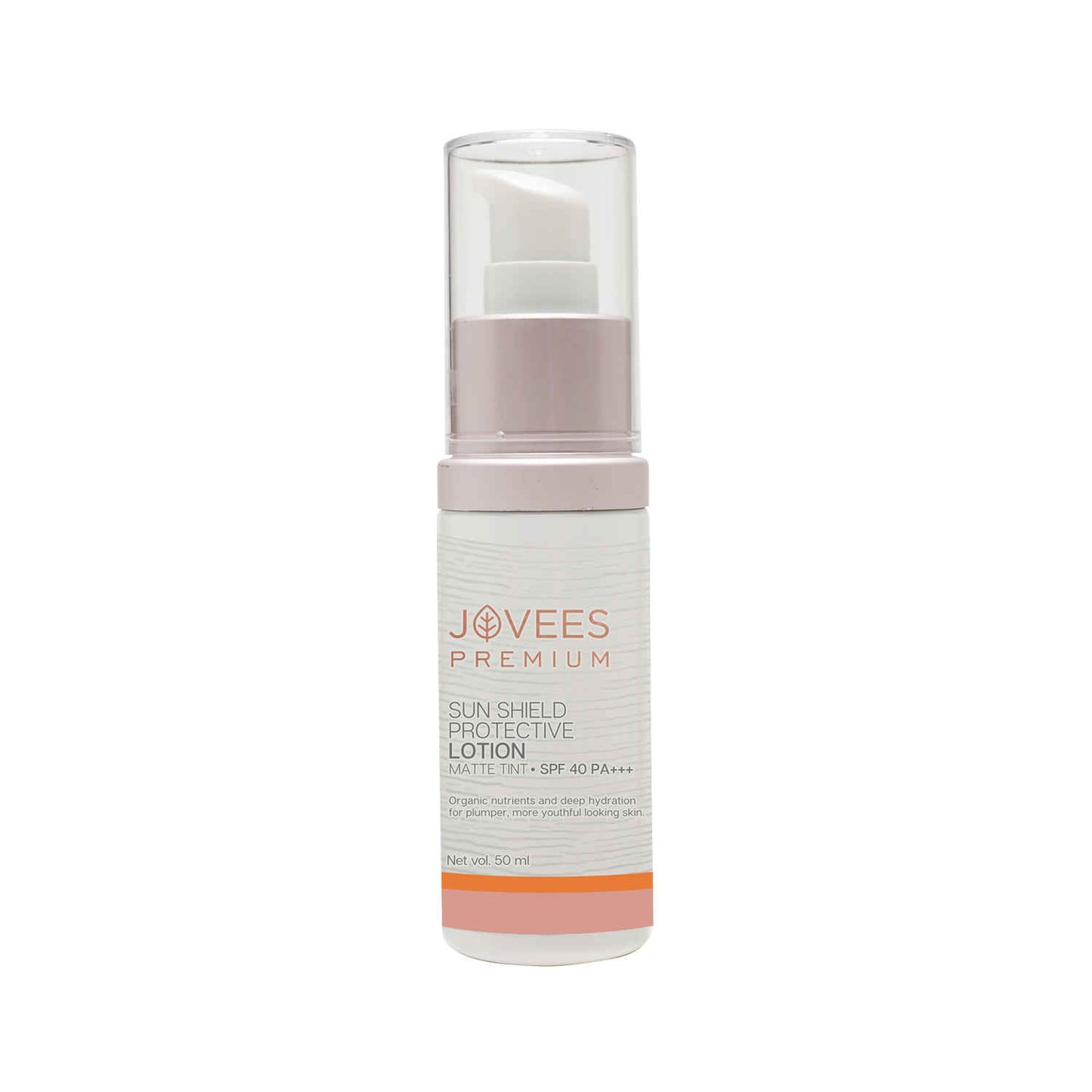
Jovees Premium Sun Shield Protective Lotion SPF 40 | Broad Spectrum PA+++ | Matte Tint | Infused with Organic Extracts | Lightweight and Oil Free 50 ml

Jovees Premium Sun Shield Protective Lotion SPF 40 | Broad Spectrum PA+++ | Matte Tint | Infused with Organic Extracts | Lightweight and Oil Free 50 ml
Jovees
jovees-premium-sun-shield-protective-lotion-spf-40-broad-spectrum-pa-matte-tint-infused-with-organic-extracts-lightweight-and-oil-free-50-ml
Suncare
10085006115109
Morning or Evening?
How often will you use this product?
Notes


Highlights
WHAT IS IT?
Protective Lotion, 50 ml
FEATURES
Protects skin from sun exposure UVA UVB rays, improves elasticity, evens the skin tone, gives a matte finish, lightweight, oil free
BEST FOR
sensitive
CHECKS
Paraben, Alcohol
Who Is It For?
Men And Women All AgesWhat Does It Help With?
Sun Protection Oil Control Skin Elasticity Improvement Even Skin ToneBudget
Mid-range ($30-$75)How To Use
Which routine should it be used in?
Instructions:
Key Information


What Jovees Says
Product Description:
Screen radiation sun exposure dust dirt sweat oil and grime after everything your skin goes through it deserves to be treated to a premium skincare experience. This premium lightweight oilfree lotion protects skin from sun exposure UVA UVB rays improves elasticity evens the skin tone and gives you a matte finish.
About the Brand:
Ingredients Overview
Ingredients List
Carrot Oil, Citrus Juice, Yarrow Flower Extract, Cumin Seed Oil, Red Grape Extract, Witch Hazel Extract, Bilberry Fruit Extract, Aloe Vera Juice, Wheatgerm Oil, Octinoxate, Oxybenzone, Alkyl Benzoate, Zinc Oxide, Titanium Dioxide, Cetostearyl, Stearic, Propylene Glycol
Key Ingredients
Organic Extracts, Sun Shield
Ingredients Details
Carrot Oil
Common Name(s): Carrot oil,cosmetic active,functional ingredient
CAS Number: N/a
DESCRIPTION
What It Does: Delivers characteristic cosmetic function — skin conditioning, protection, preservation, or active biological benefit — at recommended use concentration.
Why It's Used: Selected for its functional contribution and formulation compatibility — supported by cosmetic science literature and regulatory safety assessment.
How It Works: Works through the mechanism of its molecular class — physicochemical interaction with the formulation or biological interaction with skin proteins, lipids, or receptors as documented in peer-reviewed literature.
Typically Found In: Skin care formulations
TECHNICAL DETAILS
Primary Category: Active ingredient – cosmetic active
Secondary Functions: Skin conditioning
Application Areas:

Facial Skincare

Body Care
Hair Care
Beard Care
Color Cosmetics (Makeup)
Dietary/Oral Supplements
Typical Concentration Range: 0.1%–10%
SOURCING & ETHICS
Vegan Status: Conditional - supplier confirmation required
Halal Status: Unverified - supplier confirmation required
Source Notes: Commercially produced for cosmetic use. verify vegan/halal status with supplier. [audit 2026-07-29 rev2: the record's own source_notes does not assert a non-animal origin, or instructs the reader to verify with the supplier; "yes" asserts knowledge the record does not hold. determination requires shariah-panel sign-off.]
SKIN COMPATIBILITY
Irritancy Rating: 1/5 – very low
Comedogenicity Rating: 0/5 – non-comedogenic
Sensitivity Concerns: Well-tolerated by most skin types.
Safe for Sensitive Skin: Yes
SAFETY & COMPATIBILITY
Safety Profile: Good safety profile at recommended concentrations. ewg score: 1–2.
Works Well With: Standard skincare actives
Avoid Combining With: No known significant incompatibilities
SCIENTIFIC NOTE
Carrot oil delivers documented functional benefit with an established safety profile within the cosmetic regulatory framework (cosing eu, cir usa).
Last Verified: 2026-03-12
Primary Sources: Cosing database,carrot oil technical literature
Octinoxate
Common Name(s): Octyl methoxycinnamate,omc,parsol mcx
CAS Number: 5466-77-3
DESCRIPTION
What It Does: Provides the most widely used uvb chemical filtration with light, elegant aesthetics.
Why It's Used: The global uvb standard — octyl methoxycinnamate's combination of potent uvb absorption, light texture, and global approval makes it the most-used chemical uvb filter worldwide.
How It Works: Trans-cinnamate chromophore absorbs uvb at λmax 308nm (εmax ~24,000 l/mol·cm). undergoes trans-cis photoisomerisation reducing uv protection over time — requires photostabilisation with avobenzone or octocrylene. oil-soluble for elegant formulation.
Typically Found In: Sunscreens,foundation with spf,tinted moisturisers
TECHNICAL DETAILS
Primary Category: Active ingredient – chemical uvb filter
Secondary Functions: Skin conditioning
Application Areas:
Facial Skincare
Body Care
Hair Care
Beard Care
Color Cosmetics (Makeup)
Dietary/Oral Supplements
Typical Concentration Range: Up to 10% (eu), 7.5% (us fda)
SOURCING & ETHICS
Vegan Status: Conditional - supplier confirmation required
Halal Status: Unverified - supplier confirmation required
Source Notes: Commercially produced for cosmetic use. verify vegan/halal status with supplier. [audit 2026-07-29 rev2: the record's own source_notes does not assert a non-animal origin, or instructs the reader to verify with the supplier; "yes" asserts knowledge the record does not hold. determination requires shariah-panel sign-off.]
SKIN COMPATIBILITY
Irritancy Rating: 1/5 – very low
Comedogenicity Rating: 0/5 – non-comedogenic
Sensitivity Concerns: Well-tolerated by most skin types.
Safe for Sensitive Skin: Yes
SAFETY & COMPATIBILITY
Safety Profile: Eu max 10%. aquatic toxicity/coral reef concerns; hawaii and some us states restrict omc. requires photostabilisation for durable spf. ewg score: 5.
Works Well With: Standard skincare actives
Avoid Combining With: No known significant incompatibilities
SCIENTIFIC NOTE
Omc's trans-cis photoisomerisation (absorbing uv → converting trans to less-absorbing cis form) was identified as the mechanism for sunscreen product spf decay after uv exposure. this photodegradation led to development of octocrylene and avobenzone photostabilisation strategies — a pharmacokinetic discovery that fundamentally changed sunscreen formulation science.
Last Verified: 2026-03-12
Primary Sources: Cosing database,fda uv filter otc monograph,eu cosmetics annex vi
Oxybenzone
Common Name(s): Oxybenzone,cosmetic active,functional ingredient
CAS Number: N/a
DESCRIPTION
What It Does: Delivers characteristic cosmetic function at recommended use concentration.
Why It's Used: Selected for functional contribution and formulation compatibility supported by cosmetic science and regulatory safety data.
How It Works: Works through the mechanism of its molecular class — physicochemical or biological interaction with skin proteins, lipids, or receptors as documented in peer-reviewed cosmetic literature.
Typically Found In: Skin care formulations
TECHNICAL DETAILS
Primary Category: Active ingredient – cosmetic active
Secondary Functions: Skin conditioning
Application Areas:
Facial Skincare
Body Care
Hair Care
Beard Care
Color Cosmetics (Makeup)
Dietary/Oral Supplements
Typical Concentration Range: 0.1%–10%
SOURCING & ETHICS
Vegan Status: Conditional - supplier confirmation required
Halal Status: Unverified - supplier confirmation required
Source Notes: Commercially produced for cosmetic use. verify vegan/halal status with supplier. [audit 2026-07-29 rev2: the record's own source_notes does not assert a non-animal origin, or instructs the reader to verify with the supplier; "yes" asserts knowledge the record does not hold. determination requires shariah-panel sign-off.]
SKIN COMPATIBILITY
Irritancy Rating: 1/5 – very low
Comedogenicity Rating: 0/5 – non-comedogenic
Sensitivity Concerns: Well-tolerated by most skin types.
Safe for Sensitive Skin: Yes
SAFETY & COMPATIBILITY
Safety Profile: Good safety profile at recommended concentrations. ewg score: 1–2.
Works Well With: Standard skincare actives
Avoid Combining With: No known significant incompatibilities
SCIENTIFIC NOTE
Oxybenzone has an established safety and efficacy profile within the cosmetic regulatory framework at standard use concentrations.
Last Verified: 2026-03-12
Primary Sources: Cosing database,oxybenzone technical literature
Propylene Glycol
Common Name(s): 1,2-propanediol,pdg,propane-1,2-diol
CAS Number: 57-55-6
DESCRIPTION
What It Does: Provides humectant hydration alongside solubilization of water-soluble actives and preservation boosting.
Why It's Used: Multi-function glycol for comprehensive formulation utility: hydration, solubilization, and preservation in a single cost-effective ingredient.
How It Works: Two hydroxyl groups provide water binding for humectant activity. propylene backbone provides solvent capacity for both polar and moderately non-polar actives. antimicrobial activity via membrane disruption enhancing preservative systems.
Typically Found In: Moisturizers,serums,toners,almost all aqueous formulations
TECHNICAL DETAILS
Primary Category: Functional ingredient – glycol humectant / solvent
Secondary Functions: Tewl reduction,skin plumping
Application Areas:
Facial Skincare
Body Care
Hair Care
Beard Care
Color Cosmetics (Makeup)
Dietary/Oral Supplements
Typical Concentration Range: 1%–15%
SOURCING & ETHICS
Vegan Status: Conditional - supplier confirmation required
Halal Status: Unverified - supplier confirmation required
Source Notes: Synthetic or naturally derived. excellent aqueous solubility. [audit 2026-07-29 rev2: status downgraded on audit. determination requires shariah-panel sign-off.]
SKIN COMPATIBILITY
Irritancy Rating: 2/5 – low to moderate; potential sensitizer in sensitive individuals at high concentrations
Comedogenicity Rating: 0/5 – non-comedogenic
Sensitivity Concerns: Non-irritating; suitable for all skin types.
Safe for Sensitive Skin: Yes
SAFETY & COMPATIBILITY
Safety Profile: Well-established safety profile. ewg score: 3. bio-based pg available from corn fermentation.
Works Well With: Ceramides,emollients,occlusives,glycerin,hyaluronic acid
Avoid Combining With: No significant incompatibilities
SCIENTIFIC NOTE
Propylene glycol's dual polarity (two hydroxyl groups + propylene hydrocarbon backbone) enables dissolution of ingredients spanning a wide hydrophilicity range – from highly polar actives (amino acids, glycerin) to moderately lipophilic actives (salicylic acid, retinol). this broad solubility range makes it uniquely versatile as a cosmetic solvent.
Last Verified: 2026-03-12
Primary Sources: Cosing database,cir safety assessment