

Joy
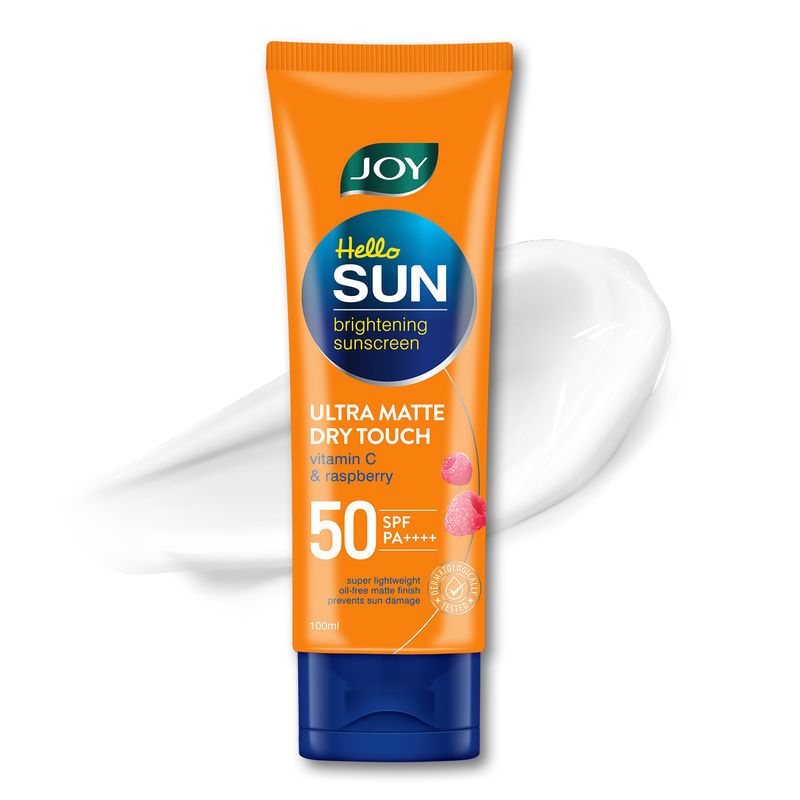
Joy Revivify Hello Sun Ultra Matte Dry Touch SPF 50 PA++++

Joy Revivify Hello Sun Ultra Matte Dry Touch SPF 50 PA++++
Joy
joy-revivify-hello-sun-ultra-matte-dry-touch-spf-50-pa
Suncare
10085097341221
Morning or Evening?
How often will you use this product?
Notes


Highlights
WHAT IS IT?
Sunscreen
FEATURES
Dry touch matte finish, Light-feel, Mattifying finish, Prevents oil visibility, No sweat, No tackiness
BEST FOR
oily
CHECKS
No white cast, Non-comedogenic
Who Is It For?
All Genders Unspecified Age RangeWhat Does It Help With?
Oil Control Sweat Resistance Matte FinishBudget
Mid-range ($30-$75)How To Use
Which routine should it be used in?
Instructions:
Key Information


What Joy Says
Product Description:
Dry touch matte sunscreen: Authentic to its name our Joy Hello Sun Revivify All Day Active Sunscreen Ultra-Matte Dry Touch SPF 50 is made for comfortable use. It imparts a light-feel and mattifying finish to the skin. It helps to prevents oil from being evident on the skin and ensures no sweat and tackiness. It’s non-comedogenic in nature and is suitable for all skin types, especially oily skin. About the Brand: Joy believes that each and every woman is naturally beautiful. Not just on the surface but also beneath it, as nature made her and intended her to be. The brand finds it unfair to define or standardize beauty and uses nature's goodness to help woman retain their natural beauty and never claim for any enhancement. Joy brings to you wide range of skin and hair care products that are made with the best ingredients from nature to protect and retain what nature has endowed to women physically.
About the Brand:
Ingredients Overview
Ingredients List
Titanium Dioxide, Niacinamide
Key Ingredients
Vitamin C, raspberry
Ingredients Details
Niacinamide
Common Name(s): Vitamin b3,nicotinamide,pyridine-3-carboxamide
CAS Number: 98-92-0
DESCRIPTION
What It Does: Niacinamide strengthens the skin barrier, reduces visible pore size, regulates sebum production, fades dark spots, and improves skin texture and tone.
Why It's Used: It is used because it addresses multiple skin concerns at once without irritation, making it suitable for all skin types. it is stable in formulations and pairs well with most other actives.
How It Works: Niacinamide inhibits the transfer of melanosomes (pigment packets) to skin cells, reducing hyperpigmentation. it also stimulates ceramide synthesis to strengthen the skin barrier and reduces inflammation by modulating cytokine activity.
Typically Found In: Serums,moisturizers,toners,cleansers,eye creams,sunscreens,primers
TECHNICAL DETAILS
Primary Category: Active ingredient – vitamin
Secondary Functions: Barrier repair,brightening,anti-inflammatory
Application Areas:

Facial Skincare
Body Care

Hair Care
Beard Care
Color Cosmetics (Makeup)
Dietary/Oral Supplements
Typical Concentration Range: 2%–10% (typical: 5%; higher concentrations may cause flushing in some individuals)
SOURCING & ETHICS
Vegan Status: Yes – synthetically produced
Halal Status: Yes – synthetic origin
Source Notes: Commercially produced via synthesis from nicotinic acid or 3-cyanopyridine. no animal-derived sources used in cosmetic-grade niacinamide.
SKIN COMPATIBILITY
Irritancy Rating: 1/5 – very low; concentrations above 10% may cause temporary flushing in sensitive individuals
Comedogenicity Rating: 0/5 – non-comedogenic
Sensitivity Concerns: At concentrations >10%, some users experience niacin flush (transient redness/tingling). generally very well-tolerated.
Safe for Sensitive Skin: Yes – one of the best-tolerated actives for sensitive skin
SAFETY & COMPATIBILITY
Safety Profile: Extensively studied and considered very safe. ewg hazard score: 1. no significant systemic toxicity concerns at topical concentrations.
Works Well With: Retinol,peptides,ahas/bhas,hyaluronic acid,ceramides,zinc,vitamin c,spf
Avoid Combining With: High concentrations of vitamin c (ascorbic acid) may theoretically convert to niacin – use at different times if using pure l-ascorbic acid above 15%
SCIENTIFIC NOTE
Niacinamide is a precursor to nad+ and nadp+, coenzymes vital to cellular energy metabolism. its benefits for dna repair and mitochondrial function make it a key ingredient in anti-aging strategies.
Last Verified: 2026-03-12
Primary Sources: Cosing database,cir safety assessment,ewg skin deep,pubmed clinical studies
Titanium Dioxide
Common Name(s): Ci 77891,tio2,rutile,anatase
CAS Number: 13463-67-7
DESCRIPTION
What It Does: Physically reflects and scatters uvb and uva-ii radiation providing broad-spectrum physical sun protection.
Why It's Used: Most widely used mineral uv filter – photostable, non-irritating physical sun protection compatible with all skin types including baby and sensitive skin.
How It Works: High refractive index (2.5–2.7) and semiconductor bandgap provide physical reflection and absorption of uv radiation. primarily uvb (280–320nm) and uva-ii (320–340nm) protection, less effective for uva-i (340–400nm) vs zinc oxide.
Typically Found In: Sunscreens,tinted products,foundations,baby sunscreens
TECHNICAL DETAILS
Primary Category: Active ingredient – mineral uv filter
Secondary Functions: Photostable uv filter,opacifier
Application Areas:
Facial Skincare
Body Care
Hair Care
Beard Care
Color Cosmetics (Makeup)
Dietary/Oral Supplements
Typical Concentration Range: 1%–25% (spf products: eu max 25%)
SOURCING & ETHICS
Vegan Status: Yes – inorganic mineral
Halal Status: Yes
Source Notes: Produced from ilmenite or rutile mineral processing. nano tio2 (<100nm) for transparency; non-nano for opacity.
SKIN COMPATIBILITY
Irritancy Rating: 1/5 – very low
Comedogenicity Rating: 0/5 – non-comedogenic
Sensitivity Concerns: Non-irritating; suitable for baby and sensitive skin.
Safe for Sensitive Skin: Yes at recommended concentrations
SAFETY & COMPATIBILITY
Safety Profile: Excellent safety profile. fda category i grase for sunscreen. eu max 25%. non-nano preferred for safety. ewg score: 1.
Works Well With: Niacinamide,salicylic acid,other actives
Avoid Combining With: No significant incompatibilities at standard concentrations
SCIENTIFIC NOTE
Tio2 provides superior uvb protection vs zno but inferior uva-i coverage. this complementarity means tio2+zno combination sunscreens provide more complete uv spectrum coverage (uvb+uva-i+uva-ii) than either mineral filter alone.
Last Verified: 2026-03-12
Primary Sources: Cosing database,fda sunscreen grase ruling,ewg sunscreen database