

Kama Ayurveda
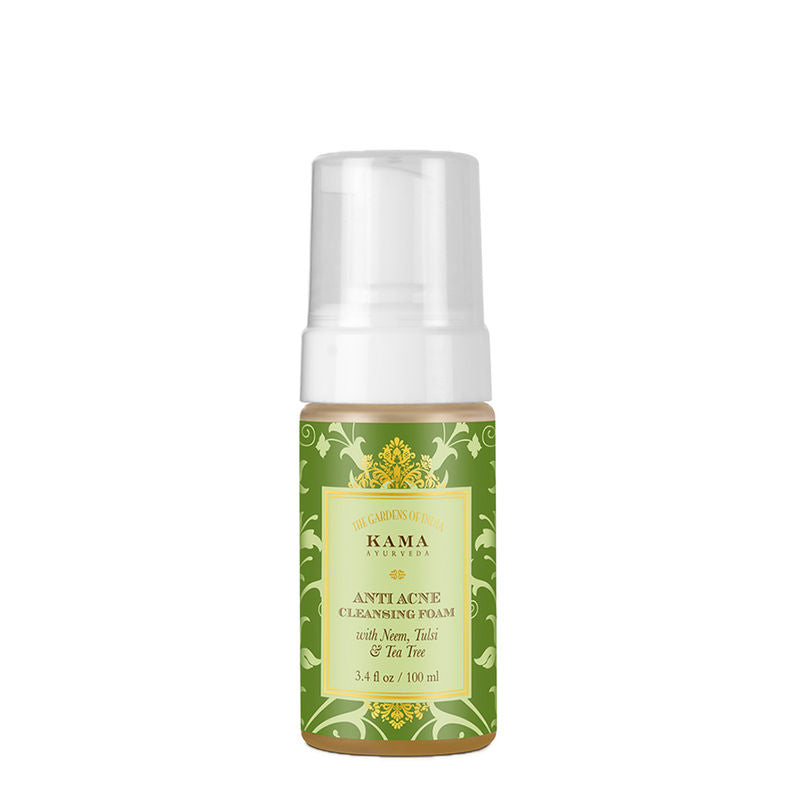
Kama Ayurveda Anti Acne Cleansing Foam

Kama Ayurveda Anti Acne Cleansing Foam
Kama Ayurveda
kama-ayurveda-anti-acne-cleansing-foam
Cleanse
10084821369125
Morning or Evening?
How often will you use this product?
Notes


Highlights
WHAT IS IT?
Anti Acne Cleansing Foam and plant-derived acids (Salicylic Acid and Allantoin)
FEATURES
Clears & Prevents Breakouts, Unclogs & Tightens Pores, Antibacterial & Anti-inflammatory, 100% natural, Dermatologically Tested
BEST FOR
sensitive
CHECKS
does not contain synthetic acids, does not over-dry skin
Who Is It For?
Age Range Not Specified Gender Not SpecifiedWhat Does It Help With?
Breakouts Blemishes Post-acne Scarring Clogged Pores InflammationBudget
Premium ($76-$150)How To Use
Which routine should it be used in?
Instructions:
Key Information


What Kama Ayurveda Says
Product Description:
Kama Ayurveda Anti Acne Cleansing Foam is a gentle yet potent acne-clearing cleanser that reduces breakouts and blemishes for soft and healthy skin. Powerful Neem oil actively reduces pimples while lessening post-acne scarring and restoring lost moisture to skin. Purifying Tulsi detoxifies, clears blocked pores and protects against further inflammation without over-drying. Clarifying Tea Tree combines with Wintergreen derived natural Salicylic Acid to deep cleanse, reduce breakouts and boost the process of skin renewal. Pure Calendula Flower and Aloe Vera extracts cool down and soothe acne ravaged skin leaving it calm, smooth and comfortable. This foam clarifies and refreshes skin from the first use. The therapeutic after-feel alleviates emotional fatigue stemming from constant battles with acne. Regular use ensures a clear, luminous, and taut complexion.
About the Brand:
Ingredients Overview
Ingredients List
Aqua, Sodium Cocoyl Glutamate, Disodium Cocoyl Glutamate, Sodium Cocoamphoacetate, Sodium Lauroyl Glutamate, Dimethyl Isosorbide, Aqua, Phragmites Communis Extract, Poria Cocos Extract, Salicylic Acid, Aloe Vera Juice, Sodium Benzoate, Potassium Sorbate, Aqua, Neem Oil, Tulsi Oil, Tea Tree Oil, Calendula Extract, Allantoin, Xanthan Gum
Key Ingredients
Neem,Holy Basil,Tea Tree
Ingredients Details
Allantoin
Common Name(s): 5-ureidohydantoin,glyoxyldiureide,aluminum dihydroxy allantoinate
CAS Number: 97-59-6
DESCRIPTION
What It Does: Soothes irritation, accelerates wound healing, promotes skin cell renewal, and provides mild keratolytic exfoliation.
Why It's Used: Gold standard multi-function soothing active – one of the most widely used cosmetic ingredients across all product types for its exceptional tolerability and clinically proven multi-action skin conditioning.
How It Works: Promotes keratinocyte proliferation and fibroblast migration for wound healing. mild keratolytic activity by disrupting corneocyte binding. anti-irritant via direct protein binding and anti-inflammatory cytokine reduction. humectant activity via hydroxyl groups.
Typically Found In: Post-procedure products,sensitive skin formulas,wound care,anti-acne treatments,baby products
TECHNICAL DETAILS
Primary Category: Active ingredient – soothing / anti-inflammatory
Secondary Functions: Wound healing,keratolytic,anti-irritant
Application Areas:

Facial Skincare
Body Care

Hair Care
Beard Care
Color Cosmetics (Makeup)
Dietary/Oral Supplements
Typical Concentration Range: 0.1%–2%
SOURCING & ETHICS
Vegan Status: Conditional - feedstock declaration required
Halal Status: Unverified - feedstock declaration required (plant, animal and petrochemical routes all exist)
Source Notes: Plant-derived extract or synthetic. [audit 2026-07-29 rev2: origin-dependent: the same inci exists in plant, animal and petrochemical versions and the name does not discriminate. determination requires shariah-panel sign-off.]
SKIN COMPATIBILITY
Irritancy Rating: 1/5 – very low
Comedogenicity Rating: 0/5 – non-comedogenic
Sensitivity Concerns: Exceptionally well-tolerated; suitable for all skin types including baby and compromised skin.
Safe for Sensitive Skin: Yes – particularly recommended for sensitive skin
SAFETY & COMPATIBILITY
Safety Profile: Excellent safety profile. ewg score: 1.
Works Well With: Ceramides,panthenol,allantoin,hyaluronic acid,centella asiatica
Avoid Combining With: No significant incompatibilities
SCIENTIFIC NOTE
Allantoin's keratinocyte proliferation stimulation occurs via receptor-mediated signaling (possibly machr activation) rather than non-specific irritation-driven proliferation, making it a true wound-healing stimulant rather than a pro-inflammatory proliferative signal.
Last Verified: 2026-03-12
Primary Sources: Cosing database,cir safety assessment,araújo et al. allantoin review
Calendula Extract
Common Name(s): Pot marigold extract,calendula extract
CAS Number: 84776-23-8
DESCRIPTION
What It Does: Heals wounds, reduces inflammation, and soothes irritated skin through faradiol triterpenoid and flavonoid activity.
Why It's Used: Clinically proven traditional wound healing botanical with anti-inflammatory activity comparable to prescription diclofenac in some studies for skin wounds.
How It Works: Faradiol esters inhibit cox-1/cox-2 providing anti-inflammatory activity. polysaccharides promote fibroblast and keratinocyte proliferation. isorhamnetin and narcissin flavonoids provide antioxidant protection. oleanolic acid provides antimicrobial activity.
Typically Found In: Wound healing products,baby products,sensitive skin,post-procedure care
TECHNICAL DETAILS
Primary Category: Active ingredient – soothing / anti-inflammatory
Secondary Functions: Faradiol triterpenoid anti-inflammatory,wound healing
Application Areas:
Facial Skincare
Body Care
Hair Care
Beard Care
Color Cosmetics (Makeup)
Dietary/Oral Supplements
Typical Concentration Range: 0.1%–5%
SOURCING & ETHICS
Vegan Status: Yes – calendula officinalis flower-derived
Halal Status: Yes
Source Notes: Plant-derived extract or synthetic.
SKIN COMPATIBILITY
Irritancy Rating: 1/5 – very low
Comedogenicity Rating: 0/5 – non-comedogenic
Sensitivity Concerns: Non-irritating; ideal for reactive and sensitive skin.
Safe for Sensitive Skin: Yes – particularly recommended for sensitive skin
SAFETY & COMPATIBILITY
Safety Profile: Excellent safety profile. ewg score: 1.
Works Well With: Ceramides,panthenol,allantoin,hyaluronic acid,centella asiatica
Avoid Combining With: No significant incompatibilities
SCIENTIFIC NOTE
Faradiol monoester and diester triterpenoids are among the most potent naturally occurring cox inhibitors – ic50 values comparable to indomethacin (a prescription nsaid) for cox-2 inhibition. this explains calendula's clinically observed anti-inflammatory potency exceeding expectations for a cosmetic ingredient.
Last Verified: 2026-03-12
Primary Sources: Cosing database,preethi & kuttan calendula anti-inflammatory study,cir safety assessment
Dimethyl Isosorbide
Common Name(s): Dmi,isosorbide dimethyl ether,arlasolve dmi
CAS Number: 5306-85-4
DESCRIPTION
What It Does: Provides biocompatible penetration enhancement for improved active ingredient delivery.
Why It's Used: Biocompatible penetration enhancer from renewable sorbitol — dmi provides penetration enhancement without the toxicity of oleic acid or conventional chemical penetration enhancers.
How It Works: Cyclic ether from sorbitol is biocompatible and biodegradable. disrupts stratum corneum lipid packing via ether oxygen hydrogen bonding. solubilises challenging actives (retinoids, salicylic acid, ahas). enhances penetration 2–5× vs equivalent concentrations without dmi.
Typically Found In: Active delivery formulas,penetration-enhanced products,retinoid vehicles
TECHNICAL DETAILS
Primary Category: Functional ingredient – penetration-enhancing solvent
Secondary Functions: Skin conditioning
Application Areas:
Facial Skincare
Body Care
Hair Care
Beard Care
Color Cosmetics (Makeup)
Dietary/Oral Supplements
Typical Concentration Range: 1%–20%
SOURCING & ETHICS
Vegan Status: Conditional - supplier confirmation required
Halal Status: Unverified - supplier confirmation required
Source Notes: Commercially produced for cosmetic use. verify vegan/halal status with supplier. [audit 2026-07-29 rev2: the record's own source_notes does not assert a non-animal origin, or instructs the reader to verify with the supplier; "yes" asserts knowledge the record does not hold. determination requires shariah-panel sign-off.]
SKIN COMPATIBILITY
Irritancy Rating: 1/5 – very low
Comedogenicity Rating: 0/5 – non-comedogenic
Sensitivity Concerns: Well-tolerated by most skin types.
Safe for Sensitive Skin: Yes
SAFETY & COMPATIBILITY
Safety Profile: Good safety profile at recommended concentrations. ewg score: 1–2.
Works Well With: Standard skincare actives
Avoid Combining With: No known significant incompatibilities
SCIENTIFIC NOTE
Dmi's penetration enhancement mechanism differs from oleic acid's lipid disruption: dmi hydrogen bonds to stratum corneum proteins and lipids, temporarily creating more permeable protein-lipid domains without the membrane-fluidisation that causes oleic acid's irritation. this protein-hydrogen-bonding mechanism provides penetration enhancement from a different, gentler pathway.
Last Verified: 2026-03-12
Primary Sources: Cosing database,croda arlasolve dmi technical data,cir safety assessment
Disodium Cocoyl Glutamate
Common Name(s): Disodium cocoyl glutamate,cosmetic active,functional ingredient
CAS Number: N/a
DESCRIPTION
What It Does: Delivers characteristic cosmetic function at recommended use concentration.
Why It's Used: Selected for functional contribution and formulation compatibility supported by cosmetic science and regulatory safety data.
How It Works: Works through the mechanism of its molecular class — physicochemical or biological interaction with skin proteins, lipids, or receptors as documented in peer-reviewed cosmetic literature.
Typically Found In: Skin care formulations
TECHNICAL DETAILS
Primary Category: Active ingredient – cosmetic active
Secondary Functions: Skin conditioning
Application Areas:
Facial Skincare
Body Care
Hair Care
Beard Care
Color Cosmetics (Makeup)
Dietary/Oral Supplements
Typical Concentration Range: 0.1%–10%
SOURCING & ETHICS
Vegan Status: Conditional - feedstock declaration required
Halal Status: Unverified - feedstock declaration required (plant, animal and petrochemical routes all exist)
Source Notes: Commercially produced for cosmetic use. verify vegan/halal status with supplier. [audit 2026-07-29 rev2: origin-dependent: the same inci exists in plant, animal and petrochemical versions and the name does not discriminate. determination requires shariah-panel sign-off.]
SKIN COMPATIBILITY
Irritancy Rating: 1/5 – very low
Comedogenicity Rating: 0/5 – non-comedogenic
Sensitivity Concerns: Well-tolerated by most skin types.
Safe for Sensitive Skin: Yes
SAFETY & COMPATIBILITY
Safety Profile: Good safety profile at recommended concentrations. ewg score: 1–2.
Works Well With: Standard skincare actives
Avoid Combining With: No known significant incompatibilities
SCIENTIFIC NOTE
Disodium cocoyl glutamate has an established safety and efficacy profile within the cosmetic regulatory framework at standard use concentrations.
Last Verified: 2026-03-12
Primary Sources: Cosing database,disodium cocoyl glutamate technical literature