

Kama Ayurveda Pvt. Ltd.
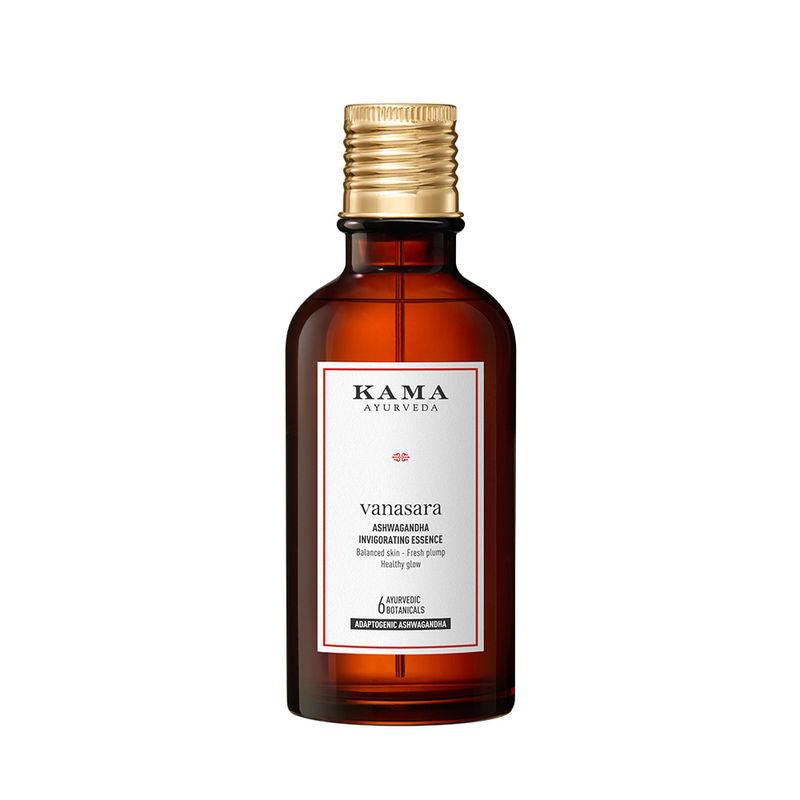
Kama Ayurveda Vanasara Ashwagandha Invigorating Essence

Kama Ayurveda Vanasara Ashwagandha Invigorating Essence
Kama Ayurveda Pvt. Ltd.
kama-ayurveda-vanasara-ashwagandha-invigorating-essence
Tone
10084876386597
Morning or Evening?
How often will you use this product?
Notes


Highlights
WHAT IS IT?
Invigorating essence mist with a blend of adaptogenic ashwagandha and Ayurvedic floral waters (14 ingredients approx.)
FEATURES
44% soothed skin, 100% refreshed and hydrated skin, +13% reinforced skin barrier, blend of neroli, mogra, vetiver, rose floral waters, barrier-moisturising Aquaxyl, preBiulin FOS
BEST FOR
sensitive
CHECKS
does not explicitly contain sulfates, parabens, silicones, or alcohol mentioned
Who Is It For?
Not Explicitly Mentioned Likely Unisex AdultsWhat Does It Help With?
Soothes Skin Hydrates Refreshes Strengthens Skin BarrierBudget
Premium ($76-$150)How To Use
Which routine should it be used in?
Instructions:
Key Information


What Kama Ayurveda Pvt. Ltd. Says
Product Description:
Powered by adaptogenic ashwagandha and precious floral waters, Kama Ayurveda's NEW Vanasara Ashwagandha Invigorating Essence is an energizing mist that clarifies skin and promotes a healthy, radiant complexion. Features include: +44% soothed skin due to energising adaptogenic ashwagandha and Adaptonyl; 100% noticed refreshed and hydrated skin with Ayurvedic floral waters and Aquaxyl; +13% reinforced skin barrier with preBiulin FOS. Suitable for daily use as a mist.
About the Brand:
Ingredients Overview
Ingredients List
Citrus-Aurantium-Amara-Flower-Water,Vetiveria-Zizanioides-Root-Water,Jasminum-Sambac-Flower-Water,Rosa-Damascena-Flower-Water,Propanediol,Aqua,Inulin,Sodium-Citrate,Xylitylglucoside,Glycerin,Anhydroxylitol,Xylitol,Fructose,Withania-Somnifera-Root-Extract,Lactic-Acid,Sodium-Gluconate,Citric-Acid,Tartaric-Acid,Gluconic-Acid,Sodium-Benzoate,Potassium-Sorbate,Linalool,Benzyl-Alcohol,Geraniol
Key Ingredients
Withania Somnifera Root Extract, Neroli (Citrus Aurantium Amara Flower Water), Mogra (Jasminum Sambac Flower Water), Vetiver (Vetiveria Zizanioides Root Water), Rose (Rosa Damascena Flower Water), Aquaxyl, preBiulin FOS
Ingredients Details
Anhydroxylitol
Common Name(s): Anhydroxylitol,cosmetic active,functional ingredient
CAS Number: N/a
DESCRIPTION
What It Does: Delivers characteristic cosmetic function at recommended use concentration.
Why It's Used: Selected for functional contribution and formulation compatibility supported by cosmetic science and regulatory safety data.
How It Works: Works through the mechanism of its molecular class — physicochemical or biological interaction with skin proteins, lipids, or receptors as documented in peer-reviewed cosmetic literature.
Typically Found In: Skin care formulations
TECHNICAL DETAILS
Primary Category: Active ingredient – cosmetic active
Secondary Functions: Skin conditioning
Application Areas:

Facial Skincare

Body Care
Hair Care
Beard Care
Color Cosmetics (Makeup)
Dietary/Oral Supplements
Typical Concentration Range: 0.1%–10%
SOURCING & ETHICS
Vegan Status: Conditional - supplier confirmation required
Halal Status: Unverified - supplier confirmation required
Source Notes: Commercially produced for cosmetic use. verify vegan/halal status with supplier. [audit 2026-07-29 rev2: the record's own source_notes does not assert a non-animal origin, or instructs the reader to verify with the supplier; "yes" asserts knowledge the record does not hold. determination requires shariah-panel sign-off.]
SKIN COMPATIBILITY
Irritancy Rating: 1/5 – very low
Comedogenicity Rating: 0/5 – non-comedogenic
Sensitivity Concerns: Well-tolerated by most skin types.
Safe for Sensitive Skin: Yes
SAFETY & COMPATIBILITY
Safety Profile: Good safety profile at recommended concentrations. ewg score: 1–2.
Works Well With: Standard skincare actives
Avoid Combining With: No known significant incompatibilities
SCIENTIFIC NOTE
Anhydroxylitol has an established safety and efficacy profile within the cosmetic regulatory framework at standard use concentrations.
Last Verified: 2026-03-12
Primary Sources: Cosing database,anhydroxylitol technical literature
Fructose
Common Name(s): Levulose,d-fructose,fruit sugar
CAS Number: 57-48-7
DESCRIPTION
What It Does: Provides natural fruit sugar humectant moisture retention with gentle soothing properties.
Why It's Used: Natural-origin humectant for clean beauty formulations with appealing fruit-derived provenance.
How It Works: Five hydroxyl groups provide strong water binding. slightly higher hygroscopicity than glucose due to fructose ring configuration. soothing activity via mild anti-inflammatory activity of fruit sugar derivatives.
Typically Found In: Natural moisturizers,clean beauty hydrators
TECHNICAL DETAILS
Primary Category: Active ingredient – fruit sugar humectant
Secondary Functions: Natural sugar humectant,soothing
Application Areas:
Facial Skincare
Body Care
Hair Care
Beard Care
Color Cosmetics (Makeup)
Dietary/Oral Supplements
Typical Concentration Range: 1%–10%
SOURCING & ETHICS
Vegan Status: Conditional - supplier confirmation required
Halal Status: Unverified - supplier confirmation required
Source Notes: Synthetic or naturally derived. excellent aqueous solubility. [audit 2026-07-29 rev2: status downgraded on audit. determination requires shariah-panel sign-off.]
SKIN COMPATIBILITY
Irritancy Rating: 1/5 – very low
Comedogenicity Rating: 0/5 – non-comedogenic
Sensitivity Concerns: Non-irritating; suitable for all skin types.
Safe for Sensitive Skin: Yes
SAFETY & COMPATIBILITY
Safety Profile: Excellent safety profile. ewg score: 1.
Works Well With: Ceramides,emollients,occlusives,glycerin,hyaluronic acid
Avoid Combining With: No significant incompatibilities
SCIENTIFIC NOTE
Fructose's ring form (furanose, 5-membered) provides all five hydroxyl groups in a more hydrophilic spatial arrangement than glucose (pyranose, 6-membered), contributing to fructose's slightly superior hygroscopicity over glucose – explaining its preference as a cosmetic humectant among monosaccharides.
Last Verified: 2026-03-12
Primary Sources: Cosing database,cir safety assessment
Geraniol
Common Name(s): (e)-3,7-dimethyl-2,6-octadien-1-ol,geranyl alcohol
CAS Number: 106-24-1
DESCRIPTION
What It Does: Provides fresh rose-geranium floral scent with antimicrobial activity.
Why It's Used: The rose fragrance terpene – geraniol defines the fresh, sweet rose-geranium note found in more than 60 essential oils and is essential for recreating natural floral fragrance profiles.
How It Works: Monoterpene alcohol inhibits bacterial membrane integrity for antimicrobial activity. activates trpv1 for anti-nociception. inhibits nf-kb for anti-inflammatory activity. antioxidant via allylic radical scavenging.
Typically Found In: Rose-scented products,floral fragrances,natural cosmetics
TECHNICAL DETAILS
Primary Category: Fragrance component – acyclic monoterpene alcohol
Secondary Functions: Skin conditioning
Application Areas:
Facial Skincare
Body Care
Hair Care
Beard Care
Color Cosmetics (Makeup)
Dietary/Oral Supplements
Typical Concentration Range: 0.001%–1%
SOURCING & ETHICS
Vegan Status: Conditional - supplier confirmation required
Halal Status: Unverified - supplier confirmation required
Source Notes: Commercially produced for cosmetic use. verify vegan/halal status with supplier. [audit 2026-07-29 rev2: the record's own source_notes does not assert a non-animal origin, or instructs the reader to verify with the supplier; "yes" asserts knowledge the record does not hold. determination requires shariah-panel sign-off.]
SKIN COMPATIBILITY
Irritancy Rating: 1/5 – very low
Comedogenicity Rating: 0/5 – non-comedogenic
Sensitivity Concerns: Well-tolerated by most skin types.
Safe for Sensitive Skin: Yes
SAFETY & COMPATIBILITY
Safety Profile: Eu cosmetics regulation: declared fragrance allergen. ifra guidelines apply.
Works Well With: Standard skincare actives
Avoid Combining With: No known significant incompatibilities
SCIENTIFIC NOTE
Geraniol's isomers (geraniol, nerol, citronellol) provide subtly different scent characters despite identical molecular formulae (c10h18o): geraniol provides the sweet, fresh rose note while its z-isomer nerol has a more delicate, neroli-like character. these isomeric scent differences arise from different spatial presentation of the hydroxyl and double bond groups to the olfactory receptor – demonstrating the extraordinary structural sensitivity of olfactory perception.
Last Verified: 2026-03-12
Primary Sources: Cosing database,ifra standards
Glycerin
Common Name(s): Glycerol,glycerine,1,2,3-propanetriol
CAS Number: 56-81-5
DESCRIPTION
What It Does: Glycerin pulls water from the environment and deeper skin layers into the outer skin layer (epidermis), boosting moisture levels and keeping skin soft, smooth, and plump.
Why It's Used: It is used in virtually every moisturizer, serum, and cleanser because it is highly effective at hydrating skin, is well-tolerated by all skin types, and enhances the texture and spreadability of formulations.
How It Works: As a humectant, glycerin forms hydrogen bonds with water molecules, trapping them in the skin. it also reinforces the skin barrier by integrating into lipid structures between skin cells.
Typically Found In: Moisturizers,serums,cleansers,toners,sheet masks,sunscreens,body lotions,shampoos,conditioners
TECHNICAL DETAILS
Primary Category: Humectant
Secondary Functions: Skin barrier support,emollient,solvent
Application Areas:
Facial Skincare
Body Care
Hair Care
Beard Care
Color Cosmetics (Makeup)
Dietary/Oral Supplements
Typical Concentration Range: 1%–30% (typical: 3–10%)
SOURCING & ETHICS
Vegan Status: Conditional - feedstock declaration required
Halal Status: Unverified - feedstock declaration required (plant, animal and petrochemical routes all exist)
Source Notes: Derived from plant oils via hydrolysis or saponification; synthetic versions also available. palm-derived glycerin carries sustainability concerns. [audit 2026-07-29 rev2: origin-dependent: the same inci exists in plant, animal and petrochemical versions and the name does not discriminate. determination requires shariah-panel sign-off.]
SKIN COMPATIBILITY
Irritancy Rating: 1/5 – very low; non-irritating at all standard concentrations
Comedogenicity Rating: 0/5 – non-comedogenic
Sensitivity Concerns: Extremely rare allergic reactions; generally safe for all skin types including sensitive and baby skin
Safe for Sensitive Skin: Yes
SAFETY & COMPATIBILITY
Safety Profile: Widely recognized as safe. ewg hazard score: 1. no significant concerns for irritation, sensitization, or toxicity at typical concentrations (up to 50%).
Works Well With: Hyaluronic acid,ceramides,niacinamide,panthenol,urea,peptides,retinol,ahas/bhas
Avoid Combining With: No known incompatibilities at standard concentrations
SCIENTIFIC NOTE
Glycerin is an endogenous skin component found naturally in the stratum corneum. aquaporin-3 channels in keratinocytes facilitate glycerin transport, making it integral to natural skin hydration pathways.
Last Verified: 2026-03-12
Primary Sources: Cosing database,cir safety assessment,ewg skin deep,inci decoder