

Nykaa E retail limited
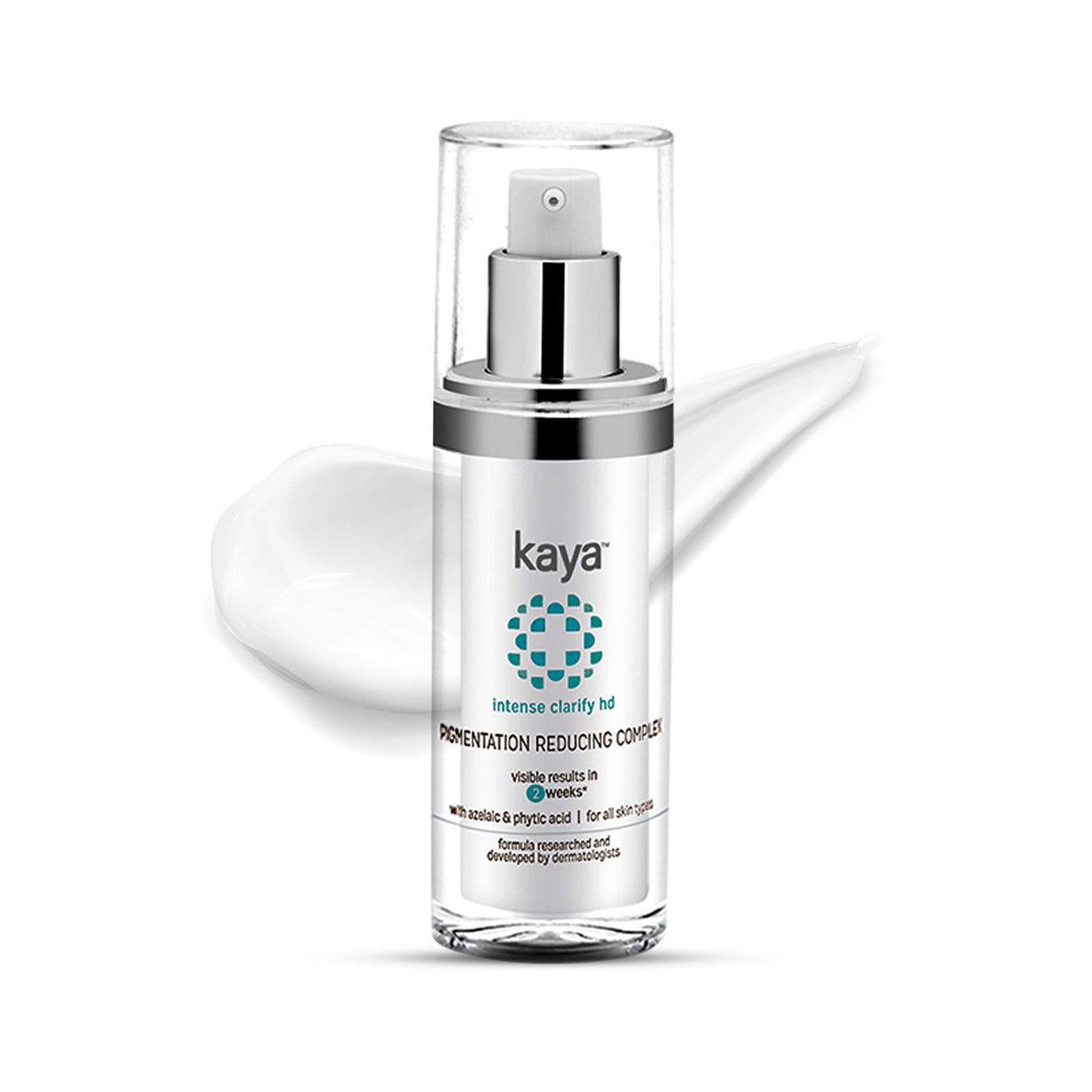
Kaya Pigmentation Reducing Complex

Kaya Pigmentation Reducing Complex
Nykaa E retail limited
kaya-pigmentation-reducing-complex
Moisturize
10084956897573
Morning or Evening?
How often will you use this product?
Notes


Highlights
WHAT IS IT?
Pigmentation reducing moisturizer with Azelaic and Phytic Acid
FEATURES
Reduces pigmentation, Suitable for all skin types
BEST FOR
combination
CHECKS
Who Is It For?
Adults All GendersWhat Does It Help With?
Pigmentation Reduction Even Skin ToneBudget
Mid-range ($30-$75)How To Use
Which routine should it be used in?
Instructions:
Key Information


What Nykaa E retail limited Says
Product Description:
Kaya Pigmentation Reducing Complex with Azelaic & Phytic Acid for all skin types (30ML)
About the Brand:
Ingredients Overview
Ingredients List
Phytic acid, Azelaic acid, Vitamin C 0.5%.
Key Ingredients
Azelaic Acid, Phytic Acid
Ingredients Details
Azelaic Acid
Common Name(s): Nonanedioic acid,lepargylic acid
CAS Number: 123-99-9
DESCRIPTION
What It Does: Reduces acne, evens skin tone, calms rosacea, and reduces hyperpigmentation through multiple complementary mechanisms.
Why It's Used: Multi-action gold standard for hyperpigmentation, acne, rosacea, and post-inflammatory hyperpigmentation (pih) – well-tolerated by all skin tones.
How It Works: Inhibits tyrosinase (melanin synthesis) and abnormal melanocyte proliferation. inhibits 5-alpha-reductase (sebum control). antimicrobial against p. acnes and malassezia. anti-inflammatory via nf-kb pathway inhibition.
Typically Found In: Brightening serums,anti-acne treatments,rosacea products,hyperpigmentation formulations
TECHNICAL DETAILS
Primary Category: Active ingredient – dicarboxylic acid
Secondary Functions: Anti-acne,rosacea management,sebum control
Application Areas:

Facial Skincare

Body Care
Hair Care
Beard Care
Color Cosmetics (Makeup)
Dietary/Oral Supplements
Typical Concentration Range: 5%–20% (otc 5–10%; prescription 15–20%)
SOURCING & ETHICS
Vegan Status: Conditional - supplier confirmation required
Halal Status: Unverified - supplier confirmation required
Source Notes: Naturally from malassezia yeast on skin; produced by ozonolysis of oleic acid commercially. [audit 2026-07-29 rev2: the record's own source_notes does not assert a non-animal origin, or instructs the reader to verify with the supplier; "yes" asserts knowledge the record does not hold. determination requires shariah-panel sign-off.]
SKIN COMPATIBILITY
Irritancy Rating: 2/5 – low to moderate; initial tingling expected
Comedogenicity Rating: 0/5 – non-comedogenic
Sensitivity Concerns: Initial tingling and stinging normalizes within 2–4 weeks of regular use.
Safe for Sensitive Skin: Use with caution – transient tingling common during introduction
SAFETY & COMPATIBILITY
Safety Profile: Excellent long-term safety. fda-approved for acne (benzaclin) and rosacea (finacea). ewg score: 1.
Works Well With: Ceramides,niacinamide,hyaluronic acid,spf
Avoid Combining With: Multiple exfoliating acids simultaneously; high concentrations without spf
SCIENTIFIC NOTE
Azelaic acid's combined tyrosinase inhibition + abnormal melanocyte selectivity (normalizes only overactive melanocytes, unlike hydroquinone) makes it uniquely safe for long-term use without bleaching normal-pigmented skin.
Last Verified: 2026-03-12
Primary Sources: Cosing database,draelos azelaic acid review,fda drug approval database
Phytic Acid
Common Name(s): Inositol hexaphosphate,ip6,phytate
CAS Number: 83-86-3
DESCRIPTION
What It Does: Provides multi-function brightening through copper chelation, antioxidant, and gentle exfoliant activity.
Why It's Used: Multi-function brightener — phytic acid's six phosphate groups provide copper chelation for tyrosinase inhibition alongside direct antioxidant and gentle aha-like exfoliation in a natural grain-derived compound.
How It Works: Six phosphate groups provide multiple copper-chelating sites for tyrosinase active site copper removal. also chelates iron for antioxidant (fenton reaction inhibition). mild acidic ph provides gentle aha-like exfoliation. found naturally in rice bran, legumes.
Typically Found In: Natural brightening products,multi-function serums,rice-derived formulas
TECHNICAL DETAILS
Primary Category: Active ingredient – ip6 brightening chelator
Secondary Functions: Melanin inhibition,hyperpigmentation reduction
Application Areas:
Facial Skincare
Body Care
Hair Care
Beard Care
Color Cosmetics (Makeup)
Dietary/Oral Supplements
Typical Concentration Range: 0.1%–5%
SOURCING & ETHICS
Vegan Status: Yes – from rice bran, wheat, legumes
Halal Status: Yes
Source Notes: Synthetic or plant-derived.
SKIN COMPATIBILITY
Irritancy Rating: 1/5 – very low
Comedogenicity Rating: 0/5 – non-comedogenic
Sensitivity Concerns: Non-irritating; well-tolerated.
Safe for Sensitive Skin: Yes
SAFETY & COMPATIBILITY
Safety Profile: Excellent safety profile. use with spf for maximum efficacy. ewg score: 1.
Works Well With: Niacinamide,vitamin c,alpha-arbutin,tranexamic acid,spf
Avoid Combining With: No significant incompatibilities
SCIENTIFIC NOTE
Phytic acid's hexaphosphate structure gives it six chelating sites for metal ions — iron and copper are the primary targets. by chelating both copper (tyrosinase cofactor) and iron (fenton reaction catalyst), phytic acid simultaneously inhibits melanin synthesis and prevents oxidative damage — a dual brightening + antioxidant mechanism from a single plant-derived molecule.
Last Verified: 2026-03-12
Primary Sources: Cosing database,graf phytic acid review