

Keya Seth Aromatherapy
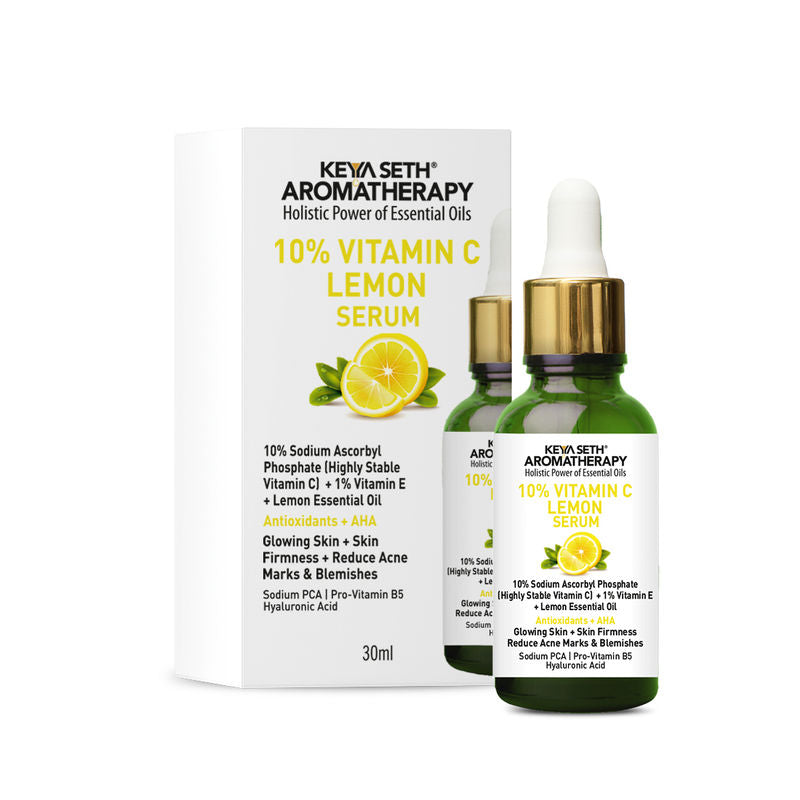
Keya Seth Aromatherapy 10% Vitamin C Lemon Serum

Keya Seth Aromatherapy 10% Vitamin C Lemon Serum
Keya Seth Aromatherapy
keya-seth-aromatherapy-10-vitamin-c-lemon-serum
Serum
10085092098341
Morning or Evening?
How often will you use this product?
Notes


Highlights
WHAT IS IT?
Vitamin C serum with 6 key ingredients
FEATURES
Targets dullness, acne marks, and blemishes; boosts collagen; firms skin; reduces pigmentation; hydrates skin with Hyaluronic Acid and Sodium PCA; brightens skin with Lemon Essential Oil
BEST FOR
sensitive
CHECKS
no parabens, no sulfates, no silicones (implied by 'natural' and absence of preservatives), no artificial fragrances (not explicitly stated)
Who Is It For?
Adult Men And WomenWhat Does It Help With?
Dullness Acne Marks Blemishes Uneven Tone Loss Of Firmness DrynessBudget
Mid-range ($30-$75)How To Use
Which routine should it be used in?
Instructions:
Key Information


What Keya Seth Aromatherapy Says
Product Description:
This serum targets dullness, acne marks, and blemishes, delivering a glowing complexion. Ingredients like Sodium Ascorbyl Phosphate (SAP) (stable Vitamin C), Lemon Essential Oil, Vitamin E, Pro Vitamin B5, Hyaluronic Acid, and Sodium PCA reduce acne marks, firm the skin, and provide hydrating, exfoliating, and brightening benefits. Benefits include glowing skin by rejuvenation and collagen boosting, firm and tight skin by elasticity improvement, reduction of acne marks and blemishes, and hydration to prevent premature aging and dryness.
About the Brand:
Ingredients Overview
Ingredients List
sodium-ascorbyl-phosphate,ascorbic-acid,lemon-essential-oil,limonene,y-terpinene,b-pinene,vitamin-e,pro-vitamin-b5,hyaluronic-acid,sodium-pca
Key Ingredients
sodium-ascorbyl-phosphate,lemon-essential-oil,vitamin-e,pro-vitamin-b5,hyaluronic-acid,sodium-pca
Ingredients Details
Limonene
Common Name(s): D-limonene,(r)-limonene,dipentene
CAS Number: 5989-27-5
DESCRIPTION
What It Does: Provides the defining fresh citrus fragrance note alongside solvent and antimicrobial properties.
Why It's Used: The citrus industry's primary fragrance compound and the most abundant terpene in essential oils – limonene provides the clean, universally appealing fresh citrus scent character.
How It Works: D-limonene activates trpv1 mildly at high concentrations. antimicrobial via membrane disruption. solvent for oils and lipophilic compounds. cleaning via emulsification of lipid soils.
Typically Found In: Citrus-scented products,cleaning products,fragrance compounds
TECHNICAL DETAILS
Primary Category: Fragrance component – cyclic monoterpene
Secondary Functions: Skin conditioning
Application Areas:

Facial Skincare

Body Care
Hair Care
Beard Care
Color Cosmetics (Makeup)
Dietary/Oral Supplements
Typical Concentration Range: 0.001%–3%
SOURCING & ETHICS
Vegan Status: Conditional - supplier confirmation required
Halal Status: Unverified - supplier confirmation required
Source Notes: Commercially produced for cosmetic use. verify vegan/halal status with supplier. [audit 2026-07-29 rev2: the record's own source_notes does not assert a non-animal origin, or instructs the reader to verify with the supplier; "yes" asserts knowledge the record does not hold. determination requires shariah-panel sign-off.]
SKIN COMPATIBILITY
Irritancy Rating: 1/5 – very low
Comedogenicity Rating: 0/5 – non-comedogenic
Sensitivity Concerns: Well-tolerated by most skin types.
Safe for Sensitive Skin: Yes
SAFETY & COMPATIBILITY
Safety Profile: Eu cosmetics regulation: declared fragrance allergen. oxidises to sensitising compounds (limonene hydroperoxides) on air exposure – use with antioxidant stabilisers. ifra guidelines apply.
Works Well With: Standard skincare actives
Avoid Combining With: No known significant incompatibilities
SCIENTIFIC NOTE
Limonene's sensitisation risk arises not from limonene itself but from its autooxidation products (limonene-1,2-epoxide and limonene hydroperoxides) formed on air exposure. fresh limonene has low sensitisation potential, but air-oxidised limonene's hydroperoxide products are potent skin sensitisers. this explains why oxidation-stabilised formulations (with bht or other antioxidants) are required to manage limonene safety.
Last Verified: 2026-03-12
Primary Sources: Cosing database,ifra standards,bråred christensson et al. limonene oxidation study